

Difference: nano-caco₃ vs. regular caco₃ in rubber
Published on: October 26, 2023
The selection of calcium carbonate (CaCO₃) as a filler in rubber compounding is a critical decision impacting performance, cost, and processing. While regular (or ground) CaCO₃ has served as a traditional, cost-effective extender, the advent of nano-CaCO₃ represents a paradigm shift, transforming the filler from a mere volume-enhancer to a functional performance modifier. The core difference lies in particle size and its resultant effects: regular CaCO₃, typically in the micron range (e.g., 2-50μm), primarily reduces compound cost and improves processability. In contrast, nano-CaCO₃, with particles below 100 nanometers, offers a dramatically increased surface area and interaction with the rubber matrix. This enables significant enhancements in mechanical properties—such as tensile strength, tear resistance, and abrasion resistance—while often improving transparency and surface finish. The choice between the two hinges on the application's demands: nano-CaCO₃ for high-performance, premium products, and regular CaCO₃ for standard, cost-sensitive formulations. Crucially, achieving the optimal performance from either grade depends on employing advanced grinding technology that ensures precise particle size distribution, high purity, and consistent quality, areas where specialized milling equipment proves indispensable.
The role of CaCO₃ in rubber is multifaceted. Regular CaCO₃, produced by grinding limestone to a fine powder, is one of the most widely used fillers globally. Its primary functions are to increase volume (thus reducing raw material costs), improve processing characteristics like extrusion and calendering, and impart a degree of stiffness. However, its relatively large particle size means it acts as a discontinuous phase within the rubber continuum. This can lead to compromises; excessive loading may increase compound density, reduce elasticity, and negatively impact critical dynamic properties like flex fatigue. The filler-rubber interaction is primarily physical, with limited chemical bonding at the interface.
Nano-CaCO₃ shatters these limitations. The reduction in particle size by orders of magnitude is not merely incremental; it's transformative. The explosive increase in surface area provides a vast interface for interaction with the rubber polymer chains. When properly dispersed and coupled with appropriate surface treatments (like stearic acid), nano-CaCO₃ particles can form strong physical and potentially chemical bonds with the matrix. This leads to a phenomenon where the nano-filler reinforces the rubber network itself. The results are tangible: a compound with nano-CaCO₃ can achieve tensile strength and tear resistance approaching that of formulations using more expensive reinforcing fillers like silica or carbon black, but often with better processing and lower heat build-up. Furthermore, the sub-wavelength size of the particles minimizes light scattering, allowing for the production of translucent or brightly colored rubber products without the graying effect caused by larger fillers.
The journey from raw limestone to these advanced fillers is where grinding technology becomes the decisive factor. Producing consistent, high-purity regular CaCO₃ with a controlled top-cut (to avoid damaging large particles) requires robust and efficient mills. For nano-CaCO₃, the challenge is exponentially greater. It demands technology capable of delaminating particles to the nanoscale while managing the immense surface energy that can cause re-agglomeration. This is not a task for conventional equipment.
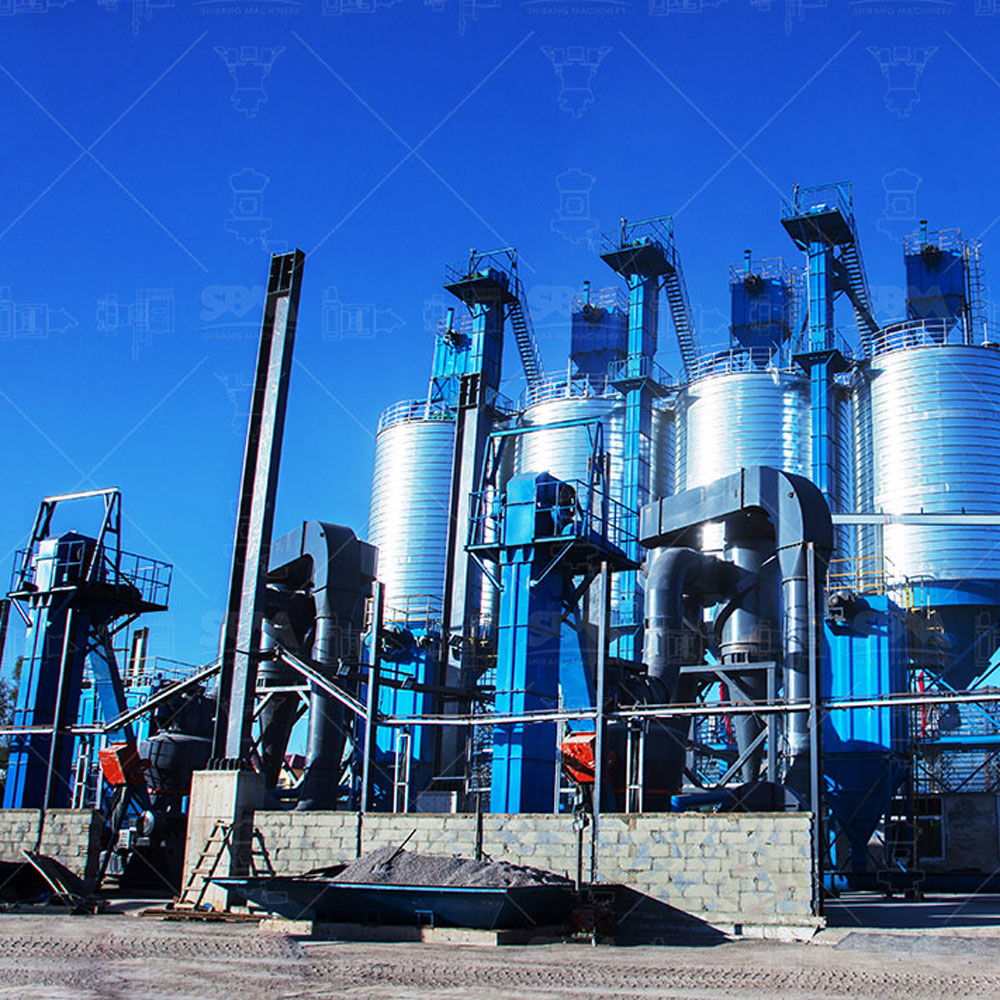
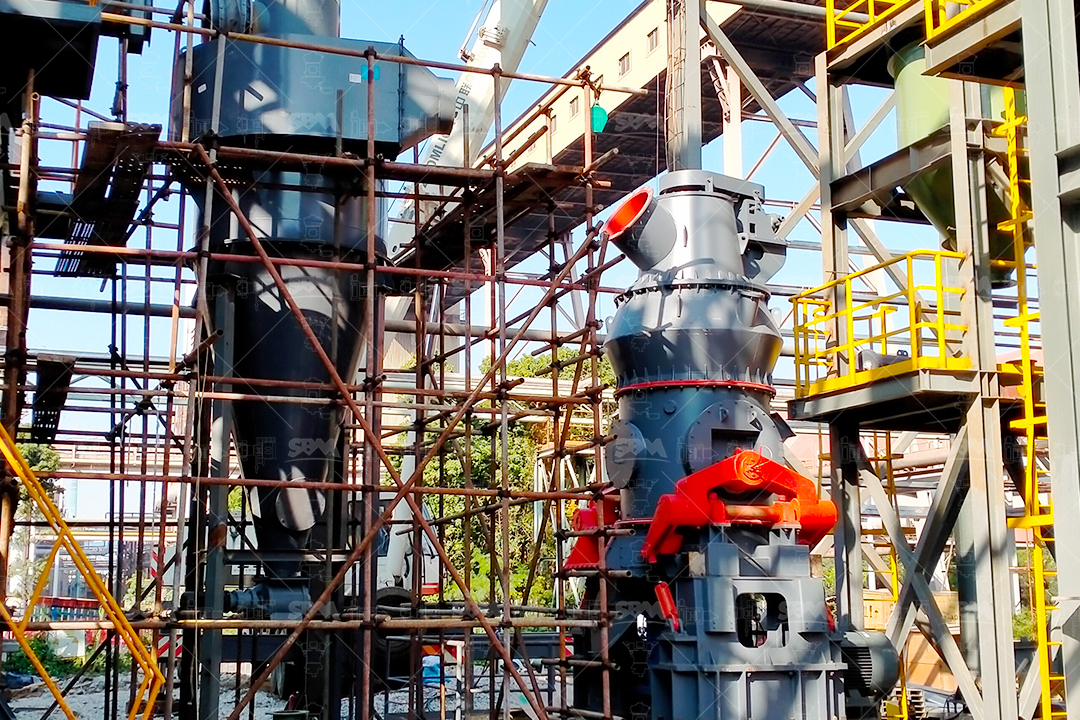
Specialized mills like the SCM Series Ultrafine Grinding Mill and the LUM Ultrafine Vertical Mill are engineered for this precise purpose. These systems integrate grinding, classification, and collection in a closed circuit. Key technological advantages, such as the efficient vertical turbine powder classifier in ultrafine mills, ensure accurate particle size cuts and prevent coarse powder spillover. The unique grinding curve design of roller and lining in vertical mills promotes efficient material bed formation, crucial for stable ultra-fine grinding. Moreover, features like inner oil absorption lubrication systems and automatic PLC control systems ensure continuous, stable operation—vital for maintaining the narrow particle size distribution required for nano-CaCO₃. The ability to reliably produce powder in the range of 325 to 4000 mesh (from fine to nano-scale) allows filler manufacturers to tailor products specifically for the rubber industry's evolving needs.
In application, the processing differences are notable. Rubber compounds with nano-CaCO₃ may require adjusted mixing procedures to ensure optimal dispersion and avoid agglomerate formation that could act as failure initiation points. The payoff, however, is a superior product. For example, in automotive rubber parts like seals, wiper blades, or interior components, nano-CaCO₃ can enhance durability, surface smoothness, and color fidelity. In technical rubber goods such as hoses, belts, and footwear, it improves the balance between stiffness and flexibility, wear resistance, and compression set. Regular CaCO₃ remains the champion for applications where cost reduction is paramount and extreme mechanical properties are not critical, such as in some flooring, general-purpose gaskets, or low-stress rubber profiles.
Ultimately, the difference between nano and regular CaCO₃ in rubber is a difference in philosophy. One is a commodity filler; the other is an engineered performance additive. The bridge between raw mineral and advanced material is built on precision grinding technology. As the rubber industry continues to demand higher performance, lighter weights, and more sustainable solutions (as filler can reduce polymer content), the capability to consistently produce both high-quality regular and nano-CaCO₃ will be a key differentiator for material suppliers and compounders alike.
Frequently Asked Questions (FAQs)
Q1: We tried a "fine" CaCO₃ before but saw minimal improvement in tensile strength. How is nano-CaCO₃ different?
A: The jump from micron-sized "fine" powder to true nano-scale (sub-100nm) creates a qualitative change in filler-rubber interaction. The surface area increase is exponential, leading to vastly more polymer-filler interfaces. For reinforcement to occur, the particle size must be small enough to integrate into the polymer network, which nano-CaCO₃ achieves, while most "fine" grades do not.
Q2: Does using nano-CaCO₃ complicate our mixing process?
A: It can require some optimization. Due to high surface energy, nano-particles tend to agglomerate. Ensuring proper dispersion often necessitates attention to mixing sequence, energy, and the use of compatible coupling agents or dispersants. Starting with a well-dispersed, pre-treated nano-CaCO₃ from a reliable supplier is crucial.
Q3: Can nano-CaCO₃ replace carbon black or silica entirely?
A: In some non-tire, non-black applications, it can come close or serve as a major partial replacement. For tire treads requiring extreme abrasion resistance and hysteresis properties, silica and carbon black are still dominant. However, for many mechanical rubber goods, nano-CaCO₃ offers an excellent balance of reinforcement, processability, and cost, especially where color is important.
Q4: We are concerned about dust and handling with finer powders. Is nano-CaCO₃ harder to manage?
A: Yes, handling considerations are important. Nano-materials have different flow and dusting characteristics. Reputable suppliers provide treated, low-dusting grades in appropriate packaging (e.g., masterbatch pellets, treated powders in big bags). On-site handling systems should be designed for fine powders to ensure worker safety and material consistency.
Q5: Is the production of nano-CaCO₃ consistent? We cannot tolerate batch-to-batch variation in our compound properties.
A: Consistency is the greatest challenge and the true mark of quality. It depends entirely on the grinding and classification technology used. Advanced mills with integrated precision classifiers and automated control systems (like PLC/DCS) are essential. They maintain stable grinding conditions and make real-time adjustments to ensure the output fineness (e.g., D97 value) and particle size distribution remain within a tight, specified range batch after batch.


