

Equipment & investment for small limestone plant?
Published on: October 26, 2023
Establishing a small-scale limestone processing plant requires a strategic balance between initial capital outlay, operational efficiency, and long-term profitability. The core of this venture lies in selecting the right grinding equipment—a decision that directly impacts product quality, energy consumption, maintenance costs, and environmental compliance. For entrepreneurs and project managers, navigating the array of available technologies can be daunting. This article provides a professional analysis of key equipment considerations, drawing on proven industry solutions to address common investment challenges and help build a foundation for a competitive and sustainable operation.
The journey begins with a clear understanding of your project's specific parameters: desired output fineness (measured in mesh), required production capacity (tons per hour), available feed size, and the intended application of the final powder (e.g., desulfurization, construction materials, or high-value fillers). A mismatch between equipment capability and project goals is a primary pitfall for new entrants. For instance, a plant targeting coarse aggregates has vastly different needs than one producing ultrafine ground calcium carbonate (GCC) for plastics. Therefore, a thorough needs assessment is not just recommended; it is essential for prudent investment.
For small to medium-scale operations focusing on limestone powder in the range of 30-400 mesh, the MTW Series European Trapezium Grinding Mill presents a compelling, modernized alternative to traditional Raymond mills. Its design directly tackles operational cost concerns. The patented cone gear whole transmission system enhances mechanical efficiency while reducing noise and space requirements. A significant pain point in grinding is the cost and downtime associated with wearing parts. The MTW mill addresses this with its unique wear-proof, combined-type shovel blade. This design allows for the replacement of only the blade segment, not the entire assembly, during maintenance, drastically reducing spare parts inventory and costs. Furthermore, its arc air duct design minimizes pneumatic resistance, ensuring stable material flow and improved classification efficiency within the mill.
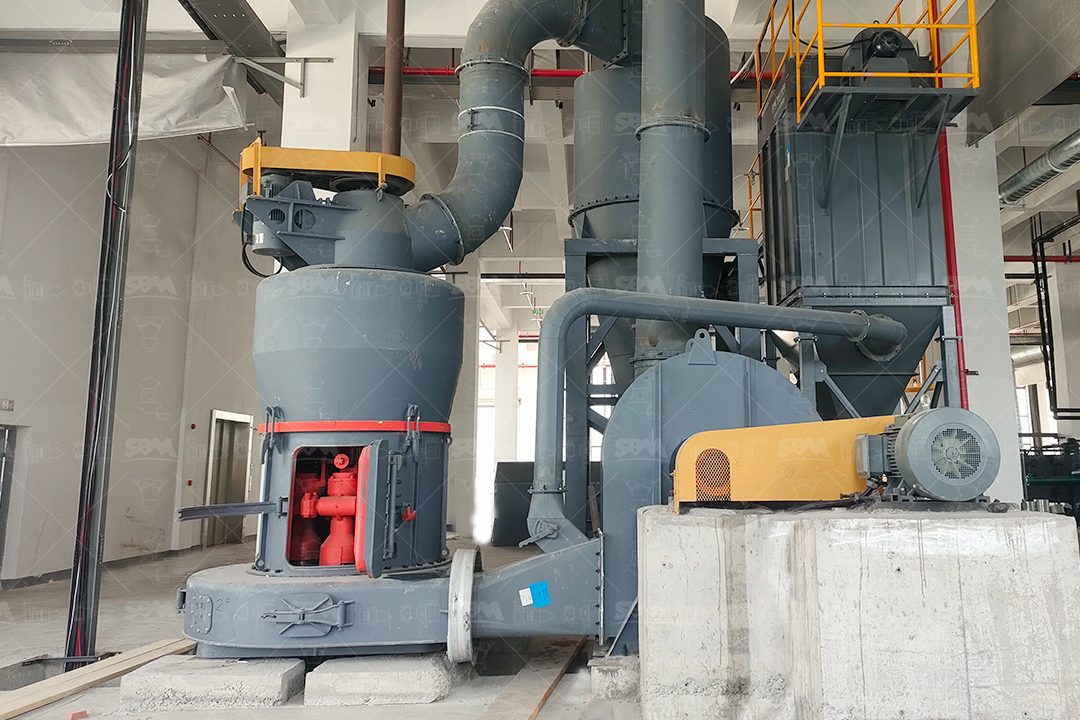
When space is at a premium and operational simplicity is valued, the LM Vertical Roller Mill (VRM) emerges as a highly integrated solution. Its greatest strength lies in its ability to consolidate multiple processes—drying, grinding, classifying, and conveying—into a single, compact unit. This integrated design can reduce the plant's footprint by up to 50% compared to a traditional ball mill system, a critical advantage for small sites. From an operational standpoint, the VRM's grinding principle, where rollers press on a rotating table, is inherently more energy-efficient than the impact and attrition of a ball mill, often leading to 30-40% lower power consumption. The non-contact grinding between roller and table (with a layer of material in between) also translates to less direct wear, extending the service life of critical components. For plant managers wary of complex operations, its expert automatic control system allows for easy local or remote monitoring and control, stabilizing product quality and reducing labor intensity.
However, the market's demand is increasingly shifting towards higher-value, ultrafine products. If your business plan targets niches like high-quality paper coatings, premium plastics, or advanced adhesives where fineness exceeds 400 mesh and reaches 2500 mesh or more, specialized equipment is non-negotiable. Here, SBM's SCM Series Ultrafine Mill and LUM Ultrafine Vertical Mill are engineered for this precise challenge. The SCM mill is renowned for achieving consistent fineness down to D97 ≤ 5µm. Its heavy-duty rotor design and use of special materials for rollers and rings combat the extreme wear associated with ultrafine grinding, turning a common headache into a managed variable. The LUM model takes vertical mill technology into the ultrafine realm. It incorporates advanced multi-rotor powder classifiers, allowing precise, customizable cut points to ensure no coarse particles contaminate the final, high-value product. Both mills feature sophisticated sealing and pulse dust collection systems, making them capable of operating in environmentally sensitive areas without dust spillage—a critical compliance factor.
_1770567473081.jpg)
While the Ball Mill remains a mature technology for certain applications, its higher energy consumption and grinding media wear make it less economically attractive for dedicated, modern limestone powder plants focused on efficiency. However, optimized versions, particularly for wet grinding processes in specific mineral contexts, can still play a role where their characteristics align with the end product requirement.
Ultimately, the investment in a small limestone plant is an investment in a system, not just a machine. Partnering with a provider like SBM Machinery, which offers total solutions from individual units to complete system design, brings invaluable expertise. Their experience serving over 180 countries means they understand the localized challenges of setting up a new operation. The right equipment choice, backed by professional support, transforms the common pain points of high costs, unreliable output, and environmental management from obstacles into managed, optimized aspects of a profitable business.
Frequently Asked Questions (FAQs)
Q1: What is the single biggest operational cost for a small grinding plant, and how can I minimize it?
A1: Energy consumption is typically the largest ongoing cost. Opting for inherently efficient technologies like Vertical Roller Mills or modern European Trapezium Mills, which can offer 30-50% savings over older ball mill systems, is the most effective long-term strategy. Their design reduces the power required per ton of output.
Q2: We are worried about frequent breakdowns and expensive spare parts. How do your mills address equipment durability?
A2: Our equipment designs prioritize reduced wear and easier maintenance. Features like the replaceable shovel blades in the MTW Mill, the non-contact grinding in the LM Vertical Mill, and special alloy rollers in ultrafine mills extend component life significantly. This design philosophy lowers the total cost of ownership by reducing both spare part consumption and unplanned downtime.
Q3: Our project site has limited space. Can we still set up an efficient grinding line?
A3: Absolutely. Vertical Roller Mills are specifically designed for compact layouts, integrating multiple functions into a single footprint. They can reduce the required floor space by up to 50% compared to traditional systems and can even be installed outdoors with proper housing, maximizing your use of available land.
Q4: How do we ensure our plant meets strict environmental regulations regarding dust and noise?
A4: Modern grinding mills are engineered for environmental compliance. Fully sealed systems that operate under negative pressure prevent dust escape. Integrated high-efficiency bag filter or pulse dust collectors capture over 99.9% of particulates. Furthermore, designs featuring whole gear transmissions and optimized sound insulation effectively control noise levels, keeping them within community-friendly limits.
Q5: We aim to produce multiple products (different fineness) for different clients. Is flexible production possible with your equipment?
A5> Yes, product flexibility is a key advantage of modern mills. Equipment like the LUM Ultrafine Vertical Mill and SCM Ultrafine Mill feature advanced, adjustable classifier systems (often with frequency control). This allows operators to quickly change the fineness of the output product—from coarse fillers to ultrafine powders—without stopping the mill, enabling you to serve diverse market segments from a single production line.


