

Chongqing desulfurization gypsum mills?
Published: October 26, 2023
For power plants and industrial facilities in Chongqing and across Southwest China, processing desulfurization gypsum (FGD gypsum) efficiently and sustainably is a critical operational challenge. This by-product of flue gas desulfurization requires specialized milling technology to transform it into a valuable resource for construction materials, cement retarders, or soil amendments. Success hinges on selecting grinding equipment that delivers high throughput, precise fineness control, low energy consumption, and robust environmental performance to handle the material's specific moisture and characteristics. This article explores the advanced milling solutions engineered to address these precise needs, enabling operators to optimize their gypsum valorization processes, reduce waste, and enhance overall plant economics.
The processing of desulfurization gypsum presents distinct challenges. Unlike natural gypsum, FGD gypsum often has higher moisture content and can exhibit variable characteristics depending on the source fuel and desulfurization process. Inefficient milling can lead to high energy costs, inconsistent product quality affecting downstream applications, excessive wear on mechanical parts, and potential dust emission issues. Therefore, the core requirement for a Chongqing desulfurization gypsum mill is a system that integrates efficient drying, precise grinding, and reliable classification within a compact, environmentally sealed footprint.
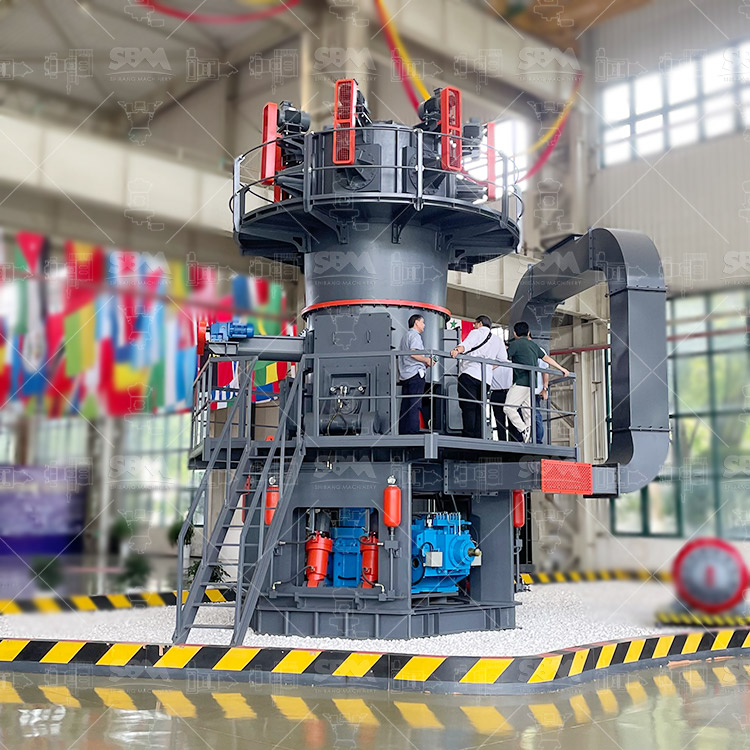
For high-capacity production lines, the Vertical Roller Mill (LM Series) stands out as a premier solution. Its integrated design combines drying, grinding, and separation in a single unit, making it exceptionally suitable for handling gypsum with residual moisture. The material is ground between rollers and a rotating table, a process that is inherently more energy-efficient than traditional ball milling. Key advantages include a 30-40% reduction in energy consumption, a compact layout saving approximately 50% of floor space, and operation under negative pressure to ensure a dust-free environment. The automatic control system allows for stable operation and easy adjustment of key parameters, ensuring a consistent output fineness ideal for wallboard or cement production.
When the application demands superior product fineness and higher value-added utilization—such as in high-strength gypsum powder or filler applications—the Ultrafine Vertical Mill (LUM Series) is the technology of choice. Building upon vertical mill principles, it incorporates advanced grinding roller and German powder separating technology. Its multi-rotor classifier allows for precise customization of final product fineness up to 4000 mesh, ensuring no coarse particles contaminate the final product. This mill is particularly effective for producing high-purity, ultrafine gypsum powders, with intelligent PLC controls maintaining stable grinding pressure and classifier speed for unparalleled consistency.
For operations requiring flexibility and proven reliability, the MTW European Trapezium Grinding Mill offers a robust alternative. Its innovative design features, such as the cone gear whole transmission for higher efficiency and the arc air duct for minimal airflow resistance, contribute to lower operating costs. The curved shovel blade design extends the service life of grinding components, directly reducing maintenance frequency and cost-per-ton for gypsum processing. This mill is an excellent choice for producing fine powders in the 30-400 mesh range with high reliability and lower initial investment complexity.
Ultimately, the optimal choice for a Chongqing desulfurization gypsum mill depends on the target capacity, desired product fineness, and specific plant constraints. A holistic approach, considering the entire system from feeding to packaging, is crucial. Partnering with a provider offering complete grinding system solutions—from equipment supply to process design and technical support—ensures that the installation not only meets today's production goals but is also future-proofed for evolving market demands and environmental regulations.
Frequently Asked Questions (FAQs)
1. What is the biggest challenge when milling desulfurization gypsum, and how do your mills address it?
The primary challenges are managing variable moisture content and achieving consistent fineness while controlling energy costs. Our Vertical Roller Mills integrate drying and grinding, efficiently handling moisture. Advanced classifier technology in our Ultrafine Vertical and MTW Mills ensures precise particle size control, and all designs prioritize energy efficiency through optimized grinding mechanics and intelligent control systems.
2. How does your equipment ensure environmental compliance, particularly regarding dust?
Our mills are designed as fully sealed systems operating under negative pressure. This means air is drawn into the mill, preventing any dust from escaping. Coupled with efficient pulse dust collectors, this design guarantees that emissions are well below national and international environmental standards, which is critical for urban and industrial areas in Chongqing.
3. We experience high wear part costs with our current mill. How do your solutions improve this?
We address wear through material science and design. Our Vertical Roller Mills feature rollers that do not directly contact the grinding plate, significantly reducing wear. The MTW Mill uses a unique combined-type shovel blade where only the tip needs replacement, and its curved design prolongs roller and ring life. Special, durable materials are used for high-wear components across all models.
4. Can your mills adapt to changes in the feedstock quality or required product specification?
Yes. Our mills are equipped with advanced automatic control systems (PLC/DCS) that allow for real-time adjustment of key parameters like grinding pressure, classifier speed, and feed rate. This enables operators to quickly adapt to changes in gypsum characteristics or to switch between different target fineness levels for various end-products without significant downtime.
5. For a new gypsum processing line, what are the advantages of a complete system from a single provider?
A single-provider total solution ensures perfect compatibility between all components—from crusher and feeder to mill, classifier, dust collector, and packing system. This simplifies project management, guarantees optimized process flow, provides a single point for technical support and spare parts, and ultimately leads to higher system reliability, easier operation, and lower lifecycle costs.


