

Sbm: can mills process wet material?
Published: October 26, 2023
The question of whether grinding mills can handle wet or high-moisture materials is a fundamental concern across industries like mining, chemicals, and building materials. The short answer is a definitive yes—with the right equipment. Shanghai SBM Machinery, as a total solution provider for grinding systems, addresses this challenge head-on by offering a diverse portfolio of mills engineered with specific capabilities for moisture management, integrated drying, and stable processing of challenging feedstocks. From our advanced Vertical Roller Mills with built-in drying functions to specialized Wet Ball Mills for mineral dressing, SBM's technology is designed to transform wet material processing from a bottleneck into a seamless, efficient operation.
Processing wet material is not merely a technical checkbox; it's a critical economic and operational factor. Raw materials often contain inherent moisture from mining or natural states, and deliberately adding water (as in slurry-based processes) is essential for certain chemical reactions, dust suppression, or material transport. The core challenge lies in preventing material clogging, ensuring uniform grinding, maintaining energy efficiency, and achieving the target fineness—all while managing the added variable of water content. Attempting to process high-moisture feed in equipment designed solely for dry grinding leads to reduced throughput, increased wear, poor product quality, and potentially costly downtime.
This is where SBM's application expertise and engineered solutions make a tangible difference. Our equipment range is built on decades of R&D and feedback from over 9500 customers worldwide, ensuring our designs solve real-world industrial pain points.
Vertical Roller Mills: The Integrated Drying and Grinding Powerhouse
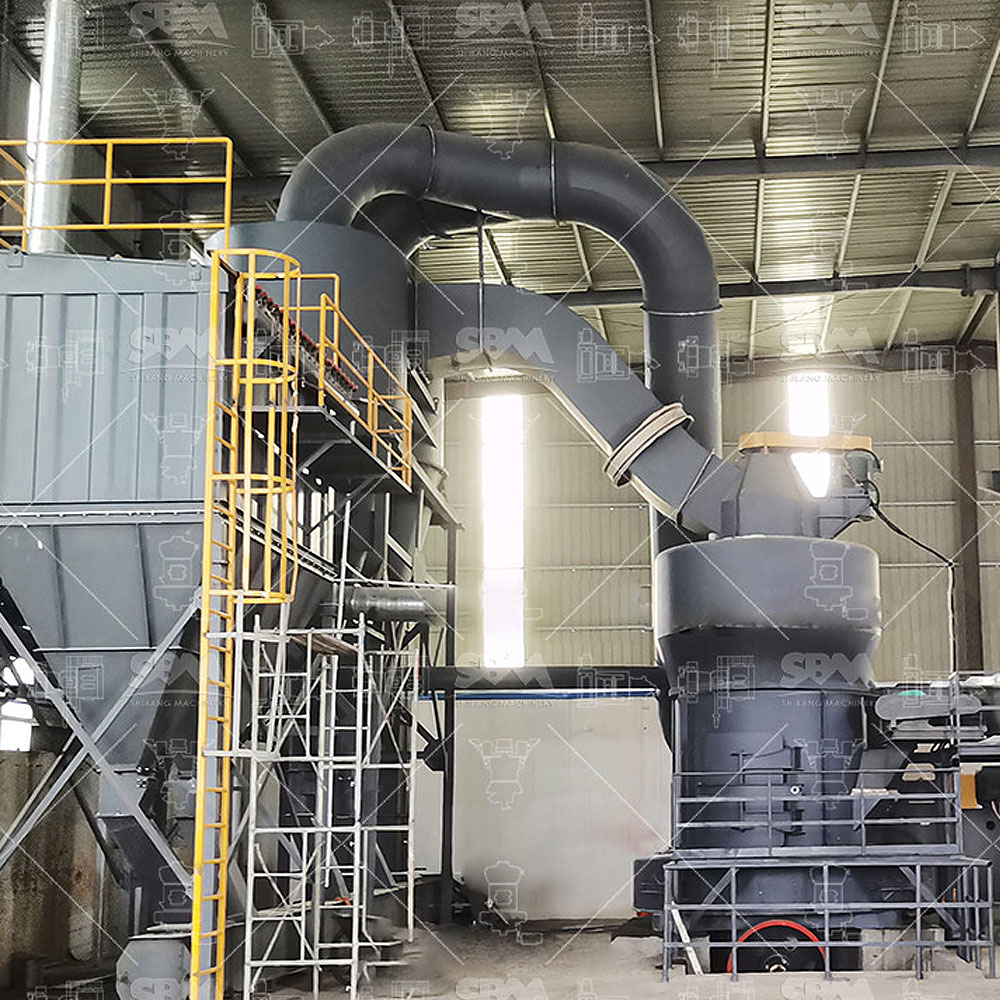
For many applications involving moderately wet materials, the SBM LM Vertical Roller Mill presents an optimal solution. Its core advantage is the integrated drying function. The mill system can introduce hot air directly into the grinding chamber, simultaneously drying and pulverizing the material in a single pass. This eliminates the need for a separate, energy-intensive pre-drying stage, offering significant savings in both capital investment and operating costs.
_1770967326619.jpg)
The design is inherently efficient. Materials are ground between rollers and a rotating table, and the hot gas stream fluidizes and transports the finer particles to the classifier. With a compact layout occupying about 50% of the space of a traditional ball mill system, and energy consumption 30-40% lower, the LM series tackles wet processing with remarkable economy. Its fully sealed, negative-pressure operation also guarantees an environmentally friendly process with no dust spillage, a crucial factor even when handling damp feeds.
Ball Mills: The Proven Workhorse for Wet Grinding
When it comes to slurry processing or industries like mineral dressing where wet grinding is the standard, the SBM Wet Ball Mill is the established technology of choice. Specifically optimized for this duty, it operates by rotating a cylinder containing grinding media (balls) and the material mixed with water. The impact and attrition of the balls in a liquid medium efficiently reduce particle size and promote chemical or physical reactions.
SBM has addressed traditional ball mill pain points like high liner and ball wear, as well as energy consumption, through structural optimization and advanced materials. Our wet ball mills are engineered for durability and consistent performance in abrasive, wet environments, ensuring reliable operation for processes where slurry formation is essential.
Advanced Solutions for Specialized Needs: Ultrafine and European Trapezium Mills
For finer grinding ranges, moisture control remains paramount. The SBM LUM Ultrafine Vertical Mill and SCM Ultrafine Mill, while often associated with dry, superfine powders, can be configured with auxiliary drying systems for materials with low to moderate surface moisture. Their highly efficient classifiers and grinding principles require a free-flowing feed, which can be achieved with coordinated hot air supply, making them versatile for a broader range of material conditions.
Similarly, the MTW European Trapezium Mill (MTW Raymond Mill) incorporates an innovative arc air flue design that ensures smooth, low-resistance airflow. This is critical when handling materials that tend to agglomerate, as it promotes better material conveyance and gas-solid separation. Its inner oil absorption lubrication system and wear-resistant components ensure reliability even when processing challenging materials that may have variable moisture content.
Key Considerations for Selecting the Right Mill for Wet Material
Choosing the correct SBM mill depends on a detailed analysis of your specific material and process goals. Our engineers typically evaluate:
- Initial Moisture Content & Desired Final Moisture: This determines the required drying capacity and whether integrated drying (as in the LM mill) or a separate dryer is needed.
- Material Abrasiveness & Stickiness: Wet materials can be more abrasive or adhesive, influencing the selection of wear-resistant materials and mill internal design.
- Target Fineness & Capacity: From coarse grinding in a ball mill to ultrafine processing in an LUM mill, the end product specification guides the technology choice.
- Process Type: Is it a dry process requiring moisture removal, or a wet process like slurry production? This is the fundamental decision between a drying-grinding combo or a dedicated wet mill.
With over 180 countries served, SBM's strength lies in providing not just a machine, but a total system solution. Our expert control systems, like the PLC/DCS automation in our vertical mills, allow for precise control over grinding pressure, temperature, and classifier speed, ensuring stable and repeatable results even with fluctuations in feed moisture.
In conclusion, the capability to process wet material is not an obstacle but a well-solved engineering challenge within SBM's product ecosystem. By matching the unique properties of your material—be it limestone for desulfurization, slag for micro-powder, or minerals for dressing—with the appropriate mill technology, SBM enables efficient, reliable, and cost-effective transformation of wet feedstocks into high-value powders.
Frequently Asked Questions (FAQs)
Q1: We have a limestone feed with up to 10% moisture. Can we grind it to 325 mesh without a pre-dryer?
A: Yes, very likely. Our LM Vertical Roller Mill with its integrated hot air system is specifically designed for this scenario. It can dry and grind materials with moderate moisture in one step, eliminating the capital and energy cost of a separate dryer.
Q2: For our mineral processing plant, we need a fine slurry. Which mill is best, and how do we manage wear from the abrasive wet material?
A: The SBM Wet Ball Mill is the standard for slurry preparation. We have optimized our designs using special materials for liners and grinding media to significantly extend service life and reduce the operating cost per ton, directly addressing the high-wear pain point in wet, abrasive environments.
Q3: Our material is both sticky and has some moisture, causing severe clogging in our current mill. Can SBM equipment handle this?
A: Absolutely. Our MTW European Trapezium Mill features an unobstructed arc air duct and volute design that minimizes material buildup and ensures smooth airflow. Combined with wear-resistant shovel blades, it is engineered to handle sticky, difficult-to-convey materials effectively.
Q4: We require ultrafine powder (D97 ≤ 10μm) but our raw material is slightly damp. Is an ultrafine mill still an option?
A: Yes. Both our SCM Ultrafine Mill and LUM Ultrafine Vertical Mill can be supplied with coordinated hot air systems to handle surface moisture. The key is proper system engineering to ensure the feed is dried sufficiently to become free-flowing before entering the precise grinding and classification zone.
Q5: How does processing wet material impact energy consumption and environmental controls?
A: Integrated systems like our LM Vertical Mill are actually more energy-efficient overall, as combining drying and grinding is less energy-intensive than two separate processes. Furthermore, all our major mills operate under negative pressure in a fully sealed system, ensuring no dust or powder escape—meeting strict environmental standards—whether processing dry or wet feed.


