

Sbm mills for large-scale mining, not labs
Published: October 26, 2023
In the demanding world of large-scale mining and mineral processing, laboratory-scale solutions simply do not scale. The challenges of throughput, energy consumption, operational stability, and total cost of ownership require industrial-strength grinding technology engineered for continuous, high-capacity production. SBM Machinery, with over 180 countries served, provides precisely that: a comprehensive portfolio of advanced grinding mills designed from the ground up for the rigors of commercial-scale operations. From the high-volume efficiency of the MTW European Trapezium Mill and LM Vertical Roller Mill to the ultra-fine capabilities of the SCM and LUM series, SBM's equipment integrates decades of R&D and field experience to deliver reliable, cost-effective, and environmentally compliant solutions that power the global mining and minerals industry.
The transition from pilot-scale testing to full-scale production is a critical juncture where equipment limitations become glaringly apparent. SBM's philosophy centers on building mills that not only meet but exceed the performance parameters required for profitable, large-scale operations. This is achieved through a relentless focus on structural integrity, intelligent system design, and innovative features that directly address the core pain points of mining operators: maximizing yield, minimizing downtime, reducing energy overheads, and ensuring environmental stewardship.
For high-volume processing of materials like limestone for desulfurization, slag, or non-metallic minerals, the MTW Series European Trapezium Grinding Mill represents a significant evolution from traditional Raymond mill designs. Its development incorporated feedback from thousands of industrial users, resulting in features like the Cone Gear Whole Transmission. This integrated drive system eliminates complex external gearboxes, delivering higher mechanical efficiency, a more compact footprint, and significantly reduced maintenance intervention. Furthermore, the patented Arc Air Duct design ensures smooth, low-resistance airflow, minimizing energy loss in the powder conveying system and protecting critical surfaces from wear. These are not lab-bench innovations; they are field-proven enhancements that contribute directly to sustained, low-cost tonnage output.
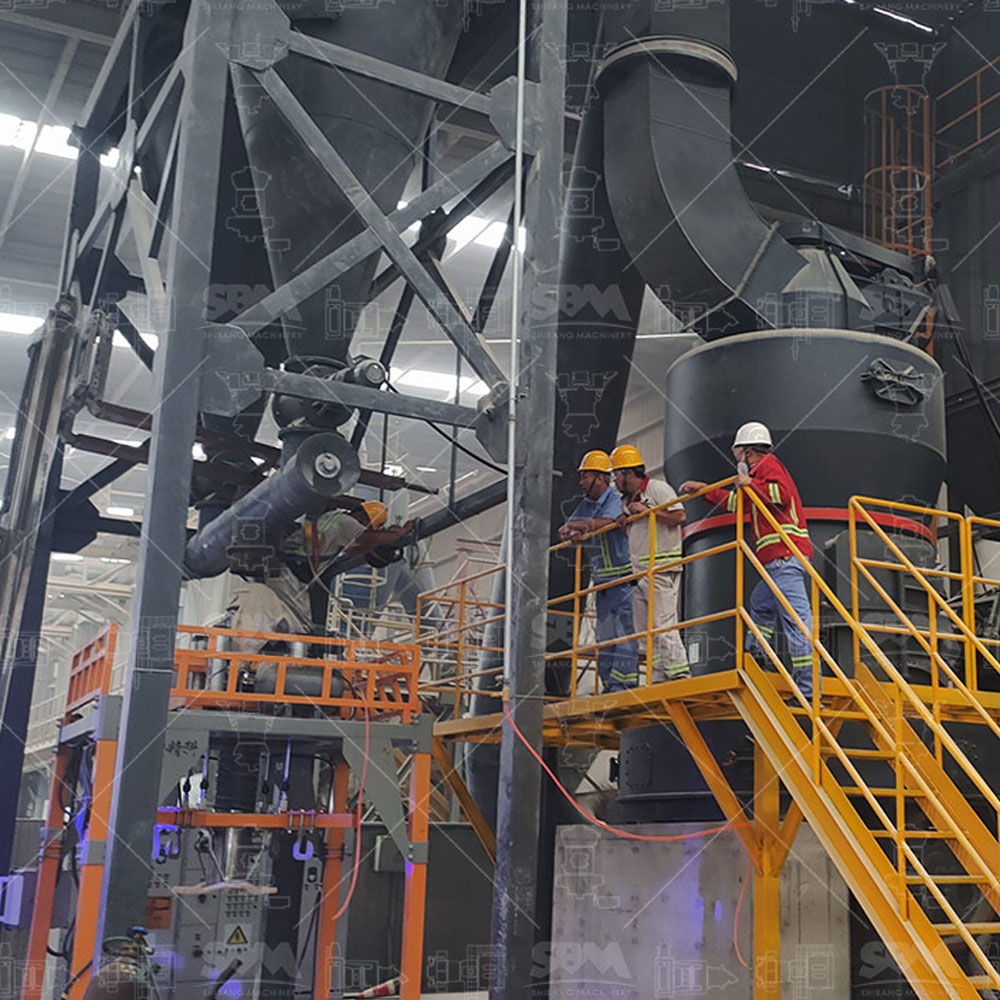
When the priority is ultimate processing efficiency within a minimized footprint, the LM Vertical Roller Mill stands out. Its integrated design combines crushing, grinding, drying, classification, and conveying into a single, coherent system. This consolidation can reduce the plant's floor space by up to 50% compared to traditional ball mill circuits, a decisive advantage in large-scale greenfield or expansion projects. More importantly, its grinding principle—where rollers compress material on a rotating table—translates to 30-40% lower energy consumption. In an industry where power costs are a primary operational expense, this saving is transformative. The mill's operation under negative pressure and its fully sealed structure ensure it meets stringent environmental standards without secondary containment, addressing both operational cost and regulatory compliance headaches.
The demand for ultra-fine powders in advanced material sectors, such as new energy or high-value non-metallics, requires precision that general-purpose mills cannot provide. SBM's SCM Ultrafine Mill and LUM Ultrafine Vertical Mill are engineered for this niche. Capable of achieving fineness up to 4000 mesh, these mills incorporate advanced classifier technology for precise particle size distribution control. The LUM series, for instance, utilizes a multi-rotor powder classifier to eliminate low-grade, off-spec material, ensuring consistently high product quality. Crucially, they maintain this precision at a commercial scale, with capacities ranging from 10 to 70 TPH. Features like heavy-duty rotors, special wear-resistant materials for rollers and rings, and intelligent automatic control systems ensure that the pursuit of fine powder does not come at the expense of mechanical reliability or operational simplicity.
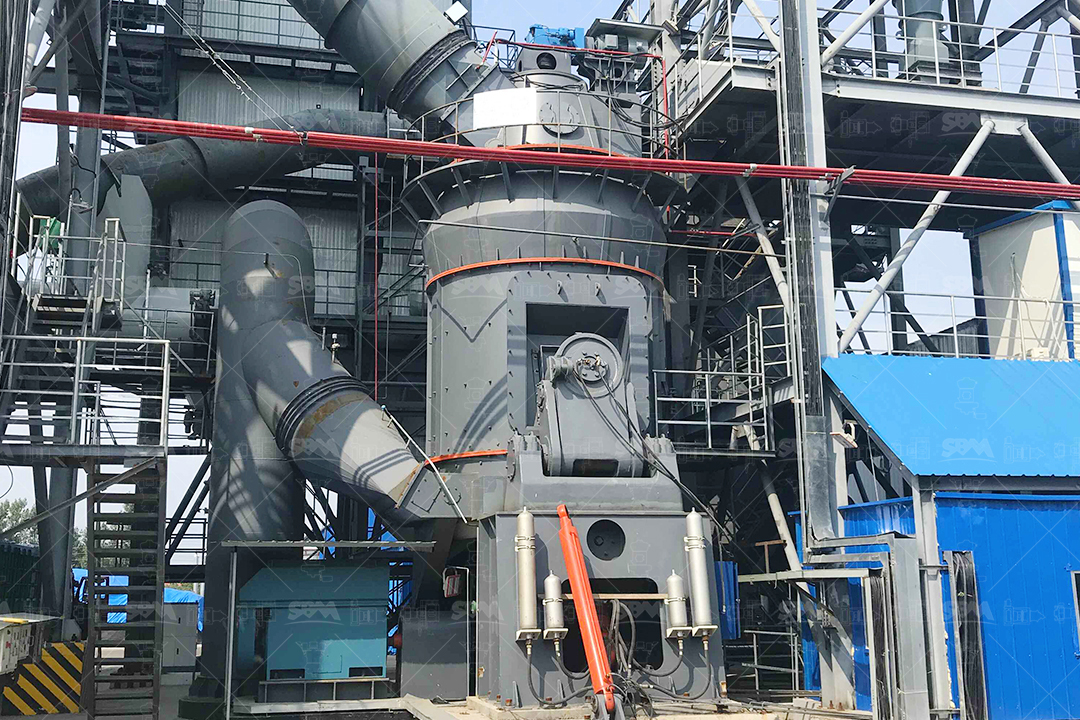
Even for established technology like the ball mill, SBM's approach is tailored for large-scale durability. Recognizing chronic issues with grinding media wear and high energy use, SBM's optimized ball mills employ improved structural designs and advanced materials to extend the service life of liners and grinding media, directly reducing the cost and frequency of spare parts replacement. Offered in both dry and wet process configurations, they provide robust, versatile solutions for applications where their specific grinding action is preferred, ensuring reliability in the most continuous of mining operations.
Ultimately, selecting grinding equipment for a large-scale mine or processing plant is a strategic decision with decades-long implications. It requires a partner whose technology is born from industrial application, not just laboratory experimentation. SBM Machinery's global footprint and diverse portfolio, from the high-capacity MTW and LM mills to the precision-focused SCM and LUM series, provide a total solution. By addressing the fundamental needs for energy efficiency, system reliability, low operating costs, and environmental compliance, SBM mills are engineered not for the lab bench, but for the relentless, profit-driven reality of the world's mines.
Frequently Asked Questions (FAQs)
Q1: Our current grinding circuit has unacceptably high energy costs. Can SBM mills genuinely make a significant difference?
A: Absolutely. Mills like the LM Vertical Roller Mill are designed specifically to address this. Its grinding mechanism can reduce energy consumption by 30-40% compared to traditional ball mill systems, a saving that directly and substantially lowers your operating expense per ton.
Q2: We experience frequent downtime for wear part replacement in our grinding operations. How do SBM mills improve this?
A: SBM mills incorporate design features and materials to maximize component life. For example, the MTW Mill's combined-type shovel blade allows for partial replacement, and its curved design prolongs roller and ring life. The LUM and SCM mills use special alloys for rollers/rings, offering several times the durability of standard materials.
Q3: We need to produce very fine powders but are concerned about consistent quality and yield at scale. Is this possible?
A: Yes. The SCM and LUM Ultrafine Mills are built for commercial-scale precision. With advanced, frequency-controlled turbine classifiers and multi-rotor systems, they ensure accurate particle size cuts (down to D97≤5μm) and high product uniformity at throughputs up to 70 TPH, eliminating low-grade material from the final product.
Q4: Environmental compliance is a major concern for our new plant. How do SBM systems handle dust and noise?
A: Environmental protection is integral to SBM's designs. Mills operate under fully sealed, negative-pressure systems, preventing dust spillage. Efficient pulse dust collectors exceed international standards. Furthermore, optimized sound insulation and mill designs with low vibration significantly reduce noise pollution, facilitating compliance.
Q5: We are planning a large, integrated processing line. Does SBM offer just equipment or support for the entire system?
A: SBM operates as a total solution provider. We offer expertise across the entire mineral processing workflow, from individual mill units to complete, optimized grinding systems. Our engineers can assist with layout planning (our compact designs can save ~50% space) and integrate automated control systems for seamless operation.


