

Mill configurations for 20 tpd, 300-500 & 1000-2000 mesh
Published: October 26, 2023
Selecting the optimal grinding mill configuration for a target production rate of 20 tons per day (tpd) at specific fineness ranges—300-500 mesh and the ultra-fine 1000-2000 mesh—requires a nuanced understanding of equipment capabilities, energy efficiency, and total cost of ownership. For operators, the core challenge lies in balancing throughput, precise particle size control, and long-term operational stability without compromising on environmental compliance. Based on SBM Machinery's extensive portfolio and global application experience, successful configurations typically integrate the MTW European Trapezium Mill or LM Vertical Roller Mill for the coarser range, while the SCM Ultrafine Mill or LUM Ultrafine Vertical Mill are engineered for the most demanding ultra-fine applications. This article explores tailored solutions, addressing common client pain points such as high wear part costs, inconsistent fineness, and excessive energy consumption, to guide selection for efficient 20 tpd operations.
For production targeting 20 tpd in the 300-500 mesh range, two primary workhorses from SBM's lineup come to the fore: the MTW European Trapezium Mill and the LM Vertical Roller Mill. The 20 tpd requirement falls comfortably within the capacity range of both mills, allowing for flexible design with potential for future expansion.
The MTW Series Mill, an evolution of the classic Raymond mill design, is particularly adept in this fineness bracket. Its strengths for a 20 tpd operation include robust construction and innovative features that directly tackle operational headaches. The patented combined-type shovel blade is a key differentiator; only the blade itself needs replacement during maintenance, drastically reducing downtime and spare parts inventory costs compared to traditional designs where entire assemblies must be swapped. Furthermore, its Cone Gear Whole Transmission system enhances mechanical efficiency, translating to lower power consumption for the same output—a critical factor in continuous 20 tpd runs. The arc air duct design ensures smooth material flow and classification within the mill, contributing to consistent product quality.
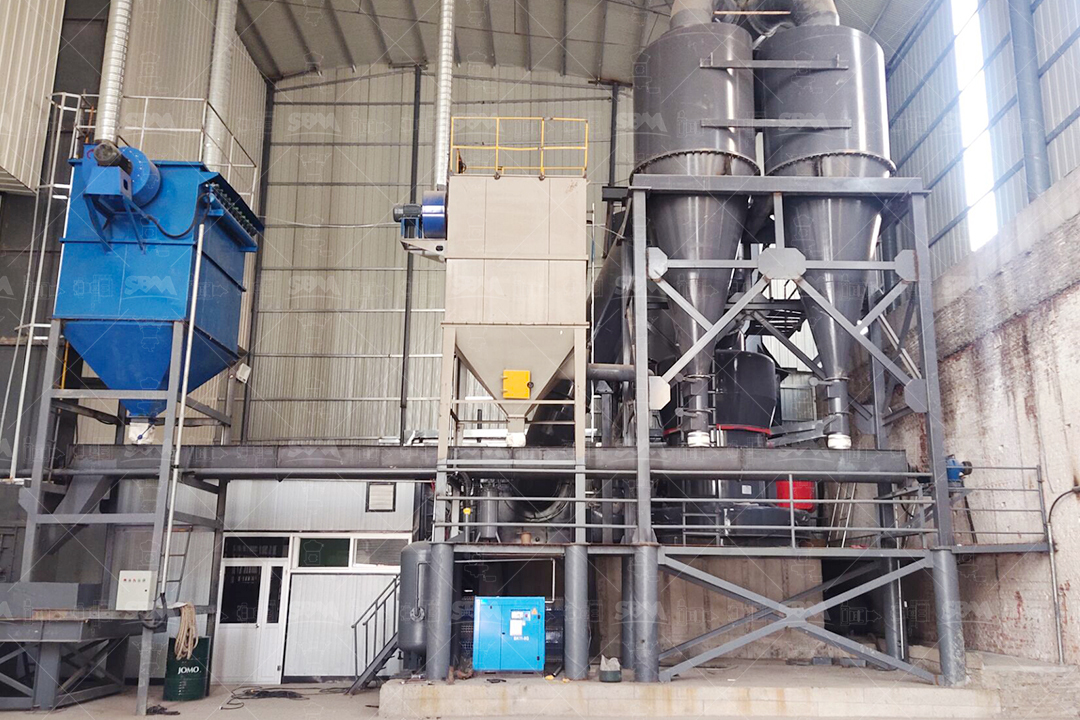
Alternatively, the LM Vertical Roller Mill presents a compelling case, especially when space constraints or energy efficiency are paramount. Its integrated design—combining drying, grinding, classification, and conveying into a single footprint—can reduce floor space by up to 50% compared to ball mill systems. For a 20 tpd line, this means a more compact plant layout. Its grinding principle, where rollers press on a rotating table, is inherently more energy-efficient, often reducing specific energy consumption by 30-40% versus traditional ball milling for the same fineness. The automatic control system allows for precise regulation of grinding pressure and classifier speed, ensuring the 300-500 mesh target is consistently met with minimal manual intervention, enhancing overall process stability for round-the-clock production.
When the specification shifts to the ultra-fine realm of 1000-2000 mesh, the challenges multiply. Achieving such fineness at a meaningful 20 tpd scale demands specialized technology focused on precise classification, minimal vibration, and handling extremely fine powders without loss. Here, SBM's SCM Ultrafine Mill and LUM Ultrafine Vertical Mill are the specialized tools of choice.
The SCM Ultrafine Mill is engineered for high-output, fine-powder production. Its design incorporates a high-efficiency vertical turbine powder classifier, which is critical for achieving sharp particle size cuts at 1000-2000 mesh. This prevents coarse particle spillover, ensuring product uniformity. For a 20 tpd operation, its high efficiency relative to jet mills (offering more than double the capacity at roughly 30% lower energy consumption) makes it a cost-effective solution over the long term. The heavy rotor design and use of special materials for rollers and rings extend service life significantly, addressing the common pain point of rapid wear in ultra-fine grinding environments where abrasion can be severe.
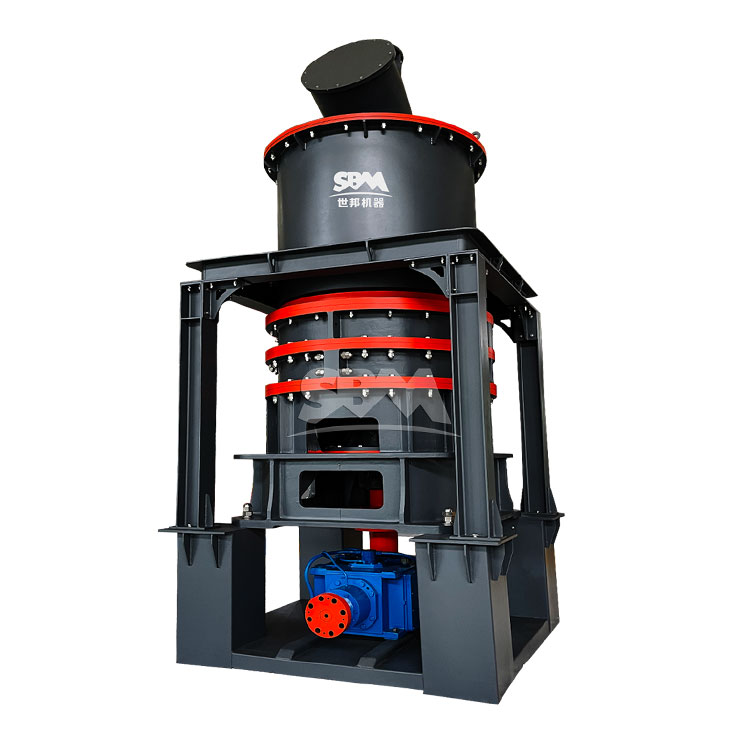
For the highest tier of ultra-fine production with superior stability, the LUM Ultrafine Vertical Mill represents the pinnacle of integration. It combines vertical grinding efficiency with advanced German powder separating technology. Its unique grinding curve design for the roller and lining plate promotes stable material bed formation, which is essential for efficient ultra-fine pulverization at 20 tpd rates. The multi-rotor classifier allows fine-tuning of the finished product across the 1000-2000 mesh spectrum. Perhaps its most significant advantage for operators is the PLC/DCS automatic control system, which meticulously controls grinding pressure and classifier speed. This intelligence guarantees not only the target fineness but also stable, uninterrupted operation—minimizing yield fluctuations and protecting product quality. The fully sealed, negative-pressure operation system comprehensively contains dust, a non-negotiable requirement when handling such fine powders.
While ball mills remain a mature technology for certain applications, their use for a dedicated 20 tpd line at 300-500 mesh, and especially at 1000-2000 mesh, is often less optimal compared to the vertical and trapezium mills discussed. Challenges with higher energy consumption and media wear can elevate operational costs. However, for specific materials or in a hybrid system role, optimized ball mills from SBM, featuring improved liners and grinding media, can be considered as part of a broader circuit.
In conclusion, configuring a mill for 20 tpd output is not a one-size-fits-all endeavor. The choice hinges decisively on the target fineness. For 300-500 mesh, the MTW or LM mills offer reliable, efficient, and cost-conscious solutions. For the rigorous demands of 1000-2000 mesh production, the SCM or LUM series provide the necessary technological edge in classification, efficiency, and process control. Partnering with an experienced provider like SBM Machinery ensures access to this full spectrum of technology, along with the engineering support to tailor the system to your specific mineral characteristics and plant objectives, ultimately delivering a configuration that prioritizes uptime, product quality, and low total operating cost.
Frequently Asked Questions (FAQs)
Q1: We need consistent 1000+ mesh powder, but our current mill produces too many coarse particles. What's the main technical feature that prevents this?
A: The key is advanced classification technology. Our SCM and LUM mills for this range employ high-precision, multi-rotor or vertical turbine classifiers that provide extremely sharp particle size cuts. This ensures coarse powder is efficiently rejected and returned for further grinding, preventing spillover into the final product and guaranteeing consistent ultra-fine output.
Q2: Wear part replacement is a major cost and cause of downtime in our grinding operation. How are your mills designed to mitigate this?
A: We address this through innovative design and material science. The MTW mill's combined-type shovel blade allows only the blade tip to be replaced, not the entire arm. For vertical and ultra-fine mills, rollers and tables use specially formulated, durable materials, and their non-contact grinding principles (in vertical mills) reduce direct abrasion, extending service life by multiples compared to conventional components.
Q3: Is a 20 tpd, 2000 mesh line feasible, or will it be unreliable and unstable?
A: It is absolutely feasible with the correct equipment. Stability is achieved through integrated design and intelligent control. The LUM Ultrafine Vertical Mill, for example, uses a PLC system to automatically maintain optimal grinding pressure and classifier speed. This, combined with its stable material bed grinding principle, ensures continuous, vibration-free operation at these high fineness levels, making 20 tpd a reliable production target.
Q4: Our plant space is limited. Can a system for 20 tpd and dual fineness ranges (e.g., 400 mesh and 1500 mesh) be compact?
A> Yes. Vertical mill solutions like the LM and LUM series are inherently space-saving due to their integrated design. They combine multiple functions (crushing, drying, grinding, separation) into a single, vertical structure, occupying up to 50% less space than traditional horizontal ball mill systems. This allows for a compact footprint even when planning for flexible or multi-product production.
Q5: How do you ensure the system meets environmental standards, especially concerning dust from such fine powders?
A> Environmental protection is core to our mill designs. All systems, especially for ultra-fine grinding, operate under fully sealed, negative pressure. This means air is drawn into the mill, preventing any dust from escaping. They are equipped with high-efficiency pulse dust collectors (often in a two-stage configuration) that capture over 99.9% of particulates, ensuring emissions are not only compliant but significantly cleaner than international standards require.


