

Mission of superfine mills in powder processing
Published on: October 26, 2023
In the evolving landscape of industrial powder processing, the mission of advanced grinding mills transcends mere size reduction. It is a commitment to delivering precision, efficiency, and sustainability across a spectrum of applications—from environmental desulfurization and non-metallic mineral refinement to the production of new energy materials. As a total solution provider, our mission is anchored in developing and supplying grinding systems that address the core challenges of modern industry: escalating energy costs, stringent environmental regulations, the demand for higher fineness and throughput, and the relentless pursuit of lower total operational expenditure. Through continuous innovation in mill design—from European Trapezium Mills and Vertical Roller Mills to cutting-edge Ultrafine and Ball Mills—we empower clients worldwide to transform raw materials into high-value powders, optimizing their entire mineral processing workflow for competitiveness in a global market.
The journey of powder processing begins with understanding the material and the desired end product. Each application, whether it's preparing limestone for flue gas desulfurization, producing heavy calcium carbonate for plastics, or grinding petroleum coke for fuel, presents unique physical and chemical demands. A one-size-fits-all approach is ineffective. This is where a diversified portfolio of grinding technologies becomes critical. For instance, the need for high-capacity, efficient grinding of materials up to 400 mesh often finds its answer in the MTW Series European Trapezium Mill. Its design genesis is instructive: born from the analysis of traditional mills and enriched by feedback from thousands of global users, it embodies a mission focused on evolutionary improvement. Features like the cone gear whole transmission system are not mere technical specs; they are direct responses to the client's pain points of mechanical complexity and energy loss. By integrating the transmission, the mill achieves higher efficiency while saving valuable plant space and reducing foundational investment costs—a tangible solution to the common challenge of high capital expenditure.
_1772695426185.jpg)
However, the mission intensifies when confronting the dual pressures of energy consumption and environmental footprint. Here, vertical roller mill technology takes center stage. The LM Vertical Roller Mill was developed precisely to tackle the historical issues of "low output and high energy consumption" prevalent in traditional systems. Its mission is systemic optimization. By integrating drying, grinding, and classification into a single, compact unit, it dramatically reduces the physical footprint—often by 50% compared to ball mill circuits—and lowers the overall plant infrastructure cost. But the more profound impact is operational. The principle of material bed grinding, where rollers compress material on a rotating table, is inherently more efficient than the impact and attrition of tumbling balls. This translates to energy savings of 30-40%, a direct counter to one of the most persistent operational pain points: volatile and rising power costs. Furthermore, its fully sealed, negative-pressure operation system mission is clear: to contain dust completely, ensuring a clean work environment and compliance with increasingly strict emission standards without the need for excessive auxiliary filtration.
The frontier of powder processing, however, is defined by ultrafine and nano-scale grinding. As industries like plastics, coatings, and advanced ceramics demand powders in the 2500 to 4000 mesh range, general-purpose mills reach their limits. The mission of our ultrafine grinding solutions, like the SCM Ultrafine Mill and LUM Ultrafine Vertical Mill, is to push these boundaries with precision and reliability. The challenge is not just achieving fineness but doing so with stable output, controllable particle size distribution, and acceptable energy economics. The SCM series addresses this with an efficient vertical turbine classifier that ensures sharp particle cuts and prevents coarse powder spillover, guaranteeing product quality. Its high-output, low-energy-consumption design claims more than double the capacity of some jet mills with 30% less energy—addressing the critical trade-off between fineness and production cost.
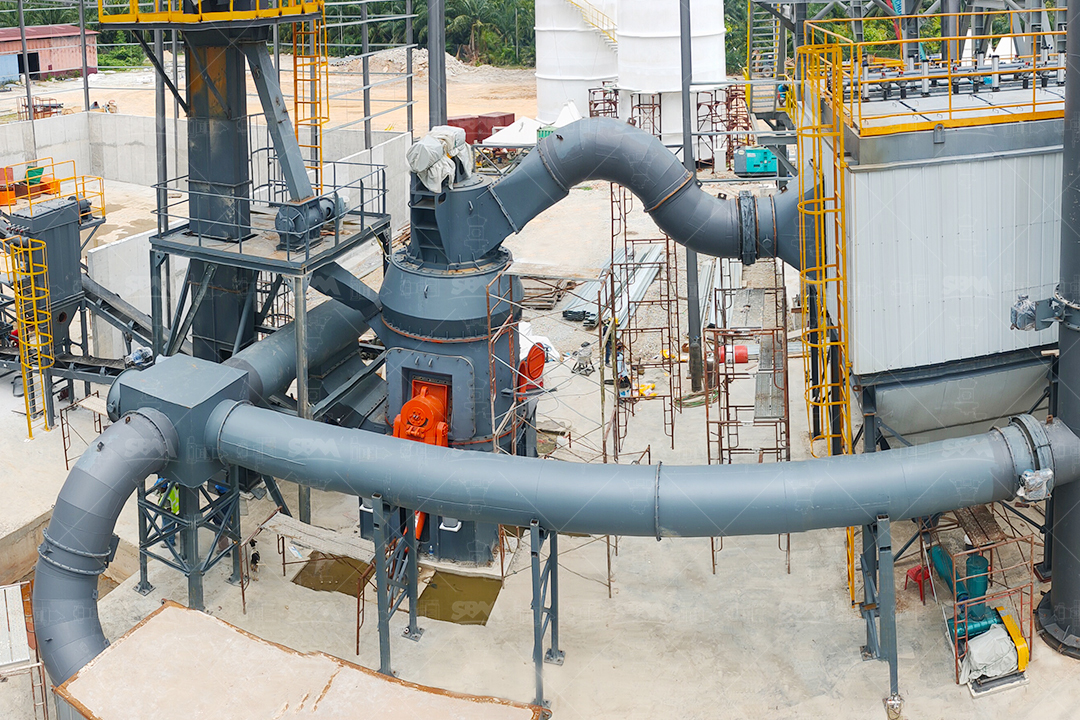
The LUM Ultrafine Vertical Mill takes this further by integrating advanced German powder-separating technology. Its multi-rotor classifier allows for the precise, customizable tuning of finished product fineness, ensuring no low-grade material contaminates the final product. This level of control is vital for high-value industries where product consistency dictates market price and application performance. Moreover, the intelligent PLC/DCS control system automates critical parameters—grinding pressure, disc speed, classifier speed—transforming the mill from a mere machine into a stable, predictable process node. This automation mission directly tackles the pain points of operational complexity, high labor costs, and product variability due to manual intervention.
Even mature technologies like the Ball Mill are subject to this mission-driven evolution. While renowned for reliability, traditional ball mills face criticism for media wear and energy intensity. Our mission here is one of optimization and adaptation. Through structural refinements and the use of more durable materials, we have extended the service life of wear parts, directly reducing the cost and frequency of maintenance shutdowns. Furthermore, offering specialized variants like dry ball mills for standard powders and wet ball mills for mineral dressing demonstrates a commitment to providing tailored solutions rather than generic equipment. This adaptability ensures that even the most established grinding method continues to serve its purpose efficiently within modern, cost-sensitive, and application-specific production lines.
Ultimately, the mission of superfine mills in today's processing industry is holistic. It is not confined to the grinding chamber but encompasses the entire value chain—from initial concept and system design to installation, operation, and ongoing support. With equipment serving over 180 countries, the mission is validated by global trust. It is a commitment to being more than a manufacturer; it is to act as a partner that provides a total solution, enabling clients to navigate the complexities of powder processing with technology that is advanced, reliable, and conscientiously engineered to turn industrial challenges into sustainable competitive advantages.
Frequently Asked Questions (FAQs)
- How do I choose between a Vertical Roller Mill and a traditional Ball Mill for my new project?
The choice depends on material properties, required fineness, capacity, and overall operational costs (OPEX). Vertical Roller Mills (like our LM series) generally offer 30-40% lower energy consumption, integrated drying for moist materials, and a smaller footprint. They are excellent for medium to fine grinding (30-400 mesh). Ball Mills, while potentially higher in energy use, offer exceptional reliability, simplicity, and are well-suited for coarser grinds or wet grinding applications. A detailed analysis of your specific material and production goals is recommended for the optimal selection. - We struggle with high maintenance costs and downtime due to rapid wear of grinding parts. What solutions are available?
This is a common pain point. Our mills incorporate several design features to combat wear. The MTW Mill uses a combined-type shovel blade where only the blade tip needs replacement, and its curved design prolongs roller and ring life. The LUM Ultrafine Vertical Mill uses specially hardened materials for rollers and tables. The key is selecting a mill whose wear-part design and material science are matched to your material's abrasiveness, significantly reducing part replacement frequency and total operating cost. - Our industry requires very fine powders (over 2500 mesh). Can your equipment achieve this consistently without frequent blockages or unstable output?
Yes, achieving and maintaining ultra-fine fineness consistently is the core mission of our SCM and LUM ultrafine mills. They employ high-efficiency, precision turbo classifiers (like the multi-rotor system in the LUM) that provide accurate particle size cuts and prevent coarse powder spillover. Stable material bed formation in the LUM mill and balanced rotor design in the SCM mill ensure smooth operation without vibration or blockage, enabling reliable production of powders up to 4000 mesh. - Environmental compliance and dust control are major concerns for our plant. How are your mills designed to meet these challenges?
Our mills are engineered with environmental protection as a core design parameter. The entire grinding system operates under negative pressure, meaning air is drawn into the mill, preventing any dust from escaping at feed or discharge points. Both the LM Vertical Roller Mill and LUM Ultrafine Vertical Mill feature fully sealed structures. They are often equipped with high-efficiency pulse dust collectors, ensuring that the exhaust air meets stringent national and international emission standards, creating a clean and safe working environment. - We need to modernize our process with better automation to reduce labor and improve consistency. Do your mills offer advanced control systems?
Absolutely. Modern process control is integral to our mill designs. Models like the LM and LUM series come equipped with expert automatic control systems (PLC/DCS). These systems allow for remote monitoring and control, automatic adjustment of key parameters (grinding pressure, classifier speed), and stable operation with minimal manual intervention. This not only reduces labor costs but also ensures consistent product quality by eliminating human error and responding in real-time to process variations.


