

Advantages of new micro-pulverizers
Published: October 26, 2023
The evolution of grinding technology has ushered in a new era of efficiency, precision, and sustainability for industries reliant on fine and ultra-fine powders. Modern micro-pulverizers, moving beyond the limitations of traditional milling systems, offer transformative advantages that directly address long-standing operational challenges. These next-generation machines integrate advanced engineering with intelligent control, delivering superior particle size distribution, significantly reduced energy consumption, and enhanced environmental compliance. For sectors ranging from non-metallic minerals and chemicals to new energy materials and construction, the adoption of these sophisticated pulverizers translates into tangible gains in productivity, product quality, and total cost of ownership, solidifying their role as the cornerstone of competitive and future-ready processing plants.
The shift from conventional ball mills or basic Raymond mills to advanced systems like the MTW Series European Trapezium Grinding Mill or the LUM Ultrafine Vertical Mill represents a fundamental upgrade in processing philosophy. A primary advantage lies in dramatically improved energy efficiency. Traditional systems, often plagued by high friction and inefficient transmission, consume excessive power. In contrast, modern designs incorporate holistic solutions. The MTW mill's Cone Gear Whole Transmission ensures minimal energy loss during power transfer, while its optimized arc air duct design maintains efficient material flow without wasteful turbulence. More strikingly, vertical roller mills and ultrafine mills leverage a bed-grinding principle where rollers press directly onto a material bed on a rotating table, achieving comminution with far less specific energy—often 30% to 40% lower than equivalent ball-milling systems. This direct reduction in operational expense is a compelling return on investment.
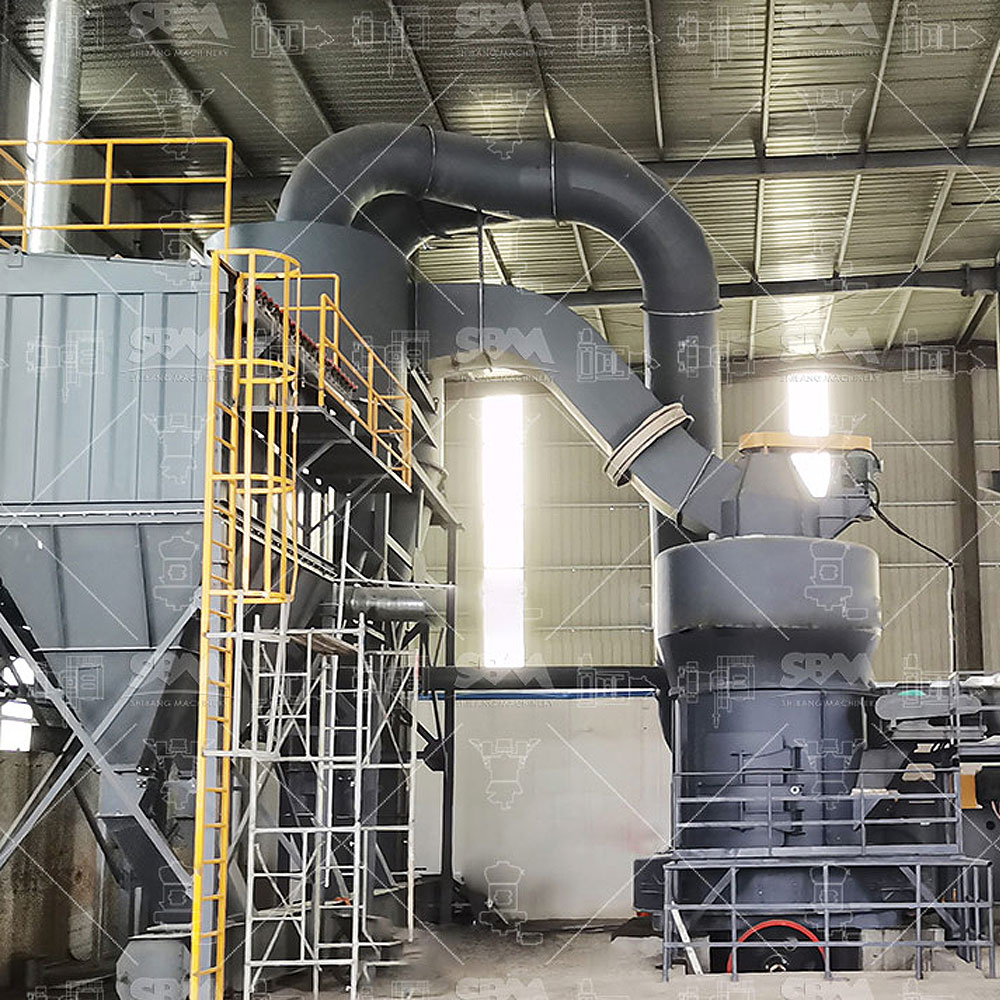
Beyond energy savings, the new generation of micro-pulverizers excels in producing consistent, high-fineness powders. This is critical for applications in plastics masterbatch, high-grade coatings, and advanced composites where particle uniformity dictates final product performance. Equipment like the SCM Ultrafine Mill and LUM Ultrafine Vertical Mill incorporate advanced, multi-rotor or turbine powder classifiers. These systems allow for precise, real-time control over particle cut size, enabling operators to tailor fineness from 400 mesh up to an exceptional 2500 mesh (D97 ≤5µm) in a single pass. This eliminates the need for secondary classification steps and ensures no spillover of coarse particles, guaranteeing batch-to-batch consistency that was difficult to achieve with older technology.
Operational reliability and reduced maintenance burdens form another cornerstone of their advantage. A significant pain point with older mills was the rapid wear of grinding media and components, leading to frequent downtime and high spare parts costs. Modern designs tackle this head-on. Features like the unique wear-proof, combined-type shovel blade in the MTW mill allow for the replacement of only the blade segment, not the entire assembly. Similarly, vertical roller mills are engineered so that grinding rollers do not directly contact the grinding plate, and both are fabricated from special, long-lasting alloys. This design philosophy extends component life by several multiples, drastically cutting maintenance frequency and inventory costs for wear parts.
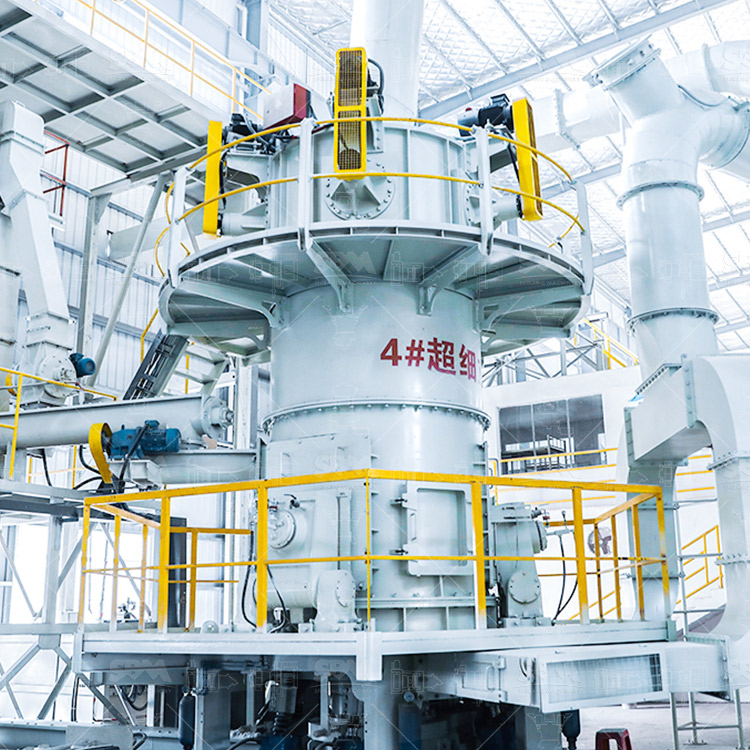
The integration of intelligent automation is a game-changer for plant operations. New micro-pulverizers are equipped with expert automatic control systems (PLC/DCS) that manage critical parameters such as grinding pressure, classifier speed, and feed rate. This enables stable, optimized operation with minimal manual intervention. The systems allow for seamless switching between remote and local control, facilitating centralized monitoring and reducing labor requirements. Furthermore, features like automatic feedback loops and frequency-conversion drives ensure the mill quickly adapts to feed variations, maintaining product specification without constant adjustment, thereby enhancing overall process stability and safety.
Finally, meeting stringent environmental and spatial standards is no longer an afterthought but a built-in feature. The fully sealed design and negative-pressure operation of systems like the LM Vertical Roller Mill and LUM Ultrafine Mill prevent any dust spillage, creating a cleaner, safer workplace and eliminating product loss. High-efficiency pulse dust collectors work in tandem to ensure emissions are well below national and international standards. Additionally, the compact, integrated design of these mills—combining crushing, drying, grinding, and separation in one unit—reduces the plant footprint by up to 50% compared to traditional ball mill circuits. Their low-vibration operation and integrated sound-dampening technologies also contribute to a significantly quieter working environment, addressing noise pollution concerns.
In conclusion, the advantages of new micro-pulverizers are multifaceted and interconnected. They deliver a powerful combination of lower operating costs through energy and maintenance savings, superior product quality through precise classification, robust reliability through advanced engineering, smarter operation through automation, and responsible production through environmental stewardship. For any operation seeking to modernize its powder processing line, these technological advancements offer a clear path to enhanced competitiveness, sustainability, and growth in an increasingly demanding market.
Frequently Asked Questions (FAQs)
Q1: Our current mill struggles with high energy bills and frequent wear part replacements. Can new micro-pulverizers genuinely reduce these costs?
A: Absolutely. Modern designs like vertical roller mills and European trapezium mills are engineered specifically for high efficiency. They utilize advanced grinding principles and transmission systems (e.g., cone gear drives) that can reduce energy consumption by 30-40% compared to traditional ball mills. Furthermore, innovations in wear-resistant materials and component design (e.g., segmented shovel blades, non-contact grinding rollers) extend service life dramatically, slashing both your power bills and maintenance/spare parts expenditure.
Q2: We need to produce ultra-fine powders (below 10µm) consistently, but our existing equipment requires multiple passes and yields inconsistent results. Is there a solution?
A: Yes. Ultrafine mills (SCM Series) and ultrafine vertical mills (LUM Series) are designed for this exact challenge. They integrate high-precision, multi-rotor powder classifiers that allow real-time adjustment of fineness from 325 to 2500 mesh in a single pass. This technology ensures precise particle cut-off, eliminates coarse powder spillover, and delivers consistent D97 ≤5µm fineness, providing the uniformity required for high-end applications.
Q3: Dust control and noise are major concerns for our plant's environmental compliance and worker safety. How do these new mills address pollution?
A: Environmental protection is a core design principle. The entire grinding system is fully sealed and operates under negative pressure, meaning no dust escapes during operation. This is complemented by high-efficiency pulse dust collectors. Regarding noise, optimized mechanical designs, sound insulation chambers, and mufflers are employed to minimize vibration and acoustic emissions, ensuring the plant meets strict environmental and occupational health standards.
Q4: We have limited floor space for expansion. Are these advanced systems more space-efficient?
A: Significantly so. Vertical roller mills and similar integrated systems combine multiple functions (drying, grinding, separation, conveying) into a single, compact unit. Their layout is highly streamlined, often requiring only about 50% of the floor space needed for a conventional ball mill system with its separate components. This compact footprint is ideal for both new installations and retrofits in space-constrained environments.
Q5: Operating complex machinery requires skilled personnel. How user-friendly are these advanced pulverizers?
A: They are designed for ease of operation. The integrated PLC/DCS automatic control system is the key. It allows for central monitoring and control of all major parameters, with capabilities for remote operation. The system provides stable, automated control, reducing the need for constant manual adjustment and lowering the dependency on highly specialized operators, thereby saving on labor costs and reducing human error.


