

Mills drive calcium carbonate market
Published: October 26, 2023
The global calcium carbonate market is undergoing a significant transformation, driven by evolving industrial demands for higher purity, finer particle sizes, and more sustainable production processes. At the heart of this evolution lies advanced grinding technology, which directly impacts product quality, operational cost, and environmental footprint. For producers of Ground Calcium Carbonate (GCC) and Precipitated Calcium Carbonate (PCC), selecting the right milling solution is no longer just about size reduction—it's a strategic decision influencing market competitiveness. Modern mills, such as the European Trapezium Mill, Vertical Roller Mills, and specialized Ultrafine Mills, offer tailored solutions that address core industry challenges like energy intensity, wear part longevity, and precise fineness control, enabling manufacturers to meet stringent specifications for applications ranging from plastics and paints to pharmaceuticals and eco-friendly construction materials.
The journey of calcium carbonate from raw limestone to a high-value functional powder is critically dependent on grinding efficiency. Traditional methods often struggled with the balance between throughput, fineness, and power consumption. Today's engineered mills are designed with integrated systems that streamline this process. For instance, the MTW Series European Trapezium Grinding Mill incorporates a cone gear whole transmission system and an inner oil absorption lubrication design. This architecture not only enhances mechanical reliability but also significantly improves transmission efficiency, leading to lower energy use per ton of output—a vital consideration in an energy-intensive industry. Its unique wear-proof perching knife and curved shovel blade design directly tackle the perennial pain point of high maintenance costs by extending the service life of critical wear parts like rollers and rings, thereby reducing downtime and operational expenses.
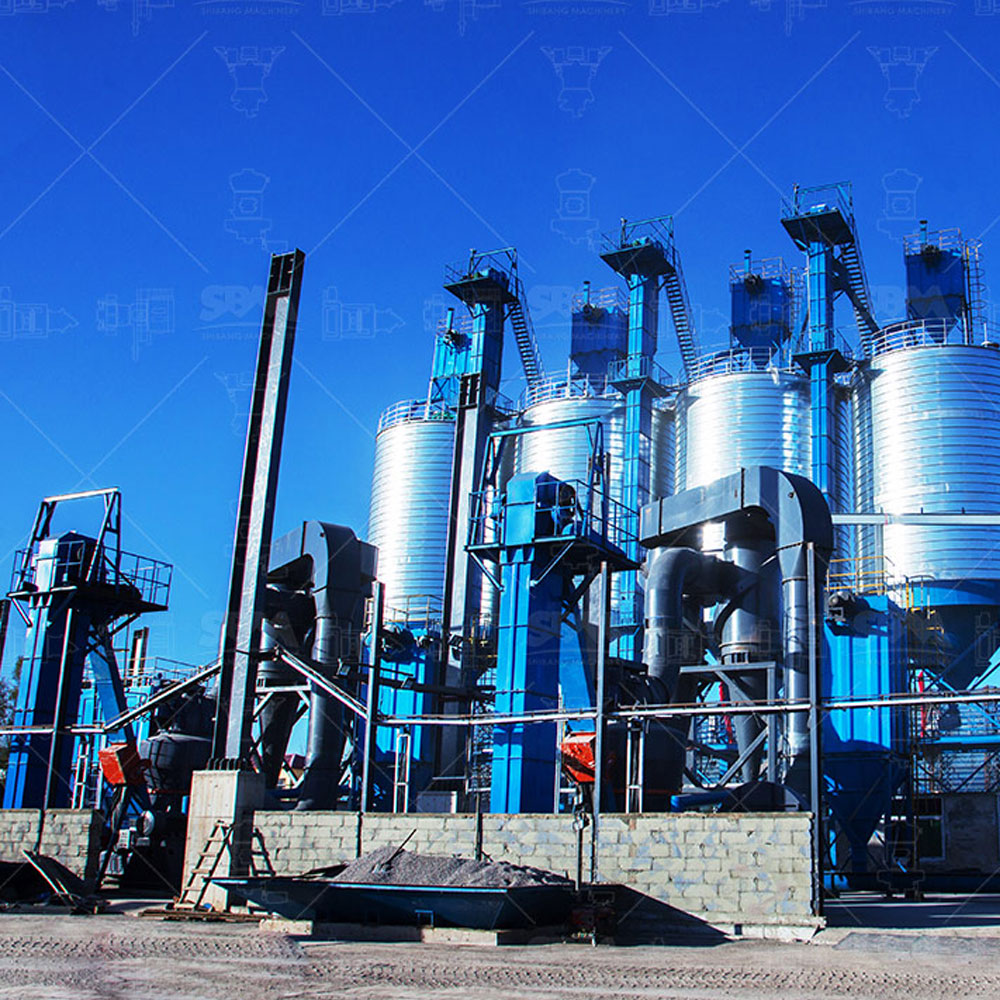
When scaling up production for large-volume applications such as environmental desulfurization or building materials, the capacity and integration capabilities of the grinding system become paramount. The LM Vertical Roller Mill exemplifies this approach by integrating crushing, drying, grinding, and classification into a single, compact unit. Its design philosophy centers on reducing the total cost of ownership. By occupying approximately 50% less floor space than traditional ball mill systems and allowing for outdoor installation, it drastically cuts initial infrastructure investment. More importantly, its operating principle—where rollers grind material on a plate without direct metal-to-metal contact—combined with high-quality materials, results in remarkably low wear and energy consumption reported to be 30-40% lower than conventional systems. For calcium carbonate producers, this translates directly into a stronger margin profile and enhanced ability to compete in price-sensitive market segments.
However, the market's frontier is increasingly defined by ultra-fine and high-purity products. The demand for calcium carbonate powders reaching 2500 mesh and beyond for masterbatch, high-end plastics, and advanced composites requires a technological leap. This is where specialized equipment like the SCM Series Ultrafine Mill and LUM Ultrafine Vertical Mill come into play. These mills are not merely incremental improvements; they are built on distinct technological platforms. The SCM series, for example, achieves a one-time fineness of D97 ≤ 5µm through an efficient vertical turbine powder classifier, ensuring precise particle size distribution without coarse powder spillover. This level of control is critical for customers whose product performance depends on consistent, sub-micron particle characteristics. The LUM Ultrafine Vertical Mill further advances this by integrating German powder-separating technology, enabling customizable fineness ranges and ensuring no low-grade material contamination, which is essential for premium product lines.
Beyond performance, sustainability and operational intelligence have become non-negotiable. Modern grinding systems are now equipped with expert automatic control systems (PLC/DCS) that enable remote monitoring, precise control over grinding pressure and classifier speed, and free switching between operational modes. This intelligence not only saves on labor costs but also ensures process stability and repeatability, batch after batch. From an environmental standpoint, the enclosed, negative-pressure design of these advanced mills virtually eliminates dust spillage, while optimized sound insulation meets strict workplace and community noise regulations. The ability to operate with lower specific energy consumption and reduced waste aligns perfectly with both corporate sustainability goals and tightening global environmental standards.
In conclusion, the calcium carbonate market's trajectory is inextricably linked to innovations in milling technology. The shift from standalone grinding units to intelligent, integrated systems that offer high efficiency, exceptional product quality, and lower environmental impact is defining the next generation of industry leaders. For producers aiming to capitalize on growth in sectors like new energy materials, high-performance polymers, and green construction, investing in the right grinding technology is the foundational step toward securing a competitive and profitable future.
Frequently Asked Questions (FAQs)
1. What are the main challenges when grinding calcium carbonate to very high fineness (e.g., above 2500 mesh)?
The primary challenges include achieving consistent particle size distribution without contamination, managing exponentially higher energy consumption, controlling heat generation to prevent product degradation, and excessive wear on grinding components. Advanced ultrafine mills address these with efficient classifier technology, optimized grinding curves for bed formation, and special wear-resistant materials to maintain product integrity and operational economy.
2. How can we reduce the high operating costs associated with frequent replacement of wear parts in our grinding process?
Costs can be significantly reduced by selecting mills designed for longevity, such as those featuring unique wear-proof designs (e.g., combined-type shovel blades), the use of special high-durability materials for rollers and rings, and grinding principles that minimize direct abrasive contact. These features extend service cycles, reduce spare part inventory, and lower maintenance downtime.
3. Our production requires a wide range of fineness for different products. Can one mill handle such flexible output specifications?
Yes, modern mills with advanced classifier systems and frequency-conversion control allow for easy and precise adjustment of finished product fineness, often within a range from 30 to 4000 mesh. Intelligent control systems enable fast and stable switching between different product specifications, enhancing production flexibility without compromising on quality or requiring multiple dedicated machines.
4. We are expanding our plant but have limited space. Are there compact grinding solutions that do not sacrifice capacity?
Vertical Roller Mills are an excellent solution for space-constrained environments. They integrate multiple functions (drying, grinding, separation) into a single, compact unit, often requiring up to 50% less floor space than traditional ball mill systems. Their vertical layout and potential for outdoor installation maximize space utilization while maintaining high throughput capacities.
5. How can we ensure our grinding operation meets increasingly strict environmental and noise regulations?
Choosing mills designed with full negative-pressure sealing prevents dust spillage entirely. Additionally, systems equipped with high-efficiency pulse dust collectors and optimized sound insulation rooms or mufflers effectively control noise pollution and dust emissions, ensuring compliance with national and international environmental protection standards.


