

Challenges facing china's rare earth industry
Published: October 26, 2023
China's rare earth industry, a cornerstone of the global high-tech and green energy supply chains, faces a complex array of challenges. These include intensifying international competition and supply chain restructuring, increasingly stringent environmental and sustainability regulations, the pressing need for technological modernization to process lower-grade ores efficiently, and the imperative to move up the value chain into high-purity separated oxides and advanced magnetic materials. Navigating this landscape requires not just policy support but a fundamental shift toward more sophisticated, efficient, and environmentally sound processing technologies. Advanced grinding and milling solutions, which form the critical first step in liberating rare earth minerals from their host ores, are pivotal in addressing these challenges by enhancing yield, reducing energy footprint, and enabling the precise particle size control essential for downstream separation and refinement.
The global push for decarbonization and electrification has paradoxically placed both immense demand and intense scrutiny on China's rare earth sector. While the nation controls a significant portion of the global processing capacity, the industry's historical development model is under pressure. Environmental concerns over toxic tailings and radioactive byproducts from mining and primary processing have led to tighter domestic controls and international calls for more sustainable practices. Simultaneously, other nations are actively developing alternative supply sources and processing capabilities, aiming to reduce dependency. This external pressure compels Chinese producers to innovate internally, focusing on maximizing recovery rates from existing resources, minimizing waste, and producing higher-value outputs to maintain competitive advantage.
At the heart of this innovation drive is mineral processing technology, particularly the comminution stage. Traditional grinding methods can be energy-intensive, offer limited control over particle size distribution, and may lead to over-grinding, which complicates subsequent flotation and leaching processes. Modern rare earth beneficiation demands equipment that delivers precise, consistent fineness with minimal energy consumption and operational downtime. For instance, achieving the optimal particle liberation for bastnaesite or monazite ores is crucial for improving the efficiency of chemical separation, a process that directly impacts both cost and final product purity.
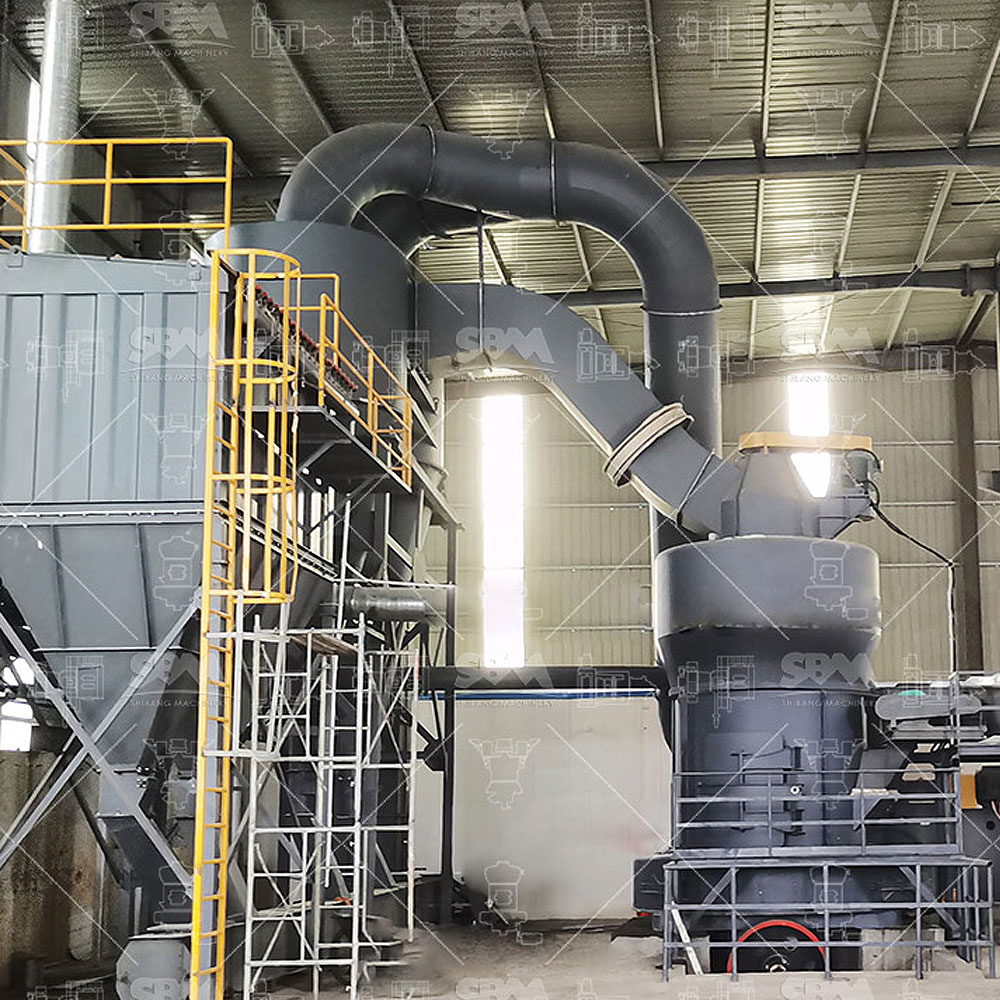
This is where next-generation milling technology becomes a strategic asset. Equipment like the MTW Series European Trapezium Grinding Mill, with its cone gear whole transmission and inner oil absorption lubrication system, is engineered for higher transmission efficiency and lower maintenance costs. Its unique wear-proof shovel blade design and arc air duct are specifically aimed at reducing the cost of wearing parts and avoiding air energy loss—key factors in lowering the total operating expenditure for continuous processing plants. For operations requiring higher throughputs for preliminary size reduction, Vertical Roller Mills (VRMs) present a compelling case. By integrating crushing, drying, grinding, and separation into a single compact unit, VRMs can reduce the footprint by up to 50% compared to traditional ball mill systems. Their principle of material bed grinding, where rollers compress material on a rotating table, leads to significantly lower specific energy consumption—often 30-40% less than ball milling—while producing less wear due to non-direct contact between grinding elements.
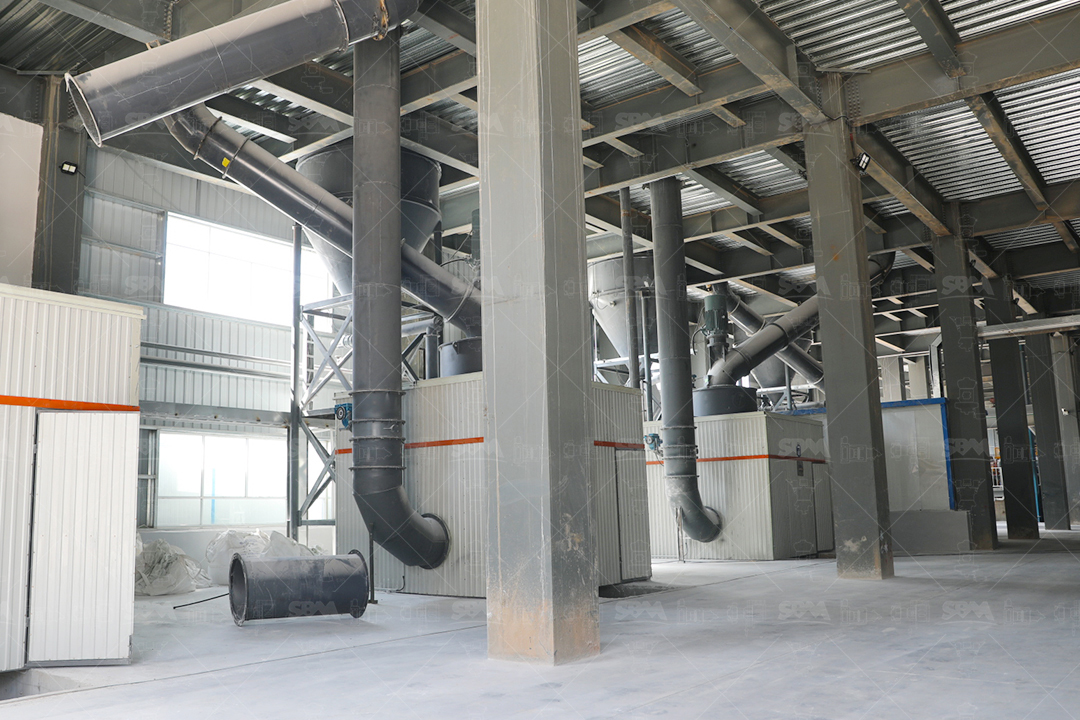
As the industry advances into producing high-purity, specialized rare earth compounds, the demand for ultrafine and consistent grinding rises exponentially. General grinding mills often reach their limits here. Ultrafine grinding mills, capable of achieving fineness up to 4000 mesh, are critical for applications like phosphors, advanced catalysts, and high-performance magnets where particle size and shape directly influence material properties. Technologies such as efficient vertical turbine powder classifiers ensure accurate particle cut-off and prevent coarse powder spillover, guaranteeing product uniformity. Furthermore, the environmental imperative is addressed head-on by these advanced systems. Sealed designs operating under negative pressure, coupled with efficient pulse dust collection systems, ensure that processing plants can meet stringent national and international emission standards, mitigating one of the industry's most significant external challenges.
In conclusion, the path forward for China's rare earth industry is inextricably linked to technological sophistication. Overcoming challenges related to cost, environmental compliance, and product quality requires a foundational upgrade in processing equipment. By adopting intelligent, high-efficiency, and environmentally friendly grinding solutions that offer precise control, reduced energy use, and lower total lifecycle costs, producers can build a more resilient, sustainable, and competitive industry poised to lead the global market not just in volume, but in technological excellence and responsible production.
Frequently Asked Questions (FAQs)
Q1: Our current grinding setup for rare earth ore is causing high energy costs and inconsistent particle size, affecting our downstream separation efficiency. What solutions can address both issues?
A: Modern vertical roller mills and advanced trapezium mills are specifically designed to tackle this dual challenge. They utilize material bed compression grinding and efficient classifier systems, which can reduce energy consumption by 30-40% while providing stable, adjustable, and consistent output fineness, directly optimizing the feed for your separation processes.
Q2: We are expanding our production line for high-value rare earth oxides and need equipment capable of producing ultrafine powders (D97 ≤ 5µm) reliably. Is there technology that ensures stability at this scale?
A: Yes, dedicated ultrafine vertical mills and SCM series ultrafine mills are engineered for this precise application. They integrate high-precision turbine classifiers and intelligent control systems that allow for frequency-conversion adjustment of fineness, ensuring stable, large-scale production of ultrafine powders with tight particle size distribution, which is critical for high-purity oxide applications.
Q3: Wear and tear on grinding rollers and rings from abrasive rare earth ores leads to frequent shutdowns and high spare parts costs. How can we improve equipment durability?
A: Look for mills featuring proprietary material technology and innovative design. Solutions include special alloy rollers and rings developed for extreme abrasion resistance, combined with designs like curved shovel blades that reduce abrasive impact. These features can extend service life by several times, dramatically reducing maintenance frequency and the total cost of wearing parts.
Q4: Meeting increasingly strict environmental regulations on dust and noise is a major concern for our plant upgrade. How can new grinding equipment help?
A: Contemporary milling systems are designed with environmental protection as a core principle. They feature fully sealed structures that operate under negative pressure, preventing dust spillover. Integrated high-efficiency dust collectors and optimized sound insulation rooms or mufflers are standard, ensuring emissions and noise levels comply with the most stringent national and international standards.
Q5: We operate a remote mining site and seek to minimize on-site operational labor and expertise requirements. Are there automated grinding solutions available?
A: Absolutely. Advanced grinding mills now come equipped with expert automatic control systems (PLC/DCS) that enable remote monitoring and operation. These systems allow for automatic adjustment of key parameters like grinding pressure and classifier speed, enabling stable operation with minimal manual intervention, which is ideal for remote or labor-constrained locations.


