

Guangxi calcite resource survey
Published: October 26, 2023
Guangxi Zhuang Autonomous Region, renowned for its vast and high-purity calcite deposits, represents a cornerstone of China's non-metallic mineral industry. This survey examines the region's calcite resource landscape, focusing on the evolving demands for processing efficiency, product fineness, and sustainable operations. The transition from traditional processing methods to advanced, integrated grinding systems is critical for producers aiming to enhance product value, reduce operational costs, and meet stringent environmental standards. This article explores how modern grinding technologies, such as those developed by SBM Machinery, provide tailored solutions to these challenges, enabling Guangxi's calcite sector to achieve superior powder quality, higher throughput, and greater market competitiveness.
The calcite resources in Guangxi are predominantly characterized by high brightness and chemical purity, making them ideal for high-value applications in plastics, paints, coatings, and paper. However, the geographical distribution and varying ore hardness present distinct processing challenges. Traditional grinding methods often struggle with inconsistent particle size distribution, high energy consumption, and significant wear on mechanical parts, leading to frequent downtime and elevated maintenance costs. These factors directly impact profitability and limit the ability to produce ultra-fine powders (exceeding 1250 mesh) demanded by premium markets.
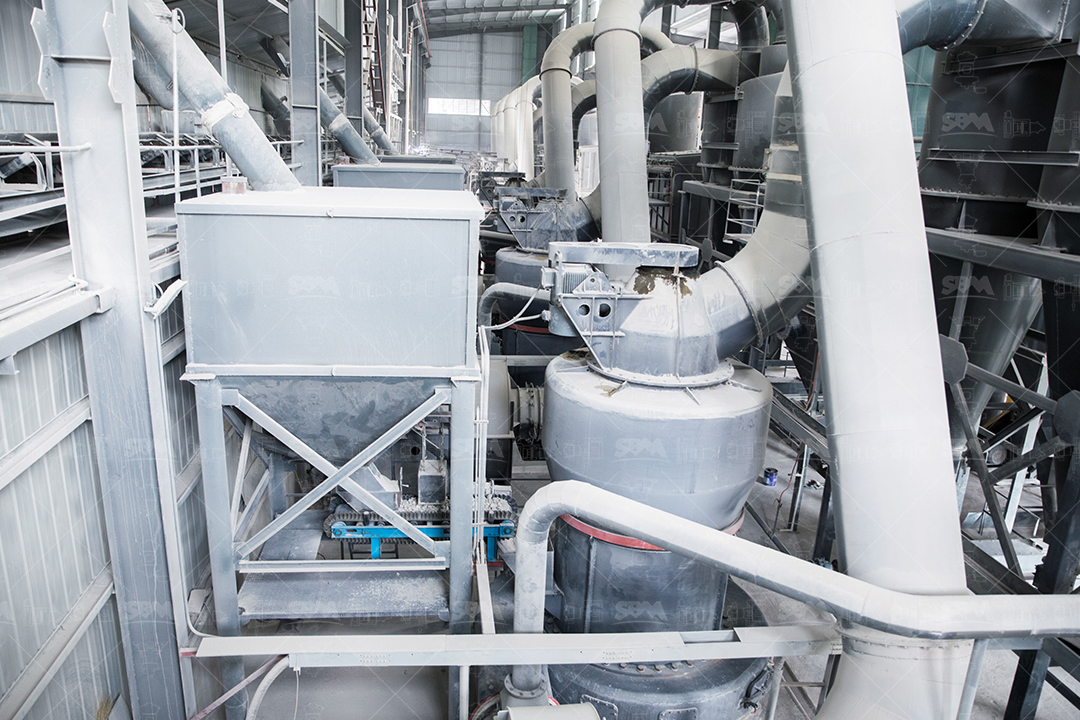
To address these pain points, the industry is increasingly adopting mills that integrate crushing, grinding, classification, and drying into a single, streamlined system. For instance, vertical roller mills offer a compact footprint and significantly lower specific energy consumption compared to conventional ball mills. Their design allows for direct grinding on the table with rollers, which operate under hydraulic pressure, ensuring stable operation even with variations in feed material. This is particularly beneficial for processing Guangxi's calcite, where maintaining consistent whiteness and minimizing iron contamination are paramount.
_1773159901229.jpg)
For producers targeting the ultra-fine powder segment, specialized equipment becomes indispensable. Ultrafine grinding mills, capable of achieving fineness between 325 and 4000 mesh, utilize advanced classifier technology to ensure precise particle cut points and eliminate coarse powder spillover. The ability to produce powders with a D97 ≤ 5μm in a single pass not only enhances product quality but also reduces the need for multi-stage processing, simplifying the production line. Furthermore, intelligent control systems enable remote monitoring and automatic adjustment of key parameters like grinding pressure and classifier speed, optimizing performance for specific calcite grades from different sub-regions within Guangxi.
Environmental compliance is no longer an option but a necessity. Modern grinding systems are engineered with full negative pressure operation and high-efficiency pulse dust collectors, ensuring dust-free workshops and emissions that meet national standards. This closed-system design also contributes to noise reduction, fostering a better working environment. The economic argument is strengthened by the longevity of wear parts. Innovations like combined-type shovel blades, special alloy rollers, and rings extend service life dramatically, transforming maintenance from a frequent cost center into a predictable, manageable operation.
In conclusion, the future of Guangxi's calcite industry lies in leveraging technology to add value. By moving beyond basic comminution to sophisticated, automated grinding solutions, producers can unlock the full potential of their resources. The focus must shift from mere volume output to achieving precise fineness, superior product characteristics, and sustainable, cost-effective production. Partnering with a total solution provider that offers comprehensive expertise—from equipment supply to system optimization—is a strategic step toward securing a leading position in the competitive global market for processed calcite.
Frequently Asked Questions (FAQ)
- We experience high energy costs and rapid wear part consumption with our current ball mills. What solutions can significantly lower our operating expenses?
Modern vertical roller mills and European-style trapezium mills are designed for high grinding efficiency, typically reducing energy consumption by 30-40% compared to traditional ball mills. Furthermore, features like unique wear-proof designs, high-quality material rollers, and inner oil absorption lubrication systems drastically extend the service life of wear parts, lowering both energy and maintenance costs per ton of output. - Our target market requires ultra-fine calcite powder (over 1250 mesh), but our existing equipment cannot achieve this fineness efficiently. What are our options?
Specialized ultrafine vertical mills and SCM series ultrafine mills are engineered precisely for this application. They integrate advanced multi-rotor or turbine powder classifiers, allowing precise fineness control up to 4000 mesh in a single closed system. This eliminates the need for external classification stages and ensures a high yield of on-spec product. - Dust control and noise levels are major concerns for our new plant to meet environmental regulations. Can advanced grinding systems help?
Yes. Contemporary mills operate under fully sealed, negative pressure conditions, preventing dust spillage. They are equipped with high-efficiency powder collection systems, often combining cyclone and pulse dust collectors, ensuring emissions comply with strict standards. Additionally, optimized mechanical designs and sound insulation features effectively minimize operational noise. - We have limited factory space and need a simple, compact layout. Is it possible to have an integrated system?
Absolutely. Equipment like vertical roller mills and ultrafine vertical mills integrate crushing, drying, grinding, and classification into one unit. This results in a system that occupies about 50% of the space required by a traditional ball mill circuit, allows for outdoor installation, and simplifies material flow, reducing overall civil engineering costs. - Managing production parameters for consistent quality is labor-intensive. How can we improve process control and stability?
Modern grinding systems come with expert automatic control systems (PLC/DCS). These systems enable remote monitoring and control, automatic adjustment of grinding pressure and classifier speed, and stable feedback loops for product fineness. This intelligence ensures stable operation, consistent product quality, and reduces reliance on manual intervention, saving labor costs.


