

Can vertical roller mill process limestone?
Published: October 2023
Yes, vertical roller mill (VRM) is fully capable of processing limestone with high efficiency, low energy consumption, and excellent product fineness control. As a total solution provider for grinding equipment, Shanghai SBM Machinery Equipment Co., Ltd. offers the LM series vertical roller mill specifically engineered to handle limestone and other non-metallic minerals. The VRM integrates crushing, drying, grinding, powder separating, and conveying into a single compact system, making it ideal for limestone powder preparation in environmental desulfurization, heavy calcium carbonate (GCC) processing, building materials, and large-scale non-metallic mineral powder processing. With input sizes up to 50mm and output fineness ranging from 30 to 400 mesh, capacity from 3 to 400 tph, the LM vertical roller mill addresses common customer pain points such as high energy bills, frequent wear part replacement, large floor space requirements, and inconsistent product quality. In this article, we dive deep into the technical advantages, operational benefits, and practical considerations when using VRM for limestone grinding, and compare it with other mill types like European trapezium mill, ultrafine mill, and ball mill, all backed by SBM's decades of experience serving over 180 countries and industries from power generation to new energy materials.
Understanding the Vertical Roller Mill for Limestone
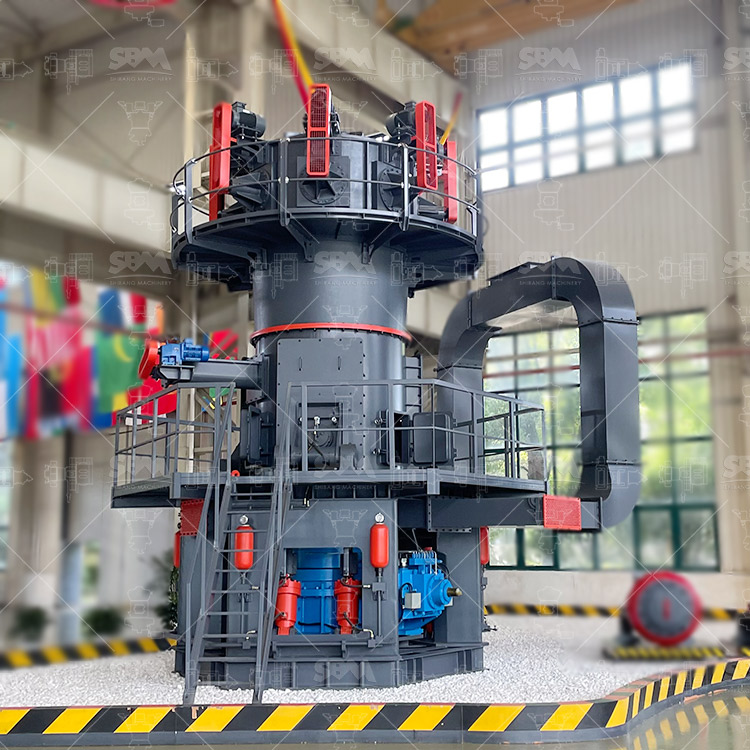
The LM series vertical roller mill from SBM is a new-generation advanced pulverizing equipment that solves the common technical issues of low output and high energy consumption seen in traditional grinding systems. Its core principle is simple: the material is fed onto a rotating grinding table, where hydraulic or pneumatic rollers press and grind the limestone against the table. Hot air or gas carries the fine particles upward to a classifier, which separates the product by size. Coarse particles fall back for re-grinding, while fine powder is collected. This closed-loop negative pressure system ensures dust-free operation and high environmental protection standards.
For limestone, the VRM is particularly effective because limestone is relatively soft (Mohs hardness around 3-4) and tends to form a stable material bed under compression, which is essential for VRM efficiency. The rollers do not directly contact the grinding plate, greatly reducing wear and extending service life. Moreover, the LM mill can handle high moisture content (up to 15-20%) due to its integrated drying function, making it suitable for wet limestone feeds common in quarry operations.
Key Advantages of Using VRM for Limestone Processing
1. Small Comprehensive Investment
The LM vertical roller mill integrates crushing, drying, grinding, powder separation, and material conveying into a single unit. This eliminates the need for multiple separate machines like crushers, dryers, ball mills, and classifiers, reducing the floor space to about 50% of a traditional ball mill system. The compact layout allows outdoor installation, further saving civil engineering costs. For limestone processors, this means lower initial capital expenditure and faster project implementation.
2. Low Operating Costs
One of the biggest pain points for limestone grinding operators is high energy consumption. The LM VRM consumes 30-40% less energy compared to ball mill systems. This is achieved by direct grinding on the material bed, where the rollers apply pressure efficiently without the need for heavy rotating drums. Additionally, the wear parts—rollers and grinding table liners—are made of high-quality alloy steel and last significantly longer because the roller does not contact the grinding plate directly. Maintenance is limited to replacing the wear-resistant liners periodically, and the simplified design reduces downtime.
3. Automatic Control System
Limestone grinding often requires consistent product fineness for downstream applications like desulfurization (typically 250 mesh or 325 mesh). The LM mill comes with an expert automatic control system that allows remote or local control. Parameters such as grinding pressure, table speed, classifier speed, and air flow are automatically adjusted to maintain target fineness and throughput. This reduces labor costs and eliminates human error, ensuring stable operation 24/7.
4. High Environmental Protection Standard
Environmental regulations are tightening globally. The LM VRM operates under negative pressure with a fully sealed system, preventing dust leakage. Its low vibration and noise levels (typically below 85 dB) meet most national emission standards. For limestone powder used in desulfurization, the mill can be equipped with efficient pulse dust collectors to capture ultrafine particles, ensuring a clean working environment.
Comparison with Other SBM Mills for Limestone
_1777652715776.jpg)
While the LM vertical roller mill is an excellent choice for medium to large-scale limestone grinding, SBM offers other mill types that may be more suitable depending on the specific application:
- MTW European Trapezium Mill: Ideal for limestone grinding in the 30-400 mesh range with capacity 3-40 tph. It features a cone gear whole transmission, arc air duct, and unique wear-proof perching knife design, making it cost-effective for smaller operations. However, it lacks the drying capability and compact footprint of VRM.
- SCM Ultrafine Mill: For ultra-fine limestone powders (325-2500 mesh), this mill offers high fineness with D97≤5μm. It uses a heavy rotor design and efficient turbine classifier. Capacity is lower (0.5-25 tph), so it is best for niche applications like plastic master batch or PVC filler.
- LUM Ultrafine Vertical Mill: Designed for superfine limestone grinding (325-4000 mesh) with capacity 10-70 tph. It combines Taiwan roller technology and German powder separation for high efficiency and high-quality finished products. Ideal for high-end non-metallic mineral processing.
- Ball Mill: A traditional but mature solution for limestone with output fineness 0.2-0.074mm. It is less energy-efficient and has higher wear costs, but may be preferred for wet grinding in mineral dressing. SBM has optimized the ball mill with new materials to reduce spare parts costs.
For most limestone powder preparation (desulfurization, GCC, building materials), the LM vertical roller mill offers the best balance of capacity, energy efficiency, operating cost, and environmental compliance. It has become the mainstream equipment in the global pulverizing industry.
Addressing Common Customer Pain Points
Customers often face challenges when selecting a limestone grinding solution. Here are the typical pain points and how the LM VRM resolves them:
- High energy bills: VRM reduces energy consumption by 30-40% vs ball mills. For a 50 tph limestone plant, this translates to significant annual savings.
- Frequent roller/ring replacement: The LM mill's roller and grinding plate do not contact directly, and are made of high-quality alloy. Service life is 2-3 times longer than Raymond mill or ball mill components.
- Inconsistent product fineness: The automatic control system with frequency-conversion classifier maintains target fineness (e.g., 250 mesh for desulfurization) even with varying feed size or moisture.
- Dust pollution: Negative pressure operation and full sealing eliminate dust spillover. The system meets strict environmental standards.
- Limited space for new installation: The VRM's compact layout requires only 50% of the space of ball mill systems, and outdoor installation is possible.
- High moisture content in limestone: The integrated drying function can handle up to 15-20% moisture without pre-drying.
Conclusion
The vertical roller mill is not only capable of processing limestone but excels in doing so with lower energy consumption, smaller footprint, longer wear life, and superior environmental performance. SBM's LM series has proven itself across 180+ countries in industries ranging from power generation to building materials. Whether you need coarse limestone powder for cement or fine powder for desulfurization, the LM VRM offers a reliable, cost-effective solution. Contact SBM for a customized solution based on your specific material characteristics, capacity requirements, and fineness targets.
Frequently Asked Questions (FAQ)
1. Can the LM vertical roller mill handle limestone with high moisture content?
Yes. The LM VRM is designed with an integrated drying function using hot air or gas. It can process limestone with moisture content up to 15-20% without any pre-drying equipment. The hot gas simultaneously dries and conveys the ground powder, ensuring consistent operation.
2. What is the typical fineness range for limestone processed by VRM?
The LM vertical roller mill can produce limestone powder in the range of 30 to 400 mesh (approximately 500 to 38 microns). For finer applications (e.g., 325-2500 mesh), SBM recommends the SCM ultrafine mill or LUM ultrafine vertical mill.
3. How does the VRM compare to ball mill in terms of maintenance frequency?
The VRM has significantly lower maintenance requirements. The rollers and grinding table liners last 2-3 times longer than ball mill balls and liners because there is no direct metal-to-metal contact. Additionally, the VRM has fewer moving parts, reducing the need for bearing replacements and lubrication. Scheduled maintenance intervals are longer, typically every 6-12 months depending on operating conditions.
4. Is the LM vertical roller mill suitable for small-scale limestone production?
The LM series starts at 3 tph capacity, so it can serve small-scale operations. However, for very low capacities (below 3 tph), the MTW European Trapezium Mill or SCM Ultrafine Mill may be more cost-effective due to lower initial investment. The VRM shines in medium to large-scale plants where energy savings and low operating costs justify the capital expenditure.
5. What safety measures are built into the VRM for limestone grinding?
The LM VRM is equipped with multiple safety features: a fully sealed negative pressure system to prevent dust explosion, an automatic fire and explosion suppression system (optional), temperature and pressure sensors for real-time monitoring, and vibration detectors that automatically shut down the mill if abnormal conditions are detected. The equipment also includes safety interlocks and emergency stop buttons.


