

Green value of bentonite in environmental protection and agriculture
Published: October 26, 2023
Bentonite, a versatile natural clay mineral, has emerged as a critical material for sustainable development in both environmental protection and modern agriculture. Its unique physicochemical properties—including high swelling capacity, cation exchange capability, and large specific surface area—enable it to function as an effective adsorbent, sealant, and nutrient carrier. In environmental applications, bentonite is indispensable for landfill liners, wastewater treatment, and soil remediation, while in agriculture, it enhances soil structure, improves water retention, and serves as a slow-release carrier for fertilizers and pesticides. For industries seeking reliable grinding solutions to process bentonite to the required fineness (typically 30–400 mesh for granular applications or 325–2500 mesh for ultrafine uses), Shanghai SBM Machinery Equipment Co., Ltd. offers a comprehensive portfolio of grinding mills—including the European Trapezium Mill (MTW Series), LM Vertical Roller Mill, SCM Ultrafine Mill, LUM Ultrafine Vertical Mill, and Ball Mill—each engineered to maximize throughput, minimize energy consumption, and produce consistent product quality across capacities from 0.5 to 400 tph. This article explores the green value of bentonite, supported by SBM’s advanced grinding technologies, and addresses common operational challenges faced by processors and end-users.
Bentonite in Environmental Protection: A Natural Barrier and Adsorbent
Bentonite’s role in environmental protection centers on its ability to adsorb heavy metals, organic pollutants, and radioactive ions from water and soil. When processed to high fineness using equipment such as the SCM Ultrafine Mill (output size 325–4000 mesh, capacity 0.5–25 tph), bentonite particles exhibit dramatically increased surface area, enhancing contaminant uptake. For instance, in wastewater treatment plants, bentonite suspensions are used as flocculants to remove suspended solids and dissolved metals like lead, cadmium, and arsenic. The LM Vertical Roller Mill (input size 0–50 mm, output 30–400 mesh, capacity 3–400 tph) is particularly suited for producing consistent bentonite powder for landfill liner applications, where its compact layout (50% floor space vs. ball mill systems) and sealed negative-pressure operation meet stringent environmental emission standards.
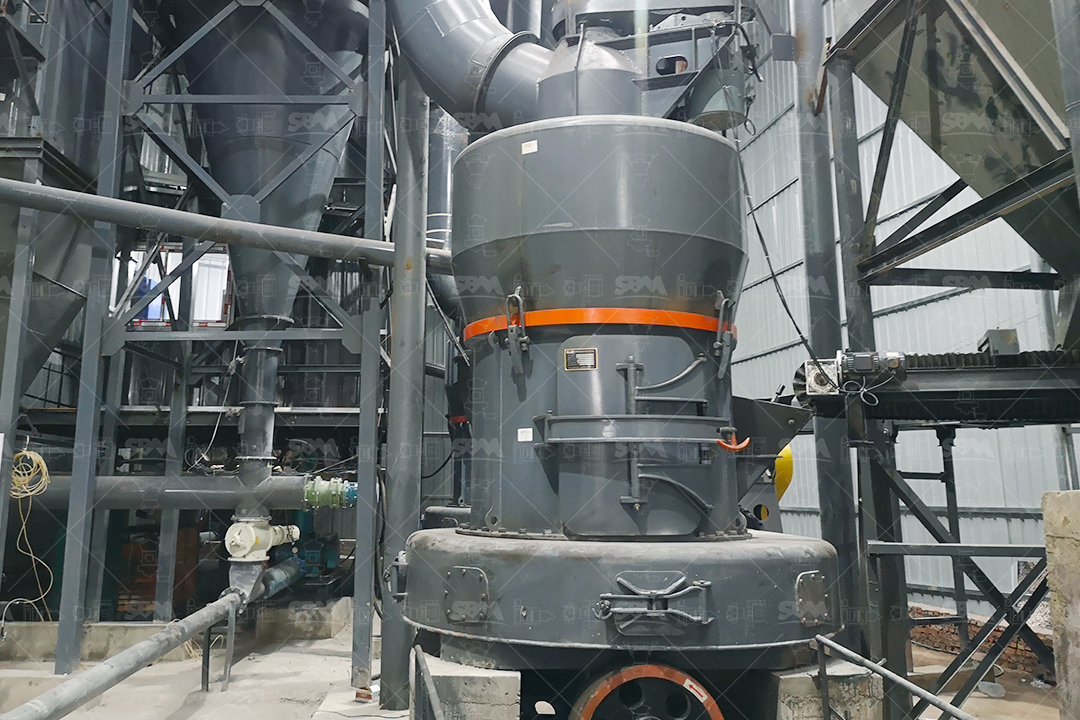
Another critical application is soil remediation: bentonite mixed with contaminated soil reduces the bioavailability of pollutants through cation exchange and encapsulation. SBM’s MTW European Trapezium Grinding Mill, with its cone gear whole transmission and arc air duct design, ensures energy-efficient fine grinding at 30–400 mesh (3–40 tph), producing the uniform particle size distribution essential for consistent barrier performance. The mill’s unique wear-proof perching knife design (curved shovel blades) prolongs roller and ring life, reducing operational costs for bentonite processors serving environmental projects.
Bentonite in Agriculture: Soil Amendment and Nutrient Efficiency
In agriculture, bentonite addresses soil degradation, nutrient leaching, and water scarcity. When applied as a soil conditioner at rates of 2–10 tons per hectare, it improves cation exchange capacity (CEC), retains moisture in sandy soils, and reduces fertilizer runoff. SBM’s LUM Ultrafine Vertical Mill (input 0–20 mm, output 325–4000 mesh, capacity 10–70 tph) is ideal for producing high-value bentonite products for precision agriculture. Its multi-rotor powder classifier enables custom fineness selection (e.g., D97≤5μm), ensuring uniform dispersion in liquid fertilizer formulations or direct soil application. The mill’s PLC/DCS automatic control system stabilizes grinding pressure and disc speed, delivering consistent quality batch after batch.
Furthermore, bentonite acts as a pellet binder in animal feed and as a carrier for slow-release agrochemicals. For these applications, the Ball Mill (output 0.074–0.2 mm, capacity 3–65 tph) offers a cost-effective solution for producing coarse to medium-fine powders. Its optimized structure and advanced materials reduce spare part wear and energy consumption by up to 30–40% compared to conventional ball mills, directly addressing the pain point of high operational costs.
_1778689420546.jpg)
SBM Grinding Mills: Solving Pain Points in Bentonite Processing
Customers processing bentonite commonly struggle with low output, high energy consumption, and inconsistent fineness. SBM’s grinding mills are engineered to overcome these challenges. For example, the LM Vertical Roller Mill’s integrated drying, grinding, and powder-selection functions reduce initial investment and floor space by 50%, while its automatic control system enables remote operation and saves labor costs. The MTW European Trapezium Mill, developed from analyses of over 9,500 customer proposals, features a volute design that improves wind-driven transmission efficiency, directly reducing material maintenance costs. For ultrafine applications, the SCM Ultrafine Mill achieves twice the output of jet mills with 30% lower energy consumption, while its heavy rotor design and special roller/ring materials extend durability several times over conventional mills.
Beyond equipment, SBM Machinery, as a total solution provider with over 180 countries of experience, supports clients from feasibility studies to complete grinding system installation. Whether the goal is environmental desulfurization limestone powder preparation or large-scale bentonite processing for agriculture, SBM’s portfolio ensures that every ton of bentonite delivers maximum green value—whether sequestering pollutants in a landfill or boosting crop yields in a field.
FAQ: Common Customer Pain Points for Bentonite Grinding
Q1: Why does my current grinding mill produce inconsistent particle size for bentonite, and how can SBM help?
A1: Inconsistent fineness often results from inadequate classifier control or worn grinding elements. SBM’s LUM Ultrafine Vertical Mill uses a multi-rotor powder classifier with frequency-conversion control to customize fineness within 325–4000 mesh, while the SCM Ultrafine Mill ensures D97≤5μm with efficient vertical turbine classifiers that prevent coarse powder spillover. Both mills include automatic feedback systems for fast, stable product conversion.
Q2: The operational cost of grinding bentonite is too high due to frequent roller/ring replacement. How can SBM equipment reduce wear?
A2: Wear is minimized through design innovations. The MTW European Trapezium Mill features a unique combined-type shovel blade with curved design—only the blade is replaced during maintenance, prolonging roller and ring life. The LM Vertical Roller Mill uses high-quality materials for rollers and grinding plates, and the rollers do not contact the plate directly, reducing wear and extending service life by 30–40% compared to ball mills.
Q3: I need to process bentonite for environmental landfill use but face space and emission constraints. What solution does SBM offer?
A3: The LM Vertical Roller Mill is ideal—it integrates crushing, drying, grinding, and separation in a compact system that occupies 50% less floor space than a ball mill. It can be arranged outdoors and operates under negative pressure with full sealing, meeting national environmental standards with low noise and zero dust spillover. The MTW Series also includes arc air duct design to prevent air energy loss and ensure efficient, clean operation.
Q4: For agricultural bentonite used in slow-release fertilizers, I need ultrafine powder (1250 mesh or finer) but with high throughput. Which mill is best?
A4: The LUM Ultrafine Vertical Mill is designed for high-capacity ultrafine grinding (10–70 tph at 325–4000 mesh). Its grinding curves are optimized for ultrafine pulverization, improving material bed formation and increasing the proportion of finished products from primary grinding. The PLC/DCS control system ensures accurate grinding pressure and stable operation, delivering consistent ultrafine powder for premium agricultural applications.
Q5: My bentonite contains moisture (up to 10%), causing blockages in my current mill. How does SBM handle wet feed?
A5: The LM Vertical Roller Mill has inherent drying capability—hot air is introduced during grinding to evaporate moisture, making it suitable for bentonite with up to 10% moisture content. The system’s negative pressure and sealed design prevent condensation and blockages. For very wet materials, pre-drying with waste heat from the mill can be integrated. Alternatively, the Ball Mill can be paired with a drying system, though the LM mill offers a more energy-efficient single-step solution.


