

Can barite be processed by raymond mill?
Summary: Barite, a commonly used barium sulfate mineral in oil drilling, chemical, and construction industries, can indeed be processed by Raymond mill, but the suitability depends on the target fineness, capacity, and moisture content. SBM Machinery offers a range of grinding equipment, including the MTW European Trapezium Mill (also known as MTW Raymond Mill), which is specifically designed to handle barite with input sizes up to 50 mm and produce powders from 30 to 400 mesh at capacities of 3 to 40 tph. However, for finer barite powders (325 to 2500 mesh), SBM's SCM Ultrafine Mill or LUM Ultrafine Vertical Mill may be more appropriate. Key considerations include moisture control (barite should be dry, ideally below 6% moisture), abrasion resistance (barite is moderately abrasive), and throughput requirements. SBM's MTW Raymond Mill features advanced wear-proof components like combined-type shovel blades and durable roller-ring designs that extend service life, making it a reliable choice for barite processing in many industrial applications. Below, we explore technical details, comparative advantages, and address common customer pain points.
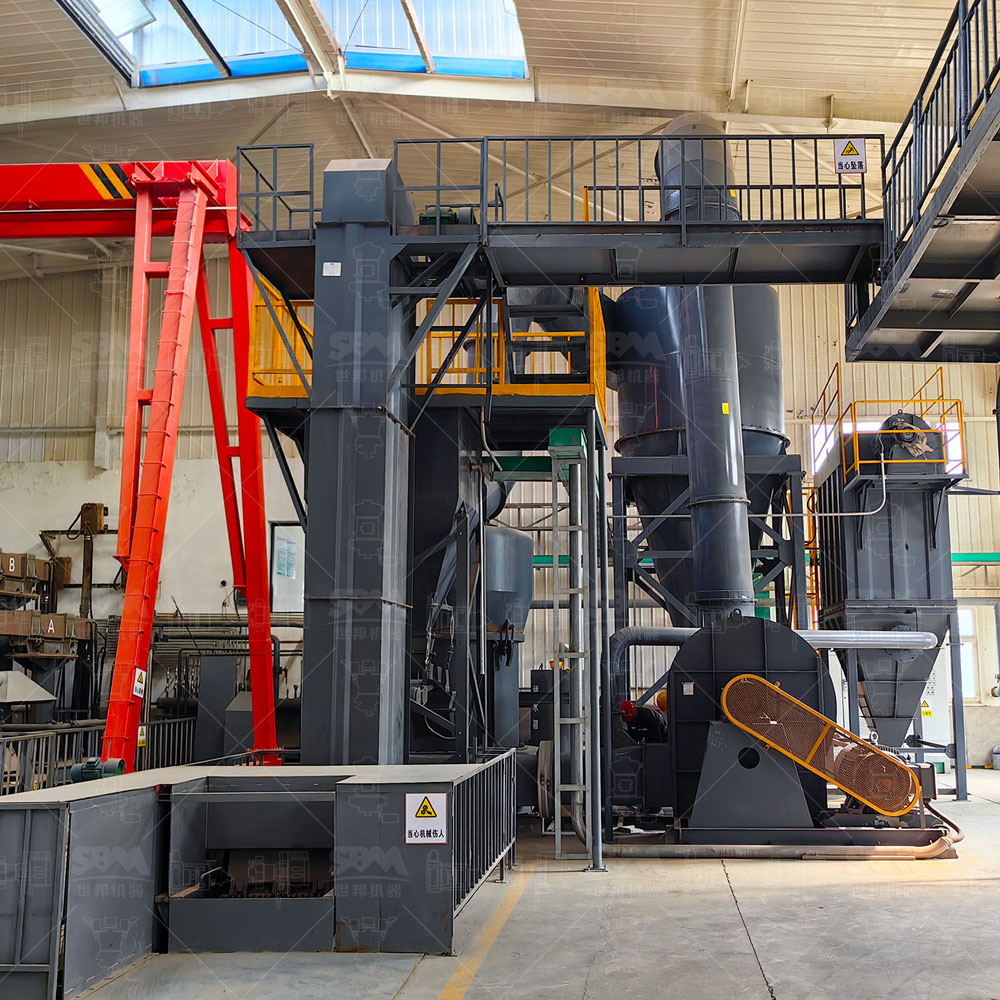
Understanding Barite Processing with Raymond Mill
Barite (BaSO₄) is known for its high specific gravity (4.2–4.5 g/cm³), low hardness (3–3.5 on Mohs scale), and chemical inertness. These properties make it ideal for use as a weighting agent in drilling fluids, as a filler in paints and plastics, and as a radiation shielding material. When considering whether a Raymond mill can handle barite, the answer is yes—but with caveats. Traditional Raymond mills may struggle with high moisture or oversized feed, but SBM's MTW European Trapezium Mill (often referred to as a Raymond mill due to its similar operating principle) overcomes these limitations through innovative design.
Key Technical Specifications for Barite Grinding
- Input Size: 0–50 mm (requires primary crushing if barite lumps exceed this)
- Output Size: 30–400 mesh (typical for drilling-grade barite: 200 mesh, density 4.2 g/cm³)
- Capacity: 3–40 tph (depends on fineness and hardness)
- Moisture Limit: <6% (higher moisture causes clogging in the grinding chamber)
Why MTW Raymond Mill Excels for Barite
SBM's MTW mill addresses several common pain points barite processors face:
1. Wear and Tear from Abrasive Barite
Barite’s moderate abrasiveness can quickly wear out standard grinding components. The MTW mill features a unique wear-proof perching knife design with combined-type shovel blades. Only the blade needs replacement during maintenance, not the entire assembly, reducing downtime and spare part costs. The curved shovel blades also optimize the feeding angle, prolonging the life of rollers and rings.
2. Energy Efficiency and Throughput
Many operators complain about high energy consumption in older mills. The MTW mill uses a cone gear whole transmission system, which delivers higher transmission efficiency (up to 30% energy savings compared to traditional Raymond mills). The arc air duct design minimizes air energy loss, ensuring stable material transport and preventing blockages—a frequent issue with sticky or damp barite.
3. Consistent Product Fineness
For oil drilling applications, barite must meet API specifications (typically 200 mesh with less than 3% residue on a 200-mesh sieve). The MTW mill’s volute design and dynamic classifier allow precise adjustment of fineness between 30 and 400 mesh. The unobstructed wear-resistant volute improves air flow efficiency, reducing the risk of oversized particles escaping.
When Raymond Mill Is Not Enough: Alternatives for Finer Barite
If your barite processing requires ultra-fine powders (e.g., for plastic fillers or medical applications with fineness >1000 mesh), a standard Raymond mill may not achieve the desired d97. SBM offers two superior alternatives:
- SCM Ultrafine Mill: Input size 0–20 mm, output 325–4000 mesh, capacity 0.5–25 tph. This mill uses a heavy rotor design and special roller/ring materials that offer several times higher durability, ideal for fine and ultra-fine barite grinding. The efficient vertical turbine powder classifier ensures accurate cutting size with no coarse powder spillover.
- LUM Ultrafine Vertical Mill: Input size 0–20 mm, output 325–4000 mesh, capacity 10–70 tph. It integrates grinding, separation, and transportation, with unique grinding curves that form a stable material bed for higher efficiency. PLC/DCS automatic control ensures stable operation and remote monitoring.
_1779293992851.jpg)
Common Customer Pain Points and Solutions
Barite processors frequently encounter the following issues, which SBM equipment specifically addresses:
Pain Point 1: High Moisture Content Causing Clogging
Barite often arrives with moisture from mining or transportation. If moisture exceeds 6%, the material tends to stick inside the grinding chamber. Solution: SBM recommends pre-drying barite using a rotary dryer or selecting a mill with a built-in drying function, like the LM Vertical Roller Mill, which integrates drying, grinding, and powder selection. For the MTW mill, an external hot air system can be added.
Pain Point 2: Inconsistent Fineness Leading to Quality Rejection
Customers in drilling and paint industries demand strict particle size distribution. Solution: The MTW mill’s arc air duct and classifier system allow real-time fineness adjustment. For ultra-fine requirements, the SCM mill uses frequency-conversion control for precise d97≤5μm, ensuring consistent quality.
Pain Point 3: High Wear and Frequent Maintenance
Traditional Raymond mills require frequent roller and ring replacement. Solution: The MTW mill’s combined shovel blade design reduces wear parts replacement costs. The LM Vertical Roller Mill uses rollers that do not contact the grinding plate directly, extending service life by 30–40% compared to ball mills.
Pain Point 4: High Energy Bills and Low Capacity
Ball mills consume significant energy. Solution: The MTW mill’s cone gear transmission reduces energy consumption by up to 30%. The LUM mill’s multi-rotor classifier and PLC control optimize grinding pressure and speed, achieving capacity up to 70 tph with lower kWh per ton.
Pain Point 5: Environmental Regulations on Dust and Noise
Stringent emission norms require dust-free operation. Solution: SBM mills use negative pressure systems and pulse dust collectors. The LUM mill is fully sealed with noise insulation, meeting national environmental standards.
Practical Recommendations for Barite Processors
To determine the best mill for your barite, consider:
- Fineness required: 30–400 mesh → MTW Raymond Mill; 325–2500 mesh → SCM Ultrafine Mill; 325–4000 mesh with high capacity → LUM Ultrafine Vertical Mill.
- Capacity: Below 40 tph → MTW; 10–70 tph → LUM; 0.5–25 tph → SCM.
- Moisture: Above 6% → Consider LM Vertical Roller Mill with drying capability or pre-dry the material.
- Cost sensitivity: For lower investment, MTW offers proven reliability. For long-term savings, LUM’s energy efficiency and reduced wear justify higher upfront cost.
SBM’s equipment has been installed in over 180 countries, and our team provides end-to-end solutions from crushers to baghouses. We encourage clients to test their barite samples at our facility to verify performance before purchase.
Frequently Asked Questions (FAQs)
1. Can barite with more than 6% moisture be ground in a Raymond mill?
No. High moisture causes agglomeration and clogging in the grinding chamber. We recommend pre-drying the barite to below 6% or using an integrated drying-grinding mill like the LM Vertical Roller Mill.
2. What is the typical wear life of grinding rollers when processing barite?
In the MTW Raymond Mill, the roller and ring made of special alloy can last 6–12 months under normal barite processing (200 mesh, 4.2 specific gravity). The combined shovel blade design reduces replacement frequency by allowing only the blade to be exchanged.
3. Can I achieve 1250 mesh barite (d97<10μm) using a Raymond mill?
Standard Raymond mills typically cannot achieve fineness below 400 mesh consistently. For 1250 mesh or higher, the SCM Ultrafine Mill or LUM Ultrafine Vertical Mill is recommended, both capable of reaching d97≤5μm.
4. What is the capacity difference between MTW Raymond Mill and LM Vertical Roller Mill for barite?
The MTW mill has a capacity of 3–40 tph, ideal for small to medium operations. The LM Vertical Roller Mill ranges from 3 to 400 tph, making it suitable for large-scale processing. However, the LM mill has a higher initial investment.
5. How do I prevent barite dust leakage during grinding?
SBM mills operate under negative pressure with fully sealed systems. Additionally, pulse dust collectors and double powder collection methods (in SCM and LUM mills) ensure zero dust spillover, meeting international environmental standards.


