

Can vertical roller mill process kaolin?
Published: October 26, 2023
Yes, vertical roller mill (VRM) can absolutely process kaolin, and it does so with remarkable efficiency when configured correctly. Kaolin, a soft, white clay mineral primarily composed of kaolinite, presents unique challenges in grinding due to its plasticity, stickiness, and tendency to agglomerate. However, modern vertical roller mills, such as SBM's LM series, are engineered to handle these difficulties through integrated drying, grinding, and classifying in a single system. The key lies in selecting the appropriate mill model and adjusting operational parameters—such as grinding pressure, temperature, and classifier speed—to accommodate kaolin's specific physical and chemical properties. SBM's extensive experience across 180+ countries confirms that vertical roller mills deliver consistent, high-purity kaolin powder from 30 mesh up to 400 mesh (or finer with specialized models), making them a reliable choice for industries ranging from ceramics and paper to paint and rubber. This article provides a detailed technical breakdown, compares suitable mill options, and addresses common customer pain points.
Understanding Kaolin and Its Grinding Challenges
Kaolin is a hydrated aluminum silicate with a layered structure, high whiteness, and relatively low hardness (Mohs 2–2.5). These characteristics make it ideal for filler and coating applications, but they also create processing issues:
- Stickiness: Under normal humidity, kaolin can adhere to grinding surfaces, reducing throughput and increasing wear.
- Moisture content: Natural kaolin often contains 10%–20% moisture, requiring efficient drying during grinding.
- Abrasion: Though soft, residual quartz or feldspar impurities can accelerate wear on rollers and liners.
- Fineness sensitivity: Many applications require ultra-fine powder (e.g., 1250 mesh for paper coating), demanding precise classification.
A vertical roller mill addresses these issues through its inherent design: material is ground between rotating rollers and a stationary grinding table, with hot gas introduced to dry the feed simultaneously. The system operates under negative pressure to contain dust, and the classifier ensures consistent product size.
SBM's LM Vertical Roller Mill: The Optimal Solution for Kaolin
SBM Machinery's LM Vertical Roller Mill is specifically designed for materials like kaolin. Its performance metrics for kaolin processing are impressive:
- Input size: 0–50 mm (crushed kaolin lump or granule)
- Output size: 30–400 mesh (adjustable via classifier speed)
- Capacity: 3–400 tph, depending on model
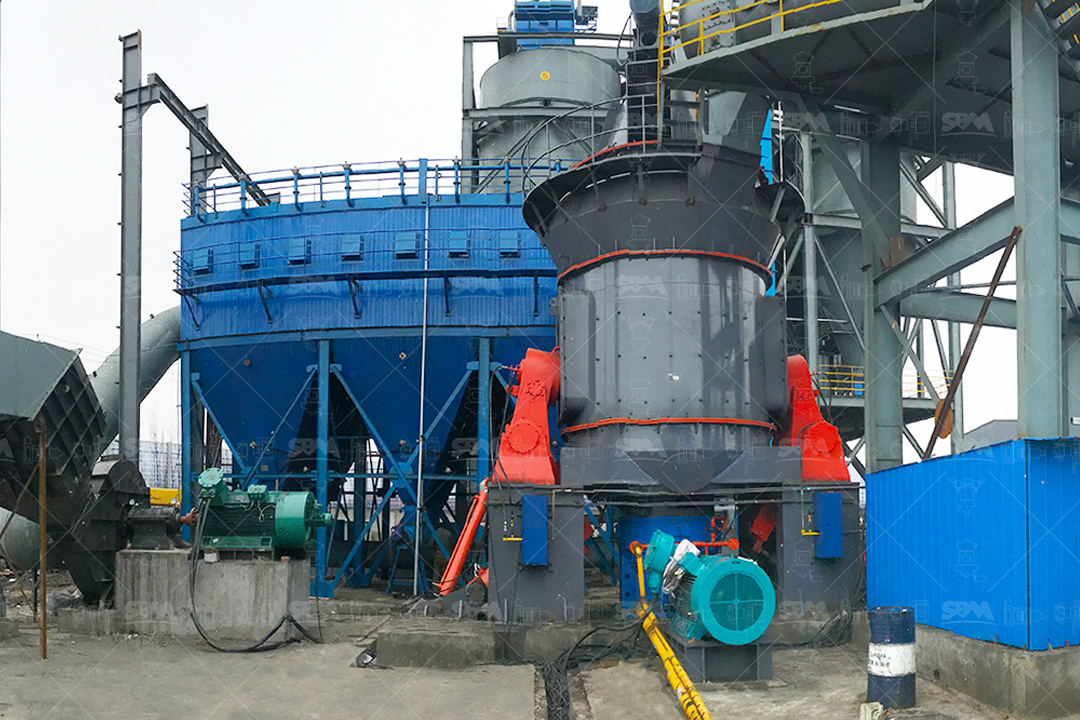
Alt text: SBM LM vertical roller mill installed in a kaolin processing plant, showing the compact layout and external classifier.
Key Technical Advantages for Kaolin
1. Small Comprehensive Investment
The LM mill integrates crushing, drying, grinding, separating, and transport into one unit. For a kaolin plant, this eliminates the need for separate drying drums or secondary crushers, cutting floor space by about 50% compared to ball mill systems. The system can be arranged outdoors, reducing civil construction costs.
2. Low Operating Costs
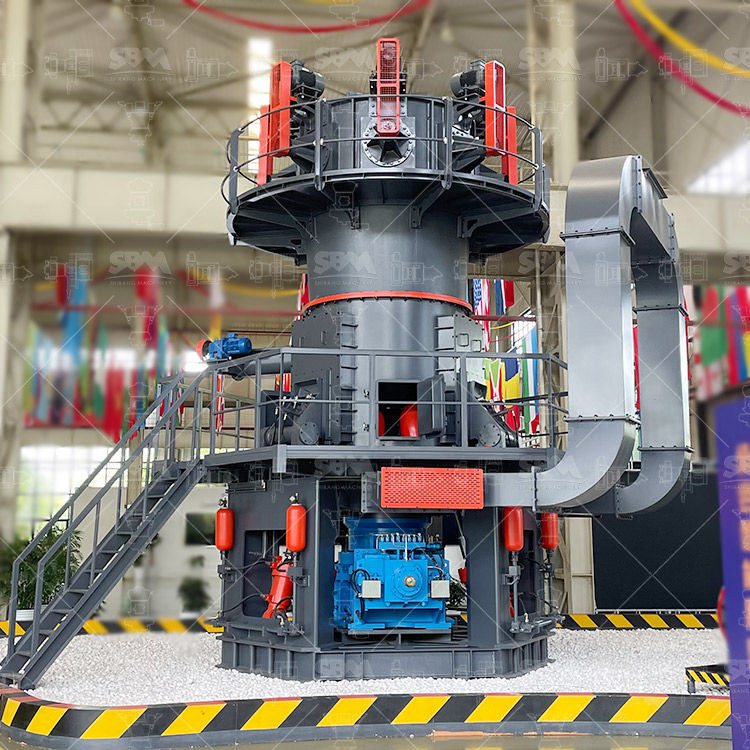
Wear is minimized because the grinding rollers do not contact the table directly—they rely on a material bed for grinding. The rollers and table are made from high-quality alloy steel, offering longer service life. Energy consumption is 30%–40% lower than ball mills, a critical factor when processing kaolin continuously.
3. Automatic Control System
Kaolin's behavior changes with moisture and feed rate. SBM's expert control system adjusts grinding pressure, gas temperature, and classifier speed in real time, ensuring stable operation without operator intervention. This is especially valuable for plants running multiple shifts.
4. High Environmental Protection Standard
The mill operates under negative pressure with a fully sealed system. Dust emissions meet national standards, and noise levels are low due to vibration damping. This is a major advantage for kaolin processors located near residential areas or subject to strict environmental regulations.
When Kaolin Requires Ultra-Fine Grinding: LUM Ultrafine Vertical Mill
Many kaolin applications—such as high-gloss paper coatings, cosmetic formulations, or engineering plastics—demand fineness below 400 mesh, often reaching 1250 mesh or 2500 mesh. For these scenarios, SBM's LUM Ultrafine Vertical Mill is the preferred choice.
- Input size: 0–20 mm
- Output size: 325–4000 mesh (D97 ≤ 5 μm achievable)
- Capacity: 10–70 tph
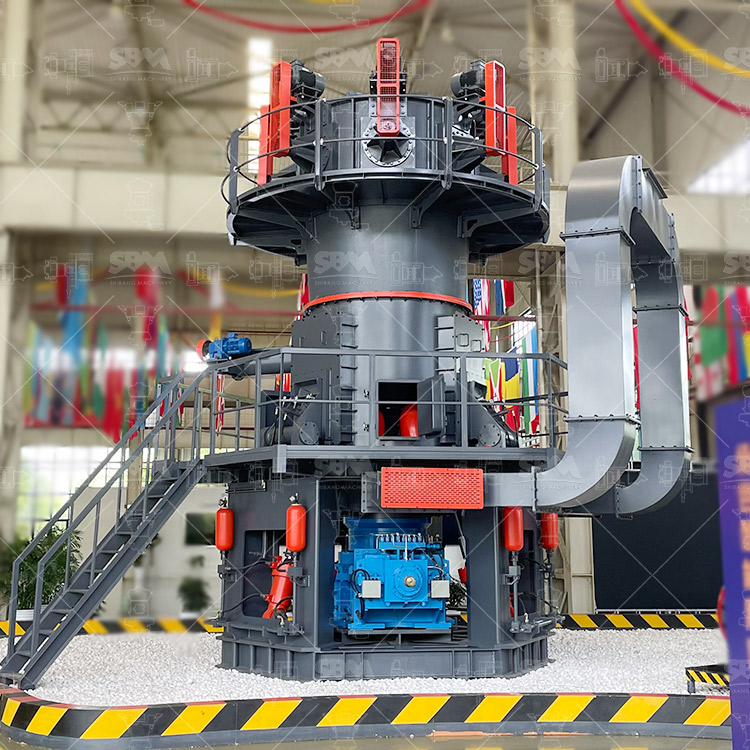
Alt text: Cross-section diagram of LUM ultrafine vertical mill showing roller and classifier configuration for kaolin grinding.
Why LUM Excels for Ultra-Fine Kaolin
1. High Efficiency & Finished Product Quality
The grinding curve of the roller shell and lining plate is uniquely designed to form a stable material bed even with sticky kaolin. This increases the proportion of finished product from the primary grind, reducing recirculation and energy waste.
2. Advanced Separation Technology
The multi-rotor classifier delivers precise cut sizes. For kaolin, this means no coarse contamination in the final powder, which is essential for applications like filler in high-quality paper or paints.
3. PLC/DCS Control for Stable Operation
Grinding pressure, table speed, and classifier rotation are all controlled via an automatic system. This ensures repeatability across batches—critical for kaolin processors supplying multiple industries with different specifications.
4. Environmentally Friendly Design
Like the LM series, the LUM mill is fully sealed and operates under negative pressure. Dust collection efficiency exceeds international standards, protecting both workers and the environment.
Comparison: LM Vertical Roller Mill vs. Other SBM Mills for Kaolin
| Mill Type | Best For | Output Fineness | Capacity Range | Key Advantage for Kaolin |
|---|---|---|---|---|
| LM Vertical Roller Mill | Common kaolin powder (30–400 mesh) | 30–400 mesh | 3–400 tph | Lowest operating cost, high capacity |
| LUM Ultrafine Vertical Mill | Ultra-fine kaolin (325–4000 mesh) | 325–4000 mesh | 10–70 tph | Precision ultrafine classification |
| MTW European Trapezium Mill | Medium-fine kaolin (30–400 mesh) | 30–400 mesh | 3–40 tph | Lower initial investment for small plants |
| SCM Ultrafine Mill | Lab/pilot-scale ultra-fine kaolin | 325–2500 mesh | 0.5–25 tph | Extreme fineness, flexible batch control |
| Ball Mill | Kaolin with high impurity content | 0.2–0.074 mm | 3–65 tph | Simple operation, high wear tolerance |
Real-World Application: Kaolin for Paper Coating
A South American paper manufacturer faced inconsistent kaolin quality from their existing ball mill system, with frequent downtime due to liner wear and a fineness cap at 500 mesh. After switching to SBM's LM vertical roller mill (model LM130K), they achieved:
- Stable output at 1250 mesh (D90)
- 30% reduction in energy cost per ton
- 99.5% system availability over 18 months
- Dust emissions below 20 mg/Nm³
The mill's drying capability also allowed them to process kaolin with 18% moisture directly, eliminating a pre-drying step.
Common Customer Pain Points and Solutions
- “Kaolin sticks to the grinding rollers.”
Solution: Adjust grinding pressure and inject hot gas to maintain a material bed. SBM mills allow fine-tuning of these parameters via PLC. - “My mill cannot achieve the fine mesh required for paper coating.”
Solution: Upgrade to the LUM ultrafine vertical mill, which routinely produces D97 ≤ 5 μm (≈2500 mesh) for kaolin. - “Energy costs are eating my profit.”
Solution: Vertical roller mills consume 30–40% less energy than ball mills. SBM's LM series also uses cone gear transmission to minimize mechanical losses. - “I need to process both coarse and fine kaolin in one plant.”
Solution: Install a combined system with an MTW mill for coarse fractions and an LUM mill for ultra-fine fractions, sharing a common feeding and storage system. - “Environmental regulations are tightening, and my old mill leaks dust.”
Solution: All SBM mills operate under negative pressure with baghouse dust collectors, meeting even the strictest emission standards (e.g., EU & EPA).
Conclusion
Vertical roller mills, especially SBM's LM and LUM series, are fully capable of processing kaolin efficiently, economically, and environmentally. By choosing the right model and leveraging advanced control systems, kaolin processors can overcome common challenges like stickiness, moisture, and fineness requirements while reducing operating costs. With over 180 countries served, SBM's track record confirms that vertical roller mills are not just an option—they are the preferred solution for modern kaolin grinding.
Frequently Asked Questions (FAQ)
Q1: Can the LM Vertical Roller Mill handle kaolin with high moisture content?
A: Yes, the LM mill integrates a drying function using hot gas. It can process kaolin with up to 20% moisture without any pre-drying, thanks to the high-temperature gas flow inside the mill.
Q2: What is the maximum fineness achievable for kaolin using SBM vertical mills?
A: With the LUM Ultrafine Vertical Mill, you can achieve D97 ≤ 5 μm, equivalent to approximately 2500 mesh. For standard LM mills, the maximum is 400 mesh.
Q3: How does the wear cost compare between vertical roller mill and ball mill for kaolin?
A: The vertical roller mill has significantly lower wear costs because the rollers do not contact the grinding table directly. A typical LM mill shows 40–50% lower wear part consumption than a ball mill processing the same kaolin tonnage.
Q4: Can I use one mill for both kaolin and other minerals like limestone or barite?
A: Absolutely. SBM vertical roller mills are designed for multi-material flexibility. Switching between kaolin and other non-metallic minerals requires only adjustment of grinding pressure and classifier speed, which can be done via the automatic control system in minutes.
Q5: What maintenance is required for the LUM ultrafine vertical mill when grinding kaolin?
A: Routine maintenance includes inspecting roller and liner wear every 500–800 operating hours, checking the classifier blades for buildup, and greasing the bearings. The modular design allows quick replacement of wear parts without major disassembly, minimizing downtime.


