

Process comparison of raymond mill and vertical mill: application scenarios and selection logic
When selecting between Raymond mill and vertical roller mill for mineral grinding, the decision ultimately hinges on throughput requirements, energy efficiency targets, material moisture content, and final product fineness. Raymond mill (exemplified by SBM's MTW European Trapezium Grinding Mill) excels in medium-fine powder production (30–400 mesh) with moderate capacities (3–40 tph) and lower initial investment, making it ideal for smaller operations or materials with low moisture. Vertical roller mill (SBM's LM series) dominates large-scale operations with capacities up to 400 tph, 30–40% lower energy consumption than ball mills, integrated drying capability, and a compact footprint—perfect for cement, coal, and power industries. Selection logic should prioritize: if capacity >40 tph and moisture >10%, choose vertical mill; if capacity <40 tph and fineness 30–400 mesh, choose Raymond mill; for ultrafine requirements (>400 mesh), consider SCM ultrafine mill or LUM ultrafine vertical mill depending on capacity needs.
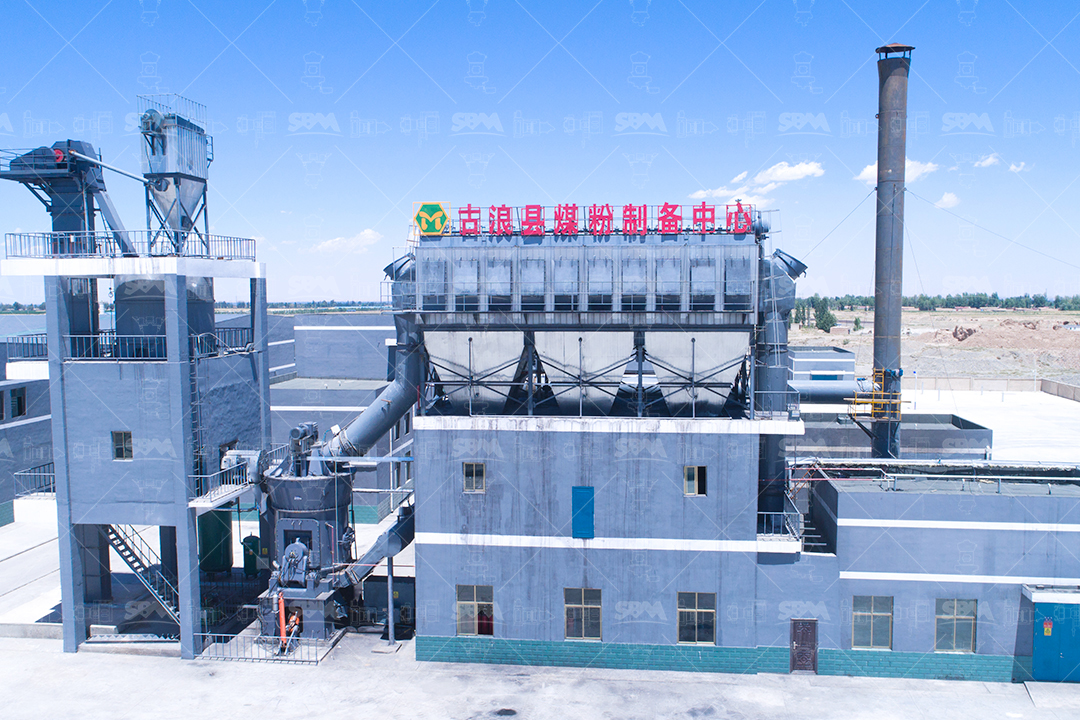
1. Working Principle and Process Differences
Raymond mill (MTW series) operates on the principle of grinding rollers rotating around a fixed grinding ring, with material fed through a hopper and crushed between the roller and ring. The conical bevel gear whole transmission ensures high transmission efficiency, while the arc air duct design minimizes energy loss during material transport. Material is classified by an integrated classifier, with coarse particles returned for further grinding. The unique wear-proof perching knife design reduces maintenance costs by allowing blade-only replacement.
Vertical roller mill (LM series) employs a different mechanism: grinding rollers press directly onto a rotating grinding table, crushing material under hydraulic or pneumatic pressure. The system integrates drying, grinding, and powder selection in one unit. Hot air from the bottom lifts ground material to a classifier, where fines are collected and coarse particles fall back for regrinding. This design eliminates the need for separate drying equipment, reducing floor space by approximately 50% compared to ball mill systems.
2. Application Scenarios
Raymond mill ideal scenarios:
- Limestone desulfurization powder preparation for power plants (30–400 mesh)
- Gypsum powder production for building materials
- Small-to-medium scale non-metallic mineral processing (calcite, talc, barite)
- Coal powder preparation for industrial boilers
- Petroleum coke grinding at moderate capacities
Vertical roller mill ideal scenarios:
- Large-scale cement raw material and clinker grinding
- Power plant coal powder preparation (high moisture coal)
- Slag micro-powder production for concrete admixtures
- Chemical industry materials requiring drying during grinding
- Non-metallic mineral processing exceeding 40 tph
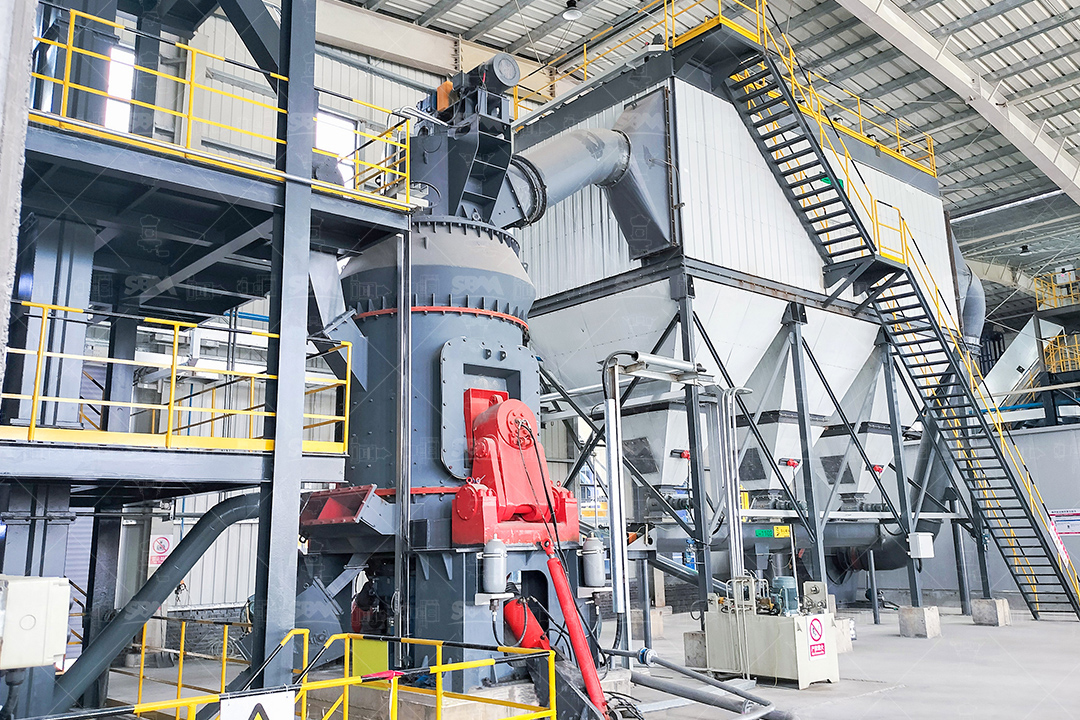
3. Performance and Cost Comparison
| Parameter | Raymond Mill (MTW) | Vertical Roller Mill (LM) |
|---|---|---|
| Capacity | 3–40 tph | 3–400 tph |
| Fineness range | 30–400 mesh | 30–400 mesh |
| Feed size | 0–50 mm | 0–50 mm |
| Energy consumption | Moderate | 30–40% lower than ball mill |
| Floor space | Moderate | ~50% less than ball mill |
| Drying capability | Limited (low moisture) | Integrated, handles >10% moisture |
| Noise level | Moderate | Low (stable operation) |
| Wear parts life | Good (curved shovel blades) | Excellent (roller/table not in direct contact) |
| Automation | Standard | Expert control system, remote/local switching |
4. Selection Logic
Step 1: Determine capacity requirements. For throughput below 40 tph, Raymond mill offers cost advantages; above 40 tph, vertical mill becomes more economical. For ultra-fine products (325–2500 mesh) at lower capacities (0.5–25 tph), SCM ultrafine mill or LUM ultrafine vertical mill should be considered.
Step 2: Evaluate material moisture. Materials with moisture content exceeding 10% (e.g., slag, wet limestone) strongly favor vertical roller mill with integrated drying. Raymond mill can only handle materials with moisture below 6% without pre-drying.
Step 3: Consider energy and environmental regulations. Vertical mill's 30–40% lower energy consumption and superior sealing (dust-free operation, low noise) meet stringent environmental standards. Raymond mill also offers environmental benefits through good sealing and negative pressure operation but at a smaller scale.
Step 4: Analyze investment vs. operating costs. Raymond mill has lower initial investment but higher per-ton operating costs for large capacities. Vertical mill requires higher upfront investment but delivers lower operating costs over time, particularly in high-throughput applications.
Step 5: Product fineness and quality. Both mills achieve 30–400 mesh. For products requiring consistent fineness with minimal fines, vertical mill's classifier system offers better control. For standard powder grades, Raymond mill provides reliable quality with simpler operation.
5. Frequently Asked Questions
Q1: My limestone desulfurization plant needs 200 mesh powder at 10 tph. Which mill should I choose?
A: For 10 tph at 200 mesh, Raymond mill (MTW series) is the most cost-effective choice. It directly meets the capacity and fineness requirements with lower initial investment compared to a vertical mill. However, if your material moisture exceeds 6%, consider pre-drying or switching to a vertical mill with integrated drying.
Q2: Why does my current mill produce inconsistent fineness, with both coarse chunks and excessive fines?
A: This typically indicates classifier inefficiency or worn grinding components. Raymond mill's arc air duct design and vertical mill's multi-rotor classifier both provide accurate particle separation. Check if the classifier rotor is balanced and if the grinding roller/ring wear is uniform. SBM mills include advanced classification systems to prevent this issue.
Q3: I need to grind slag with 15% moisture for cement production. Can a Raymond mill handle this?
A: No. Raymond mill is not designed for high-moisture materials. The moisture will cause material stickiness, clogging the grinding chamber and reducing throughput. A vertical roller mill (LM series) is mandatory here because it integrates hot air drying during grinding, efficiently handling moisture up to 20%.
Q4: My electric bill is very high with my current ball mill. Which mill reduces energy consumption the most?
A: Vertical roller mill offers the greatest energy reduction—30-40% lower than ball mill systems. Raymond mill also uses less energy than ball mill but not as dramatically. If your capacity exceeds 40 tph, vertical mill is the clear choice. For smaller operations, Raymond mill still provides meaningful savings.
Q5: I want to produce ultrafine GCC (d97≤5μm) for paper coating. Is Raymond mill suitable?
A: No. Standard Raymond mill can only reach 400 mesh maximum. For d97≤5μm (approximately 2500 mesh), you need an ultrafine grinding system. SCM ultrafine mill (0.5-25 tph) or LUM ultrafine vertical mill (10-70 tph) are designed for this application, using special roller/ring materials and high-efficiency turbine classifiers to achieve sub-micron fineness.


