

Properties, distribution, uses, and processing of pyrophyllite
Published: October 26, 2023
Pyrophyllite, a hydrous aluminum silicate mineral with the chemical formula Al₂Si₄O₁₀(OH)₂, occupies a unique niche in the industrial minerals landscape due to its remarkable combination of thermal stability, chemical inertness, and softness. As a phyllosilicate, pyrophyllite exhibits a platy morphology and a Mohs hardness of 1 to 2, making it one of the softest minerals, yet it withstands extremely high temperatures without significant structural degradation. Its distribution is geographically concentrated, with major deposits in the United States, Brazil, China, India, Japan, and South Africa. The mineral's versatility shines in diverse end-use sectors, including refractories, ceramics, paint, plastics, rubber, and construction materials. However, realizing its full industrial value requires precision in processing—specifically in grinding and classification—to achieve optimal particle size distribution, purity, and surface properties. SBM Machinery, leveraging decades of experience and advanced grinding technologies such as the MTW European Trapezium Mill, LM Vertical Roller Mill, SCM Ultrafine Mill, and LUM Ultrafine Vertical Mill, provides turnkey solutions tailored to the unique challenges of pyrophyllite beneficiation and powder preparation. This article explores the intrinsic properties, global distribution, industrial applications, and the critical processing pathways that transform raw pyrophyllite into high-value industrial powders, addressing common operational bottlenecks encountered by producers.
Geological Properties and Global Distribution
Pyrophyllite forms through the hydrothermal alteration of felsic volcanic rocks or aluminum-rich sediments under low-grade metamorphic conditions. Its crystal structure consists of an octahedral aluminum layer sandwiched between two tetrahedral silica layers, which imparts excellent thermal expansion resistance. The mineral decomposes at around 800°C to form mullite and amorphous silica, a property critical for refractory applications. It is naturally lubricious due to its layered structure, making it ideal for use as a filler and processing aid.
Significant deposits exist in North Carolina (USA), the Minas Gerais region of Brazil, China's Zhejiang and Fujian provinces, and the Deccan Plateau in India. These deposits vary widely in purity, with iron and titanium oxide impurities frequently posing challenges. For example, a typical Chinese pyrophyllite ore may contain 65-75% SiO₂ and 20-28% Al₂O₃, with Fe₂O₃ content sometimes exceeding 1.5%, which affects color and refractory performance. Producers in these regions often require advanced beneficiation circuits to meet stringent industrial specifications.
Industrial Uses and Performance Criteria
Pyrophyllite's applications span traditional and emerging sectors:
- Refractories: Approximately 50% of global consumption goes into refractory bricks and castables for steel ladles, glass furnaces, and cement kilns. The mineral's low thermal expansion and high refractoriness (PCE value of 30-35) make it a cost-effective alternative to fire clay and andalusite.
- Ceramics: In ceramic tiles and sanitaryware, pyrophyllite reduces shrinkage and improves thermal shock resistance. It serves as a fluxing agent and a source of aluminum, enhancing body strength.
- Fillers and Extenders: In paints, plastics, and rubber, finely ground pyrophyllite (typically 325 mesh to 1250 mesh) improves dimensional stability, reduces resin consumption, and provides a smooth matte finish. It competes with talc and kaolin in these markets.
- Construction: It is used in fiber cement boards, coatings, and joint compounds to enhance workability and strength.
- Agricultural Carriers: Its inertness and absorption capacity make it suitable for pesticide and fertilizer carriers.
A critical demand in these sectors is consistent particle size distribution and freedom from coarse contaminants. For instance, in the refractory industry, even a 5% oversize fraction above 200 mesh can cause premature failure of linings. In filler applications, high brightness (ISO brightness above 85) and low abrasion (measured by the Einlehner abrasion test) are non-negotiable.
Processing Pyrophyllite: Challenges and SBM Solutions
Processing pyrophyllite from run-of-mine ore to market-ready powder involves crushing, grinding, classification, and sometimes magnetic separation or flotation. The primary technical hurdle is the mineral's laminar structure: it tends to cleave along its basal planes, generating flakes that can behave differently in downstream processing compared to isotropic minerals. Additionally, the presence of hard quartz inclusions (Mohs 7) accelerates wear on grinding media and liners. High energy consumption and frequent maintenance downtime are common client complaints.
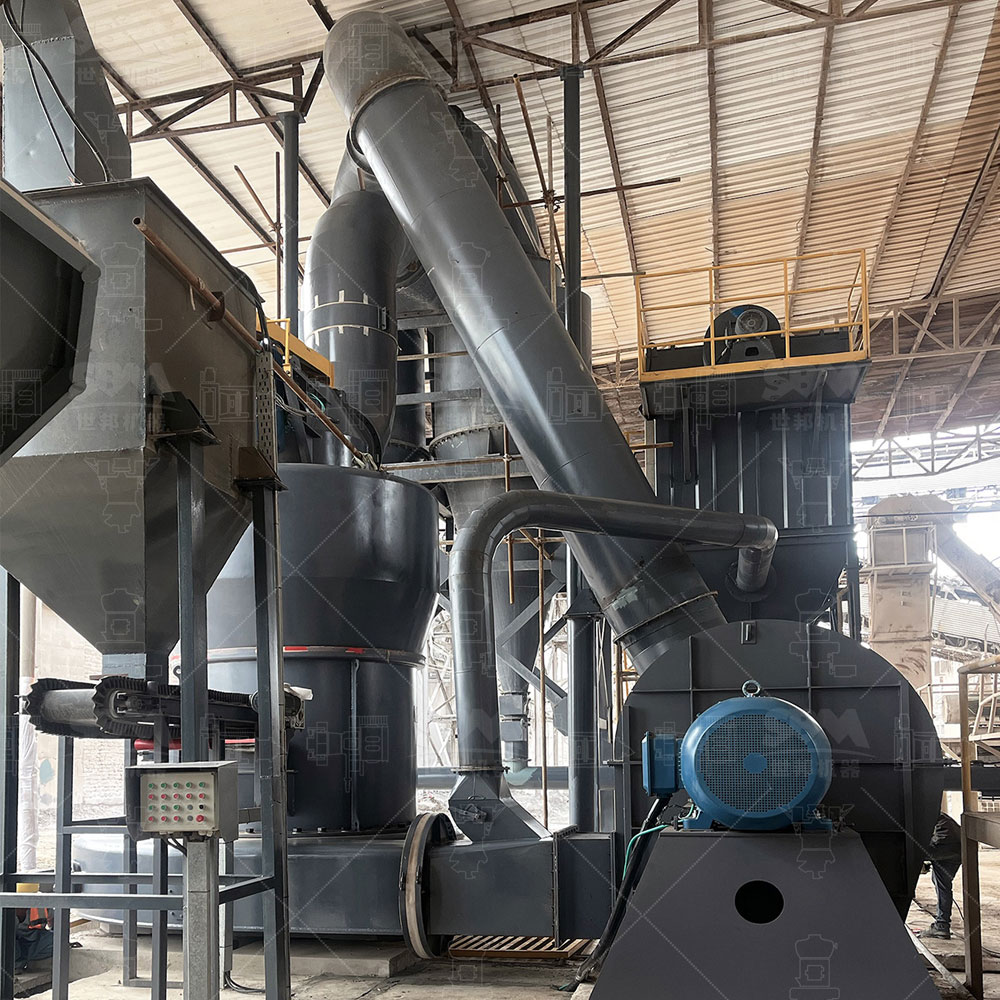
To address these issues, SBM Machinery has engineered a suite of grinding mills specifically optimized for pyrophyllite. The MTW Series European Trapezium Grinding Mill (MTW Raymond Mill) features a unique wear-proof perching knife design with combined-type shovel blades. In pyrophyllite processing, this innovation significantly reduces the cost of replacing wear parts—only the blade tip needs renewal, not the entire shovel assembly. The arc air duct design minimizes air energy loss, maintaining stable material transport even when processing sticky, hygroscopic pyrophyllite fines. One client in Fujian Province, China, processing pyrophyllite for ceramic filler (325 mesh D97), reported a 15% reduction in operating costs after switching from a traditional Raymond mill to the MTW mill, primarily due to longer roller and ring life (from 1,200 hours to over 2,500 hours).
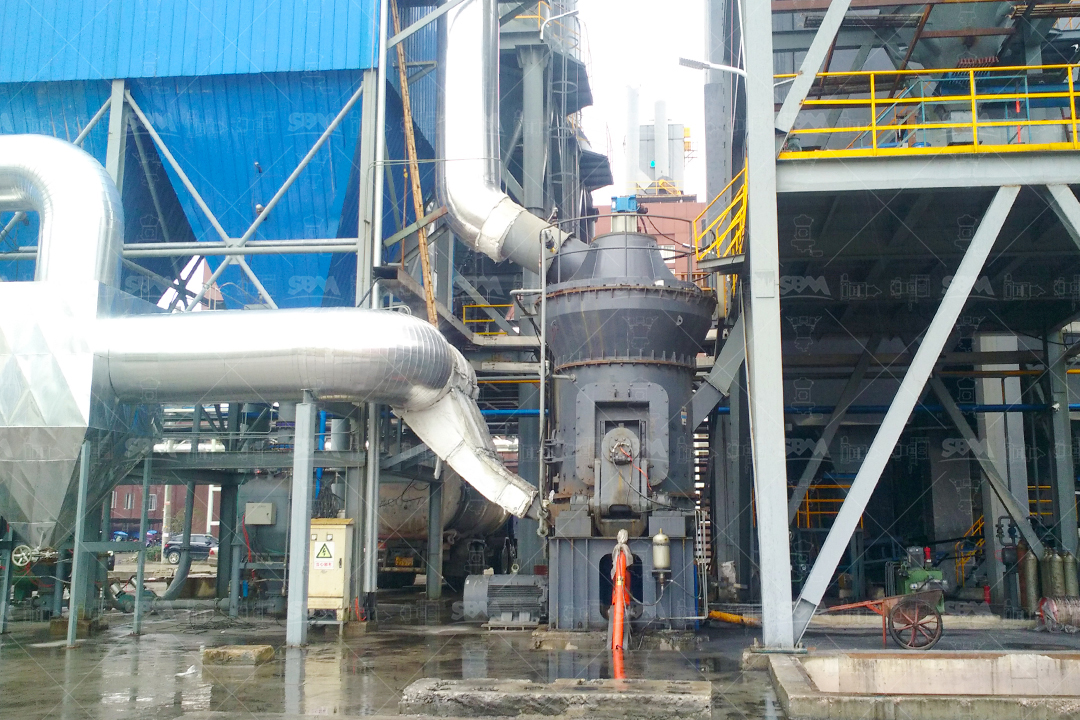
For larger throughput requirements (10-70 tph), the LM Vertical Roller Mill offers integrated drying, grinding, and classification in a single unit. Its compact layout occupies only half the footprint of a ball mill system, a boon for greenfield projects in land-constrained areas. The grinding rollers are designed to avoid direct contact with the grinding plate, reducing wear from quartz inclusions. The automatic control system allows remote adjustment of grinding pressure and classifier speed, ensuring consistent product fineness (30-400 mesh) even when feed moisture fluctuates between 5% and 15%. A refractory-grade pyrophyllite producer in India using the LM mill achieved a throughput of 55 tph at a fineness of 200 mesh (70% passing), with less than 1% oversize, satisfying the demanding standards of the steel industry.
When the market demands ultra-fine powders (325 to 2500 mesh) for high-value filler or coating applications, SBM's SCM Ultrafine Mill and LUM Ultrafine Vertical Mill are recommended. The SCM mill employs a heavy rotor design and special alloy grinding rollers that endure several times longer than conventional components. Its high-efficiency vertical turbine classifier cuts cleanly at 5 micrometers, eliminating coarse particle spillover. One plastic masterbatch manufacturer reported achieving D97=5μm pyrophyllite powder with 30% less energy consumption compared to jet milling, a critical competitive advantage given rising electricity costs.
For producers requiring moderate fineness (0.074mm to 0.2mm) in high-volume operations, the Ball Mill remains a robust option. SBM's optimized ball mill incorporates new-material liners and grinding media, reducing wear rates by up to 40% compared to standard mills. It is available in dry and wet configurations; the wet ball mill is particularly effective for preparing pyrophyllite slurries used in coating and casting applications. However, clients should note that ball mills generally consume 30-40% more energy than vertical roller mills, so total cost of ownership should be evaluated carefully.
Common Operational Pain Points and Mitigation Strategies
The most frequently reported issues in pyrophyllite processing include:
- Unpredictable wear life of grinding components: Due to quartz inclusions, roller and ring life can be as low as 800 hours in some ores. SBM's MTW and LUM mills counter this with patented wear-resistant alloys and the combined-type blade design.
- Inconsistent product fineness: In traditional hammer mills, classifier bypass can lead to 10-15% coarse material in the final product. SBM's mills use dynamic classifiers with frequency control, achieving cut sharpness values (K factor) below 1.2.
- High energy costs: A 50-tph ball mill circuit can draw 3,500 kW. An SBM LM vertical roller mill for the same throughput typically draws 2,200 kW, a 37% reduction.
- Dust emissions: Airborne pyrophyllite dust poses health hazards. SBM systems operate under negative pressure with pulse-jet dust collectors, meeting PM2.5 emission standards.
- Difficulty scaling: Many clients move from pilot to production only to find the mill cannot handle feed moisture variations. SBM's engineering team provides pre-shipment simulation using client ore samples to guarantee performance at scale.
SBM Machinery's comprehensive service—spanning ore characterization, flow sheet design, equipment selection, and aftermarket support—ensures that pyrophyllite producers can overcome these obstacles and achieve a stable, profitable operation.
Conclusion
Pyrophyllite remains a strategic industrial mineral due to its unique combination of softness and thermal stability. Its global distribution ensures abundant supply, but realizing its commercial potential demands precision processing. SBM Machinery, with over three decades of grinding experience and a product range spanning trapezium mills, vertical roller mills, ultrafine mills, and ball mills, offers tailored solutions that address the specific challenges of pyrophyllite—from high wear and energy consumption to fineness control and environmental compliance. By partnering with SBM, producers can unlock higher yields, lower costs, and consistent product quality, positioning themselves competitively in the global market.
Frequently Asked Questions (FAQ)
1. Why does my pyrophyllite grinding mill wear out so quickly?
The high abrasive content of quartz and other impurities in pyrophyllite ore is the primary cause. Standard wear parts can fail in under 1000 hours. SBM's MTW mill features a combined-type shovel blade that only requires replacing the blade tip, reducing cost. For vertical roller mills, our grinding rollers are made from high-chrome alloy and are designed to avoid metal-to-metal contact, extending service life.
2. How can I reduce energy consumption when grinding pyrophyllite to 1250 mesh?
High energy consumption is common when targeting fine powders. The SCM Ultrafine Mill consumes 30% less energy than a jet mill for similar fineness due to its efficient grinding mechanism and advanced classifier. If your throughput exceeds 10 tph, the LUM Ultrafine Vertical Mill offers even greater energy savings by combining grinding and classification in one system.
3. My final product contains coarse particles (more than 5% above target mesh). How to fix it?
This is typically a classifier issue. Many older mills use static classifiers that are inefficient at cut sizes below 100 mesh. SBM's mills incorporate dynamic vertical turbine classifiers with frequency control. This allows precise adjustment of rotational speed to achieve a sharp cut, ensuring that >99% of product is within the target size range.
4. I am losing 10% of production due to dust emissions. How can SBM help?
Open-circuit mills or poorly sealed systems are common culprits. SBM's LM Vertical Roller Mill operates under negative pressure with a fully sealed housing and is integrated with a pulse-jet baghouse dust collector. This design prevents fugitive dust, meets environmental standards, and recovers fine product that would otherwise be lost.
5. We plan to expand capacity from 3 tph to 20 tph. Which mill should we choose?
For a significant scale-up, the LM Vertical Roller Mill is ideal. It offers capacities from 3 to 400 tph with a compact footprint. It also integrates drying, reducing the need for separate dryers. SBM can simulate your ore in our test center to recommend the exact model and configuration, ensuring a smooth transition with no performance surprises.


