

Pyrophyllite: a multifunctional industrial treasure from nature
Published on: May 15, 2025
Pyrophyllite, a naturally occurring hydrous aluminum silicate mineral, has quietly become one of the most versatile industrial treasures in modern manufacturing. With its unique combination of high thermal stability, low electrical conductivity, excellent lubricity, and remarkable chemical inertness, this mineral is indispensable across ceramics, refractory materials, rubber, plastics, paint, paper, and even emerging energy storage sectors. However, unlocking its full potential in industrial applications requires advanced grinding technology that can deliver consistent ultrafine particle size, high throughput, and low operational costs. This article explores how state-of-the-art milling equipment—including European trapezium mills, vertical roller mills, ultrafine mills, and ball mills—can transform raw pyrophyllite into high-value products, addressing common production bottlenecks such as excessive energy consumption, frequent wear part replacement, poor powder uniformity, and environmental compliance.
Why Pyrophyllite Matters in Modern Industry
Pyrophyllite is often overshadowed by talc and kaolin, yet its performance in high-temperature and high-wear environments is exceptional. Its natural platy structure provides reinforcement and barrier properties in polymer composites, while its low expansion coefficient makes it ideal for kiln furniture and insulating bricks. In the paint and coatings industry, pyrophyllite acts as a functional extender that improves durability and reduces cracking. For the rubber and plastics sector, it enhances dimensional stability and electrical insulation. The challenge lies in achieving the precise particle size distribution—from 30 mesh for coarse fillers to 2500 mesh for ultrafine functional powders—without sacrificing production efficiency or incurring prohibitive costs.
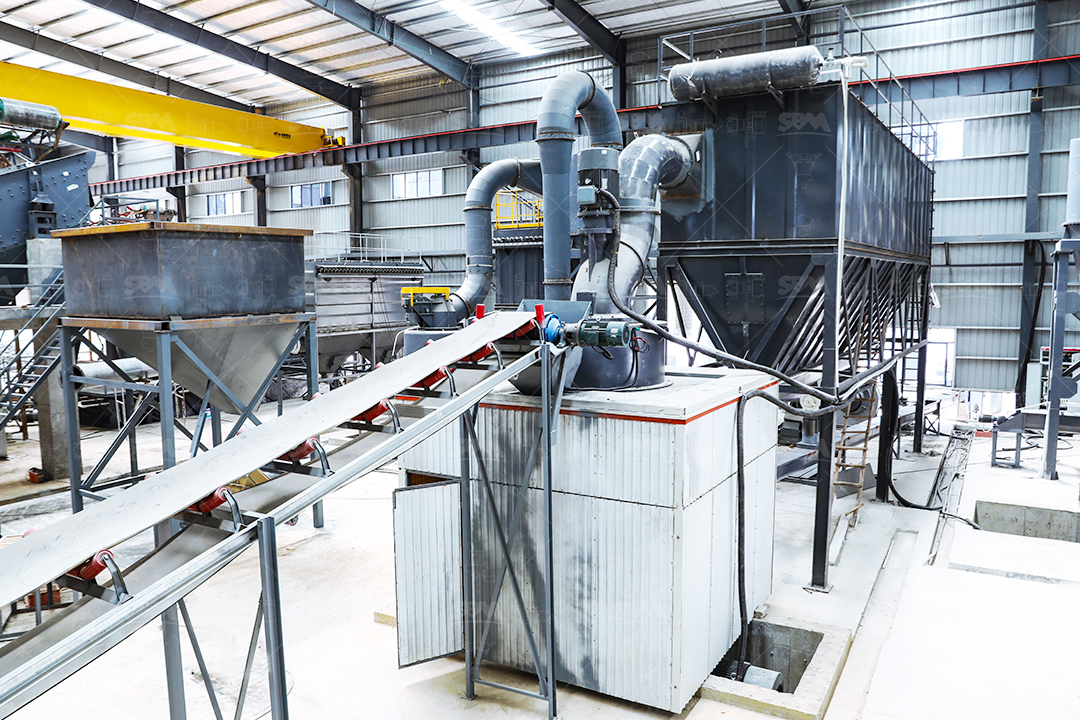
Addressing Customer Pain Points with Tailored Grinding Solutions
Pain Point 1: High Energy Consumption and Low Output
Traditional ball mills are notorious for energy waste, often consuming 30-40% more power than modern alternatives for the same throughput. For pyrophyllite processing, this translates directly into inflated operational budgets. LM Vertical Roller Mill offers a compelling solution. Its integrated design combines crushing, drying, grinding, and powder separation in a single compact unit, reducing floor space by up to 50% compared to ball mill systems. The grinding rollers apply direct pressure on the material bed, achieving 30-40% lower energy consumption. For a medium-scale pyrophyllite powder plant targeting 10-15 tph with a fineness of 325 mesh, the LM series can cut electricity bills substantially while maintaining stable 24/7 operation.
Pain Point 2: Frequent Wear Part Replacement and Downtime
Pyrophyllite's hardness (1-2 on Mohs scale) is low, but its abrasive nature—especially when impurities like quartz are present—can accelerate wear on grinding components. Clients often complain about having to replace rollers and rings every few months. MTW European Trapezium Grinding Mill addresses this with its unique wear-proof perching knife design. The combined-type shovel blade allows only the blade tip to be replaced during maintenance, not the entire assembly. Additionally, the curved shovel blades optimize the feeding angle, extending roller and ring service life significantly. This innovation reduces both spare parts inventory and maintenance labor costs.
Pain Point 3: Inconsistent Particle Size and Low Fineness
Producing pyrophyllite powder finer than 800 mesh with traditional Raymond mills often leads to uneven particle distribution and excessive coarse particle carryover. For high-value applications like masterbatch or artificial stone, this is unacceptable. SCM Ultrafine Mill employs a multi-rotor classifier and frequency-conversion control, enabling one-time production of D97≤5μm (approximately 2500 mesh). Its heavy rotor design and balanced grinding chamber eliminate vibration, even during prolonged operation. The result is a uniform powder with no spillover of coarse particles, meeting the most stringent quality specifications.
Pain Point 4: Environmental and Dust Control Compliance
Regulatory pressure is mounting worldwide for industrial powder processing to minimize dust emissions and noise. Traditional mills often leak fine particles, causing workplace hazards and fines. Both the LUM Ultrafine Vertical Mill and the LM Vertical Roller Mill operate under negative pressure with fully sealed systems. The LUM series features an optimized sound insulation room and muffler, while the LM series uses a double powder collection method combining cyclones and pulse dust collectors. These systems ensure emissions meet national standards, and the noise level remains low enough for indoor installation near residential areas.
Pain Point 5: High Capital Investment for Full Production Lines
Building a complete pyrophyllite processing plant from crusher to packing can require a significant upfront investment. Many customers hesitate because they fear the system will be too complex or the payback period too long. SBM Machinery provides total solution packages, offering everything from single units to turnkey grinding systems. The Ball Mill remains an affordable entry-level option for coarse powder (0.2-0.074mm), while the MTW Series and LM Series offer scalable upgrades. With over 180 countries served, SBM designs each line according to local power conditions, material moisture, and target market, ensuring the lowest total cost of ownership.
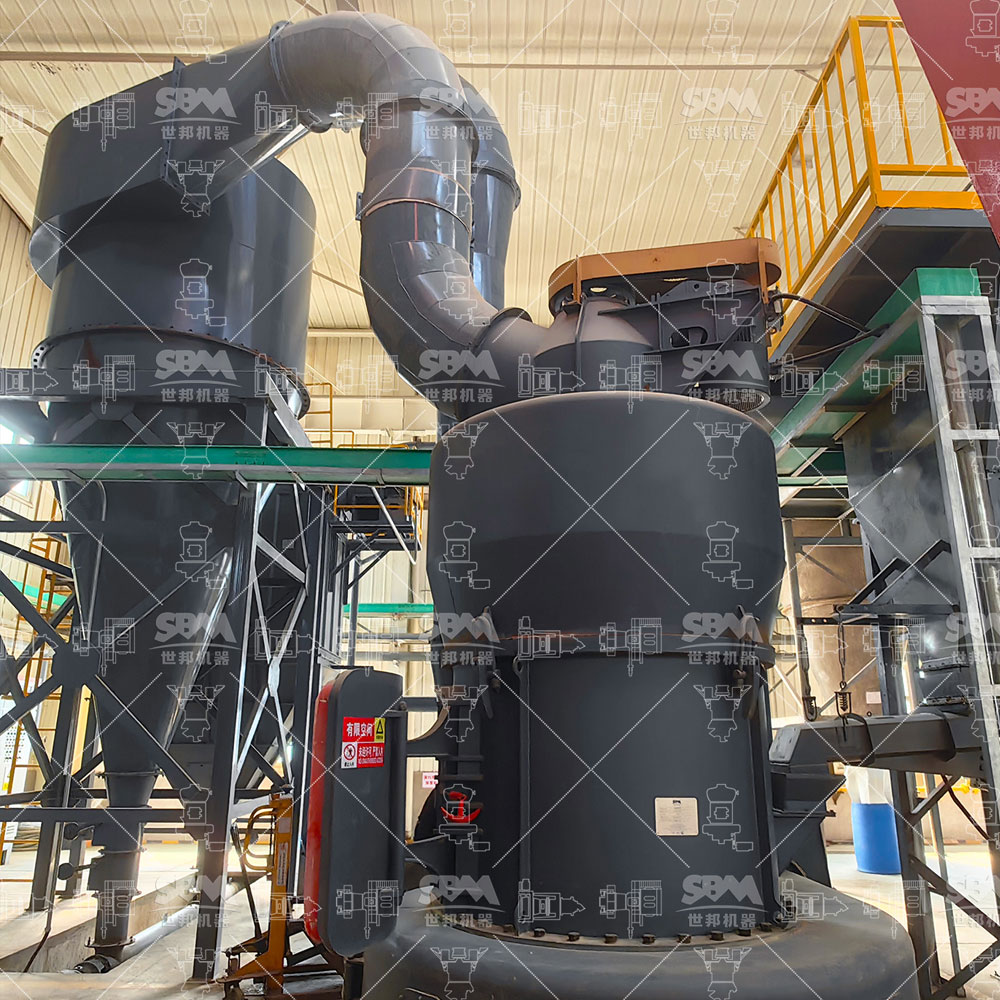
Technology Comparison for Pyrophyllite Applications
| Equipment | Input Size (mm) | Output Size (mesh) | Capacity (tph) | Best For |
|---|---|---|---|---|
| MTW European Trapezium Mill | 0-50 | 30-400 | 3-40 | Medium-coarse pyrophyllite for ceramics, refractories |
| LM Vertical Roller Mill | 0-50 | 30-400 | 3-400 | Large-scale production, high energy efficiency |
| SCM Ultrafine Mill | 0-20 | 325-4000 | 0.5-25 | Ultrafine pyrophyllite for plastics, masterbatch |
| LUM Ultrafine Vertical Mill | 0-20 | 325-4000 | 10-70 | High-end ultrafine with low energy, large capacity |
| Ball Mill | 0-25 | 0.2-0.074mm | 3-65 | Coarse grinding, budget-friendly option |
Real-World Performance and Global Trust
SBM's grinding equipment has been deployed in over 180 countries, processing everything from limestone for desulfurization to petroleum coke for power plants. A pyrophyllite processor in Southeast Asia recently switched from a traditional Raymond mill to the SCM Ultrafine Mill, doubling their capacity while cutting energy costs by 30%. Another client in the Middle East uses the LM Vertical Roller Mill to produce 400-mesh pyrophyllite for oil well drilling additives, achieving 99.5% consistency in particle size with zero dust violations. These cases illustrate that the right grinding technology turns pyrophyllite from a simple mineral into a high-margin industrial asset.
FAQ: Common Customer Concerns
1. I have to produce both coarse (100 mesh) and ultrafine (1250 mesh) pyrophyllite from the same plant. Do I need two separate machines?
Not necessarily. The MTW European Trapezium Mill can handle output from 30 to 400 mesh by adjusting the classifier speed and grinding pressure. For ultrafine grades above 800 mesh, the SCM Ultrafine Mill is recommended. However, many clients install a vertical roller mill (like the LM series) as the primary unit and add a secondary ultrafine mill for niche products. SBM can design a shared classification and conveying system to minimize duplication.
2. My raw pyrophyllite has moisture content up to 8%. Will it clog the mill?
Standard Raymond mills struggle with moist feed, but the LM Vertical Roller Mill includes an integrated drying function. Hot air from a furnace or waste heat source can be introduced into the mill, removing moisture during the grinding process. For materials with moisture below 15%, no external pre-dryer is needed. The MTW series also features an arc air duct that improves airflow and prevents condensation inside the mill chamber.
3. How do I reduce the frequency of replacing grinding rollers and rings?
Wear is inevitable, but the MTW series' perching knife design allows you to replace only the blade tip rather than the entire shovel assembly. The rollers and rings in both MTW and LM mills are made from high-chrome alloy or ceramic composite materials, which can extend service life 2-3 times compared to standard manganese steel. Additionally, maintaining a stable material bed and avoiding empty running will significantly reduce wear.
4. Is it possible to automate the entire pyrophyllite grinding line with remote monitoring?
Yes. The LM Vertical Roller Mill and LUM Ultrafine Vertical Mill come with PLC/DCS automatic control systems. These systems allow free switching between local and remote operation, real-time monitoring of grinding pressure, disc speed, and classifier rotation, and automatic fault alerts. You can operate the line from a control room or even integrate it into a factory-wide MES system. This reduces labor costs and ensures consistent product quality.
5. What is the warranty and after-sales support for SBM grinding mills?
SBM provides a standard warranty covering manufacturing defects for the first 12 months from commissioning. Beyond that, a global network of service centers and spare parts warehouses ensures rapid response—typically within 48 hours for critical breakdowns. SBM also offers free process optimization visits for clients who need to adjust product specifications or increase capacity. The company has been serving the powder processing industry for decades, and its technical team can provide remote troubleshooting via video or data link.


