

Technical application and challenges of raymond mill in fluorite powder processing
Published: November 15, 2025
Raymond mill, as a core grinding equipment in the non-metallic mineral processing industry, plays a pivotal role in the production of fluorite powder—a critical raw material for the chemical, metallurgical, ceramic, and optical industries. This article provides a comprehensive overview of the technical applications, operational advantages, and prevalent challenges associated with using Raymond mill for fluorite powder processing, drawing on our company's extensive product portfolio including the MTW European Trapezium Grinding Mill, LM Vertical Roller Mill, SCM Ultrafine Grinding Mill, LUM Ultrafine Vertical Roller Mill, and Ball Mill. The discussion is framed around real-world operational hurdles such as high energy consumption, wear of grinding components, inconsistent particle size distribution, moisture sensitivity, and dust control. By examining each product's specific features—such as cone gear whole transmission, arc air duct design, and intelligent control systems—we present actionable insights to help customers optimize throughput, reduce operating costs, and achieve consistent product quality.
1. Introduction to Fluorite Powder Processing with Raymond Mill
Fluorite (calcium fluoride, CaF₂) is a naturally occurring mineral widely used in the production of hydrofluoric acid, aluminum fluoride, synthetic cryolite, and as a flux in steelmaking. The grinding process is critical to unlock its commercial value, as particle size directly influences reactivity, purity, and downstream application performance. Raymond mill has been a workhorse in this field for decades due to its mechanical simplicity, relatively low capital cost, and ability to produce fine powders in the range of 30–400 mesh (approximately 500–38 microns). However, as market demands shift toward higher purity, finer particle sizes, and lower energy footprints, operators face several technical challenges. Our company's grinding equipment line—especially the MTW series, LM series, SCM series, and LUM series—has been engineered to address these pain points while maintaining operational reliability.
2. Key Technical Applications
2.1 MTW European Trapezium Grinding Mill for Medium-Fine Fluorite Powder
The MTW Raymond mill is particularly well-suited for fluorite powder processing requiring output sizes between 30 and 400 mesh (typical for ceramic and flux applications). Its cone gear whole transmission system ensures higher transmission efficiency and lower energy consumption compared to traditional spur gear designs. The arc air duct design minimizes air energy loss, which is critical when processing sticky or moisture-laden fluorite ore. The unique worn-proof perching knife design—where only the blade is replaced during maintenance—significantly reduces downtime and spare parts costs. For fluorite ore with input sizes up to 50 mm, the MTW mill can process 3–40 tons per hour, making it ideal for medium-scale operations.
2.2 LM Vertical Roller Mill for Large-Volume Processing
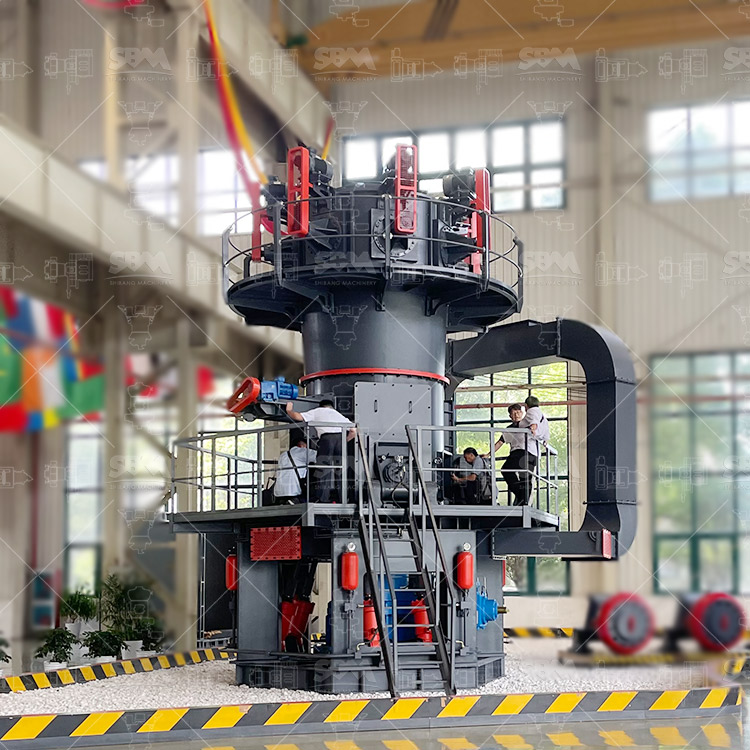
When throughput requirements exceed 40 tph, the LM Vertical Roller Mill becomes the preferred choice. Its integrated drying, grinding, and powder-selection functions are particularly advantageous for fluorite ore with high surface moisture (common in wet mining operations). The grinding rollers do not contact the grinding plate directly, reducing wear and extending service life. For fluorite powder applications in the metallurgical industry (typically 100–200 mesh), the LM mill offers energy savings of 30–40% compared to ball mill systems. The automatic control system allows operators to adjust grinding pressure and classifier speed remotely, ensuring stable product fineness even when feed quality fluctuates.
2.3 SCM Ultrafine Grinding Mill for High-Fineness Fluorite
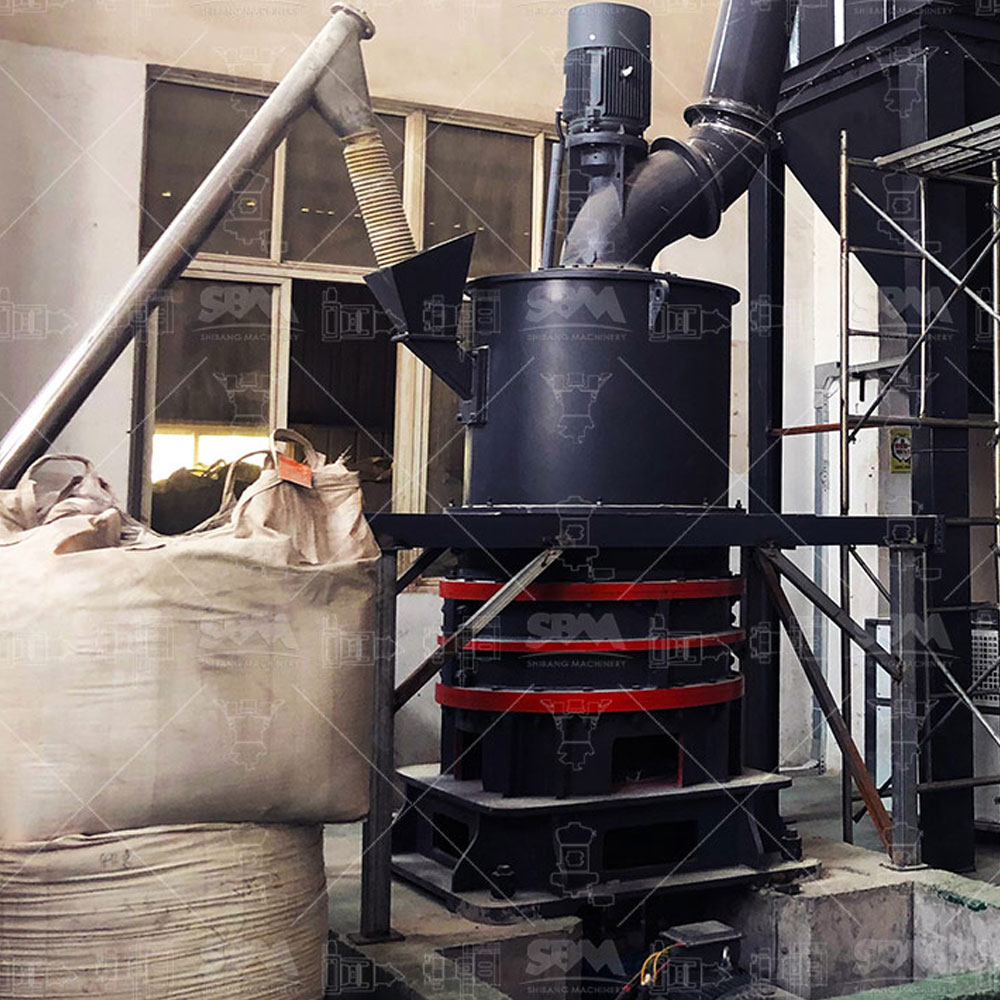
For industries requiring ultra-fine fluorite powder—such as optical lens manufacturing or high-grade ceramics—the SCM Ultrafine Grinding Mill delivers fineness from 325 to 2500 mesh (D97 ≤ 5 μm). Its heavy rotor design and special material rollers and rings offer several times the durability of standard Raymond mill components. The vertical turbine powder classifier achieves accurate cut sizes without coarse powder spillover. This mill is especially valued in applications where product consistency and high specific surface area are paramount.
2.4 LUM Ultrafine Vertical Roller Mill for High-Capacity Ultra-Fine Grinding
The LUM series combines vertical mill efficiency with ultra-fine grinding capabilities, handling capacities of 10–70 tph with output sizes up to 4000 mesh. Its multi-rotor powder classifier ensures customized fineness distribution, eliminating low-grade material. For fluorite processors aiming at high-value markets like PVC compounding or non-woven fabrics, the LUM mill's PLC/DCS control system enables precise grinding pressure adjustment, resulting in consistent product quality with minimal operator intervention.
3. Technical Challenges in Fluorite Powder Processing
3.1 High Energy Consumption and Wear
Fluorite is a relatively soft mineral (Mohs hardness 4) but can be abrasive due to silica impurities. Traditional Raymond mills often suffer from rapid wear of grinding rollers and rings, leading to frequent shutdowns and high spare parts costs. Additionally, the energy required to achieve fine particle sizes—especially below 200 mesh—can escalate operational expenses. Our MTW and LM mills address this through curved shovel blades that change the feeding angle and advanced material selection, but operators must still monitor wear patterns regularly and adjust feed rates to optimize the trade-off between throughput and component life.
3.2 Moisture Sensitivity and Material Handling
Fluorite ore often contains surface moisture from mining and washing operations. High moisture content can cause material to stick to grinding surfaces, reduce classification efficiency, and even block the air duct system. The arc air duct design in the MTW mill and the integrated drying function in the LM mill help mitigate this, but pre-drying may still be necessary for wet feed. Operators need to implement moisture control strategies, such as blending with dry material or using hot air injection, to maintain stable operation.
3.3 Particle Size Distribution Control
Achieving a narrow particle size distribution (PSD) is critical for fluorite powder used in high-end applications like optical glass or chemical synthesis. Traditional Raymond mills can struggle with PSD consistency because of variations in feed rate and classifier performance. The SCM and LUM mills offer frequency-conversion control and multi-rotor classifiers that improve PSD precision, but calibration and regular maintenance of the classifier are essential. Customers often report that adapting the classifier speed to match feed characteristics requires initial trial runs and periodic adjustments.
3.4 Dust Pollution and Environmental Compliance
Fluorite powder is fine and can become airborne easily, posing health risks and causing environmental non-compliance. Older Raymond mill designs often have leakage points at joints and discharge ports. Our mills incorporate negative-pressure operation, fully sealed systems, and efficient pulse dust collectors. However, when processing ultra-fine powder (e.g., 1250 mesh or finer), the dust load on filters increases, requiring proper sizing of the dust collection system. Operators must also check the integrity of seals regularly to prevent fugitive emissions.
3.5 Scalability and Investment Complexity
Small-scale fluorite processors often start with a single Raymond unit but later face difficulties scaling up due to space constraints or inconsistent product quality across multiple lines. The LM and LUM series mills reduce this challenge by offering compact layouts (50% smaller footprint compared to ball mill systems) and built-in automation. Yet, the initial investment for a complete grinding system—including feeders, classifiers, dust collectors, and control panels—can be substantial. Our turnkey solution approach helps clients plan for modular expansion, but careful feasibility analysis is required to match equipment capacity to long-term production goals.
4. Conclusion
Raymond mill technology continues to evolve to meet the demanding requirements of fluorite powder processing. From the robust MTW European Trapezium Mill for general-purpose grinding to the high-capacity LM Vertical Roller Mill and the ultra-fine SCM and LUM series, our product line offers tailored solutions for every stage of the value chain. While challenges such as wear, moisture sensitivity, PSD control, dust management, and scalability remain, ongoing innovations in transmission design, classifier technology, and intelligent control systems are helping customers overcome these obstacles. For fluorite processors seeking to improve efficiency, reduce operating costs, and achieve consistent product quality, selecting the right mill configuration—and partnering with a total solution provider—is the key to long-term success.
Frequently Asked Questions (FAQ)
Q1: Why does my Raymond mill produce inconsistent particle size when processing fluorite, even when I use the same settings?
Inconsistent particle size can result from fluctuations in feed material hardness, moisture content, or feed rate. Also, wear on the classifier blades or grinding rollers can alter the cut point. We recommend checking the classifier speed calibration and inspecting the wear condition of the grinding components. Upgrading to a mill with frequency-conversion control, like the SCM Ultrafine Mill, can improve PSD consistency.
Q2: How can I reduce the high wear rate of grinding rollers and rings in my current Raymond mill when grinding fluorite?
First, ensure that the feed material is screened to remove large foreign objects (e.g., metal scraps) that can accelerate wear. Second, consider using a mill with a curved shovel blade design and replaceable blade tips, as found in the MTW series. Additionally, adjusting the feeding angle and reducing the grinding pressure slightly can slow wear, though this may reduce throughput.
Q3: My fluorite powder processing line frequently stops due to material clogging in the air duct. What can cause this, and how do I fix it?
Clogging is often caused by high surface moisture in the fluorite feed, which makes the powder sticky. Check your feed moisture content—if it exceeds 5%, pre-drying or blending with dry material is advisable. The arc air duct design of the MTW mill helps reduce energy loss and material buildup, but regular cleaning of the duct and check of the high-strength guard plate is still recommended.
Q4: Is it possible to produce fluorite powder finer than 1250 mesh using a Raymond mill, and what modifications are needed?
Yes, but standard Raymond mills may struggle beyond 800 mesh. For ultra-fine grinding (up to 2500 mesh), the SCM Ultrafine Mill or LUM Ultrafine Vertical Roller Mill is more suitable. These mills feature heavy rotor designs, multi-rotor classifiers, and frequency-conversion control. If you must use a standard Raymond mill, you may need to add a separate high-efficiency classifier and reduce the feed rate, but this often reduces overall efficiency.
Q5: How do I ensure my fluorite grinding operation meets local environmental dust emission standards?
Invest in a mill with a sealed negative-pressure system and an efficient pulse dust collector. Our LM and LUM series mills are designed for low dust spillover. Additionally, consider installing a secondary baghouse filter and using sound insulation rooms to reduce noise. Regular maintenance of seals, gaskets, and filter bags is essential to maintain compliance.


