

Manganese ore applications and grinding equipment
Published: October 11, 2023
Manganese ore, a critical raw material in steelmaking, battery production, and chemical manufacturing, demands high-precision grinding to unlock its full industrial value. The applications of manganese ore span from desulfurization in metallurgy to the production of high-purity manganese dioxide for lithium-ion batteries, requiring grinding equipment that ensures consistent fineness, low energy consumption, and minimal downtime. Shanghai SBM Machinery Equipment Co., Ltd. (SBM Machinery) provides a comprehensive suite of grinding solutions, including European trapezium mills, vertical roller mills, ultrafine mills, and ball mills, tailored to the unique needs of manganese ore processing. With over 180 countries served, SBM's equipment addresses common client pain points such as high wear rates, energy inefficiency, and complex maintenance, delivering robust performance for capacities ranging from 0.5 to 400 tph and fineness from 30 to 2500 mesh. This article explores the diverse applications of manganese ore and the specialized grinding equipment that optimizes its processing, ensuring cost-effective, high-quality outputs for global industries.
Manganese Ore Applications in Industry
Manganese ore is indispensable in modern manufacturing, with its primary applications driving demand for precise grinding equipment. In the steel industry, manganese acts as a deoxidizer and alloying element, improving strength and workability. For this, grinding to 30–200 mesh is typical, often using MTW European Trapezium Mills or LM Vertical Roller Mills to achieve consistent particle size. In the battery sector, high-purity manganese dioxide requires ultrafine grinding to 325–2500 mesh, leveraging SCM Ultrafine Mills or LUM Ultrafine Vertical Mills for superior fineness. Chemical applications, such as fertilizer production and water treatment, demand medium fineness, where ball mills offer reliable, low-cost solutions. Environmental desulfurization processes also utilize manganese ore powder, with limestone powder preparation benefiting from the LM mill's drying and grinding integration. Each application presents unique challenges, from energy consumption to wear resistance, which SBM equipment addresses through advanced design features.
Grinding Equipment for Manganese Ore
European Trapezium Mill (MTW Series)
The MTW Series European Trapezium Grinding Mill is engineered for medium-capacity manganese ore grinding, with input sizes up to 50 mm and outputs from 30 to 400 mesh. Its cone gear whole transmission ensures high efficiency, while the arc air duct design minimizes energy loss. Clients often face wear-related downtime, but the unique wear-proof perching knife design reduces costs by allowing only blade replacement. For manganese ore with moderate hardness, the MTW mill delivers 3–40 tph, making it ideal for small to mid-scale operations. The volute design enhances wind-driven transmission, reducing maintenance frequency—a common pain point for operators seeking reliability.
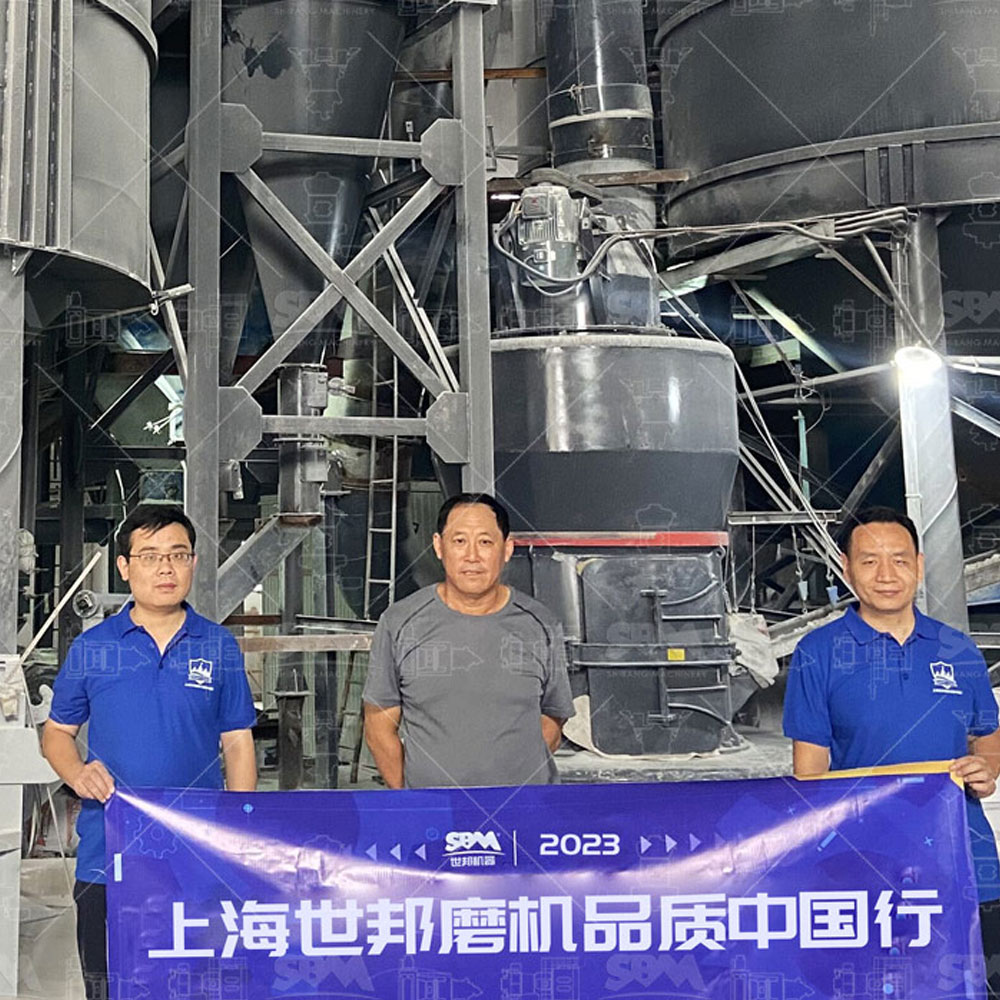
LM Vertical Roller Mill
For large-scale manganese ore grinding, the LM Vertical Roller Mill excels with capacities up to 400 tph and fineness adjustable from 30 to 400 mesh. It integrates crushing, drying, and grinding, solving the pain point of high floor space requirements by occupying 50% less area than ball mills. The automatic control system enables remote operation, reducing labor costs—a key advantage for clients in high-wage regions. With 30–40% lower energy consumption than ball milling systems, the LM mill addresses costly energy bills. Its sealed, negative-pressure operation ensures dust-free environments, meeting strict environmental standards. For manganese ore with high moisture content, the drying function prevents clogging, a common issue in traditional mills.
Ultrafine Mill (SCM Series)
The SCM Ultrafine Grinding Mill is tailored for high-fineness manganese ore applications, such as battery-grade powder, achieving D97≤5 µm (325–2500 mesh). Its heavy rotor design and tight test method extend roller and ring life several times longer than standard mills, tackling wear as a major client pain point. Frequency-conversion control allows precise fineness adjustment, while the efficient double powder collecting method exceeds international environmental standards. With a capacity of 0.5–25 tph, it suits niche markets requiring ultra-pure manganese. The intelligent control system automates feedback, saving labor and reducing human error—critical for consistent quality in competitive sectors.
_1781886216492.jpg)
Ultrafine Vertical Mill (LUM Series)
The LUM Ultrafine Vertical Mill combines Taiwan grinding roller technology and German powder separation, achieving 325–4000 mesh for premium manganese ore products. Its multi-rotor classifier ensures no coarse powder spillover, addressing the pain point of inconsistent quality. With capacities of 10–70 tph, it serves medium to large operations in PVC, artificial stone, and cable industries. The PLC/DCS automatic control system stabilizes operation, reducing vibration and noise—a relief for clients facing strict noise regulations. For manganese ore processing, the LUM mill's unique grinding curves improve material bed formation, boosting efficiency and reducing re-grinding needs.
Ball Mill
The Ball Mill, a mature technology for manganese ore, handles input sizes up to 25 mm and outputs from 0.074 to 0.2 mm. Clients often report high energy consumption and ball wear, but SBM's optimizations—improved structure and new materials—cut spare parts costs. Dry ball mills suit common powder production, while wet ball mills excel in mineral dressing. With capacities of 3–65 tph, it remains cost-effective for bulk grinding. For manganese ore, the ball mill's simplicity ensures low maintenance, though energy efficiency is lower than vertical mills. SBM's design enhancements mitigate wear, a frequent pain point in traditional ball mills.
Addressing Client Pain Points
Clients in manganese ore grinding face several recurring issues. High wear from abrasive ore is mitigated by SBM's wear-proof shovel blades and special alloy coatings. Energy inefficiency, especially in older mills, is countered by LM and LUM mills' 30–40% lower consumption. Dust pollution is eliminated through sealed, negative-pressure systems in vertical roller and ultrafine mills. Labor costs are reduced with PLC/dcs automatic controls, enabling remote monitoring. Finally, inconsistent product fineness is tackled by advanced classifiers and frequency-conversion controls, ensuring tight particle distribution for high-value applications like battery-grade manganese.
Conclusion
Manganese ore applications demand versatile grinding solutions, from coarse steelmaking powders to ultrafine battery materials. SBM's equipment portfolio—MTW, LM, SCM, LUM, and ball mills—offers tailored solutions for every capacity and fineness requirement, backed by decades of expertise and global reach. By addressing pain points like wear, energy, and automation, SBM ensures clients achieve operational excellence in manganese ore processing.
Frequently Asked Questions (FAQs)
- Why does my manganese grinding equipment wear out quickly? Abrasive manganese ore accelerates wear, but SBM mills feature replaceable blades and special alloys that extend part life, reducing maintenance intervals.
- How can I reduce energy costs in manganese ore grinding? Use LM or LUM vertical mills, which consume 30–40% less energy than ball mills, thanks to direct grinding and integrated drying systems.
- What equipment prevents dust in manganese processing? SBM's LM and LUM mills operate under negative pressure with sealed systems, while the SCM uses double powder collectors to exceed environmental standards.
- Can I achieve ultrafine manganese powder for battery use? Yes, the SCM ultrafine mill achieves D97≤5 µm (325–2500 mesh), ideal for battery-grade manganese dioxide with precise fineness control.
- How do I control fineness consistency in large-scale operations? SBM mills use frequency-conversion drives and multi-rotor classifiers, ensuring uniform particle size without coarse powder spillover.


