

Applicability and workflow of processing aluminum ash with vertical mill
Aluminum ash, a byproduct of aluminum smelting and recycling, presents both environmental hazards and opportunities for resource recovery. Processing aluminum ash with a vertical mill, specifically utilizing the LM Vertical Roller Mill or LUM Ultrafine Vertical Mill, offers a highly efficient, low-energy, and environmentally compliant solution. The vertical mill integrates crushing, grinding, drying, and powder classification into a single system, significantly reducing the footprint and operational complexity compared to traditional ball milling or Raymond mill setups. This workflow effectively addresses common industry pain points such as high energy consumption, excessive wear, poor dust control, and inconsistent product fineness, while enabling the recovery of valuable metallic aluminum and the production of fine alumina (Al₂O₃) powders for reuse in construction or ceramics. The following sections detail the applicability, technical advantages, and step-by-step workflow tailored for aluminum ash, based on field-tested configurations from Shanghai SBM Machinery Equipment Co., Ltd.
1. Applicability of Vertical Mills for Aluminum Ash
Aluminum ash is typically classified into two types: (1) primary aluminum ash (rich in metallic aluminum, 30-70%), and (2) secondary aluminum ash (lower metallic content, high oxide content, often containing salt flux residues). Processing either type requires equipment capable of handling abrasive, sticky feed materials while achieving fine grinding (30-400 mesh or finer to liberate metallic particles). The LM Vertical Roller Mill is the preferred choice for capacities up to 400 tph and feed sizes up to 50 mm, making it ideal for large-scale recycling plants. For higher fineness requirements (325-2500 mesh) and smaller capacity (10-70 tph), the LUM Ultrafine Vertical Mill excels, particularly when producing high-grade alumina powder for value-added applications. Both mills feature direct grinding on a rotating table without metal-to-metal contact between rollers and disc, drastically reducing wear rates and maintenance downtime – a critical advantage over ball mills where metal balls degrade rapidly when processing ash containing hard aluminum oxide particles.
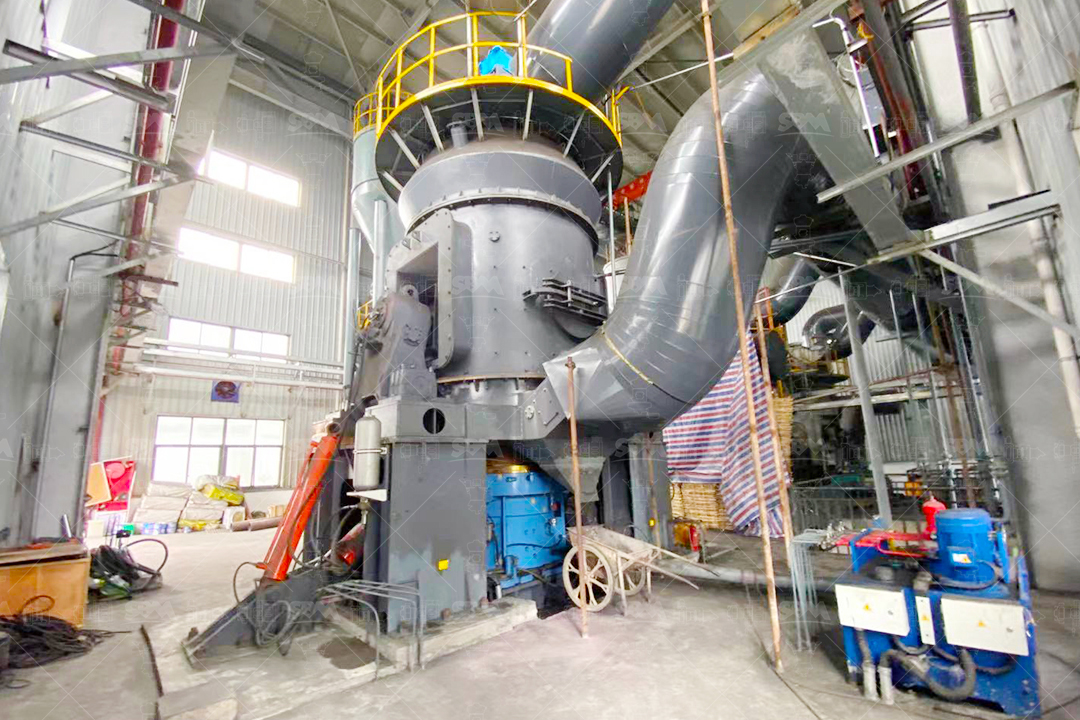
2. Workflow: Step-by-Step Processing
2.1 Pre-treatment and Feeding
Aluminum ash is first crushed using a jaw crusher or hammer crusher to achieve a maximum particle size of <50 mm (for LM mill) or <20 mm (for LUM mill). A magnetic separator is installed in the feed conveyor to remove any ferrous contaminants, protecting the mill internals. The material is then fed into the vertical mill via a vibration feeder, ensuring a controlled, uniform feed rate. The built-in hot air generation system (optional) provides drying air up to 350°C, essential for reducing moisture content from 15-25% down to <1% during the grinding process.
2.2 Grinding and Classification Inside the Mill
Inside the mill, the material falls onto the center of the rotating grinding table. Centrifugal force moves it outward toward the grinding ring. Hydraulic pressure pushes the grinding rollers against the material bed. The curved design of the roller shell and lining plate (especially in LUM mill) optimizes the material bed formation, improving grinding efficiency and increasing the proportion of finished product from primary grinding. The ground fine powder is lifted by the hot air stream to the dynamic classifier at the top of the mill. The classifier rotates at a controlled speed to separate particles: oversized particles drop back to the grinding table for further size reduction, while fine particles meeting the target fineness (e.g., 200 mesh or 1250 mesh) pass through and exit the mill with the air stream.
2.3 Dust Collection and Product Recovery
The air stream carrying finished product enters a pulse-jet bag filter. The system operates under negative pressure throughout, ensuring no dust escape. The high-efficiency double powder collecting method (bag filter + pulse dust collector in LUM design) achieves dust emission levels far below international environmental standards. Collected fine powder is transported via a screw conveyor or air slide to storage silos. The cleaned air is discharged to atmosphere or recirculated to maintain thermal efficiency.
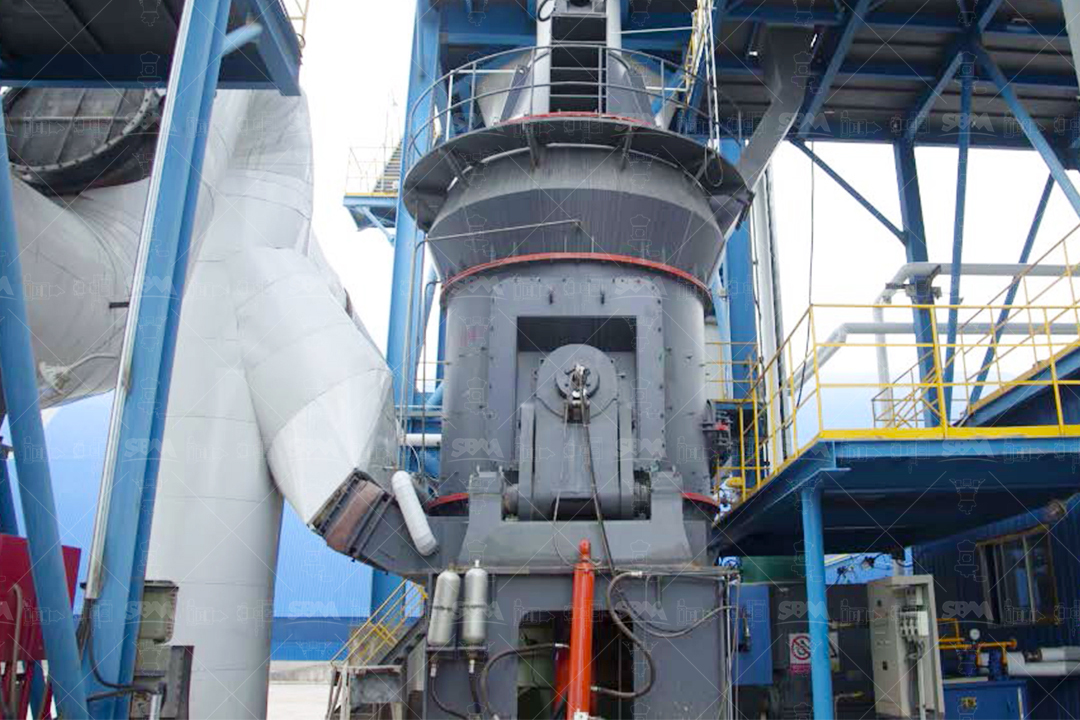
2.4 Post-Grinding Separation of Metallic Aluminum (Optional Step)
For aluminum ash with high metallic aluminum content, the ground product (typically 30-100 mesh) can be sent to an air classifier or vibrating screen to separate the denser metallic aluminum particles from the lighter oxide fraction. The metallic aluminum fraction (bright, malleable particles) can be directly re-melted, while the oxide-rich fine powder is sold as a raw material for refractory bricks, ceramic tiles, or as a filler in construction materials. This two-step process maximizes resource recovery and economic return.
3. Key Advantages over Traditional Methods
- Lower Operating Costs: The vertical mill consumes 30-40% less energy than ball milling systems. With no metal-to-metal contact between rollers and disc, wear part life is extended 2-3 times. The combined-type shovel blade (on European trapezium mill) or curved roller shell design reduces replacement costs – only the blade or roller tire needs replacement, not the entire assembly.
- Small Comprehensive Investment: The integrated design (crushing, drying, grinding, classifying, conveying) reduces floor space by approximately 50% compared to ball mill systems, and the mill can be arranged outdoors, saving building costs.
- Superior Environmental Performance: The whole system is enclosed and operates under negative pressure with pulse-jet bag filtration. Noise levels are low due to vibration-dampening design of the heavy rotor and balanced grinding chamber (especially in LUM mill). Dust spillover is eliminated, meeting or exceeding national emission standards.
- Intelligent Control: PLC/DCS automatic control system enables remote operation, real-time monitoring of grinding pressure, roller speed, classifier speed, and air temperature. Automatic feedback ensures consistent product fineness and stable operation, reducing the need for manual intervention.
4. Performance Specifications (Typical for Aluminum Ash)
| Parameter | LM Vertical Roller Mill | LUM Ultrafine Vertical Mill |
|---|---|---|
| Feed Size | ≤50 mm | ≤20 mm |
| Output Fineness | 30-400 mesh | 325-4000 mesh (D97≤5μm) |
| Capacity | 3-400 tph | 10-70 tph |
| Moisture Tolerance | ≤15% (drying available) | ≤10% (drying available) |
These specifications are based on standard configurations; actual performance depends on ash composition, moisture content, and target fineness. SBM's engineering team provides customized layout and control logic for each project, ensuring optimal recovery rates and lowest total cost of ownership.
5. Conclusion
The vertical mill workflow for processing aluminum ash delivers a robust, cost-effective, and environmentally sound solution to the growing challenge of aluminum waste management. By integrating multiple process steps into one compact unit, operators can significantly reduce capital expenditure, energy consumption, and maintenance burden while achieving high recovery rates of metallic aluminum and producing marketable fine oxide powders. As global aluminum production grows and environmental regulations tighten, adoption of vertical mill technology becomes not just a technical choice, but a strategic necessity for sustainable operations.
Frequently Asked Questions (FAQ)
- Q: Our aluminum ash has high moisture (up to 20%) – will the vertical mill handle it without pre-drying?
A: Yes, both the LM and LUM vertical mills are equipped with an integrated hot air drying system that can handle feed moisture up to 15-20% without external pre-dryers. The hot air stream inside the grinding chamber simultaneously dries and conveys the material, achieving final product moisture below 1%. Proper adjustment of air temperature (up to 350°C) and flow rate enables efficient processing. - Q: We experience very high wear costs with our current ball mill – roller and ring life is only 2 months. Will the vertical mill improve this?
A: Absolutely. The LM and LUM vertical mills are designed with no metal-to-metal contact between rollers and grinding table. The roller shell and lining plate are made of high-chromium wear-resistant alloy steel. In aluminum ash processing, typical roller/ring service life is 12-18 months before replacement is needed. Additionally, only the outer wear tire needs replacement (not the entire roller), reducing spare part costs by up to 60% compared to ball mill ball charges. - Q: We need consistent product fineness (d97=125μm) for our downstream ceramics process. Can the vertical mill maintain this without frequent manual adjustment?
A: Yes. The vertical mill is equipped with a PLC/DCS automatic control system that continuously monitors the classifier rotor speed, grinding pressure, and material feed rate. The system adjusts these parameters in real time to maintain target fineness (d97=100-200μm) within ±5% tolerance. Frequency-conversion control on the classifier motor provides precise cut-size adjustment. No manual tinkering is needed once the recipe is set. - Q: Our plant is in a residential area – how does the vertical mill control dust and noise compared to traditional technology?
A: The vertical mill system is fully enclosed and operates under negative pressure, so dust spillover is practically zero. The pulse-jet bag filter achieves outlet dust concentration <10 mg/Nm³ (exceeding typical national standards of 20-30 mg/Nm³). Noise levels are significantly lower than ball mills because the grinding mechanism involves rolling on a material bed (no impact noise) and the mill body is structurally damped. Measured noise at 1 meter from the mill is typically 75-82 dB(A) versus 90-100 dB(A) for comparable ball mill installations. Additional soundproofing options are available if required. - Q: We have limited space and want to expand capacity gradually. Is the vertical mill modular or scalable?
A: Yes. The vertical mill system is designed for modular expansion. A single LM mill can be installed first with capacity of 30-50 tph (for aluminum ash). As production needs grow, a second mill can be added in parallel without significant re-engineering of the common infrastructure (feed hopper, dust collection, product silos). The compact footprint (typically 50% of ball mill system) allows installation in tight spaces. SBM provides complete turnkey support for phased implementation, including layout optimization.


