

Raymond mill process flow for kaolin
Published: October 26, 2023
Summary: The Raymond mill process flow for kaolin represents a mature, efficient, and widely adopted methodology for transforming raw kaolin ore into finely ground industrial powder. This article provides a comprehensive technical overview of the complete process flow, from primary crushing and feeding to grinding, classification, and collection, with a specific focus on the application of advanced milling equipment such as the MTW European Trapezium Mill and the LM Vertical Roller Mill. Drawing on extensive industry experience and technical innovations, this guide addresses common operational pain points including low throughput, high energy consumption, excessive wear of components, and inconsistent product fineness. By understanding the optimized process flow and leveraging modern equipment designs, kaolin processors can achieve significant improvements in production efficiency, product quality, and operational cost control.
1. Introduction to Kaolin Processing with Raymond Mill Technology
Kaolin, also known as china clay, is a soft, white, naturally occurring clay mineral primarily composed of the mineral kaolinite. It is widely used in the production of ceramics, paper coatings, paints, rubber, plastics, and refractories. The processing of kaolin to achieve the required fineness and purity is a critical step in its industrial application. The Raymond mill, originally developed in the early 20th century, has evolved significantly over the decades. Modern Raymond mills, particularly the MTW Series European Trapezium Grinding Mill, have incorporated advanced engineering principles to overcome the limitations of traditional designs. The process flow for kaolin using a Raymond mill typically involves several key stages: raw material preparation (crushing and drying), feeding, grinding, classification, and product collection.
The choice of equipment and the specific configuration of the process flow depend on the feed characteristics of the raw kaolin, the desired product fineness, and the required capacity. Modern Raymond mills can handle input sizes up to 50mm and produce output fineness ranging from 30 to 400 mesh, with capacities from 3 to 40 tons per hour for the MTW series, and up to 400 tons per hour for the LM Vertical Roller Mill in larger applications. This flexibility makes them suitable for both small-scale and large-scale industrial operations.
2. Detailed Process Flow of Raymond Mill for Kaolin
2.1 Raw Material Preparation
The process begins with the extraction and initial preparation of the kaolin ore. Run-of-mine kaolin often contains moisture and oversized lumps. Therefore, the first step involves crushing the raw ore to a size suitable for the mill feed. Typically, a jaw crusher or hammer crusher is used to reduce the material to 20-50mm. For high-moisture kaolin, a drying step may be integrated using a rotary dryer or by utilizing the hot air system within the mill itself, especially in vertical roller mill configurations. Proper preparation ensures a consistent feed, which is crucial for stable mill operation and uniform product quality.
2.2 Feeding System
The crushed kaolin is then transported to the mill hopper via a bucket elevator or belt conveyor. A vibrating feeder or screw feeder, equipped with a variable speed drive, provides a controlled and uniform feed rate to the grinding chamber. This precise feeding is essential for maintaining the material bed stability inside the mill, directly impacting grinding efficiency and preventing issues such as mill vibration or choking.
2.3 Grinding Process
This is the core of the process. In the MTW Raymond Mill, the material falls onto the grinding table and is ground between the grinding roller and the grinding ring. The patented cone gear whole transmission system ensures high transmission efficiency and stable operation. The unique combined-type shovel blade design efficiently scoops and directs the material into the grinding zone. As the grinding table rotates, centrifugal force distributes the material evenly. The grinding rollers, which do not make direct metal-to-metal contact with the table (in vertical mill designs), apply pressure to crush and shear the kaolin particles. The arc air duct design in the MTW mill minimizes air energy loss, ensuring efficient material transport within the mill.
2.4 Classification
After grinding, the fine powder is carried upward by the air stream from the mill's fan. It passes through a classifier (or separator) located at the top of the grinding chamber. The classifier rotor speed is adjustable, allowing precise control over the final product fineness. Coarse particles that are not fine enough are rejected by the classifier and returned to the grinding table for further grinding. This internal classification system ensures a consistent and narrow particle size distribution in the final product, meeting strict specifications.
2.5 Product Collection
The fine kaolin powder, now meeting the required fineness, exits the mill with the airflow and is directed to a dust collection system. This typically consists of a cyclone collector and a pulse-jet bag filter. The cyclone collector performs primary separation, collecting the bulk of the finished product. The bag filter then captures any remaining fine particles, ensuring high collection efficiency (≥99.9%) and clean exhaust air. The collected powder is discharged through a rotary airlock valve and conveyed to storage silos or packaging stations.
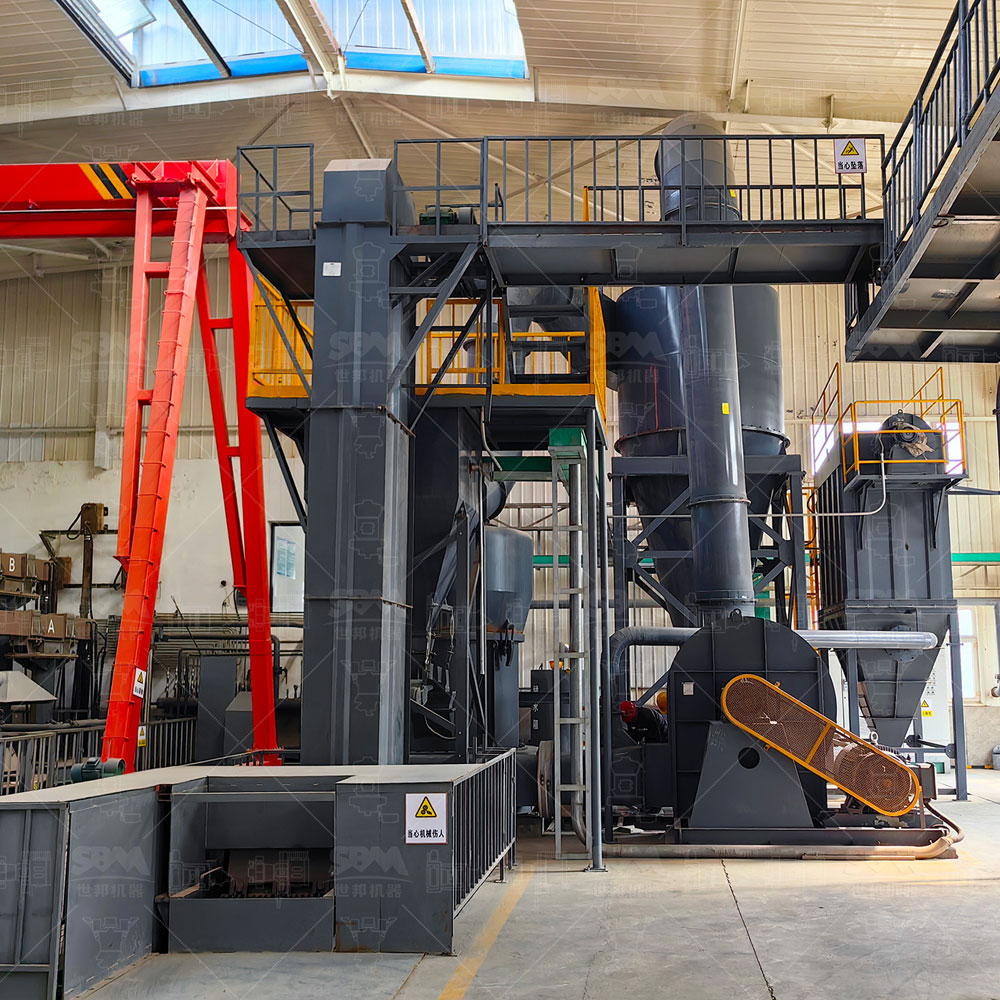
3. Advanced Equipment Options for Kaolin Grinding
While the classic Raymond mill process is effective, several advanced equipment options offer superior performance for specific requirements.
3.1 MTW European Trapezium Mill
This mill represents the pinnacle of Raymond mill technology. Its bevel gear integral transmission provides higher torque and smoother operation. The curved shovel blade design prolongs roller and ring life by optimizing the feeding angle, significantly reducing operational costs related to wear parts. The volute design of the air duct ensures smooth, energy-efficient airflow. These features make the MTW mill ideal for processing kaolin where consistent quality and high uptime are critical. Its input size can be up to 50mm with an output fineness of 30-400 mesh and capacity ranging from 3-40 TPH.
3.2 LM Vertical Roller Mill
For large-scale kaolin processing, the LM Vertical Roller Mill offers unmatched advantages in capacity and operational efficiency. It integrates crushing, drying, grinding, and powder separation into one compact unit. Its floor space is about 50% of a traditional ball mill system, significantly reducing civil engineering costs. The grinding rollers do not directly contact the grinding plate, leading to lower wear and longer service life. Energy consumption is 30-40% lower than ball mill systems. With an automatic control system for remote operation and high environmental protection standards (low noise, negative pressure operation), the LM mill is the preferred choice for high-capacity plants requiring fineness between 30-400 mesh and capacities up to 400 TPH.
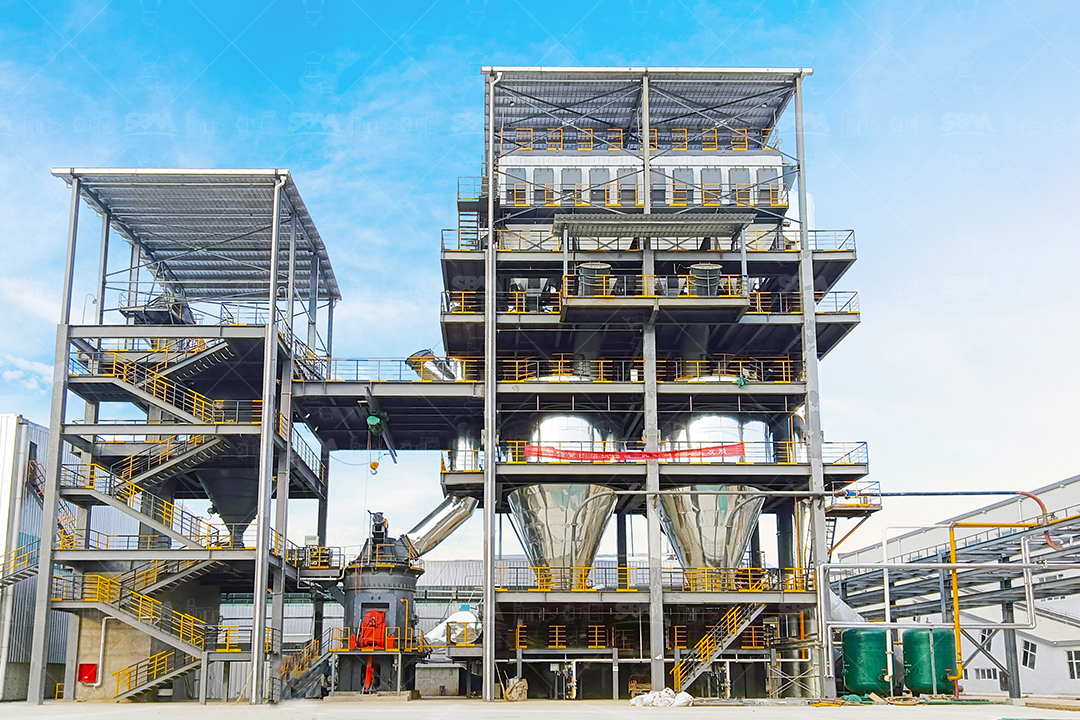
3.3 SCM Ultrafine Mill & LUM Ultrafine Vertical Mill
When kaolin products require ultra-high fineness (325-2500 mesh or finer), the SCM Ultrafine Mill is the solution. It can achieve D97≤5μm in a single pass. For even higher capacity in the ultrafine range (10-70 TPH), the LUM Ultrafine Vertical Mill incorporates German and Taiwanese separation technology, offering intelligent control and environmentally friendly operation. These mills are essential for high-value applications such as paper coating, high-grade paints, and specialty plastics.
4. Addressing Common Customer Pain Points
Customers in the kaolin grinding industry frequently face several critical challenges. The Raymond mill process flow, when implemented with modern equipment, directly addresses these issues:
- Low Output and High Energy Consumption: Traditional mills often suffer from low capacity and high electricity costs. Modern Raymond and vertical roller mills feature optimized grinding curves and transmission systems, delivering 30-40% higher energy efficiency compared to ball mills. The LM series, for instance, is specifically designed to solve the problem of low output while maintaining high fineness.
- High Wear Parts Cost: Frequent replacement of grinding rollers and rings is a major operational expense. The MTW mill’s combined-type shovel blade and curved blade design, along with the use of high-quality alloy materials for rollers and rings in both MTW and LM series, dramatically extend service life. The LM mill design, where the roller does not contact the grinding plate directly, further minimizes wear.
- Inconsistent Product Fineness: Achieving a stable and precise particle size distribution is crucial for downstream applications. Modern classifiers with frequency-conversion speed regulation (as in SCM and LUM mills) ensure accurate and stable cutting points, eliminating coarse powder contamination and guaranteeing consistent product quality.
- High Maintenance and Operational Complexity: Older mills require frequent manual intervention. The new generation of mills comes with PLC/DCS automatic control systems, enabling remote monitoring, automated lubrication (internal oil absorption systems), and easy adjustment of parameters. This reduces labor costs and minimizes unscheduled downtime.
- Environmental Compliance: Strict dust emission regulations are a growing concern. The negative pressure system, combined with high-efficiency pulse dust collectors and sealed equipment designs in all modern SBM mills, ensures dust-free operation, meeting or exceeding environmental standards with minimal noise pollution.
5. Conclusion
The Raymond mill process flow for kaolin has evolved from a simple grinding operation into a sophisticated, integrated system capable of meeting the most demanding industrial requirements. By selecting the appropriate equipment—whether it be the versatile MTW European Trapezium Mill, the high-capacity LM Vertical Roller Mill, or the ultra-fine SCM and LUM series—processors can overcome traditional pain points related to efficiency, costs, quality, and maintenance. SBM Machinery's comprehensive solutions, backed by decades of global experience, provide the expertise and equipment necessary to optimize every stage of the kaolin processing workflow.
Frequently Asked Questions (FAQ)
Q1: Why does my current Raymond mill produce inconsistent kaolin product fineness?
A: Inconsistent fineness is often caused by an outdated or poorly maintained classifier. The misalignment of blades or a fixed-speed rotor cannot compensate for variations in feed. Modern mills like the MTW or SCM use frequency-controlled classifiers that automatically adjust the rotor speed (RPM) to maintain a precise cut point. Additionally, an unstable material bed due to uneven feeding can cause surging. Upgrading to a mill with an intelligent control system and a high-efficiency turbo classifier will directly solve this problem by ensuring every particle exiting the mill meets your spec.
Q2: Our kaolin has a high moisture content. Can a Raymond mill handle it, or do we need a separate dryer?
A: It depends on the equipment. Traditional Raymond mills struggle with moisture above 6-8%, leading to clogging and reduced throughput. For high-moisture kaolin (up to 15-20%), the LM Vertical Roller Mill is the ideal solution. It integrates a drying function by introducing hot air into the grinding chamber, which simultaneously grinds and dries the material in a single step. This eliminates the need for a separate rotary dryer, reducing your capital expenditure and simplifying the process flow.
Q3: The grinding rollers and rings in our old mill wear out every few months. How can we extend their lifespan?
A: Frequent wear is a classic pain point. This is addressed by two key innovations in modern mills. First, the MTW mill features a patent-pending combined-type shovel blade. Only the blade tip needs replacement, not the entire assembly. Second, the grinding components in both the MTW and LM mills are made from special high-chromium alloys and wear-resistant materials. The LM mill has a unique advantage: its roller and grinding plate do not make direct contact. This design eliminates metal-on-metal friction during operation, reducing wear by several times compared to traditional mills where rollers directly press against a ring.
Q4: Our production capacity needs to increase, but we have limited space in our factory. What mill configuration is best?
A: For capacity expansion with space constraints, the LM Vertical Roller Mill is your best choice. Its integrated design (crusher, dryer, grinder, and classifier in one unit) has a footprint that is approximately 50% smaller than a traditional ball mill or Raymond mill system. The LM series can offer capacities up to 400 TPH while allowing for outdoor installation, which further saves indoor workshop space. This compact layout simplifies the civil engineering and foundation work, reducing overall project costs.
Q5: We need to produce ultra-fine kaolin for paper coating (d97 < 10µm). Is a standard Raymond mill suitable for this?
A: No, a standard Raymond mill (30-400 mesh) is not capable of consistently producing material finer than 400 mesh (38µm) for specification-critical applications like paper coating. For ultra-fine requirements, you must use a specialized mill such as the SCM Ultrafine Mill or the LUM Ultrafine Vertical Mill. The SCM mill uses a high-speed, multi-rotor classifier and a heavy rotor design to achieve D97≤5µm (approximately 2500 mesh). The LUM mill offers even higher throughput for ultra-fine kaolin, utilizing unique grinding curve designs to maximize the proportion of finished product from the first grind. These are the standard solutions for high-grade, ultra-fine kaolin powder.


