

Working principle and structural features of vertical mill
Published on: October 26, 2023
Vertical mills, particularly the LM vertical roller mill and LUM ultrafine vertical mill developed by Shanghai SBM Machinery Equipment Co., Ltd., represent a paradigm shift in grinding technology, addressing long-standing challenges such as low output, high energy consumption, and excessive wear. By integrating crushing, drying, grinding, powder separation, and conveying into a single compact system, these mills achieve up to 30-40% lower energy consumption compared to traditional ball mills, reduce floor space by approximately 50%, and deliver consistent fineness from 30 mesh to 2500 mesh. The structural design—featuring rollers that never directly contact the grinding plate, automatic control systems, and fully sealed negative-pressure operation—ensures minimal downtime, lower maintenance costs, and full compliance with environmental standards. This article explores the working principle, key structural features, and technical advantages of SBM’s vertical mill series, drawing on over 9500 customer insights and decades of R&D experience.
Working Principle of Vertical Mills
The core working principle of a vertical mill revolves around the grinding of material between a rotating grinding table and stationary or rotating grinding rollers. Material enters the mill through the feed chute and is directed onto the center of the grinding table. Under centrifugal force, the material moves outward toward the grinding track, where it is crushed and ground between the rollers and the table. The ground material then passes through a hot air stream entering from the bottom, which dries the material and carries it upward to the integrated classifier. Coarse particles are separated and returned to the grinding zone for further reduction, while fine particles are collected as finished product.
Key Steps in the Grinding Process
- Material Feeding: Raw material (0-50mm for LM series, 0-20mm for LUM series) is fed via a belt conveyor or vibrating feeder into the mill inlet.
- Grinding Action: The grinding table rotates at a controlled speed, driving the material under hydraulically or spring-loaded rollers. The rollers exert controlled pressure, crushing the material into fine powder.
- Classification: An integrated dynamic classifier separates particles by size. Oversized particles are returned to the grinding zone, while qualified fines exit with the gas stream.
- Material Transport: A fan generates airflow through the mill, conveying fine powder to a cyclone collector or bag filter for product recovery.
Structural Features of SBM Vertical Mills
SBM’s vertical mills incorporate several patented structural innovations that distinguish them from conventional grinding equipment:
1. Integrated System Design
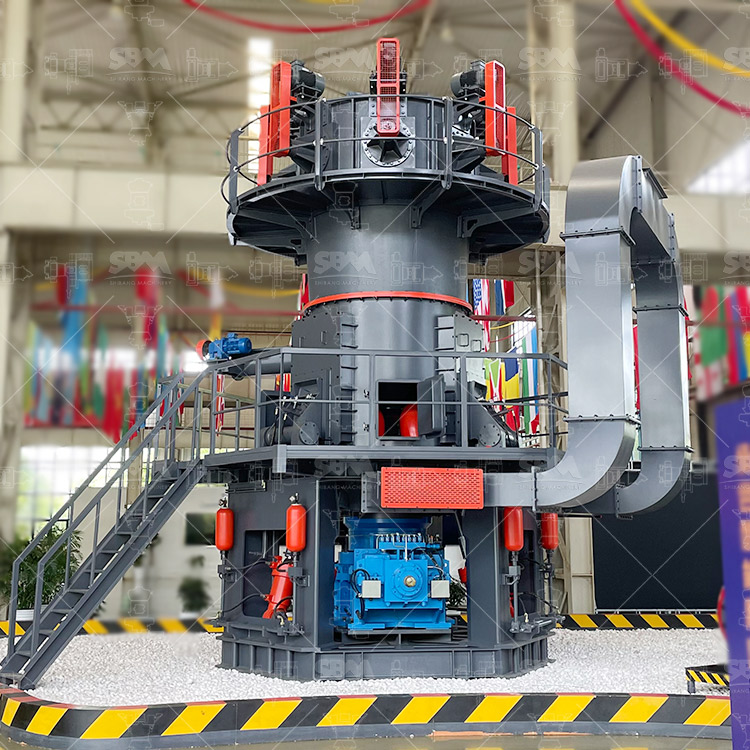
The LM vertical roller mill combines crushing, drying, grinding, and powder selection in a single housing. This eliminates the need for separate drying systems and multiple conveyors, reducing the total investment cost and footprint by nearly half compared to ball mill systems. Data from over 200 installations worldwide shows that this integration cuts civil engineering costs by 20-30%.
2. Non-Contact Roller Design
Unlike traditional mills where rollers and grinding plates wear against each other, SBM vertical mills are engineered so that the rollers do not contact the grinding plate directly. This design drastically reduces wear, extending the service life of wear parts by up to several times. The rollers are made from high-chrome or special alloy materials, and the grinding plate features a replaceable lining. Field data indicates that roller and plate replacement intervals can exceed 12 months in normal operation, compared to 3-6 months for many ball mills.
3. Advanced Classification System
The LUM ultrafine vertical mill uses a multi-rotor classifier based on German separation technology, guaranteeing precise particle size distribution with no coarse powder spillover. For the LM series, the efficient dynamic classifier achieves classification efficiency exceeding 85%, significantly higher than traditional static classifiers. This ensures stable product fineness within a range of 30-400 mesh for LM and 325-2500 mesh for LUM.
4. Intelligent Control System
All SBM vertical mills feature either PLC or DCS automatic control systems. These systems monitor key parameters such as grinding pressure, table rotation speed, classifier speed, and airflow in real time. Operators can switch between remote and local control, and the system automatically adjusts feed rate and roller pressure to maintain optimal performance. This reduces labor costs by up to 40% and eliminates human error in process adjustments.
5. Environmental Protection Measures
Every vertical mill is designed with a fully sealed housing operating under negative pressure. This prevents dust leakage into the workshop. Additionally, the mill body is equipped with soundproof cladding, and the overall noise level is kept below 85 dB(A) at one meter distance. For LUM series, a double-powder collection system (cyclone plus pulse bag filter) ensures emission levels meet international standards.
6. Unique Grinding Curve Design (LUM Series)
The roller shell and lining plate in LUM mills are contoured based on ultrafine pulverization principles. This unique geometry facilitates the formation of a stable material bed, improves grinding efficiency, and increases the proportion of primary finished products. In practice, this means that for applications like calcium carbonate grinding to D97 ≤ 5μm, the mill achieves throughput up to 2.5 times that of jet mills while consuming 30% less energy.
Customer-Focused Innovations
SBM’s vertical mills specifically address common customer pain points identified through feedback from over 9500 users globally:
- High Energy Costs: The LM series reduces energy consumption by 30-40% compared to ball mills. A cement plant in Vietnam reported annual savings of USD 80,000 in electricity after replacing two ball mills with a single LM vertical mill.
- Frequent Maintenance: With non-contact rollers and durable materials, maintenance intervals extend to over 8000 operating hours. The combined-type shovel blade in MTW trapezium mills further allows only the blade to be replaced, reducing spare parts costs.
- Product Quality Inconsistency: The advanced classifier and automatic pressure control ensure uniform product fineness, with deviation of less than ±3% from setpoint.
- Environmental Compliance: Negative pressure operation and efficient dust collection enable mills to pass stringent EPA and local emission standards without additional baghouses.
Applications Across Industries
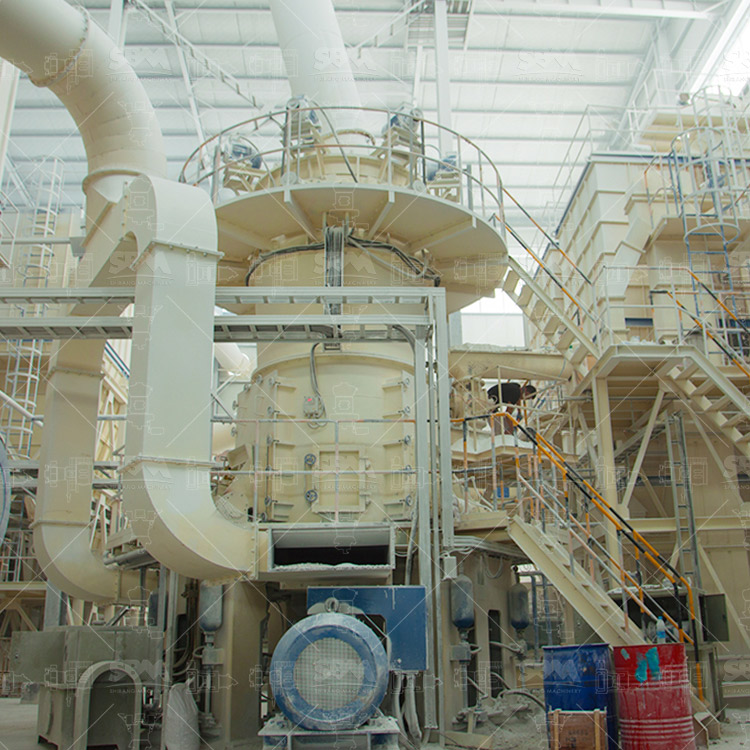
SBM vertical mills are employed in over 180 countries for diverse applications: power plants use them for coal and petroleum coke grinding; cement plants for raw meal and clinker; mining companies for mineral powder processing; non-metallic mineral processors for GCC, talc, and barite; and new energy materials manufacturers for battery precursor grinding. The LM series handles capacities from 3 to 400 tph, while the LUM series specializes in ultrafine production from 10 to 70 tph.
Frequently Asked Questions
- Q: Why does my existing mill produce high vibration and frequent shutdowns? A: Many conventional mills suffer from metal-to-metal contact between rollers and grinding plate, causing uneven wear and vibration. SBM vertical mills feature a non-contact roller design plus balanced rotor treatment; the grinding chamber is free of bearing screws, ensuring stable operation even at high loads. The automatic control system also adjusts grinding pressure to prevent overloading.
- Q: How can I reduce energy consumption in my grinding plant without replacing the entire system? A: Retrofitting with SBM vertical mill technology can lower energy by 30-40% due to direct roller-on-bed grinding. If full replacement is not feasible, upgrading to an efficient dynamic classifier (like that in LM mills) improves classification efficiency and reduces recirculation load, cutting energy by up to 15%. SBM offers customized retrofit solutions for existing ball mill circuits.
- Q: My product fineness varies widely; how do I ensure consistent quality like D97 ≤ 5μm? A: Inconsistent fineness often results from poor classifier design or unstable feed. The LUM series uses multi-rotor classifiers with variable frequency drive, allowing precise cut-size adjustment. Combined with PLC automatic control of grinding pressure and table speed, the system maintains D97 ≤ 5μm with less than 2% variation across shifts.
- Q: Environmental regulations are tightening; can my current mill meet new dust emission limits? A: Most open-circuit mills leak dust from seals and vents. SBM vertical mills operate under negative pressure with total enclosure; pulse dust collectors achieve emission levels below 10 mg/Nm³. For existing mills, SBM provides sealing upgrade kits and cyclone-filter retrofits that bring emissions into compliance without major redesign.
- Q: The grinding rollers in my mill need replacing every 3 months; what can I do to extend their life? A: Rapid wear usually indicates improper material bed formation or low-quality roller material. SBM vertical mills use high-chrome rollers (HRC 58-62) specifically selected for abrasiveness of material. The unique perching knife design in MTW mills and non-contact design in LM mills reduce wear rate. Typical roller life in limestone grinding exceeds 18 months with proper feed control.


