

Small powder, big effect: pyrophyllite grinding equipment supports fiberglass production
Published: June 18, 2025
In the fiberglass manufacturing industry, the quality of raw materials directly determines the performance and cost structure of the final product. Pyrophyllite, as a key fluxing agent and aluminum source in fiberglass batch formulations, requires precise grinding to achieve the optimal particle size distribution and chemical reactivity. However, many producers face persistent challenges: high energy consumption, excessive wear on grinding parts, inconsistent fineness, and frequent equipment downtime. These pain points not only inflate operational costs but also compromise product consistency. Shanghai SBM Machinery Equipment Co., Ltd. (SBM Machinery) offers a comprehensive suite of grinding solutions — from European trapezium mills to ultrafine vertical roller mills — specifically engineered to address these issues. This article explores how SBM’s grinding technologies transform pyrophyllite processing into a stable, efficient, and high-yield operation, ultimately supporting the stringent demands of fiberglass production.
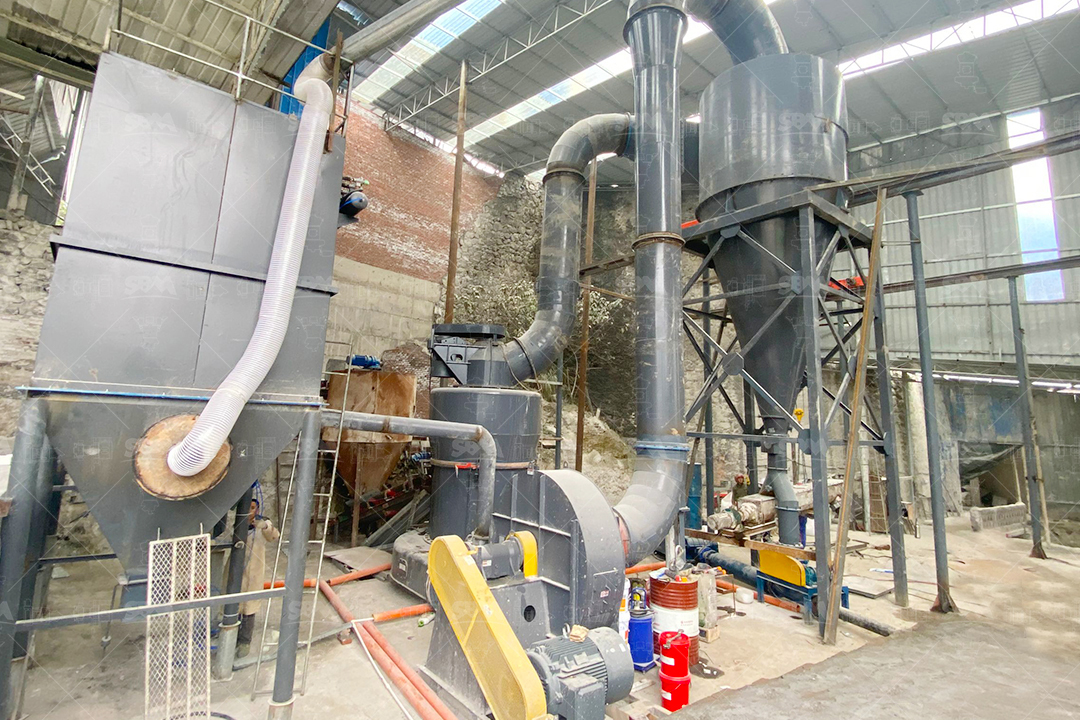
Understanding pyrophyllite in fiberglass manufacturing
Pyrophyllite is a hydrous aluminum silicate mineral widely used in fiberglass formulations due to its ability to lower melting temperatures and improve fiber quality. Its chemical composition provides a stable source of alumina and silica, which are essential for glass network formation. However, the mineral’s natural hardness and layered structure make it challenging to grind efficiently. Traditional processing methods often result in high wear rates, excessive fines, and inconsistent particle sizes — issues that directly impact the melting behavior and homogeneity of the glass melt. For fiberglass producers, achieving a uniform feed with a controlled particle size distribution (typically 30–400 mesh, or 0.5–5 mm) is critical to maintaining furnace stability and product quality.
The grinding equipment portfolio for pyrophyllite
1. MTW European Trapezium Mill — for medium-fine grinding with low operating costs
The MTW Series European Trapezium Grinding Mill is built on decades of R&D experience and feedback from over 9,500 customers worldwide. It is an ideal choice for pyrophyllite grinding in the 30–400 mesh range, with a capacity of 3–40 tons per hour. Key features relevant to fiberglass applications include:
- Unique wear-proof perching knife design: The combined-type shovel blade reduces replacement costs; only the blade needs to be changed during maintenance. Curved shovel blades optimize the feeding angle, extending the service life of rollers and rings by up to 30% compared to conventional designs.
- Arc air duct design: Circular ducts minimize air energy loss, ensuring consistent material transport efficiency. High-strength guard plates protect the air duct from abrasive pyrophyllite particles.
- Cone gear whole transmission: Bevel gear integral transmission delivers higher efficiency, saves installation space, and lowers initial investment.
- Volute design: An unobstructed, wear-resistant volute improves wind-driven material circulation inside the mill, reducing maintenance frequency.
For fiberglass producers who need a reliable mid-range solution with proven long-term performance, the MTW mill offers a balanced combination of throughput, durability, and energy efficiency.
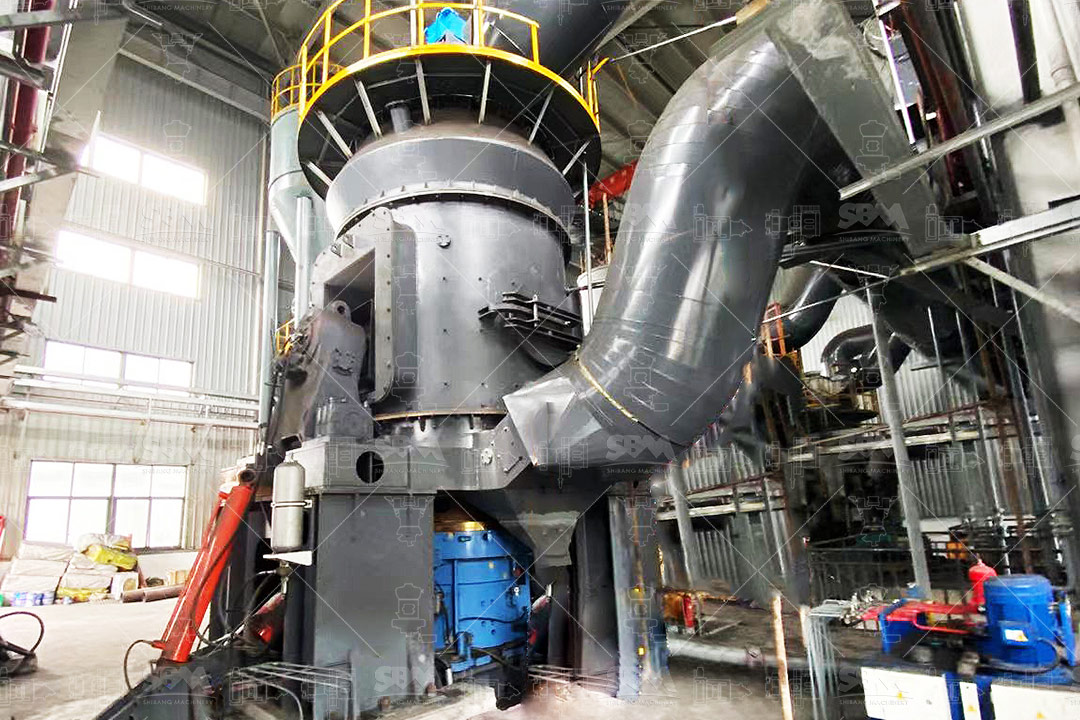
2. LM Vertical Roller Mill — for large-scale production with integrated drying
When production capacity demands exceed 40 tph, the LM Vertical Roller Mill becomes the preferred option. It integrates crushing, drying, grinding, powder separation, and transportation in one compact system. Its performance has reached international leading levels, particularly in cement, chemical, and coal industries, and it is equally effective for pyrophyllite. Benefits include:
- Small comprehensive investment: The system occupies about 50% of the floor space of a ball mill system and can be installed outdoors, significantly reducing civil engineering costs.
- Low operating costs: The grinding roller does not contact the grinding plate directly, reducing wear. High-quality materials ensure a longer service life, and energy consumption is 30–40% lower than ball mill systems.
- Automatic control system: An expert control system enables remote/local switching, easy operation, and reduced labor costs.
- High environmental protection standard: The system operates under negative pressure with minimal vibration and noise; no dust spillover ensures compliance with stringent environmental regulations.
For fiberglass manufacturers aiming to scale up production while maintaining cost efficiency, the LM mill provides a robust solution with lower total cost of ownership.
3. SCM Ultrafine Mill — for high-fineness requirements (325–2500 mesh)
Some advanced fiberglass formulations require finer pyrophyllite powders, ranging from 325 to 2500 mesh (down to D97 ≤ 5 μm). The SCM Series Ultrafine Grinding Mill is designed precisely for this niche. Its one-time fineness has been verified by geoscientific research institutes to reach D97 ≤ 5 μm, with partial fineness up to 2500 mesh. Advantages include:
- High output and low energy consumption: Capacity is more than double that of jet mills, while energy consumption is 30% lower. Intelligent feedback control ensures fast, stable powder conversion.
- High fineness control: Frequency-conversion speed regulation allows precise adjustment. The vertical turbine classifier achieves accurate cut points without coarse powder spillover.
- Heavy rotor design: Rollers and rings made of special materials offer several times higher durability. The grinding chamber has no bearing screws, ensuring vibration-free operation after balancing.
- Environmental protection: A dual powder-collection system (cyclone + pulse dust collector) achieves dust removal efficiency far exceeding international standards. Optimized sound insulation rooms mute equipment noise.
This mill is ideal for fiberglass producers who require ultra-fine pyrophyllite for specialized high-performance glass compositions.
4. LUM Ultrafine Vertical Mill — for high-capacity ultrafine processing
The LUM Ultrafine Vertical Mill combines Taiwan’s grinding roller technology with Germany’s powder separation technology. It is designed for medium to high-end processing in industries such as plastic masterbatch, PVC, and artificial stone, and is particularly effective for pyrophyllite ultrafine grinding in the 325–4000 mesh range with capacities up to 70 tph. Key features:
- High efficiency and high quality of finished products: Unique grinding curves on roller shells and lining plates facilitate material bed formation, enhancing grinding efficiency and increasing the primary grinding yield.
- Advanced separation technology with energy efficiency: Multi-rotor classifiers enable customized fineness selection without low-grade material contamination. PLC control manages grinding pressure, disc speed, and classifier speed precisely.
- Intelligentized control system: PLC/DCS automatic control ensures accurate pressure adjustment, stable operation, and remote monitoring capabilities.
- Environmentally friendly: The sealed system operates under negative pressure, preventing dust escape. Vibration and noise levels are low, meeting global environmental standards.
For fiberglass plants with high throughput demands and stringent quality specifications, the LUM mill delivers consistent performance with minimal operator intervention.
5. Ball Mill — conventional option for standard applications
Although ball mill technology is mature and widely used, it comes with inherent drawbacks — high wear of metal balls and elevated energy consumption. SBM has optimized its ball mill design with improved structural materials to reduce spare parts cost. It remains a viable option for applications where 0.2–0.074 mm output size (200 mesh) is sufficient and investment budget is limited. However, for most modern fiberglass production lines, the energy and wear advantages of the MTW, LM, SCM, or LUM mills make them more attractive long-term investments.
Addressing common customer pain points
Fiberglass producers frequently encounter several operational challenges when grinding pyrophyllite:
- High energy costs: Traditional ball mills consume 30–40% more energy than SBM’s vertical roller mills. The LM mill’s direct grinding mechanism and the MTW mill’s arc air duct design both contribute to significant savings.
- Frequent wear part replacement: The unique wear-proof shovel blade in MTW mills and the durable roller/ring materials in SCM mills extend part life by several times, reducing downtime and replacement costs.
- Inconsistent product fineness: Advanced classifiers in LUM and SCM mills ensure sharp cut points and stable particle size distribution, eliminating fines variability that can disrupt furnace operation.
- Environmental compliance: All SBM mills integrate negative pressure systems and efficient dust collection, meeting strict emission standards without additional investment.
- Space constraints: The LM mill’s compact footprint — half that of a ball mill system — allows installation in existing facilities without major civil works.
Conclusion
Pyrophyllite grinding is a critical process in fiberglass production, where even small variations in powder quality can have outsized effects on melting efficiency, fiber strength, and production costs. SBM Machinery’s comprehensive grinding portfolio — from the robust MTW trapezium mill to the high-capacity LUM ultrafine vertical mill — provides tailored solutions for every scale and fineness requirement. With over 180 countries served and decades of expertise in mineral processing, SBM empowers fiberglass manufacturers to achieve consistent, high-quality output with lower operating costs and enhanced environmental performance. By choosing the right grinding equipment, producers can turn pyrophyllite processing from a pain point into a strategic advantage.
FAQ
- Q: Our pyrophyllite feed has high moisture content (up to 8%). Which mill can handle drying and grinding simultaneously?
A: The LM Vertical Roller Mill is designed with an integrated drying function. Its hot air system can handle moisture contents up to 8–10% while grinding, eliminating the need for a separate dryer. - Q: We experience excessive wear on grinding rollers every 3 months when processing pyrophyllite. How can SBM equipment reduce this?
A: The MTW mill’s curved shovel blades and the SCM mill’s special material rollers and rings are engineered to reduce wear rates. Many customers report roller life extending to 12–18 months with proper operation. - Q: Our current ball mill produces too many fines below 200 mesh, causing furnace instability. Can SBM equipment give a tighter particle size distribution?
A: Yes. Both the LUM Ultrafine Vertical Mill and SCM Ultrafine Mill utilize advanced multi-rotor classifiers that achieve sharp cut points with minimal fines overspill. The classifier speed can be adjusted via frequency converter to precisely target your desired mesh range. - Q: We need to expand production from 5 tph to 20 tph without increasing plant footprint. What do you recommend?
A: The LM Vertical Roller Mill offers up to 400 tph capacity in a compact footprint (50% smaller than a ball mill system). It can be installed outdoors and supports remote control, making expansion feasible even in space-limited sites. - Q: How does SBM ensure environmental compliance for pyrophyllite grinding, especially regarding dust emissions?
A: All SBM mills operate under negative pressure with sealed systems. The LUM and SCM models include dual dust collection (cyclone + pulse bag filter) achieving emission levels far below international standards. Noise is mitigated via sound insulation rooms and mufflers.


