

Wide use of raymond mill in non-metallic mineral processing
发布时间:2025-03-27
When it comes to non-metallic mineral processing, the raymond mill has established itself as a cornerstone technology across the global powder industry. From calcium carbonate and talc to barite and gypsum, the versatility of raymond mill systems enables operators to achieve consistent output sizes ranging from 30 to 400 mesh while maintaining production capacities that suit both small-scale and large-scale operations. SBM Machinery, as a total solution provider for grinding equipment, has leveraged decades of R&D experience to develop raymond mill variants like the MTW European Trapezium Grinding Mill, which addresses the common pain points of wear resistance, energy efficiency, and operational stability. This article explores how raymond mill technology, particularly through SBM’s product lineup, serves as the preferred choice for non-metallic mineral processors worldwide, offering integrated systems that combine crushing, drying, grinding, and powder selection in one seamless workflow.
The Role of Raymond Mill in Non-Metallic Mineral Processing
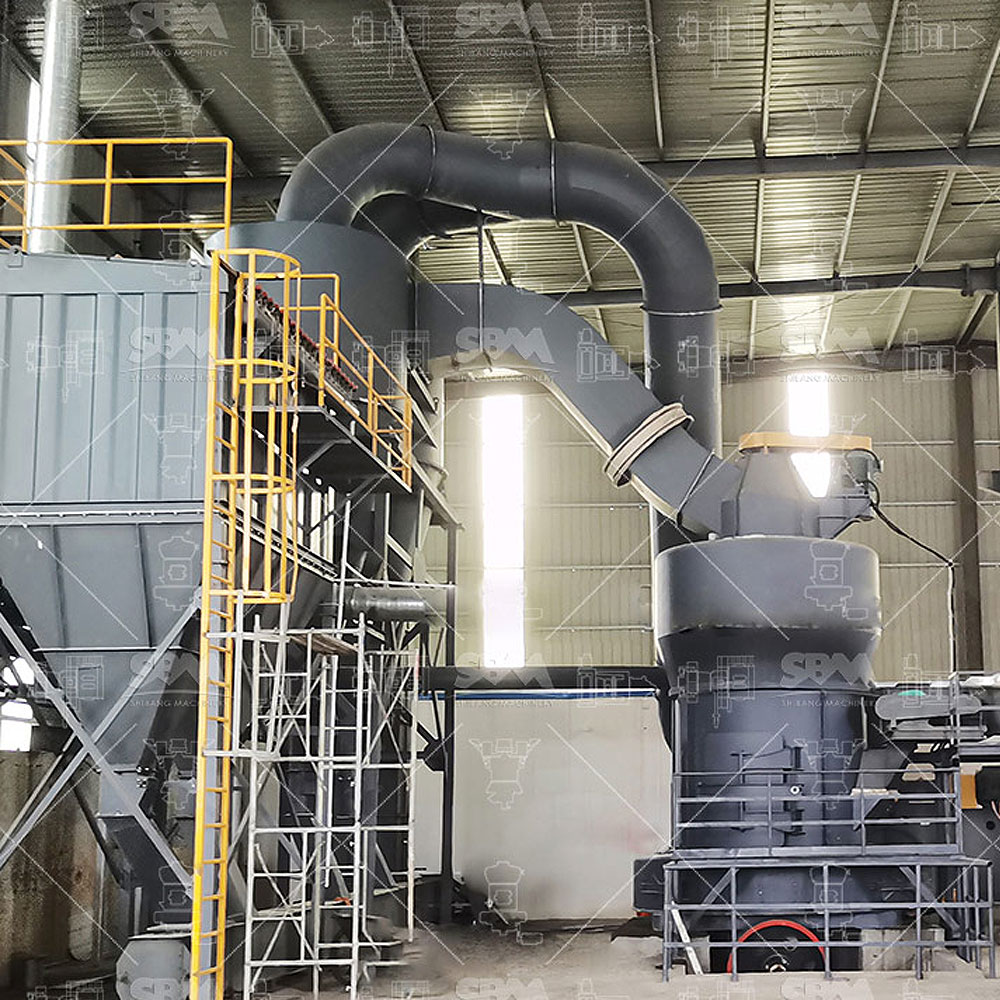
Non-metallic minerals such as limestone, calcite, marble, and dolomite are fundamental raw materials for industries ranging from construction to chemicals and new energy. The processing of these minerals demands equipment that can handle varying feed sizes—up to 50mm in standard setups—while delivering fine powders with tight particle size distributions. The raymond mill excels in this domain because of its proven mechanical design that prioritizes durability and throughput. For example, SBM’s MTW series incorporates a cone gear whole transmission system that minimizes energy loss and maximizes torque transfer, ensuring that even hard minerals like feldspar or wollastonite are ground efficiently. Additionally, the arc air duct design in these mills prevents air energy dissipation, guaranteeing consistent pneumatic transport of ground material from the grinding chamber to the classifier.
Operators often struggle with frequent downtime due to wear parts like grinding rollers and rings. SBM addresses this with a unique wear-proof perching knife design that allows only the blade to be replaced during maintenance, drastically reducing operational interruptions. The curved shovel blades also optimize the feeding angle, extending the service life of key components. This is a direct response to the industry’s call for lower operating costs and longer intervals between overhauls. Furthermore, the volute design in SBM raymond mills enhances wind-driven transmission efficiency, which is critical when processing sticky or moist non-metallic minerals that tend to clog conventional systems.
Technological Advancements Driving Adoption
The wide use of raymond mill in non-metallic mineral processing is also fueled by continuous innovation in grinding technology. SBM’s LM Vertical Roller Mill, while a different machine architecture, shares the same design philosophy of high integration and low energy consumption that characterizes modern raymond mill evolution. The LM mill integrates drying, pulverizing, and powder-selection into a single unit, reducing floor space by up to 50% compared to traditional ball mill systems. This compact layout is particularly beneficial for non-metallic mineral plants where space constraints are a common pain point. The automatic control system in these mills enables remote operation, freeing operators from constant manual monitoring and reducing labor costs—a critical advantage in markets with rising wage pressures.
For applications requiring ultrafine powders, SBM’s SCM Ultrafine Mill extends the raymond mill concept to fineness levels reaching D97≤5μm, with a capacity up to 25tph. This is achieved through frequency-conversion control and a vertical turbine powder classifier that ensures no coarse powder spillover. Non-metallic mineral processors in industries like plastic masterbatch, PVC, and artificial stone often demand such fine grades to meet product specifications, and the SCM mill delivers this without the high energy consumption typical of jet mills. The double powder collection method—combining powder collectors with pulse dust collectors—also addresses environmental compliance, a growing concern in mineral processing operations worldwide.
Another standout is the LUM Ultrafine Vertical Mill, which incorporates German powder separation technology and Taiwanese grinding roller technology. This mill is specifically engineered for ultrafine grinding of non-metallic minerals like talc, barite, and kaolin, offering capacities up to 70tph. The multi-rotor powder classifier allows for customized particle size selection, eliminating low-grade material contamination. For operators, this means higher product quality consistency and reduced rejection rates. The PLC/DCS automatic control system further stabilizes grinding pressure, compensating for variations in feed material hardness, which is a frequent challenge when processing natural minerals from different quarries.
_1784564569665.jpg)
Addressing Client Pain Points in Non-Metallic Mineral Processing
Clients in the non-metallic mineral processing industry face a set of recurring pain points: high wear part replacement costs, inconsistent product fineness, excessive energy bills, and difficulty scaling production. SBM’s raymond mill and related technologies are designed to mitigate each of these issues. Take the ball mill, for example—a mature technology that still suffers from high metal ball wear and energy consumption. SBM optimized its ball mill design by adopting new material for liners and grinding media, reducing spare part costs while maintaining output sizes between 0.2mm and 0.074mm. For wet processing applications in mineral dressing, this optimized ball mill remains a viable option, though for dry grinding of non-metallic minerals, the raymond mill or vertical roller mill often proves more economical.
The intelligent control systems featured in SBM’s mills are a direct answer to the operator’s need for labor savings. With remote-to-local switching capabilities, a single technician can oversee multiple mill lines, adjusting parameters like grinding pressure, disc speed, and classifier speed on the fly. This is particularly valuable in remote mining sites where skilled labor is scarce. Additionally, the noise and vibration reduction measures—such as soundproof rooms and mufflers in the SCM mill, and the sealed negative pressure system in the LM mill—ensure that environmental compliance is met without sacrificing productivity. For clients facing strict emission standards in countries across Europe, Asia, and the Americas, these features are non-negotiable.
Finally, scalability is a major concern. A non-metallic mineral processor might start with a single raymond mill handling 3tph but later need to expand to 400tph for a new product line. SBM’s modular approach, offering capacities from 3tph in the MTW raymond mill to 400tph in the LM vertical roller mill, allows for phased investment. The shared spare parts across certain series, like the standardized roller and ring dimensions in the MTW and SCM mills, further reduce inventory costs. This flexibility, combined with over 180 countries of global service experience, positions SBM as a partner that understands the local nuances of non-metallic mineral processing while delivering internationally competitive technology.
Conclusion
In summary, the wide use of raymond mill in non-metallic mineral processing is no accident. It is the result of decades of engineering refinement aimed at solving real-world client problems: reducing wear, improving energy efficiency, ensuring product consistency, and meeting environmental standards. SBM’s comprehensive product portfolio—spanning the MTW European Trapezium Mill, LM Vertical Roller Mill, SCM Ultrafine Mill, LUM Ultrafine Vertical Mill, and optimized Ball Mill—offers tailored solutions for every stage of mineral processing, from coarse grinding to ultrafine powder production. For any non-metallic mineral processor seeking reliability and innovation, the raymond mill remains the gold standard.
FAQ: Common Client Pain Points in Non-Metallic Mineral Processing with Raymond Mill
- Q: My raymond mill rollers wear out every six months. How can I extend their life?
A: SBM’s MTW raymond mill features a combined-type shovel blade with curved design that changes the feeding angle, reducing direct impact on rollers and rings. Additionally, only the blade needs replacement during maintenance, lowering costs. For high-abrasion minerals like quartz, consider pre-screening to remove oversized material above 50mm feed size. - Q: The final product from my mill often has inconsistent fineness. What causes this?
A: Inconsistent fineness is often due to classifier inefficiency or variable feed rates. SBM’s SCM Ultrafine Mill uses a vertical turbine powder classifier with frequency-conversion control, ensuring precise cutting size and no coarse powder spillover. Regular calibration of the PLC/DCS system can also help maintain stability. - Q: My energy bill is too high for the output we get. Is a raymond mill the right choice?
A: Energy consumption is a common pain point. The LM Vertical Roller Mill by SBM reduces power usage by 30–40% compared to ball mill systems through direct roller-on-plate grinding and high-efficiency separation. For existing raymond mills, upgrading to the arc air duct design can minimize air energy losses, lowering operational costs. - Q: We struggle with dust emissions during grinding. Are there sealed mill options?
A: Yes. Both the LM Vertical Roller Mill and LUM Ultrafine Vertical Mill operate under negative pressure with fully sealed systems, preventing dust spillover. The SCM Ultrafine Mill also uses dual powder collection with pulse dust collectors, meeting international environmental standards. Regular checks on seal integrity are recommended. - Q: We need to scale from 5tph to 50tph for a new calcium carbonate product. Can SBM help?
A: Absolutely. SBM offers a range of mills to match scale requirements. The MTW raymond mill handles 3–40tph, while the LM Vertical Roller Mill covers 3–400tph. For ultrafine needs, the LUM mill scales from 10 to 70tph. All models integrate with existing SBM systems for seamless capacity expansion.


