

How to judge when raymond mill wear parts need replacement?
发布时间:2025-04-07
Determining the optimal timing for replacing wear parts in Raymond mill equipment is a critical operational decision that directly impacts production efficiency, product quality, and operating costs. Based on SBM Machinery's extensive field experience serving over 180 countries and regions, we have identified definitive indicators across five key areas: output degradation, particle size inconsistency, abnormal power consumption, unusual noise and vibration patterns, and visual inspection of critical components like grinding rollers and rings. For MTW Series European Trapezium Grinding Mill (MTW Raymond Mill), which features unique wear-proof perching knife design and cone gear whole transmission, the replacement decision should be guided by measurable performance metrics rather than arbitrary schedules. This article provides a comprehensive framework for operators to assess wear part condition, drawing from SBM's database of over 9500 customer feedback instances and decades of R&D expertise in grinding equipment for industries including power generation, building materials, mining, metallurgy, chemicals, and non-metallic minerals processing.
Primary Indicators of Wear Part Deterioration
The first and most reliable sign that Raymond mill wear parts require replacement is a consistent reduction in throughput capacity. For instance, an MTW Raymond Mill designed to process 3-40 tph of limestone for environmental desulfurization will show measurable decline if the grinding roller and ring surfaces have worn beyond tolerance. Operators should monitor daily production data against baseline values. A drop exceeding 10-15% over a short period, after ruling out feed material changes or mechanical adjustments, strongly indicates wear part degradation. Similarly, for LM Vertical Roller Mill, which integrates drying, pulverizing, and powder-selection functions, capacity loss often correlates with roller tire and table liner wear. The key advantage here is that the roller does not contact the grinding plate directly, but even minimal contact surface degradation can reduce grinding efficiency by up to 30-40% compared to ball milling systems.
Product Quality and Particle Size Distribution Changes
Another decisive factor is the deterioration of finished product quality. Raymond mills are designed to produce powders between 30-400 mesh (MTW and LM series) or 325-4000 mesh (SCM Ultrafine Mill and LUM Ultrafine Vertical Mill). When wear parts become worn, the grinding gap enlarges, leading to coarser particles, wider size distribution, and increased oversize material returning to the mill. For SCM Ultrafine Mill, which can achieve D97≤5μm fineness, any increase in mean particle size or reduction in fines proportion indicates that the special material rollers and rings need inspection. Field tests show that when roller and ring durability declines, the one-time finished product D97 value can shift by 2-3 microns, directly impacting downstream processes such as PVC compounding or plastic masterbatch production. Operators using LUM Ultrafine Vertical Mill for ultrafine grinding of calcite or marble should regularly perform sieve analysis and compare results with the mill's design specification of 325-4000 mesh.
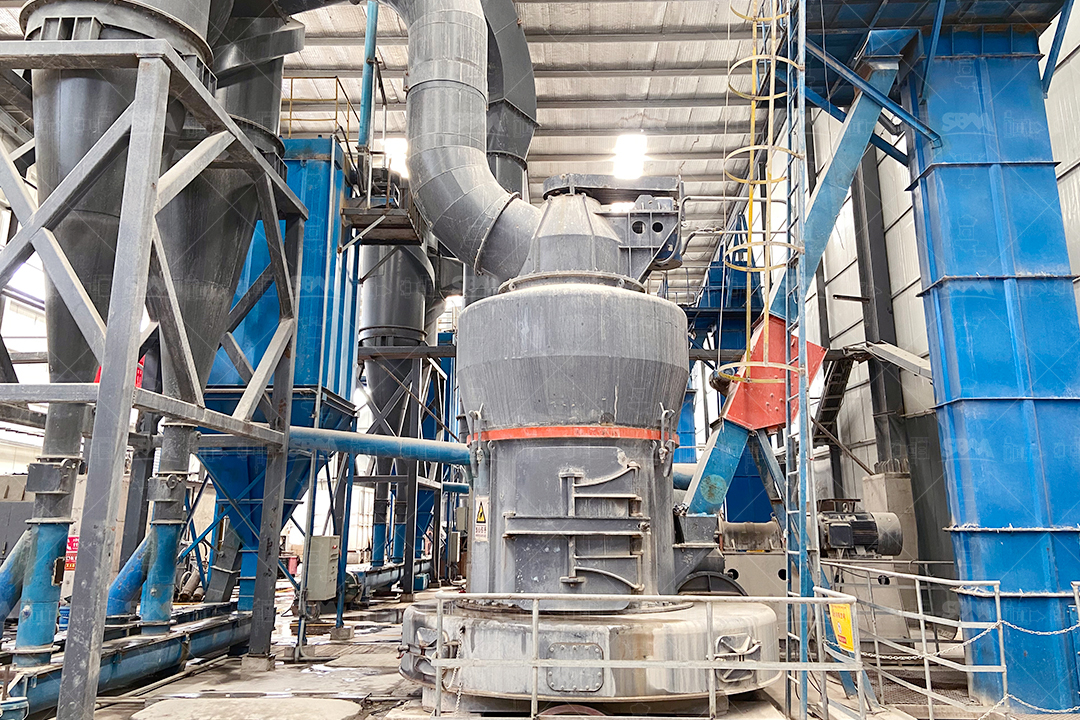
Energy Consumption and Power Draw Anomalies
Energy consumption is a powerful diagnostic tool for wear part condition. In SBM's grinding equipment, particularly the MTW Raymond Mill with its arc air duct design and cone gear transmission, the mill's motor current draw should remain stable under consistent load. A gradual increase in amperage—often 5-15% above normal—without corresponding increase in feed rate signals that the mill is working harder to achieve the same output. This occurs because worn rollers and rings require more energy to crush and grind material. For LM Vertical Roller Mill, which boasts 30-40% lower energy consumption than ball milling systems, an upward trend in specific power consumption (kWh per ton) is a clear red flag. The automatic control system provided with this mill can log power data, enabling operators to detect deviations. Similarly, for SCM Ultrafine Mill, which claims capacity more than double that of jet mills with 30% lower energy consumption, any reversal of this advantage points to wear-related inefficiency.
Mechanical Indicators: Noise, Vibration, and Temperature
Audible and tactile changes during operation cannot be ignored. Raymond mills operating with healthy wear parts produce a consistent, low-frequency grinding sound. As components wear, particularly the combined-type shovel blade on MTW mills, the sound becomes irregular, higher-pitched, or metallic. Vibration levels also escalate. SBM's equipment, such as the LUM Ultrafine Vertical Mill, is designed for minimal vibration due to heavy rotor design and tight balance testing. An increase in vibration amplitude—especially if accompanied by cyclic pounding—often indicates that the grinding rollers are no longer making uniform contact with the ring or table. Temperature monitoring at bearing housings and gearboxes provides additional clues. For instance, the cone gear whole transmission in MTW mills runs efficiently with minimal heat generation; abnormal temperature rise suggests increased friction from worn parts or insufficient lubrication from the inner oil absorption system. It is worth noting that SBM's volute design and arc air duct help maintain airflow, but worn parts can disrupt the wind-driven transmission, exacerbating thermal issues.
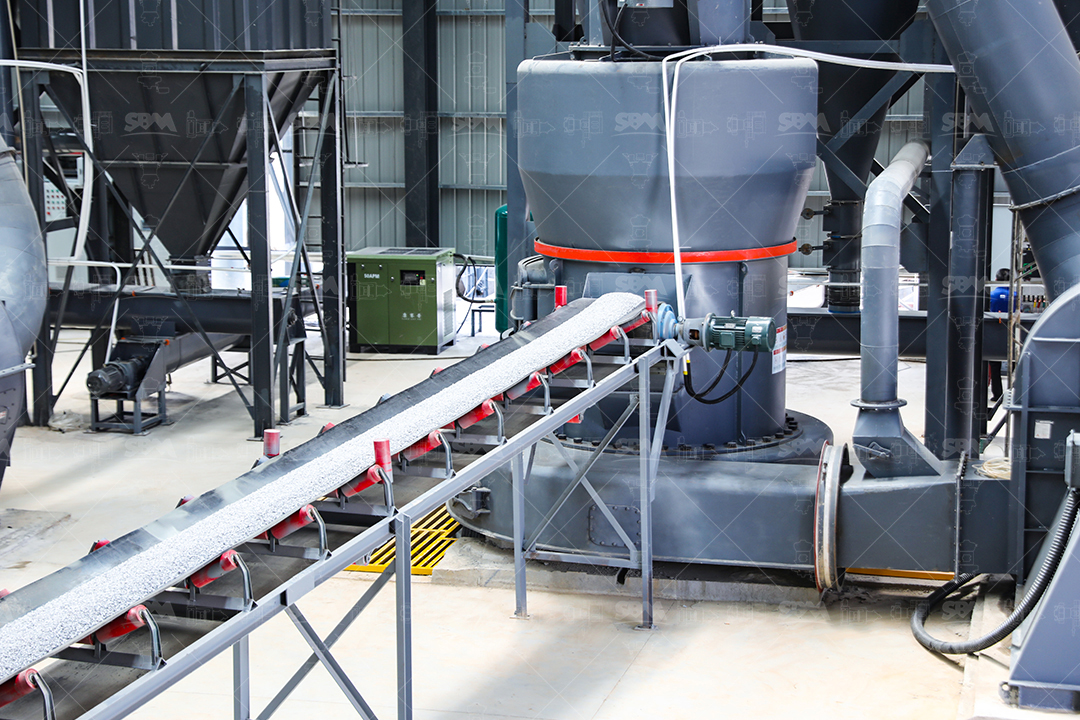
Visual Inspection and Thickness Measurement
Direct inspection remains the most definitive method. For MTW Raymond Mill, the unique wear-proof perching knife design allows operators to check blade condition without full disassembly—only the blade needs replacement during maintenance, reducing costs. Similarly, the curved shovel blade design changes the feeding angle to prolong roller and ring life, but visual measurement of remaining thickness is essential. A general rule is to replace rollers and rings when thickness is reduced by 60-70% of the original dimension. For LM Vertical Roller Mill, high-quality materials in rollers and grinding plates mean longer service life, but regular checks for pitting, cracking, or uneven wear patterns are critical. The grinding chamber's design ensures that the roller does not contact the plate directly, but wear on the grinding table's liner or the roller tire's profiling can still occur. In SCM Ultrafine Mill, the special material construction of rollers and rings offers several times higher durability, but operators should inspect for spalling or glazing, which reduces grinding efficiency. The grinding chamber's bearing-free screw design allows stable operation after balance treatment, but any visible wear on the powder classifier blades—especially in the efficient vertical turbine system—warrants attention.
Systemic Effects: Powder Circulation and Classification Efficiency
Wear parts not only affect grinding but also classification. In Raymond mills, the wear of fan blades or volute liners can reduce air flow, leading to poor powder transportation. SBM's arc air duct design and high-strength guard plate protect the working face, but if the duct surface becomes rough or pitted, air energy losses increase. This manifests as reduced fines output or increased coarse material recirculation. For ultrafine grinding in LUM or SCM mills, the multi-rotor powder classifier is sensitive to wear. If classifier blades lose their aerodynamic profile, cut size accuracy degrades, allowing low-grade material into the finished product. Operators using LUM Ultrafine Vertical Mill for high-end applications like plastic masterbatch or artificial stone should monitor classifier speed versus fineness correlation; deviation indicates blade wear. Similarly, the efficient double powder collecting method in SCM mills, using powder collectors and pulse dust collectors, relies on proper mill operation. Excessive wear increases dust load, challenging the dust collection system and potentially violating environmental standards (<5um emissions).
Operational Context: Material Type and Production Schedule
The decision to replace wear parts also depends on the material being processed. Abrasive materials like silica, feldspar, or pyrophyllite accelerate wear compared to softer limestone or talc. For SBM's Ball Mill, used widely in mineral dressing and cement industries, the metal balls are prone to wear, but optimized design and new materials have reduced spare parts cost. Operators processing petcoke, slag micro-powder, or heavy calcium carbonate (GCC) should expect shorter intervals between replacements. A practical approach is to correlate replacement cycles with cumulative throughput. For example, in MTW mills processing 30 tph of limestone, operators often schedule roller and ring inspection after 2000-3000 operating hours, but earlier if feed material hardness exceeds design limits. SBM's experience across over 180 countries indicates that preventive maintenance based on these indicators saves 20-30% in unexpected downtime costs compared to reactive replacement.
Conclusion
Judging when Raymond mill wear parts need replacement is a blend of data analysis, visual inspection, and understanding of equipment design. SBM Machinery, as a total solution provider, emphasizes that proactive monitoring—using output rate, product fineness, power consumption, mechanical behavior, and direct measurement—enables operators to maximize uptime and maintain quality. The company's equipment, from MTW to LUM series, incorporates features like combined-type shovel blades, arc air ducts, cone gear transmission, and intelligent control systems to extend wear life, but no component lasts indefinitely. By establishing baseline performance and recognizing the signs outlined above, users can make informed decisions, ensuring their grinding operations remain competitive in industries ranging from power generation to new energy materials.
Frequently Asked Questions (FAQ)
Q1: My Raymond mill's output has dropped by 20% in the last week. Should I immediately replace the grinding roller and ring, or could there be other causes?
A: While wear parts are a likely cause, first check feed material size (should be 0-50mm for MTW/LM series), moisture content, and classifier settings. If these are normal, conduct an amperage check: a power draw increase of 10-15% supports wear-related reduction. SBM recommends inspecting the combined-type shovel blade and roller surface before full replacement, as partial wear may only require blade replacement.
Q2: How can I tell if the grinding roller in my LM Vertical Roller Mill is worn without stopping production?
A: Monitor the mill's specific power consumption (kWh/ton) and compare to baseline from commissioning. An increase of 8-12% indicates roller or table wear. Also, regularly check the differential pressure across the mill; a rising trend suggests reduced grinding efficiency. The automatic control system can alert you if parameters deviate beyond setpoints.
Q3: My SCM Ultrafine Mill produces powder that is coarser than 2500 mesh, but I need D97≤5μm. Could worn wear parts be the issue?
A: Absolutely. Worn rollers and rings increase the grinding gap, reducing comminution intensity. Also, the vertical turbine powder classifier blades, if worn, fail to cut fines accurately. Check the classifier rotor speed vs. fineness relationship; if you need higher RPM to maintain target fineness, blade wear is likely. Replace rollers and rings when thickness loss exceeds 60%.
Q4: We process petcoke in an MTW Raymond mill. Are there specific wear indicators for this abrasive material?
A: Yes. Petcoke accelerates wear, particularly on the curved shovel blades and roller surfaces. Expect 30-40% faster wear than limestone. Monitor the mill's arc air duct pressure; if it increases while throughput remains same, it indicates duct surface wear. Also, inspect the high-strength guard plate regularly—visible grooves or thinning prompt replacement.
Q5: How often should I replace wear parts in a ball mill used for wet grinding of ores?
A: For SBM's ball mill (input 0-25mm, output 0.2-0.074mm), metal ball wear depends on ore abrasiveness and slurry pH. Typically, inspect ball charge level monthly—if original diameter reduces by 20-30mm, consider addition of new balls. For the mill lining, measure thickness every 500 operating hours; replace when thickness drops below 70% of original. Wet grinding accelerates liner wear due to chemical erosion, so adjust cycles accordingly.


