

Technical evolution of raymond mill: from classic to intelligent
The Raymond mill has undergone a remarkable transformation from its classic origins to today's intelligent, high-efficiency systems, driven by decades of engineering innovation and customer feedback. Shanghai SBM Machinery Equipment Co., Ltd. has played a pivotal role in this evolution, leveraging extensive R&D experience and insights from over 9,500 clients to develop advanced grinding solutions. This journey spans the European trapezium mill, vertical roller mill, ultrafine mill, and beyond, each generation addressing critical industry needs such as energy efficiency, wear resistance, automation, and environmental compliance. Today's intelligent Raymond mills integrate PLC control, remote monitoring, and precision powder classification, setting new standards for productivity and sustainability across global markets.
The Classic Era: Foundation of Grinding Technology
The original Raymond mill, introduced over a century ago, relied on mechanical grinding between a rotating central shaft and stationary grinding rings. While revolutionary for its time, classic designs suffered from frequent roller and ring wear, high energy consumption, and limited fineness control. Operators faced constant downtime for part replacement and struggled to maintain consistent product quality. SBM's early analyses of traditional mills revealed critical inefficiencies, including energy losses in air ducts, inadequate lubrication systems, and cumbersome transmission mechanisms.
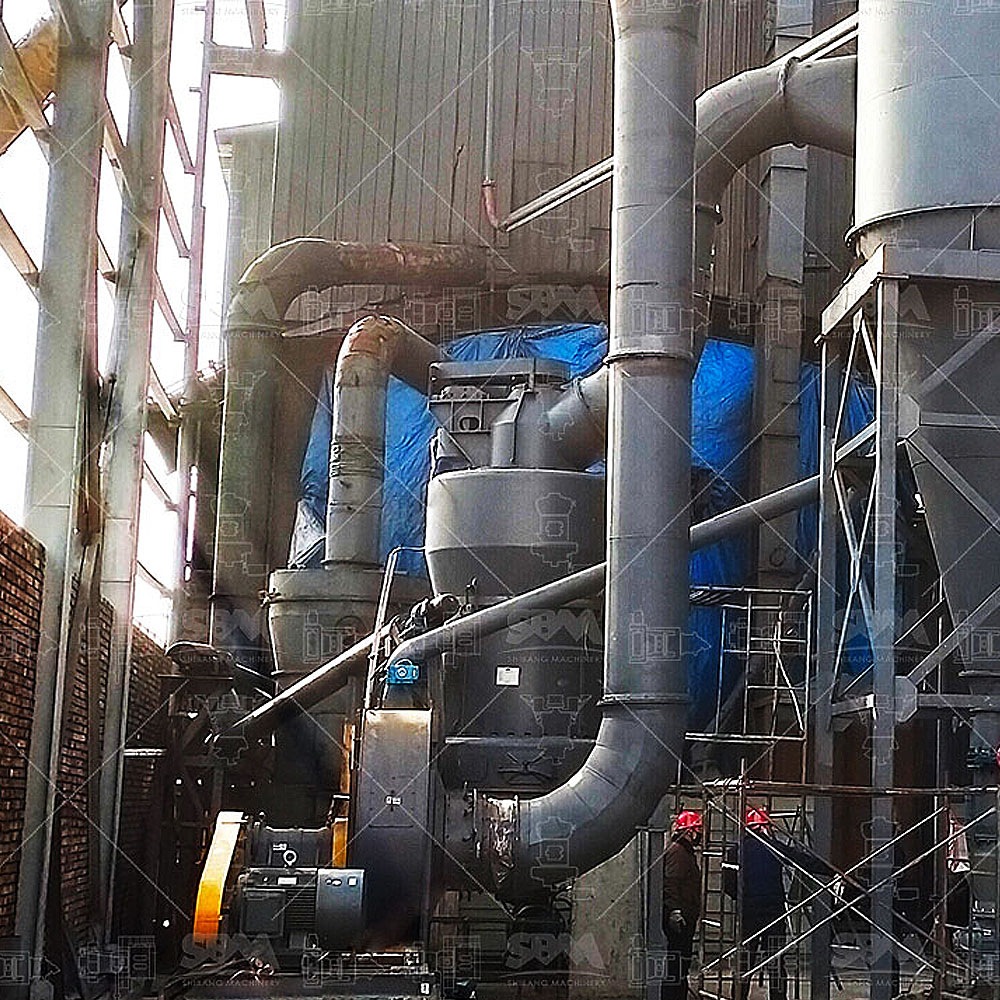
First Wave of Innovation: European Trapezium Mill
In response to industry demands for higher efficiency and lower operating costs, SBM developed the MTW Series European Trapezium Grinding Mill (MTW Raymond Mill). This new generation mill introduced several breakthrough features:
- Cone gear whole transmission replaced traditional belt drives, achieving higher transmission efficiency while saving floor space and reducing investment costs.
- Arc air duct design eliminated energy losses common in straight ducts, improving material transportation efficiency and incorporating high-strength guard plates for extended service life.
- Unique wear-proof perching knife design featured combined-type shovel blades where only the blade tip requires replacement during maintenance. Curved shovel blades optimized the feeding angle, extending roller and ring lifespan while reducing operational expenses.
- Volute design improved wind-driven transmission efficiency inside the mill and minimized material maintenance requirements.
These innovations directly addressed client pain points: reduced downtime for part replacement, lower energy bills, and more consistent output of 30-400 mesh materials. The MTW mill became a global standard for limestone desulfurization, coal powder preparation, and petroleum coke grinding.
Second Wave: Vertical Roller Mill Breakthrough
As industries demanded higher throughput and integrated processing, SBM introduced the LM Vertical Roller Mill, solving critical issues of low output and high energy consumption plaguing conventional ball mills. Key advancements included:
- Small comprehensive investment through integration of crushing, drying, grinding, powder separation, and transportation in a single system. The compact layout occupies only 50% of traditional ball mill footprint and can be installed outdoors, significantly reducing civil engineering costs.
- Low operating costs via direct roller-to-plate grinding without metal-to-metal contact. Premium wear materials extended part life by 30-40%, while energy consumption dropped 30-40% compared to ball milling systems.
- Automatic control system enabling remote/local control switching, reducing labor requirements and human error.
- High environmental protection through fully sealed negative pressure operation, virtually eliminating dust spillover and meeting stringent national emission standards.
With capacities ranging from 3 to 400 tph, the LM mill became the mainstream choice for cement, chemical, coal, and power industries, particularly for large-scale mineral powder processing and slag micro-powder production.
Ultrafine Era: Meeting High-Fineness Demands
The rapid development of new energy materials, plastics, and advanced ceramics created demand for ultra-fine powders (325-4000 mesh). General Raymond mills proved inadequate, leading SBM to develop the SCM Series Ultrafine Grinding Mill. This mill achieved D97 ≤ 5μm fineness in a single pass, with partial results reaching 2500 mesh in repeated tests verified by geoscientific research institutes.
Technical highlights included:
- High output with 30% lower energy consumption compared to jet mills while delivering twice the capacity.
- Intelligent feedback control for fast, stable conversion of finished products, direct labor savings.
- Frequency-conversion control enabling precise fineness adjustment and an efficient vertical turbine powder classifier preventing coarse powder overflow.
- Heavy rotor design with specially formulated roller and ring materials achieving several times higher durability, plus a bearing-screw-free grinding chamber for vibration-free operation.
- Environmental protection through dual powder collection (cyclone + pulse dust collector) exceeding international standards, complemented by sound insulation rooms and mufflers.
SCM mills quickly became the equipment of choice for GCC processing, non-metallic mineral ultra-fine grinding, and high-value added industries.
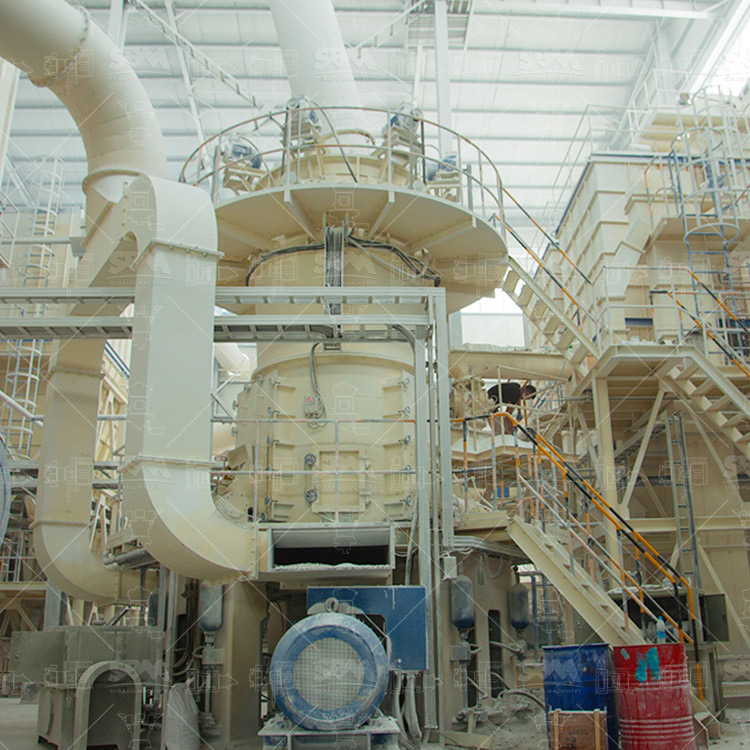
Intelligent Integration: LUM Ultrafine Vertical Mill
The latest milestone in Raymond mill evolution is the LUM Ultrafine Vertical Mill, combining Taiwan's grinding roller technology with Germany's powder separation expertise. Designed for medium to high-end applications in plastic masterbatch, PVC, artificial stone, cable, and non-woven fabrics, LUM mills process calcite, marble, limestone, talc, dolomite, barite, and other non-metallic minerals.
Intelligent features include:
- Multi-rotor powder classifiers with PLC/DCS automatic control for customized fineness selection, eliminating low-grade material contamination.
- Uniquely designed grinding curves on roller shells and lining plates based on ultrafine pulverization principles, improving material bed formation and primary grinding yield.
- Intelligentized pressure adjustment for grinding rollers, ensuring precise control and stable operation under varying feed conditions.
- Frequency-conversion speed regulation adapting mill parameters to different material properties without manual reconfiguration.
- Environmentally-friendly sealing and negative pressure operation compliant with national environmental requirements.
By integrating drying, grinding, separation, and transportation in a single intelligent unit, LUM mills achieve capacities of 10-70 tph with fineness up to 4000 mesh, while enabling remote monitoring and predictive maintenance.
Ball Mill Optimization: Classic Technology Reimagined
Despite the rise of advanced mills, ball mills remain relevant for specific applications due to their mature technology. SBM optimized traditional ball mills by addressing two persistent client complaints: excessive metal ball wear and high energy consumption. Structural redesigns and new wear-resistant materials reduced spare part costs significantly. The company now offers dry ball mills for common powder production and wet ball mills widely used in mineral dressing, with input sizes up to 25mm and output sizes ranging 0.2-0.074mm.
Global Impact and Future Trends
SBM grinding equipment now serves over 180 countries, making it the preferred partner for global powder processing industries. The evolution from classic mechanical systems to intelligent, digitally controlled mills reflects broader industry trends toward Industry 4.0, including IoT connectivity for real-time monitoring, AI-based predictive maintenance, and cloud-based process optimization. Future Raymond mills will likely incorporate self-learning algorithms that adjust grinding parameters based on material characteristics, further reducing energy consumption while maximizing throughput and product consistency.
Summary table of key mill types:
| Mill Type | Input Size | Output Size | Capacity | Key Applications |
|---|---|---|---|---|
| MTW European Trapezium | 0-50mm | 30-400 mesh | 3-40 tph | Desulfurization, coal, petroleum coke |
| LM Vertical Roller | 0-50mm | 30-400 mesh | 3-400 tph | Cement, chemical, power, slag |
| SCM Ultrafine | 0-20mm | 325-4000 mesh | 0.5-25 tph | GCC, non-metallic minerals, new energy |
| LUM Ultrafine Vertical | 0-20mm | 325-4000 mesh | 10-70 tph | Masterbatch, PVC, artificial stone |
| Ball Mill | 0-25mm | 0.2-0.074mm | 3-65 tph | General grinding, mineral dressing |
FAQ
- Why does my current Raymond mill produce inconsistent fineness and require frequent roller replacement? Older mill designs often lack precise classifier control and use wear-prone materials. Modern MTW and LUM mills feature arc air ducts, combined shovel blades, and frequency-conversion classifiers that maintain consistent product size while reducing roller wear by up to 50% compared to classic models.
- How can I reduce energy costs in my grinding operation without sacrificing throughput? Upgrade to LM Vertical Roller Mill or SCM Ultrafine Mill, which use direct grinding principles and optimized transmission systems to cut energy consumption by 30-40% versus traditional ball mills. The cone gear whole transmission in MTW mills also eliminates belt drive losses.
- My plant faces strict environmental regulations. Can modern Raymond mills help me comply? Yes. All SBM mills operate under negative pressure with fully sealed systems. Ultrafine models add pulse dust collectors and sound insulation rooms, achieving dust emission levels far below international standards. LM mills feature wholly enclosed designs that prevent any dust spillover.
- What is the best mill choice for processing ultrafine powders below 10 microns for new energy materials? The LUM Ultrafine Vertical Mill or SCM Ultrafine Grinding Mill are optimal. Both achieve D97 ≤ 5μm in a single pass with high efficiency. The LUM adds multi-rotor classifiers for precise cut sizes, while the SCM offers frequency-conversion control for fineness adjustment between 325-2500 mesh.
- How can I automate my grinding process to reduce labor costs and human error? Modern intelligent mills like LUM and LM come with PLC/DCS automatic control systems supporting remote/local switching, pressure adjustment, and classifier speed regulation. These systems enable one-button start/stop, real-time parameter monitoring, and predictive maintenance alerts, reducing labor requirements by up to 60%.


