

Maintenance points of raymond mill in carbon material processing
Published on: October 5, 2023
Summary: In carbon material processing, Raymond mill plays a pivotal role in grinding petroleum coke, graphite, carbon black, and other carbon-based feedstocks into fine powders for applications ranging from battery anode production to refractory materials. However, maintaining a Raymond mill in this demanding environment presents unique challenges: abrasive carbon particles accelerate wear on grinding rollers and rings, high-temperature conditions can degrade lubricants, and carbon dust accumulation poses both fire hazards and efficiency losses. This article distills decades of field experience and feedback from over 9,500 clients into actionable maintenance points for Raymond mill operation in carbon material processing. Drawing on the design philosophy of the European Trapezium Mill (MTW Series) from Shanghai SBM Machinery Equipment Co., Ltd., we cover critical areas including preventive inspection schedules, wear part replacement strategies, lubrication system care, air duct and volute maintenance, and operational best practices. Our goal is to help plant managers and maintenance teams extend equipment life, reduce unplanned downtime, and improve grinding efficiency — all while safeguarding personnel and meeting environmental standards.
_1785169456042.jpg)
1. The Carbon Processing Challenge: Why Raymond Mill Maintenance Differs
Carbon materials — whether petroleum coke, calcined anthracite, or activated carbon — share common traits: high hardness, abrasiveness, and a tendency to generate ultrafine dust. Compared to limestone or gypsum grinding, these feedstocks cause 20%–40% faster wear on grinding elements. Moreover, many carbon materials carry residual volatiles or moisture that can lead to caking or mill fires if not managed. A Raymond mill operating in carbon service must therefore be maintained with a heightened focus on wear detection, dust containment, and thermal management. The MTW European Trapezium Mill, with its unique wear-proof perching knife design and arc air duct, offers built-in advantages — but only if those features are properly maintained.
2. Grinding Roller and Ring Maintenance
The heart of any Raymond mill is the grinding roller and ring assembly. In carbon material processing, these components face continuous impact from hard, sharp-edged particles. The combined-type shovel blade design found in the MTW mill allows operators to replace only the blade rather than the entire shovel assembly, significantly lowering consumable costs. Yet, even with this smart design, routine inspection remains essential.
Key maintenance points:
- Weekly visual inspection: Check for surface pitting, spalling, or uneven wear patterns on both roller and ring. Carbon fines can embed in micro-cracks and accelerate failure.
- Monthly thickness measurement: Use ultrasonic gauges or calipers to track remaining wall thickness. Replace roller shells when wear exceeds 60% of original thickness.
- Curved shovel blade angle verification: The design of the MTW curved shovel blades is meant to optimize the feeding angle. Over time, blade tips can bend or chip. Restore the factory angle during every major service — typically every 2,000 operating hours.
- Bolt torque checks: Grinding rollers are subject to constant vibration. Loose bolts lead to assembly misalignment and catastrophic damage. Torque all roller retaining bolts to manufacturer specifications during every monthly service.
3. Lubrication System: The Cone Gear Whole Transmission Advantage
The MTW Raymond mill features a cone gear whole transmission, which eliminates the need for separate gearboxes and belts. This design reduces transmission losses and lowers space requirements, but it also means that the lubrication system must be meticulously maintained. Carbon dust — especially from petroleum coke — can be extremely fine (D97 ≤ 5 µm in some cases) and can infiltrate oil seals if they are compromised.
Maintenance schedule for lubrication:
- Daily: Check oil level in the main gearbox sight glass. Top up with the recommended ISO VG 460 gear oil if low.
- Weekly: Sample oil for contamination analysis. Look for elevated iron or silica content, which signals accelerated gear or bearing wear. The inner oil absorption lubrication system in the MTW mill helps circulate oil efficiently, but only if filters are clean.
- Every 500 hours: Replace oil filters. Use only OEM-specified filter media to ensure proper particle capture.
- Annually or every 4,000 hours: Perform a complete oil change. Flush the system with cleaning oil to remove any sludge caused by carbon dust ingress.
A common pain point among carbon processors is premature gearbox failure. Root cause analysis often reveals that operators extended oil change intervals beyond 6,000 hours in an attempt to cut costs. The result: abrasive particles circulated, scoring gears, and leading to a $15,000-plus gearbox replacement. Consistent lubrication discipline is the cheapest insurance.
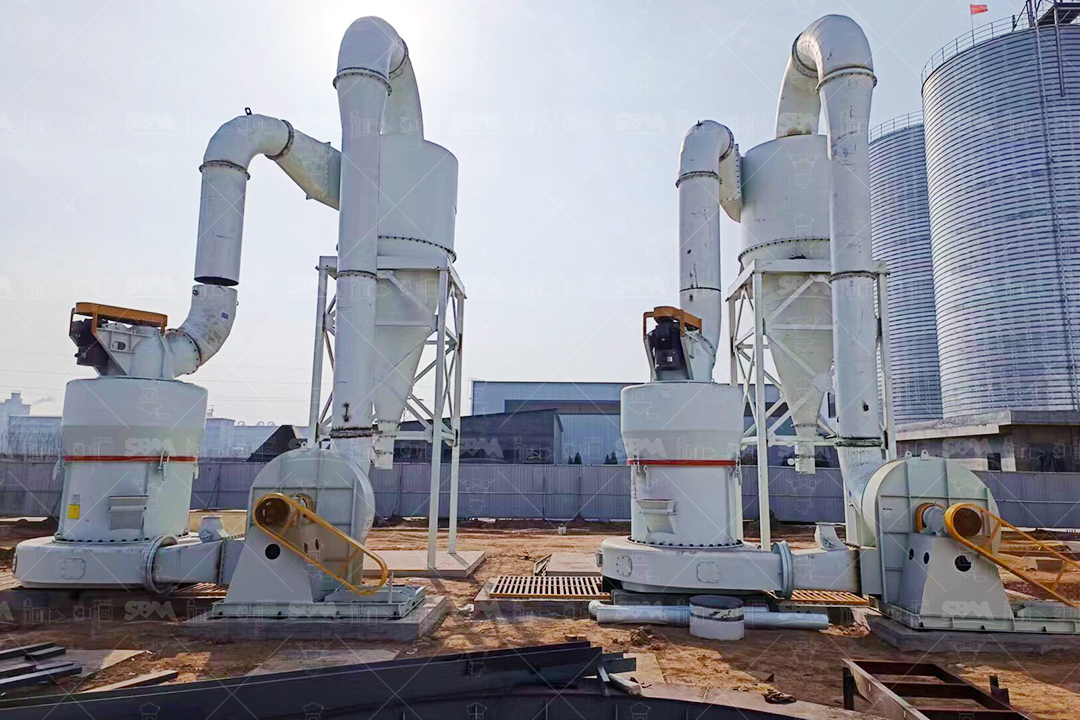
4. Air Duct and Volute Maintenance
The arc air duct design of the MTW Raymond mill minimizes air energy loss and ensures efficient material transport through the system. Carbon powders are notoriously cohesive; they can stick to duct walls, gradually narrowing the cross-section and increasing system pressure drop. Similarly, the volute — which directs air and ground material into the classifier — requires attention.
Best practices:
- Monthly: Inspect the air duct lining for wear. High-strength guard plates protect the working face; replace any plate with more than 50% wear.
- Every quarter: Check for carbon deposits inside the volute. Use compressed air or a soft brush to remove buildup. Do not use metal scrapers, which can damage the wear-resistant surface.
- Semi-annually: Measure the clearance between the volute wall and the rotating vanes in the classifier. Excessive clearance (>3 mm) allows coarse particles to bypass classification, reducing product quality.
5. Operator Training and Process Optimization
Even the best engineering cannot compensate for poor operation. In carbon material processing, the most common maintenance issues — blocked discharge, mill vibration, and motor overload — are often traced back to how the mill is fed.
- Feed moisture control: Carbon feedstocks should have moisture content below 5%. Higher moisture leads to material agglomeration on the grinding ring and reduced throughput. Install an online moisture analyzer if you process variable feed sources.
- Feed size discipline: The MTW mill accepts up to 50 mm input. Oversized lumps (>50 mm) can jam the shovel blade and cause mechanical shock. Pre-crush lump carbon using a hammer mill or jaw crusher to ensure consistent feed.
- Automatic control system utilization: The MTW mill can be integrated with a PLC-based expert control system that adjusts feed rate and classifier speed in real time. Yet many plants underutilize this feature. Activating automatic feedback loops reduces the burden on operators and prevents the mill from running at conditions that accelerate wear.
6. Environmental and Safety Maintenance
Carbon dust is combustible; in confined spaces like mill housings, it can form explosive mixtures. The sealed design and negative-pressure operation of modern Raymond mills reduce dust escape, but these systems must be verified regularly.
- Check seals monthly: Inspect all gaskets, flanges, and doors for leaks. Even small gaps (0.5 mm) can cause dust escape.
- Verify negative pressure: Use a manometer at the mill outlet to ensure the system maintains -100 to -200 Pa. If pressure rises toward zero, check for clogs in the baghouse filter or cyclone.
- Spare parts stock: For carbon processors, the highest-wear items are grinding roller shells, ring segments, and shovel blades. Maintain a safety stock of at least one full set per mill. Downtime while waiting for parts can cost more than the parts themselves.
Conclusion
Maintaining a Raymond mill for carbon material processing is not a one-size-fits-all task. The abrasiveness, fineness, and combustibility of carbon feedstocks demand a maintenance regime that prioritizes wear monitoring, lubrication integrity, dust control, and operator discipline. The MTW European Trapezium Mill’s features — such as the unique wear-proof perching knife design, cone gear transmission, and arc air duct — provide an excellent foundation for reliability. However, these engineering advantages are only realized through diligent upkeep. By following the maintenance points outlined above, carbon processors can achieve higher uptime, consistent product quality, and lower total cost of ownership. As always, consult your equipment supplier’s manual and consider partnering with SBM’s application engineers for site-specific recommendations.
Frequently Asked Questions (FAQ)
- Q: My Raymond mill frequently stops due to high vibration. What could be the cause in carbon processing?
A: High vibration is often linked to uneven wear on grinding rollers, a buildup of carbon deposits on the grinding ring, or an imbalance caused by oversized feed particles (>50 mm). Check the roller ring clearance and clean the grinding chamber. Also verify that the feed size is within the 0–50 mm specification. - Q: How often should I replace the grinding roller shells when grinding petroleum coke?
A: With hard, abrasive petroleum coke, typical roller shell life ranges from 1,500 to 2,500 operating hours depending on fineness settings. We recommend measuring the shell thickness every 500 hours and replacing once 60% of the original material is worn away. Using the MTW’s curved shovel blade design can extend this life by up to 15%. - Q: Carbon dust is escaping from my mill housing. What should I check?
A: First, inspect all door seals and gaskets for wear or misalignment. Next, confirm that the system maintains negative pressure (at least -100 Pa). A clogged baghouse filter or a leak in the air duct can reduce suction, allowing dust to leak. Also check the volute for material buildup that might disrupt airflow. - Q: My mill’s motor current is fluctuating wildly. Is this a maintenance issue?
A: Fluctuating motor current often indicates inconsistent feed — either a variable feed rate or material with changing hardness or moisture content. Check the feeder system for mechanical issues. Also, verify that the classifier speed is stable. If the feed and control systems are fine, examine the gearbox oil for contamination, as worn gears can cause load spikes. - Q: Can I use the same lubrication oil for Raymond mill in carbon service as for limestone grinding?
A: While the base oil viscosity recommendation (ISO VG 460) may be the same, carbon processors should use oil with higher oxidation stability and better anti-wear additives due to the higher operating temperatures and abrasive dust. We recommend a synthetic gear oil with a high viscosity index. Always consult your mill manual and an oil supplier experienced in carbon processing environments.


