

Key role of raymond mill in industrial filler production
Published on: 2025-04-09
In the production of industrial fillers, the grinding mill is the single most critical piece of equipment. It directly determines the quality, consistency, and cost-efficiency of the final product. Among the various grinding technologies available, the Raymond mill—specifically the MTW European Trapezium Grinding Mill—plays a pivotal role. This mill series addresses common customer pain points such as high maintenance costs, inconsistent fineness, high energy consumption, and low throughput. Based on over 9500 customer proposals and decades of R&D, the modern Raymond mill has evolved far beyond its traditional design. It now features cone gear whole transmission, arc air ducts, and a unique wear-proof blade system. These innovations directly translate into lower operating costs, stable production, and a high-quality finished product that meets the stringent demands of industries like plastics, paint, paper, and rubber. The mill is not just a machine; it is the heart of a reliable and profitable filler production line.
The Evolution of the Raymond Mill in Filler Processing
The term 'Raymond mill' has become synonymous with powder processing in many industries. However, the technology has moved far beyond the simple pendulum mill of the past. For industrial fillers—such as ground calcium carbonate (GCC), talc, barite, and kaolin—the requirements are rigorous. Customers need a mill that can produce a fine, uniform powder with minimal variation in particle size distribution. They also need a machine that is reliable, easy to maintain, and efficient to run.
The MTW Series European Trapezium Grinding Mill is a direct response to these needs. It is designed from the ground up with the specific challenges of filler production in mind. The input size can be up to 50mm, and the output fineness ranges from 30 to 400 mesh, with capacities from 3 to 40 tons per hour. This makes it ideal for medium-scale producers who need consistent quality without the massive investment required for larger systems.
Overcoming the Common Woes of Traditional Mills
Traditional Raymond mills often suffer from several recurring problems. High wear rates on grinding rollers and rings lead to frequent shutdowns and costly replacements. The energy efficiency is often poor, eating into profits. Another common issue is the difficulty in controlling the final product fineness, leading to off-spec material and wasted product.
The MTW mill tackles these issues head-on with several key technical innovations. The unique wear-proof perching knife design is a game-changer. The combined-type shovel blade means that only the blade needs to be replaced during maintenance, not the entire assembly. The curved design of the shovel blades also extends the service life of the roller and ring by optimizing the feeding angle. This directly reduces the cost of wearing parts and operational downtime.
Efficiency Through Design: The Arc Air Duct and Cone Gear
Two more features are critical to the mill's performance in filler production. The first is the arc air duct design. In a standard mill, air energy can be lost in sharp corners, reducing the efficiency of material transport. The circular duct in the MTW mill avoids this energy loss and ensures that the finished powder is transported out of the grinding chamber quickly and efficiently. The high-strength guard plate also protects the working face of the air duct, adding to the mill's durability.
The second major feature is the cone gear whole transmission. This system achieves a higher transmission efficiency than traditional gearboxes. It saves space within the mill's footprint and, importantly, lowers the initial investment cost for the customer. By simplifying the transmission path, it also reduces the chance of mechanical failure, a key concern for production managers who need to keep the line running 24/7.
Beyond the MTW: A Complete Filler Production Solution
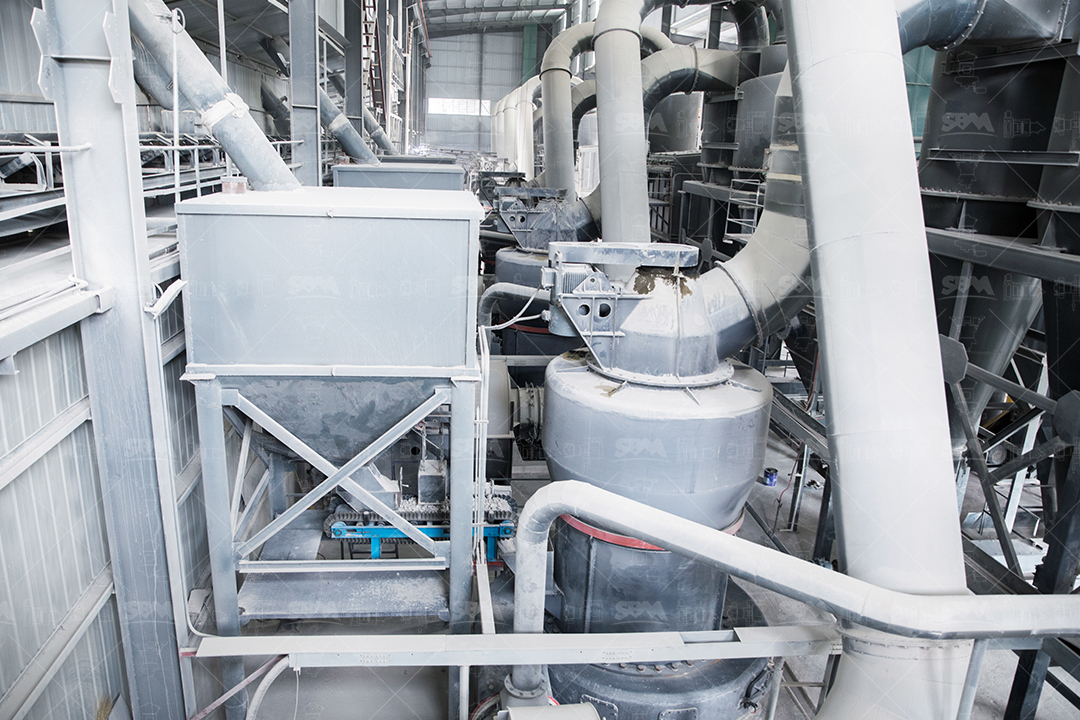
While the MTW Raymond mill is excellent for medium-scale and standard fineness requirements (up to 400 mesh), not all filler applications are the same. SBM offers a full line of grinding equipment that serves as a total solution provider for the entire workflow. For customers with higher capacity demands or lower energy consumption targets, the LM Vertical Roller Mill is another excellent option for the filler industry.
The LM mill integrates crushing, drying, grinding, and powder separation into a single unit. Its compact layout requires about 50% less floor space than a ball mill system, and it can be arranged outdoors to reduce civil construction costs. The operating costs are also significantly lower. The grinding rollers do not contact the grinding plate directly, and both are made of high-quality materials, leading to less wear. The energy consumption is 30% to 40% lower than a ball-milling system, a substantial saving for high-tonnage filler producers. Furthermore, its automatic control system allows for remote operation, saving on labor costs.
High-Tech Filler Production with Ultrafine Mills
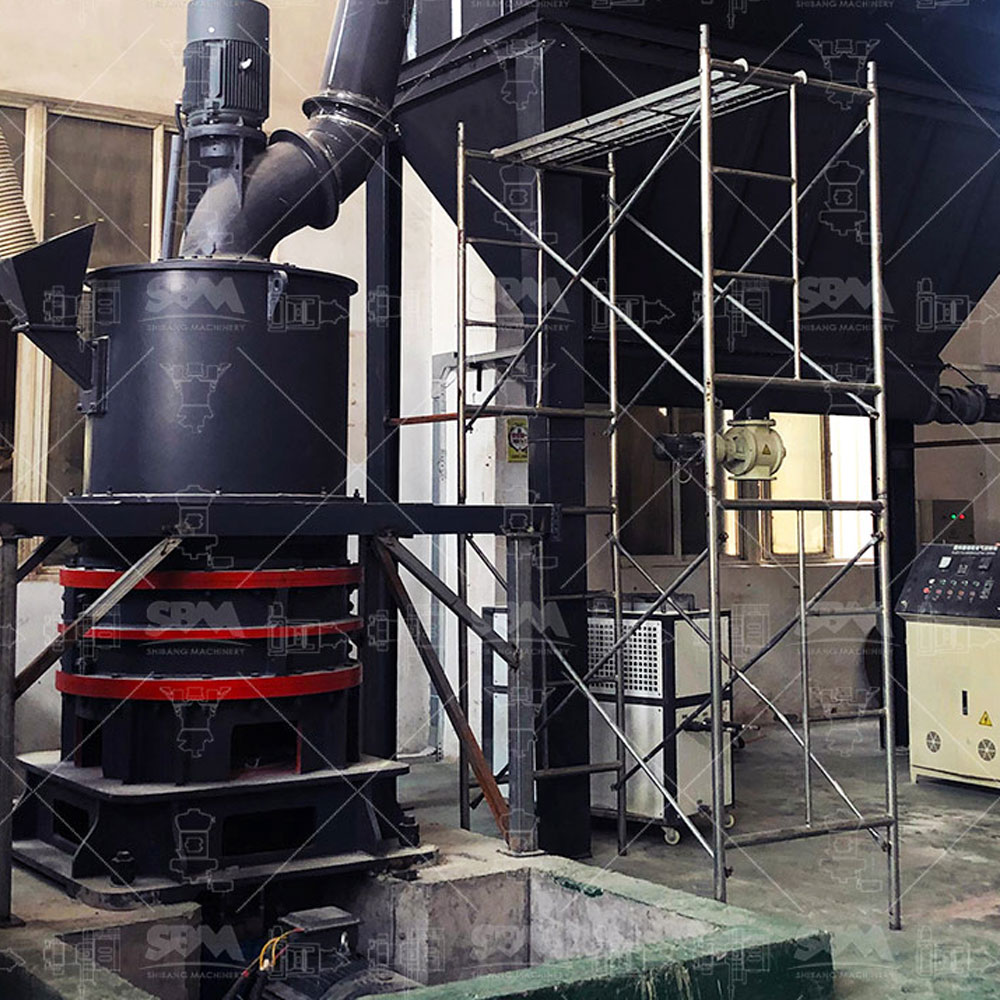
For customers requiring ultra-fine fillers in the range of 325 to 2500 mesh, the SCM Ultrafine Mill is the specific solution. As the market demands higher quality and finer powders for applications like high-end plastics, rubber, and paints, this mill steps in where traditional Raymond mills fall short. Its fineness can be adjusted via frequency conversion, and it can achieve a one-time fineness of D97 ≤ 5μm.
The SCM mill also features high output with low energy consumption, offering more than twice the capacity of a jet mill with 30% less energy. Its heavy rotor design and tight testing method mean that the roller and ring have a durability that is several times higher than standard equipment. Coupled with an efficient double powder collecting method using pulse dust collectors, it ensures both high product quality and a clean working environment.
For even larger-scale ultra-fine production (10-70 tph), the LUM Ultrafine Vertical Mill is the top-tier choice. It integrates Taiwan’s grinding roller technology and Germany’s powder separating technology. This mill is designed for the most demanding applications in plastic masterbatch, PVC, and artificial stone industries. Its unique grinding curve design on the roller shell and lining plate makes it easier to form a material bed, improving grinding efficiency. The PLC/DCS automatic control system ensures precise control of grinding pressure and stable operation, giving filler producers the ultimate in product consistency and reliability.
Conclusion: Reliability and Quality as the Standard
Choosing the right mill for industrial filler production is a strategic decision that impacts every part of the business. The key role of the Raymond mill, especially in its modern European Trapezium form, is to provide a reliable, efficient, and cost-effective solution for standard filler applications. However, the full suite of options—from the energy-saving LM Vertical Mill to the ultra-fine SCM and LUM mills—ensures that no matter the fineness requirement or capacity target, there is a solution that addresses the core pain points of high wear, high energy, and inconsistent quality. SBM’s equipment has been proven in over 180 countries, helping producers achieve a higher standard of quality and profitability in their filler operations.
Frequently Asked Questions (FAQ)
- My current mill has very high wear rates on the grinding rollers, causing frequent shutdowns. How does the MTW Raymond mill solve this?
The MTW mill uses a unique wear-proof perching knife design. The shovel blades are combined-type, meaning only the lower blade part needs replacement, not the whole unit. The curved design also optimizes the feeding angle to protect the roller and ring, significantly extending their service life and reducing downtime. - I need to produce fillers for the paint industry with very fine and consistent particle size. Which mill is best for this?
For fine powders up to D97 ≤ 5μm, the SCM Ultrafine Mill is the ideal choice. Its efficient vertical turbine powder classifier ensures accurate cutting size and no spillover of coarse powder. The frequency conversion control makes fineness adjustment very convenient and precise. - My factory has limited space. Is there a grinding system that doesn't take up as much room as a traditional ball mill?
Yes, the LM Vertical Roller Mill is perfect for this. Its system integrates crushing, drying, grinding, and separating in one compact unit. Its floor space is about 50% of a ball mill system, and it can even be arranged outdoors to save more indoor space. - I'm worried about the high energy costs of running a grinding mill. How can I reduce this expense?
Two options are highly energy-efficient. The LM Vertical Roller mill has 30-40% lower energy consumption compared to ball mills. The SCM Ultrafine Mill also offers high output with energy consumption 30% lower than a jet mill while having more than twice the capacity. - I need to produce high volumes of ultra-fine filler for the plastic masterbatch industry. What is the best capacity option?
The LUM Ultrafine Vertical Mill is designed for this high-demand sector. With a capacity range of 10 to 70 tons per hour, it is built for large-scale production. It incorporates advanced separating technology and intelligent controls to ensure stable, high-quality output for demanding customers.


