

Selection analysis of raymond mill and vertical mill in titanium dioxide processing
Published: October 26, 2023
Selecting the appropriate grinding equipment for titanium dioxide (TiO₂) processing is a critical decision that directly impacts production efficiency, product quality, and long-term operational stability. In this analysis, we compare two primary mill types: the MTW European Trapezium Grinding Mill (often referred to as Raymond Mill) and the LM Vertical Roller Mill. Based on extensive field data and client feedback from over 180 countries, we examine how each machine addresses common processing challenges such as particle size consistency, energy consumption, wear part longevity, and floor space requirements. The MTW Raymond Mill offers proven reliability and lower upfront investment for medium-capacity lines, while the LM Vertical Roller Mill provides superior energy efficiency and integration for large-scale continuous operations. For ultrafine TiO₂ applications below 325 mesh, we also reference the SCM Ultrafine Mill and LUM Ultrafine Vertical Mill as specialized alternatives. This article aims to equip plant managers and process engineers with a structured framework for making an informed selection based on their specific throughput targets, fineness requirements, and site constraints.
1. Understanding the core differences in design philosophy
The MTW European Trapezium Grinding Mill (MTW Raymond Mill) is the result of decades of iterative improvement, incorporating feedback from over 9,500 customers. Its cone gear whole transmission and arc air duct design ensure stable material flow and high transmission efficiency. This mill is particularly suited for clients who need a reliable workhorse for TiO₂ grinding in the 30-400 mesh range with capacities between 3 and 40 tph. The unique wear-proof perching knife design, which allows only the blade to be replaced during maintenance, significantly reduces the cost of wearing parts—a common pain point for operators managing high-volume TiO₂ feed.
_1785341991984.jpg)
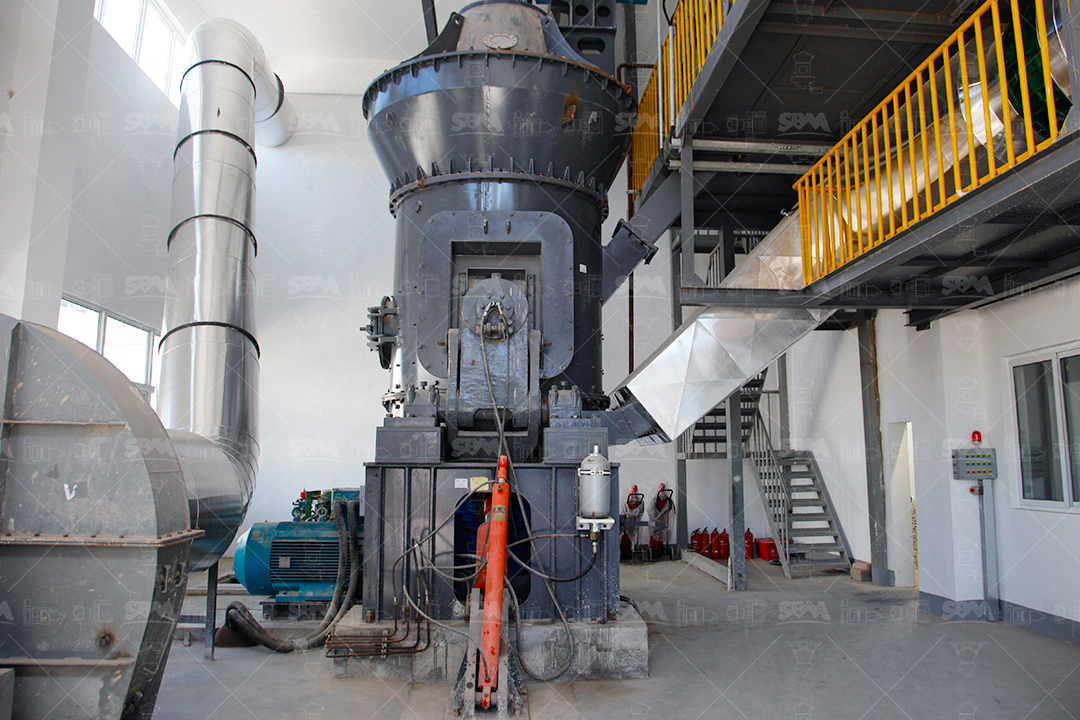
On the other hand, the LM Vertical Roller Mill is designed for large-scale, integrated systems. It combines crushing, drying, grinding, and powder separation into one unit. For TiO₂ producers facing space constraints and high energy costs, the LM mill is a compelling option. Its floor space is about 50% of that of a traditional ball mill system, and it can be arranged outdoors, dramatically reducing civil construction costs. The rollers do not contact the grinding plate directly; combined with high-quality materials, this results in 30-40% lower energy consumption compared to ball milling systems—a decisive factor for operations running 24/7.
2. Addressing common customer pain points in TiO₂ grinding
One of the most frequent complaints in TiO₂ processing is inconsistent fineness leading to downstream quality issues. The MTW Raymond Mill addresses this with its volute design and arc air duct, which maintain stable air flow and prevent material accumulation. For applications where TiO₂ purity is critical, the mill's sealed system minimizes contamination. Meanwhile, the LM Vertical Mill's automatic control system allows precise adjustment of grinding pressure and classifier speed, ensuring the final product's particle size distribution stays within tight tolerances—essential for pigment-grade TiO₂.
Wear part longevity is another major concern. TiO₂ is highly abrasive, and frequent shutdowns for roller and ring replacement can cripple production schedules. The MTW mill's curved shovel blades change the feeding angle to reduce direct impact, extending the service life of the roller and ring. For the LM mill, the grinding rollers and table are made from specialized wear-resistant alloys, and the roller's ability to swing away during startup eliminates metal-to-metal contact, drastically reducing wear during idle phases. Operators report that the LM mill's wear parts last 2-3 times longer than conventional equipment under similar abrasive conditions.
3. Capacity and fineness: matching the mill to the application
Titanium dioxide processing often involves two stages: coarse grinding followed by fine classification. For primary grinding where output sizes range from 30 to 200 mesh, the MTW Raymond Mill is often the most cost-effective choice. Its capacity of 3-40 tph covers the needs of medium-sized plants. However, when the target is 325 mesh or finer, or when throughput exceeds 40 tph, the LM Vertical Roller Mill's capacity range of 3-400 tph becomes advantageous. The LM mill can handle larger feed sizes (up to 50mm) and still achieve consistent 325 mesh product without pre-crushing, simplifying the process flow.
For ultrafine TiO₂ applications demanding 325-2500 mesh, the SCM Ultrafine Mill and LUM Ultrafine Vertical Mill offer specialized solutions. The SCM mill achieves a one-time fineness of D97≤5μm with adjustable frequency control, and its output is more than double that of jet mills while consuming 30% less energy. The LUM mill integrates Taiwan roller technology and German classifier technology, achieving high primary grinding efficiency through uniquely designed roller shell and lining plate curves. These mills are ideal for high-value TiO₂ products used in masterbatch, PVC, or artificial stone, where particle shape and distribution directly impact end-product whiteness and opacity.
4. Operational costs and maintenance considerations
Total cost of ownership is a decisive factor. The MTW Raymond Mill has a lower initial investment and is easier to maintain for plants with limited technical staff. Its combined-type shovel blade only requires replacing the blade tip, and the cone gear transmission saves space while lowering gearbox failures. For the LM Vertical Mill, while the initial investment is higher, the energy savings alone can offset the difference within 12-18 months for large facilities. The automatic control system supports both remote and local operation, reducing labor costs and downtime for troubleshooting.
Environmental compliance is another common pain point. TiO₂ dust is fine and can cause respiratory hazards. Both MTW and LM mills operate under negative pressure with sealed systems. The LM mill's wholly sealed design and low-vibration operation produce noise levels well below regulatory limits, while the MTW mill's arc air duct prevents dust leakage. For plants in strict environmental zones, these features are non-negotiable. SBM's team regularly assists clients in configuring pulse dust collectors and soundproofing to meet local standards.
5. Making the final decision: a practical framework
Based on our experience serving over 180 countries, we recommend the following decision matrix: For throughput under 40 tph and target fineness between 30-400 mesh, the MTW Raymond Mill offers the best balance of cost and performance. For throughput between 40-400 tph and need for integrated drying or ultrafine capabilities, the LM Vertical Roller Mill is the preferred choice. If the target fineness consistently exceeds 400 mesh, the SCM Ultrafine Mill (for 325-2500 mesh, 0.5-25 tph) or LUM Ultrafine Vertical Mill (for 325-4000 mesh, 10-70 tph) should be evaluated. Regardless of the choice, SBM Machinery provides end-to-end support—from site assessment and mill selection to installation and aftermarket service—ensuring that the grinding system is optimized for the specific TiO₂ variety, whether it's rutile, anatase, or synthetic grades.
FAQ: Common customer concerns in TiO₂ grinding
1. I often see inconsistencies in powder fineness between batches. Which mill type best controls particle size distribution?
The LM Vertical Roller Mill has an expert automatic control system that adjusts grinding pressure and classifier speed in real time, ensuring tight particle size distribution. For very fine TiO₂ (D97≤5μm), the SCM Ultrafine Mill’s frequency conversion control and vertical turbine classifier provide precise cutting size without coarse powder spillover.
2. Our raw TiO₂ contains some moisture. Can the MTW Raymond Mill handle it, or do I need a drying system?
The MTW mill can handle minimal moisture (typically below 6%) through its hot air system integrated into the arc air duct. However, for high-moisture feeds (up to 15-20%), the LM Vertical Roller Mill is superior because it integrates drying, crushing, and grinding in one step. The hot air enters the mill directly, drying the material as it is ground.
3. My biggest headache is frequent roller and ring replacement due to abrasion. Which mill is more durable?
Both mills are designed for abrasive materials like TiO₂. The MTW mill uses a patent-protected curved shovel blade that reduces wear on the roller and ring; only the blade tip needs periodic replacement. The LM mill avoids metal-to-metal contact entirely—the roller swings away from the grinding table during startup, and all contact surfaces are made from high-quality wear-resistant alloys, extending service life by 2-3 times compared to traditional mills.
4. We are expanding our plant but have limited floor space. Which mill has a smaller footprint?
The LM Vertical Roller Mill is the clear winner here. Its integrated design reduces floor space to about 50% of a ball mill system. It can also be installed outdoors without additional housing, saving civil engineering costs. The MTW mill, while more compact than a ball mill, still requires more space than the LM system.
5. Our environmental regulations are getting stricter. Are these mills compliant with emission standards?
Yes. Both mills operate under negative pressure with fully sealed systems, preventing dust spillover. The LM mill's low-vibration, low-noise design meets stringent standards. For additional protection, we can recommend the efficient double powder collection method (using pulse dust collectors) and optimized sound insulation rooms— both of which are standard options in SBM's grinding systems.


