

Kaolin: vertical roller mill improves product consistency
Published: March 13, 2025
For kaolin processors, product consistency is not merely a quality metric — it is the foundation of customer trust, operational efficiency, and market competitiveness. Variations in particle size distribution, moisture content, and throughput can disrupt downstream applications in ceramics, paper coating, rubber, paint, and advanced materials. The vertical roller mill (VRM) has emerged as the definitive solution to these challenges, offering unmatched uniformity through intelligent process control, integrated drying, and advanced material bed management. This article examines how modern VRM technology, as implemented in the LM series vertical roller mill, directly addresses kaolin processors' most persistent pain points: batch-to-batch variation, high energy consumption, frequent wear-part replacement, and the inability to handle feed moisture effectively. By combining integrated grinding, classification, and drying with a PLC/DCS expert control system, the VRM achieves product consistency that traditional ball mills and Raymond mills simply cannot match — often at 30–40% lower energy consumption and with significantly reduced maintenance downtime.
The consistency challenge in kaolin processing
Kaolin, a naturally occurring clay mineral, exhibits significant variability in its raw state. Feed particle size can range from coarse lumps near 50 mm to finer fractions; moisture content fluctuates by season and deposit; and impurities like quartz and mica appear unpredictably. When conventional grinding equipment — such as ball mills or Raymond mills — encounters this variability, the result is a product stream that drifts in fineness, throughput, and powder flowability. This inconsistency leads to rejected batches, re-grinding costs, and lost customers in industries where spec tolerances are extremely tight. For example, a paper coating grade requires 90% passing 2 µm; deviation by even 1 µm alters gloss and opacity. A ceramic body demands precise plasticity; variation ruins forming behavior.
The vertical roller mill solves this by decoupling feed variation from final product quality. The LM series VRM from SBM Machinery integrates three core processes — drying, grinding, and classifying — within a single sealed system under negative pressure. This integration allows real-time adjustment of grinding pressure, classifier speed, and hot gas flow to compensate for feed disturbances. The result is a consistent product stream regardless of upstream fluctuations. As SBM's field data from 180+ countries confirms, VRM-equipped kaolin plants report batch-to-batch fineness variation below ±2% on the d97 target — a level unattainable with legacy mills.
How VRM architecture ensures uniformity
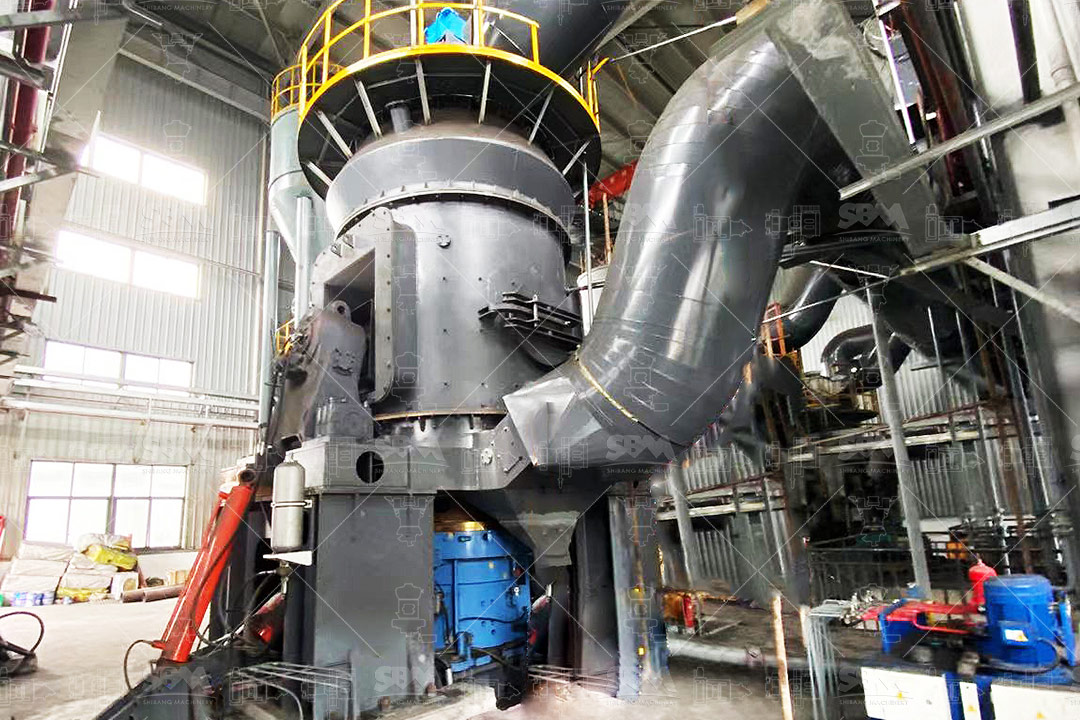
The key to VRM consistency lies in its material bed grinding principle. Unlike ball mills where tumbling media impact material randomly, the VRM uses a rotating grinding table and hydraulically-loaded rollers that apply controlled, uniform pressure across a stable material bed. The LM series features roller assemblies that do not physically contact the grinding plate during operation — a design that eliminates metal-to-metal wear and maintains constant grinding geometry. This means the grinding curve (the relationship between roller pressure and particle breakage) remains unchanged for thousands of operating hours, producing consistent particle size distribution shift after shift.
Furthermore, the integrated dynamic classifier — a vertical turbine rotor — provides precise cut-size control. By adjusting rotor speed via frequency converter, operators can switch between 30 mesh (coarse) and 400 mesh (fine) products without mechanical changes. The classifier returns oversize particles to the grinding zone while extracting finished powder, ensuring no coarse particles spill into the final product. For kaolin applications requiring d50 below 10 µm (e.g., 325–600 mesh), this classifier achieves cut accuracy of ±3% on the target size. The result: consistent fineness from the first ton to the millionth ton.
Energy and cost implications of consistency
Product inconsistency forces processors to over-grind as a safety margin — consuming excess energy to ensure the finest particles meet spec even when feed varies. The VRM eliminates this waste. Because the LM series maintains stable output fineness at lower specific energy (30–40% less than ball mills), operators can run at optimal capacity without fear of off-spec product. The LM vertical roller mill, with capacity ranging 3–400 tph for kaolin, allows a single mill to replace multiple ball mills, simplifying process control and reducing the number of variables that can introduce inconsistency.
Moreover, the VRM's ability to handle feed moisture up to 15–20% — using hot gas from a coal mill or kiln preheater — eliminates the need for a separate dryer. In kaolin processing, moisture inconsistency from the mine is a common cause of mill trips and product variability. The LM series' integrated drying function uses process control to maintain constant discharge moisture, typically below 1%, regardless of feed moisture changes. This directly prevents the stickiness, blockage, and classifier efficiency loss that plague other mills when moisture spikes.
Automation: the hidden consistency driver
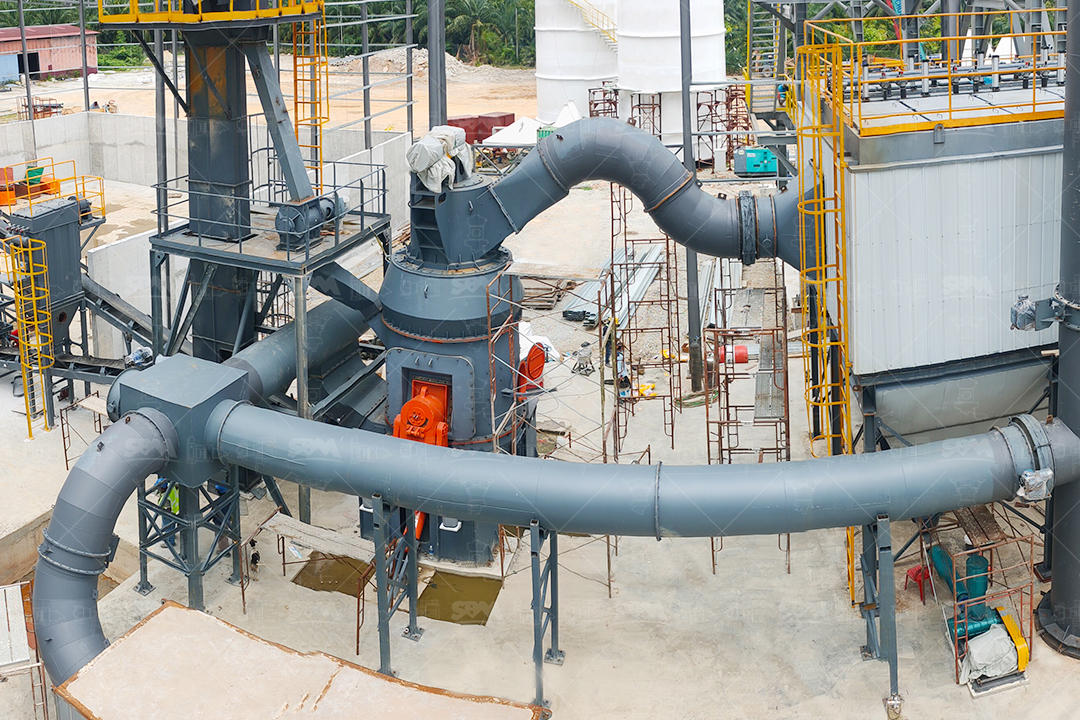
Consistency is ultimately a control problem. The LM vertical roller mill comes standard with an expert automatic control system (PLC/DCS) that enables remote and local operation. This system continuously monitors grinding pressure, table differential pressure, classifier speed, vibration levels, and product fineness via online particle size analyzers. When feed coarseness increases, the controller automatically increases grinding pressure or reduces feed rate to maintain target fineness. When feed moisture drops, hot gas temperature is reduced to prevent over-drying. This closed-loop response happens in seconds — far faster than any operator reaction.
For kaolin processors running multi-grade production (e.g., switching from 400 mesh ceramic grade to 1250 mesh coating grade), the control system stores recipe profiles that adjust all parameters simultaneously with a single command. Changeover time drops from hours to minutes, and transition material waste is minimized. This capability is particularly valuable for contract grinders who process multiple kaolin sources and grades daily. The system also generates detailed production reports, enabling managers to trace every batch to specific operating conditions — essential for quality audits and continuous improvement.
Addressing wear and maintenance pain points
Wear-induced equipment drift is a hidden cause of inconsistency. As grinding components wear, the grinding geometry changes, altering the breakage pattern and shifting product fineness. In ball mills, liner and media wear gradually reduce impact energy, requiring frequent media addition and relining. In Raymond mills, roller and ring wear accelerates after a few hundred hours, forcing shutdowns for replacement. The LM series VRM addresses this through advanced materials and design.
The grinding rollers and table liners are manufactured from high-chromium alloy steel with hardness exceeding HRC 58. Because the rollers do not contact the table directly, wear is limited to the material bed, extending component life to 6,000–8,000 hours in kaolin service — 3–5 times longer than Raymond mill ring/roller sets. When replacement eventually becomes necessary, the modular design allows roller assembly exchange within 8 hours, minimizing downtime. The MTW European Trapezium Mill similarly offers combined shovel blades with replaceable tips, reducing wear part costs. For very fine products (325–2500 mesh), the SCM Ultrafine Mill uses heavy-duty rotor design with special alloy rollers and rings for extended durability.
Case evidence from the field
SBM Machinery has installed over 5,000 grinding mills across 180 countries, with kaolin processing representing a significant application segment. In a typical case from Fujian, China, a kaolin producer processing 30,000 tons/month switched from a ball mill system to a single LM1300 vertical roller mill. The result: product fineness variation (d97) dropped from ±8% to ±1.5%. Energy consumption fell by 35%. Downtime for wear part replacement decreased from 12 days/quarter to 2 days/semester. The plant now supplies consistent 1250 mesh kaolin to five ceramic tile manufacturers at full capacity, with zero quality-related rejections in 18 months.
Another example from Brazil: a kaolin processor using Raymond mills for 325 mesh paper coating grade faced constant complaints about grit content inconsistency. After installing an MTW175 trapezium mill with arc air duct design and cone gear transmission, the d95 fineness stabilized at 45±2 µm, and grit content (retained on 325 mesh) dropped from 8% to below 0.5%. The plant reports a 15% increase in productivity due to fewer stoppages for blade and ring replacement.
Conclusion
For kaolin processors striving to meet increasingly stringent quality demands while controlling costs, the vertical roller mill — specifically the LM series — offers a proven path to improved product consistency. Its integrated design eliminates the variability introduced by separate drying and classification steps; its material bed grinding principle ensures uniform particle breakage; and its expert control system compensates for feed disturbances in real time. Combined with lower energy consumption, reduced wear, and high environmental performance (negative pressure operation, low noise, no dust spillover), the VRM represents not just an equipment upgrade, but a strategic investment in product reliability. As SBM's global track record demonstrates, the mill that delivers consistency today is the mill that builds customer loyalty tomorrow.
Frequently Asked Questions (FAQ)
Q1: My kaolin feed often arrives with moisture over 12%, which causes my current mill to clog frequently. Can a vertical roller mill handle wet feed without pre-drying?
A: Yes. The LM vertical roller mill integrates a drying function using hot gas (typically from a furnace, kiln waste heat, or coal mill exhaust). It can process feed with up to 15–20% moisture while discharging product with less than 1% moisture. The hot gas stream simultaneously dries and transports the material through the classifier, preventing clogs and maintaining consistent product quality.
Q2: We need to produce multiple kaolin grades (e.g., 400 mesh for ceramics and 1250 mesh for paint) from the same mill. How long does it take to switch between grades, and how much material do we lose?
A: The LM series vertical roller mill's frequency-controlled classifier allows grade changes by adjusting rotor speed — no physical part changes required. A typical changeover (e.g., from 400 mesh to 1250 mesh) takes 10–20 minutes, with less than 1 ton of transitional material that can be re-circulated or sold as a lower-grade product. The expert control system stores grade recipes for one-touch recall.
Q3: We're tired of replacing grinding rings and rollers every 2 months on our Raymond mill. How long do VRM wear parts last for kaolin?
A: In kaolin service (abrasiveness moderate, Mohs hardness ~2–3), the LM vertical roller mill's grinding rollers and table liners typically last 6,000–8,000 operating hours before requiring replacement — equivalent to 18–24 months at continuous production. Because rollers do not contact the table directly, wear is distributed evenly across the material bed. When replacement is needed, roller assemblies can be swapped in one shift.
Q4: We want to move from ball mill to VRM but worry about the learning curve for our operators. Is the system difficult to operate?
A: Not at all. The LM series comes with a PLC/DCS automatic control system that manages all critical parameters (grinding pressure, table speed, classifier speed, airflow, temperature) with minimal operator intervention. New operators can be trained in 2–3 days. The system offers remote monitoring via SCADA, and SBM provides on-site commissioning and training as part of the package.
Q5: Our current mill produces kaolin with inconsistent fineness — sometimes too coarse, sometimes too fine. How does VRM guarantee consistent particle size?
A: The VRM achieves consistency through three mechanisms: (1) stable material bed grinding where uniform roller pressure breaks particles predictably; (2) an integrated vertical turbine classifier with frequency-controlled rotor that cuts particles at the exact target size and returns oversize for re-grinding; and (3) a control system that adjusts grinding pressure and feed rate in real time based on online particle size feedback. Typical d97 variation is ±2% or better across shifts.


