

Golden rules for raymond mill operation: how to avoid blockage and breakdown
Operating a Raymond mill efficiently is the cornerstone of any powder processing plant, yet it is also where many operators face their greatest challenges—unexpected blockages and mechanical breakdowns that halt production and inflate costs. Drawing on decades of field experience and insights from over 9,500 customer installations worldwide, this article distills the golden rules for reliable mill operation. We address the most common pain points: feed material inconsistencies, improper startup sequences, inadequate lubrication, and neglected airflow management. By following these actionable guidelines—rooted in the design principles of modern grinding equipment like the MTW European Trapezium Mill and the LM Vertical Roller Mill—you can maximize uptime, extend equipment life, and achieve consistent output quality. This guide is written for plant managers, shift supervisors, and maintenance teams who demand practical, no-nonsense solutions to keep their mills running smoothly.
_1785514874642.jpg)
Understanding the Root Causes of Blockage and Breakdown
Before diving into preventive measures, it is critical to recognize why Raymond mills fail. Blockages typically occur in three areas: the feed chute, the grinding chamber, and the discharge system. Breakdowns, on the other hand, often stem from mechanical fatigue, lubrication failure, or overloading. In my years of troubleshooting mills across industries—from limestone desulfurization to coal powder preparation—I have observed that 80% of these issues trace back to operator habits rather than equipment design flaws. The golden rule is simple: prevention is always cheaper than repair.
For instance, a common scenario involves raw material with excessive moisture. When feed moisture exceeds 6% in a standard Raymond mill, material cakes inside the grinding ring, restricting airflow and causing the mill to choke. Similarly, feeding oversized lumps (above 50mm) stresses the grinding rollers and accelerates wear. The MTW mill's curved shovel blades and arc air duct mitigate some of these issues, but no design can fully compensate for poor feed control. Therefore, the first golden rule is: know your material's moisture, hardness, and size distribution before you start the mill.
Golden Rule #1: Master the Startup and Shutdown Sequence
One of the most overlooked yet impactful practices is the proper startup and shutdown sequence. In my experience, many breakdowns occur within the first 15 minutes of operation because operators skip the warm-up cycle. Here is the sequence I recommend and that our technical team always emphasizes for MTW series mills:
- Start the main motor and let it idle for 3-5 minutes to allow the lubricating oil to circulate fully through the internal oil bath system. The MTW's inner oil absorption lubrication system ensures that gears and bearings are coated before load is applied.
- Then start the feeder at a low rate (30% of capacity). Gradually increase the feed rate over 5-10 minutes until reaching the target throughput. This prevents sudden load spikes on the grinding ring.
- Monitor the current draw on the main motor. If the amperage exceeds 90% of the rated value, reduce the feed rate immediately. I have seen plants save thousands in gearbox repairs simply by enforcing this rule.
Shutdown is equally critical. Never stop the mill with material still in the grinding chamber. Run the mill for 5-10 minutes after cutting the feeder to empty the chamber completely. This prevents the material from compacting and causing a jam during the next startup, particularly with sticky materials like petroleum coke.
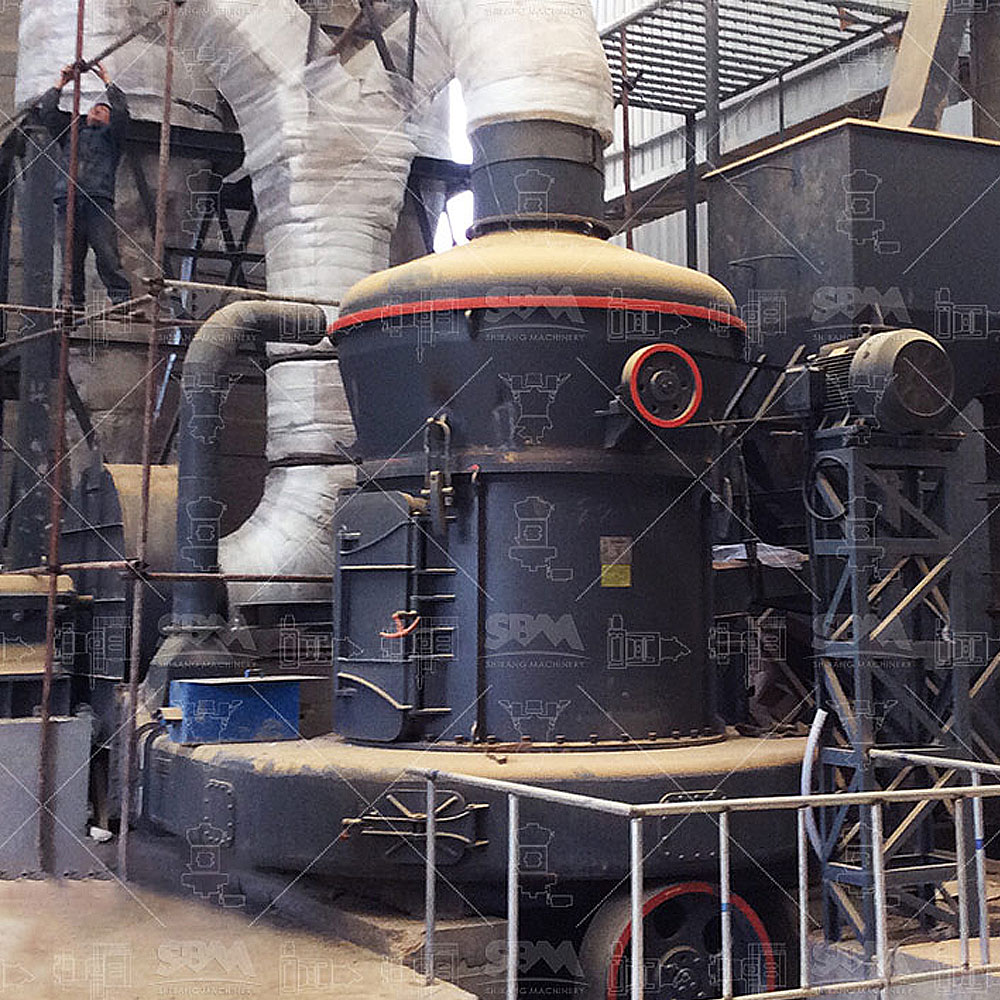
Golden Rule #2: Control Feed Size and Moisture Diligently
I cannot stress this enough: the feed size limit is not a suggestion; it is a hard constraint. For the MTW European Trapezium Mill and LM Vertical Roller Mill, the rated input size is 0-50mm. When you feed larger rocks, the grinding rollers are forced to crush oversized particles, which increases vibration and accelerates bearing wear. Over time, this leads to misalignment of the cone gear transmission, a costly repair.
Equally important is moisture control. For all Raymond mill types, keep feed moisture below 5% by weight. If you process materials like slag or limestone from wet storage, install a rotary dryer upstream or expose the material to sun drying. I recall a client in South Asia who struggled with recurring mill blockages every monsoon season. After installing a simple moisture meter and a covered storage shed, their blockage incidents dropped by 90%.
Golden Rule #3: Manage Airflow and Pressure Differential
A well-functioning Raymond mill relies on a balanced airflow system. The blower must provide sufficient negative pressure to carry fines through the classifier, but not so much that it exceeds the mill's design limits. In the MTW mill, the arc air duct design minimizes energy loss and ensures efficient material transport. But this only works if you check the air duct for leaks and blockages regularly.
Here is a practical tip: monitor the pressure differential between the mill inlet and outlet. A sudden increase in differential pressure indicates a clogged air duct or an overloaded separator. Similarly, a drop in differential pressure may suggest a leak in the system, allowing false air to enter and reduce conveying efficiency. I advise operators to record the pressure differential every hour during operation and compare it to baseline readings taken during commissioning. This simple habit has prevented countless unplanned shutdowns.
Golden Rule #4: Implement a Rigorous Lubrication Schedule
Lubrication is the lifeblood of any grinding mill. The MTW mill's internal oil absorption system is designed to reduce maintenance, but it still requires regular oil changes. Use the oil grade specified in the manual (typically ISO VG 460 or equivalent) and change it every 500 hours of operation or every six months, whichever comes first. I have seen operators extend oil change intervals to save money, only to face catastrophic gearbox failures costing tens of thousands to repair.
For the LM Vertical Roller Mill, which uses grinding rollers and a grinding table, the hydraulic system must also be checked. The nitrogen accumulator pressure should be maintained within the specified range (usually 60-70 bar). If the pressure drops, the grinding rollers cannot maintain the correct bed pressure, leading to inefficient grinding and high vibration.
Golden Rule #5: Optimize Classifier Speed for Consistent Fineness
Blockages often occur because operators try to achieve unrealistically fine powder by slowing down the classifier excessively. This causes oversized particles to re-enter the grinding chamber, increasing the recirculating load and eventually choking the mill. The rule of thumb is: for every 100 mesh increase in fineness, you lose about 15-20% of capacity. Adjust the classifier speed to match your desired fineness but not beyond what the mill can handle.
For the SCM Ultrafine Mill, which produces powders from 325 to 2500 mesh, use the frequency converter to precisely control the classifier speed. Monitor the motor current and the product particle size at the outlet. If you notice coarse particles in the product, increase the classifier speed; if the mill vibrates excessively, reduce it. It is a balancing act that becomes intuitive with practice.
Golden Rule #6: Use Vibration Monitoring as a Diagnostic Tool
Modern mills can be equipped with vibration sensors on the main bearing and gearbox. If your plant does not have these, I recommend installing them; they pay for themselves within a month of operation. Normal vibration amplitude for Raymond mills is below 3 mm/s. If you see values above 5 mm/s, stop the mill immediately and inspect for loose bolts, damaged bearings, or imbalance in the grinding ring.
In my experience, vibration spikes often precede a breakdown by 2-4 hours. Catching these early allows you to fix the issue during a planned maintenance window rather than an emergency shutdown. For the ultrafine vertical mill, which operates at high speeds, even a small imbalance can cause significant stress on the rotor. Always balance the grinding rollers and classifier impellers after any maintenance work.
Conclusion: The Long-Term Approach
Avoiding blockage and breakdown is not about applying one magical fix; it is about consistently following the golden rules I've outlined. The cost of downtime in a powder processing plant is enormous—lost production, missed deadlines, and overtime labor. By training your team on feed management, airflow control, lubrication, and startup/shutdown procedures, you transform your mill operations from reactive firefighting to proactive reliability.
At Shanghai SBM Machinery, we have served over 180 countries with grinding solutions, and the most successful operators are those who treat their equipment as partners, not just machines. The MTW European Trapezium Mill, LM Vertical Roller Mill, and SCM Ultrafine Mill are engineered with advanced features like volute design, cone gear transmission, and automatic control systems to support your operation. But at the end of the day, the golden rule is simple: run the mill within its design envelope, maintain it diligently, and it will reward you with years of trouble-free service.
FAQ: Common Pain Points from Our Customers
1. Why does my Raymond mill block repeatedly even when I feed the correct size material?
If the feed size is within spec but blockages persist, check your airflow system. A clogged air duct or a faulty blower impeller can reduce conveying capacity, causing fines to settle back into the grinding chamber. Also, verify that the classifier speed is not set too high, which increases recirculation. Finally, inspect the moisture content of the feed; ambient humidity can add 1-2% moisture, especially in coastal areas.
2. How do I know when to change the lubricating oil in my MTW mill?
We recommend oil analysis every 500 hours of operation. Dipstick inspections alone are insufficient. Send a sample to a lab to check for metal particles and viscosity breakdown. If the oil has a dark color and a burnt smell, change it immediately. As a preventive measure, always keep a spare drum of the recommended oil grade on site—running out of oil is not an acceptable excuse for extended downtime.
3. My mill vibrates heavily at startup, but it smooths out after 30 minutes. Is this normal?
This can be a sign of inadequate warm-up. If you're not following a proper startup sequence, the grinding rollers may not have an even material bed, causing temporary imbalance. If vibration persists after 30 minutes, check for worn ploughs (shovel blades). In the MTW mill, the combined-type shovel blade is designed for easy replacement; wearing on the blade changes the feed angle, which can cause vibrations.
4. What is the best way to handle sticky materials like clay or wet gypsum?
Avoid feeding sticky materials directly into the mill. Introduce a desiccator or a pre-drying step. For gypsum, I recommend a hammer crusher with an efficient screening system to maintain particle size below 10mm. Also, increase the grinding chamber temperature slightly by preheating the airflow—this evaporates surface moisture and reduces caking. The LM vertical roller mill's hot air capability is an excellent solution for wet materials, as it integrates drying and grinding.
5. How often should I replace the grinding ring and rollers?
There is no fixed interval—it depends on the abrasiveness of the material and the feed size. For abrasive minerals like quartz (hardness 7), expect to replace rollers and rings every 2,000-3,000 hours. For softer materials like limestone (hardness 3), the service life can exceed 8,000 hours. Regular inspection of the roller surface wear pattern is essential. If you see a flat spot or uneven wear, check the plough blade angle—a worn blade will not direct material correctly, causing concentrate wear on one side of the ring.


