

Activated carbon: the black “adsorption guard” and its industrial applications empowered by grinding mills
Published: March 14, 2025
Summary: Activated carbon, often called the black “adsorption guard,” plays an indispensable role across water treatment, air purification, gold recovery, food and beverage processing, and pharmaceutical refining. Its porous structure and vast surface area make it unmatched in capturing impurities, toxins, and volatile organic compounds. However, the effectiveness of activated carbon depends heavily on particle size, surface area, and pore distribution, which in turn rely on advanced milling technologies. Grinding mills such as trapezium mills, vertical roller mills, ultrafine mills, and ultrafine vertical mills are central to producing activated carbon powders with precise fineness, consistent quality, and high throughput. This article explores how modern grinding equipment empowers the activated carbon industry, solving common pain points like low productivity, high energy consumption, and unstable product quality, while highlighting the expertise of Shanghai SBM Machinery Equipment Co., Ltd. in delivering total solutions for powder processing.
The Critical Role of Grinding in Activated Carbon Production
Activated carbon starts as carbonaceous materials like coconut shells, coal, wood, or peat, which undergo carbonization and activation to develop a highly porous structure. But the raw activated carbon, even after activation, is often too coarse or irregular for direct application. Whether it is used in granular form for column adsorption or in powder form for slurry dosing, the particle size distribution must be tightly controlled. This is precisely where grinding mills come into play.
For powder activated carbon (PAC), the typical requirement is a fineness of 325 mesh or finer, often down to D97 < 5μm for specialized applications like pharmaceutical or ultra-pure water treatment. For granular activated carbon (GAC), the production process may involve crushing and sieving rather than fine milling, but even there, precise control of particle shape and size is essential. Without proper milling, manufacturers face inconsistent adsorption rates, high dust generation, and clogged filtration systems — all costly operational headaches.
Consider a municipal water treatment plant: PAC is injected into the water stream to adsorb organic contaminants and emerging pollutants. If the particles are too coarse, the available surface area is reduced, and adsorption efficiency plummets. If they are too fine, handling becomes difficult, and the carbon may pass through filters into the treated water. Therefore, grinding mills must offer precise fineness control and repeatable output.
The Grinding Solutions Tailored for Activated Carbon
Shanghai SBM Machinery Equipment Co., Ltd. (SBM Machinery) is a total solution provider for grinding equipment, serving industries such as power generation, building materials, mining, metallurgy, and chemicals. Its milling lineup — MTW European Trapezium Mill, LM Vertical Roller Mill, SCM Ultrafine Mill, LUM Ultrafine Vertical Mill, and the classic Ball Mill — addresses the diverse needs of activated carbon processing as follows.
MTW European Trapezium Mill: The Workhorse for Medium Fineness
For activated carbon producers targeting 80–400 mesh (roughly 180–38 μm), the MTW European Trapezium Mill (often called MTW Raymond Mill) is a robust and cost-effective choice. With input sizes up to 50mm and capacities between 3 and 40 tph, it handles pre-crushed activated carbon with ease. The mill’s cone gear whole transmission ensures higher transmission efficiency and saves floor space, while the internal oil absorption lubrication system reduces maintenance frequency — a significant advantage in continuous production environments.
One of the most appreciated features is the unique wear-proof perching knife design. The combined-type shovel blade only requires replacement of the blade itself, lowering spare part costs. The curved shovel blades change the feeding angle, prolonging the service life of the roller and ring. For activated carbon producers, who often deal with abrasive feed materials, this translates to fewer shutdowns and lower operating costs.
Moreover, the arc air duct design minimizes air energy loss, ensuring consistent pneumatic conveying of fine particles. This is critical because activated carbon powder is prone to clogging if airflow is not properly managed. The high-strength guard plate protects the air duct’s working face from wear, further enhancing reliability.
LM Vertical Roller Mill: High Capacity and Integrated Drying
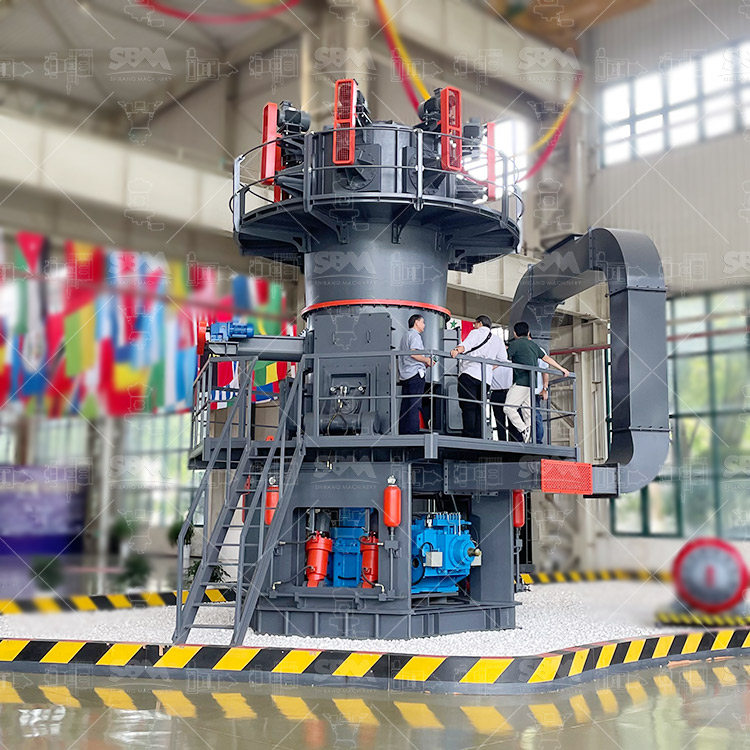
For large-scale activated carbon production, the LM Vertical Roller Mill is a game changer. It integrates crushing, drying, grinding, powder separation, and material conveying into a single unit. The grinding rollers directly compress the material on the grinding plate, achieving an energy consumption 30–40% lower than ball mill systems. Depending on the model, capacities range from 3 to 400 tph, making it suitable for both medium and very large plants.
Activated carbon often retains residual moisture after activation. The LM mill’s integrated drying function uses hot air to evaporate moisture internally, eliminating the need for separate dryers. This not only saves capital investment but also simplifies the process flow. The compact layout occupies only about 50% of the floor space of a conventional ball milling system, and it can be installed outdoors, reducing civil engineering costs.
From an operational standpoint, the automatic control system allows remote monitoring and fine-tuning of grinding pressure and classifier speed. For a material like activated carbon, where the pore structure can be damaged by excessive mechanical stress, the ability to precisely control the grinding force is invaluable. The rollers do not touch the grinding plate directly, minimizing metal-to-metal wear and preventing contamination of the carbon product with metallic particles — a crucial aspect for food-grade and pharmaceutical applications.
SCM Ultrafine Mill: Achieving Ultra-Fine Particle Sizes
When customer requirements jump to ultra-fine powders (325–2500 mesh, or even D97 ≤ 5μm), the SCM series ultrafine grinding mill is the answer. It was developed specifically to address the limitations of traditional Raymond mills in producing very fine powders. The fineness can be adjusted via frequency-conversion control, and the one-time finished product can reach D97 ≤ 5μm — a level that has been verified by geoscientific research institutes through repeated testing.
For activated carbon used in advanced adsorption applications like gold cyanide recovery or the removal of micropollutants from pharmaceutical wastewater, such ultra-fine sizes dramatically increase the external surface area and accelerate adsorption kinetics. The SCM mill’s unique roller and ring materials offer durability several times higher than conventional mills, reducing wear-related maintenance.
The grinding chamber contains no bearing screws, allowing stable, vibration-free operation after balance treatment. This is important because vibration can cause particle segregation and inconsistent product quality. Additionally, the efficient double powder collection system (using powder collectors and pulse dust collectors) ensures virtually zero dust leakage, meeting strict environmental standards — a selling point for factories located in urban or eco-sensitive areas.
LUM Ultrafine Vertical Mill: For High-End and High-Purity Needs
For demanding applications in plastic masterbatch, PVC, artificial stone, and non-woven fabrics, where activated carbon must be exceptionally pure and consistent, the LUM Ultrafine Vertical Mill is the premium choice. It combines Taiwan’s grinding roller technology with Germany’s powder separation technology, and it is designed specifically for ultrafine grinding of non-metallic minerals including calcite, marble, talc, and — critically — activated carbon.
The grinding curves of the roller shell and lining are uniquely designed based on ultrafine pulverization principles, making it easier to form a stable material bed. This improves grinding efficiency and increases the proportion of finished product obtained from the primary grinding cycle. The multi-rotor powder classifier allows accurate and adjustable cut sizes, with no low-grade oversize particles slipping through. The PLC/DCS control system enables precise regulation of grinding pressure, disc rotation speed, and classifier speed, ensuring that every batch meets the same stringent specs.
For activated carbon producers targeting niche markets like high-purity water filters or medical-grade adsorbents, the LUM mill’s clean chamber design and low metal contamination are major advantages. The whole system operates under negative pressure, completely sealed, preventing any dust escape or external contamination.
Addressing the Common Pain Points of Activated Carbon Manufacturers
In working with hundreds of activated carbon producers, SBM Machinery has repeatedly observed five main challenges, all solvable with modern milling equipment:
- Low productivity: Traditional ball mills or Raymond mills often produce inconsistent output or have limited capacity. Switching to a vertical roller mill or a high-efficiency trapezium mill can increase throughput by 50–200% without enlarging the factory footprint.
- High energy consumption: Grinding is an energy-intensive process. By using mills with integrated drying and classification, such as the LM or LUM mills, total energy consumption can be reduced by 30–40% compared to conventional systems, directly improving the bottom line.
- Inconsistent product quality: Without precise control over fineness, moisture, or particle size distribution, customers may reject entire batches. The automatic control systems of SBM mills allow real-time adjustment of classifying speed and grinding pressure, locking in uniform quality.
- Downtime due to wear and tear: Activated carbon is abrasive. The wear-resistant designs of MTW’s curved blades, LM’s non-contacting rollers, and SCM’s super-durable roller/ring materials significantly extend maintenance intervals. For example, the combined shovel blade only needs blade replacement, not the whole assembly, cutting spare parts costs.
- Environmental compliance: Dust generation and noise are persistent issues in milling. SBM mills are sealed and operate under negative pressure; the optimized sound insulation rooms and mufflers reduce noise to acceptable levels, and the pulse dust collectors capture almost all particulate matter. This helps factories pass stringent environmental inspections.
Image Placeholder One
_1785601489926.jpg)
Real-World Application Scenarios
Water Treatment: Municipal wastewater treatment plants use powdered activated carbon to remove endocrine-disrupting chemicals and pharmaceutical residues. Here, the SCM ultrafine mill produces D97 < 10μm powder that rapidly disperses in water, maximizing contact time. One plant in Southeast Asia reported a 15% improvement in pollutant removal after switching to SCM-milled carbon.
Gold Recovery: In carbon-in-pulp (CIP) and carbon-in-leach (CIL) processes, granular activated carbon with a size of 2–4 mm is standard. However, the fines generated during handling represent a loss of valuable carbons. Using the LM vertical mill to crush oversize particles or recycle fines reduces waste. The mill’s external classification system ensures that only particles of the desired size exit to the process, while oversize is returned for re-grinding.
Air Purification: For activated carbon used in solvent recovery or gas masks, the pore structure is more critical than particle size, but a uniform particle size ensures uniform packing density and pressure drop. The MTW mill’s precise classification helps produce consistently sized granules or powder, preventing channeling in filter beds.
Why SBM Machinery’s Approach Stands Out
SBM Machinery has served over 180 countries and regions, not only as an equipment supplier but as a process consultant. The company’s engineers analyze the client’s raw material characteristics (e.g., hardness, moisture, abrasiveness) and target product specs (fineness, capacity, purity) before recommending the ideal mill configuration. For instance, if a client’s feed contains more than 15% moisture, the recommendation often shifts from MTW to LM to leverage the latter’s drying capability.
SBM also provides complete grinding systems, including feeders, classifiers, dust collectors, and control panels, ensuring a single-source responsibility for the entire performance. This holistic view minimizes startup issues and maximizes operational reliability.
Image Placeholder Two
Conclusion: The Future of Activated Carbon Milling
As global regulations on water purity, air emissions, and industrial waste become stricter, the demand for high-performance activated carbon will only rise. Producers must invest in advanced grinding technology to retain competitiveness. The choice of mill should be dictated by the specific downstream application:
- For cost-sensitive, medium-fineness production (30–400 mesh), the MTW trapezium mill offers exceptional value.
- For high-throughput plants with moisture-laden feed, the LM vertical roller mill provides integrated drying and energy savings.
- For ultra-fine powders (325–2500 mesh), the SCM ultrafine mill is unbeatable in output per kWh.
- For the highest purity and consistency, the LUM ultrafine vertical mill sets the benchmark.
Regardless of the equipment chosen, the engineering expertise behind SBM machinery ensures that the activated carbon produced is truly an effective “adsorption guard,” protecting both the environment and human health. With SBM’s track record and global support network, producers can be confident in scaling up their operations without compromising on quality.
FAQ: Frequently Asked Questions from Activated Carbon Producers
Q1: My current ball mill produces too many fine dust particles, and I lose a lot of activated carbon during sieving. What is the best solution?
Ball mills inherently generate a wide particle size distribution with a high percentage of ultra-fines. Replacing or supplementing with an SBM LM vertical roller mill or MTW trapezium mill, which use integrated classifier systems, will narrow the distribution and reduce over-grinding. For example, the MTW mill’s arc air duct and volute design ensure that finished powder is removed quickly, preventing over-pulverization.
Q2: How can I reduce energy consumption in my ultrafine grinding process without sacrificing output?
The SCM ultrafine mill consumes 30% less energy than jet mills for the same fineness, with a throughput more than double that of traditional Raymond mills. Moreover, its automatic feedback system stabilizes conversion of finished product, avoiding the energy waste associated with variable feed rates. If you can maintain a consistent feed size (0-20mm), the mill will operate at peak efficiency.
Q3: Moisture in my activated carbon often causes clogging inside the mill. Can SBM equipment handle wet materials?
Yes, the LM vertical roller mill is designed with an integrated drying function. Hot air is introduced through the nozzle ring to simultaneously dry and convey the material. This elevates moisture content handling up to around 15-20% without any external dryer. For very high moisture (above 20%), we recommend a two-stage approach: first use the LM mill as a coarse dryer-grinder, then finish with an SCM or LUM for final fineness.
Q4: I need to produce consistent D97 = 8μm activated carbon for a pharmaceutical application. Which mill can guarantee this?
For consistent D97 ≤ 8μm, the SCM ultrafine mill or the LUM ultrafine vertical mill are both excellent choices. The LUM mill, using multi-rotor powder classifiers, offers a very sharp cut point and virtually no coarse fractions. The SCM mill also achieves D97 ≤ 5μm, but it has a lower capacity (0.5-25 tph). For larger capacities, the LUM (up to 70 tph) is preferable.
Q5: I am worried about metal contamination from grinding media affecting my activated carbon purity. Is that an issue with SBM mills?
No. In the LM and LUM vertical mills, the grinding rollers never touch the grinding plate; they compress material through hydraulic force, eliminating metal-to-metal friction. The roller and plate liners are made of wear-resistant alloys with high hardness, so the amount of metallic particles abraded is minimal. Additionally, the system operates under negative pressure, and the product is collected cleanly with no contact outside the mill. For the utmost purity, we can also supply ceramic-lined options for the SCM mill.


