

What to do when ultra-fine vertical roller mill runs too hot?
Published on: October 26, 2023
Overheating in an ultra-fine vertical roller mill is not just a nuisance—it is a silent production killer. When the mill runs too hot, you risk shortened equipment lifespan, degraded product quality (especially for heat-sensitive materials), increased energy consumption, and even unplanned downtime. Based on our extensive field experience with LUM series ultra-fine vertical mills across more than 180 countries, this guide summarizes the most common causes of overheating and provides actionable, step-by-step solutions. We will walk you through mechanical checks, process parameter adjustments, lubrication system inspections, and airflow management—all tailored to keep your mill running cool, stable, and profitable. This article addresses the real pain points we hear from operators daily: “Why is my mill hot?” “Why is my product caking?” “Why does my bearing keep failing?” We have the answers.
Understanding the Heat Problem in Ultra-Fine Vertical Roller Mills
Ultra-fine vertical roller mills (like the LUM series) inherently generate heat due to high grinding forces and internal friction. However, excessive temperature—generally above 100°C at the mill outlet or 70°C at the main bearing—indicates a system imbalance. Heat is not always bad; some mills use hot air to dry moist feed. But when the mill runs hot without a drying requirement, it accelerates wear, degrades the lubricating oil film, and can even cause the grinding roller and grinding table to deform. Below, we break down the root causes and the cure for each.
Cause #1: Insufficient or Improper Grinding Material Bed
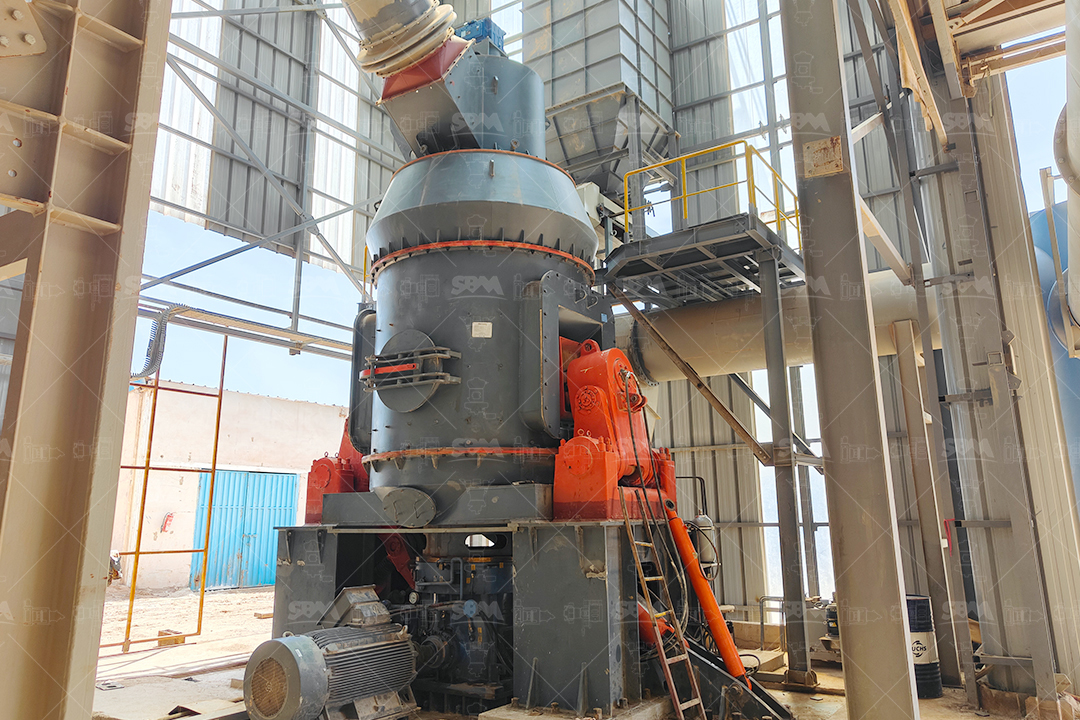
Symptom: Mill vibration is high, and the motor current fluctuates. The product becomes coarse, and the mill temperature climbs.
Why it happens: In a vertical roller mill, the material bed between the grinding roller and the grinding table acts as a heat sink. If the bed is too thin—because the feed rate is too low or the feed size is too fine—the metal surfaces come into direct contact. This creates metal-on-metal friction, which generates intense localized heat and can cause the grinding ring to buckle.
What to do:
- Immediately reduce the classifier speed to retain more coarse particles in the mill, which rebuilds the bed.
- Increase the feed rate gradually by 2-3% while observing the differential pressure and vibration. The goal is to achieve a stable bed thickness of roughly 15-20 mm (check your mill manual).
- Adjust the grinding pressure downward by 10% temporarily until the bed forms, then restore normal pressure.
- If using a system with external circulation, make sure returned coarse material is reintroduced properly to stabilize the bed.
Cause #2: Inadequate Grinding Pressure or Excessive Material Hardness
Symptom: The mill runs hot, but vibration is low. The product grain size is too large, and throughput is below specification.
Why it happens: If the material is harder than the design limit (like high-silica limestone or river sand), the rollers may struggle to break particles. The energy is not used for grinding but is converted into heat by slippage or by the rollers pressing without shattering the material. Similarly, insufficient hydraulic pressure allows the rollers to skid over the bed, causing friction without grinding.
What to do:
- Check the feed material hardness and moisture. If above 7 on the Mohs scale, consider pre-crushing to reduce the input size below 20 mm.
- Increase the hydraulic grinding pressure by increments of 0.5-1.0 MPa, but never exceed the recommended maximum (usually 12-15 MPa for LUM series).
- Inspect the grinding roller and table wear. Worn surfaces increase friction and heat. If the roller shell profile is flattened, replace it immediately.
- Use an ultra-fine vertical mill with variable speed classifier to match the material properties—sometimes a slower table speed reduces slip.
Cause #3: Suboptimal Airflow & High Internal Recirculation
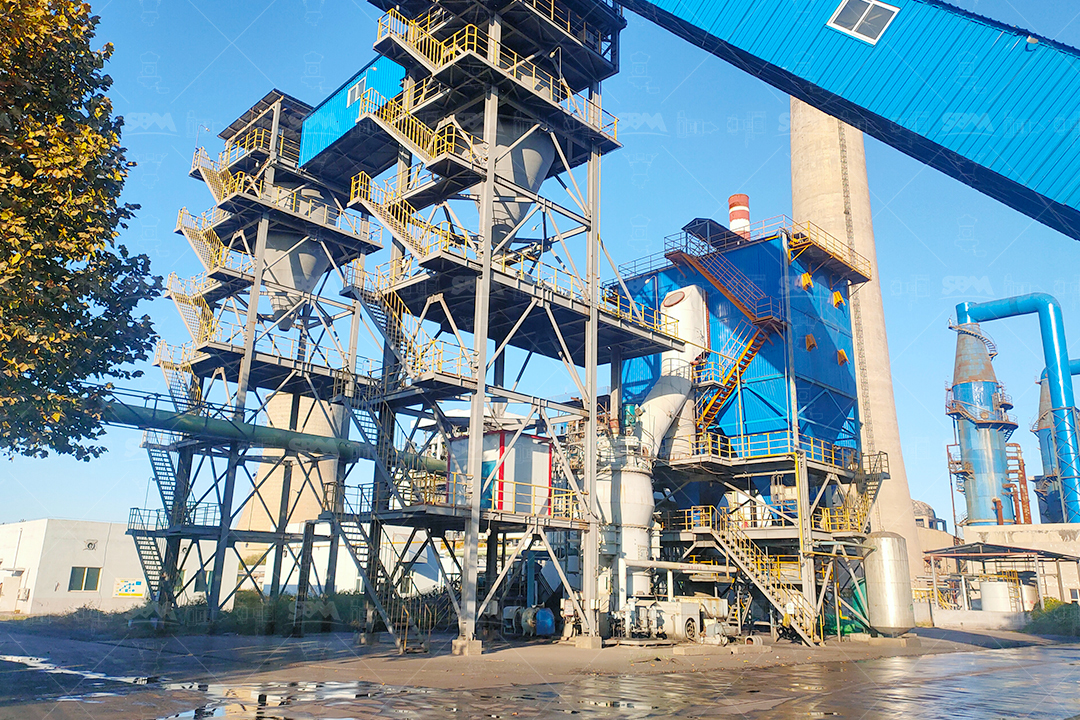
Symptom: Mill inlet pressure is too low, but the outlet differential pressure is very high. The mill becomes very hot, and the product may be too fine or too coarse intermittently.
Why it happens: Airflow is the primary cooling mechanism in an ultra-fine vertical mill. When the hot air volume is insufficient—because the damper is closed or the ID fan is faulty—the mill cannot carry away the heat generated by grinding. Additionally, excessive internal recirculation of fine particles (due to a blocked separator or wrong vanes) means they are re-ground repeatedly, adding heat energy without additional useful work.
What to do:
- Measure the mill inlet and outlet pressures with a manometer. Increase the ID fan speed or open the hot air damper to achieve the recommended air-to-material ratio (usually 1.0-1.5 m/s for ultra-fine mills).
- Inspect the static and dynamic separator vanes. Worn or misaligned vanes cause coarse particles to bypass the classifier, leading to recirculation.
- Clean the air duct—accumulated powder insulates and raises temperatures. Use a pressure pulse system if available.
- For every 10°C rise in gas temperature, increase the gas volume by 5-10% to compensate for reduced gas density.
Cause #4: Lubrication System Failure or Contaminated Oil
Symptom: The gearbox or main bearing temperature spikes suddenly. The mill alarm may show high oil temperature. Visual inspection reveals oil leaks or dark sludge.
Why it happens: In our LUM ultra-fine vertical mill, the bearing and gearbox use internal oil absorption lubrication systems. If the oil level drops below the dipstick, or if the oil becomes contaminated with fine dust and metal shavings, the oil film loses its cooling and protective properties. The friction quickly raises temperatures, which degrades oil viscosity further—creating a vicious cycle.
What to do:
- Stop the mill immediately if the oil temperature exceeds 75°C or the alarm sounds. Allow it to cool for at least 30 minutes.
- Check the oil level—if low, add the recommended synthetic gear oil (e.g., ISO VG 220). Do not mix brands.
- Take an oil sample. If it appears milky (water contamination) or contains particles, drain and flush the system with clean oil. Replace the filter element.
- Inspect the oil pump and pipes for blockages. In ultra-fine mills, the oil return pipe is often narrow and can be clogged by sludge—clean it with compressed air.
- If the bearing temperature has been high for more than 8 hours, replace the bearing as a precautionary measure, since the heat may have damaged the raceway.
Cause #5: Cooling Fan or Heat Exchanger Issues
Symptom: The mill gearbox temperature is normal on start-up but rises after a few hours. The external cooling fan vibrates or the heat exchanger is coated with dust.
Why it happens: Many ultra-fine vertical mills use forced-air cooling or a water-oil heat exchanger. If the cooling fan belt is loose, the blades are broken, or the heat exchanger internals are fouled, the heat cannot be dissipated to the atmosphere.
What to do:
- Inspect the cooling fan belt for tension. Replace if it shows cracks or squeals.
- Clean the heat exchanger fins with a low-pressure air jet. Do not use water if the fin fins are aluminum—use a brush and vacuum.
- If using a water-based heat exchanger, check the inlet water flow rate (should be 5-10 L/min for a 20 MT/h LUM mill). Water temperature above 30°C is a red flag—add a cooling tower if necessary.
- Monitor the temperature trend. If the mill still runs hot after cleaning, the gearbox might be mechanically overloaded—reduce the feed rate temporarily.
Preventive Maintenance Tips to Avoid Overheating
Even with troubleshooting, the best strategy is prevention. Here are our top recommendations based on field data from our SBM machinery installations:
- Install RTD sensors at three points: mill outlet, gearbox, and main bearing. Calibrate them every 6 months.
- Keep a daily log of temperature, pressure, and output. A gradual 5°C rise over a month predicts a future breakdown.
- Regularly inspect the grinding roller shell—if the convexity is worn by more than 5 mm, replace the shell. Worn parts increase heat generation exponentially.
- For moisture-laden feeds, always use the hot air heater but monitor the dew point to prevent condensation inside the mill—condensation leads to caking and blockage.
- Follow the original equipment manufacturer’s schedule for oil changes (every 2000 hours) and grease the roller joints with high-temperature grease (up to 200°C).
Real-World Case: How a Customer Solved Their Overheating Issue
A GCC (ground calcium carbonate) producer in Italy experienced mill outlet temperatures of 120°C, causing the product to pack and the air classifier to jam. The SBM service team analyzed the logs and found that the grinding pressure was set to 12.5 MPa (near max) for a 6 Mohs dolomite, while the airflow was only 80% of the rated value. After reducing pressure to 10 MPa and opening the damper to 15% more, the temperature dropped to 85°C. The user also discovered that the separator blades were worn by 40%, leading to recirculation. They replaced the blades and the mill output improved by 12%. This is a typical example of how systematic troubleshooting beats random adjustments.
Emergency Shutdown Protocol if the Mill Runs Over 130°C
Do not wait for a catastrophic failure. If the temperature exceeds 130°C:
- Immediately stop the feed and start the mill motor with no load to circulate air for 5 minutes.
- Open the inert gas valve (for coal or other flammable materials) to purge the system.
- Stop the mill motor after 2 minutes of idle running.
- Visually inspect the grinding table and roller for any welding or deformation—remove the hot material with a vacuum if necessary.
- Never re-start the mill until the temperature drops below 60°C.
Conclusion
An ultra-fine vertical roller mill running too hot is a warning that something is out of balance—material bed, airflow, lubrication, or process parameters. By following the systematic steps above, you can resolve 90% of overheating issues without costly service calls. Remember, a well-maintained mill runs cool, quietly, and continuously. For persistent problems, contact SBM Machinery for a comprehensive audit. We support over 180 countries, and our engineers are ready to help.
Frequently Asked Questions (FAQ)
Q1: Why does my ultra-fine vertical mill overheat even when the feed is dry and the output is normal?
A: If the output is normal but the mill is hot, check the separator efficiency. If the classifier is set too fine, fine particles are recirculated internally and re-ground, generating heat without increasing production. Reduce the classifier speed by 10-15% and see if the temperature drops. Also, check the air inlet damper—it may be partially closed due to debris.
Q2: How can I prevent bearing failures caused by overheating in a vertical roller mill?
A: Use high-quality synthetic oil with a viscosity suited to your gear reducer (typically ISO VG 220). Monitor the oil temperature trend daily—if the delta between morning and evening increases by more than 5°C over a week, investigate before the bearing fails. Also, ensure the cooling fan is always running when the mill is in operation, even in winter, to maintain stable oil film.
Q3: Is it normal for the mill outlet gas temperature to be 110°C when drying wet limestone?
A: For drying, a outlet temperature up to 110°C is normal if you are removing moisture. However, if the product is below 1% moisture and you are using an external dryer, then 110°C is too high. In that case, reduce the hot gas temperature and increase the gas flow volume. The typical drying temperature is 80-100°C for GCC, but never exceed the product's decomposition temperature (for calcite, that's 700°C, but the mill components will fail much earlier). Use the manufacturer's guidelines.
Q4: My mill vibrates and runs hot at the same time. Is this a safety concern?
A: Yes. Vibration and heat together often indicate a bearing raceway spall or a failed grinding roller bearing. Stop the mill immediately and inspect the hydraulic accumulators for precharge (should be at 5.5 MPa). If the precharge is fine, remove the roller and check the keyways—if the shaft is bright blue, it has overheated and must be replaced. Never run a vibrating-hot mill for more than 15 minutes.
Q5: How often should I calibrate the temperature sensors on the LUM ultra-fine vertical mill?
A: We recommend calibrating all temperature sensors (PT100 or thermocouples) every 6 months or after 2000 operating hours. Use a dry-well calibrator and ensure accuracy to ±2°C. An inaccurate sensor can fail to trigger the alarm, causing the machine to self-destruct. In harsh environments with dust, check the wiring every quarter—loose connections cause false readings.


