

Process flow and advantages of vertical mill for rare earth processing
Rare earth processing presents unique challenges—abrasive feed, strict particle size distribution, and the need for high throughput with minimal contamination. The vertical roller mill (VRM) has emerged as the preferred solution, integrating drying, grinding, and classification into a single compact system. This article details the process flow of VRM for rare earth ores, outlining key advantages such as energy savings of 30-40% compared to ball mills, a 50% smaller footprint, and the ability to achieve fineness from 30 to 400 mesh (or up to 2500 mesh with ultrafine variants). By examining technical innovations—like cone gear transmission, arc air ducts, and automated control—we demonstrate why SBM's vertical roller mill line (including LM and LUM series) is the industry benchmark. The content also addresses common operational pain points: wear part longevity, system vibration, dust leakage, and control complexity, offering practical solutions verified in over 180 countries.
1. Introduction: Why VRM for Rare Earths?
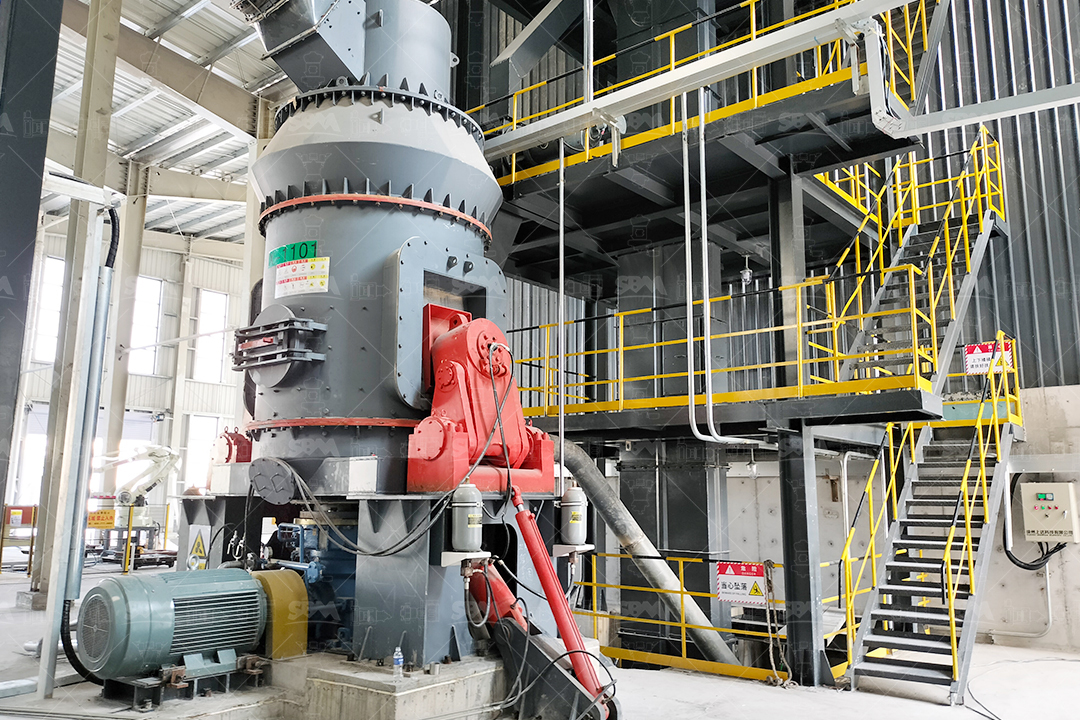
Rare earth elements (REEs) are critical for modern technologies, from magnets to catalysts. However, their processing is notoriously difficult. The ore is often hard, abrasive, and requires fine grinding to liberate valuable minerals. Traditional ball mills are energy-intensive and bulky. The vertical roller mill (VRM) offers a paradigm shift. By employing a dynamic classifier and grinding rollers that crush material on a rotating table, VRM combines three functions—grinding, drying, and classification—in one unit. This reduces auxiliary equipment, lowers capital expenditure, and simplifies the plant layout. SBM's LM series vertical roller mill, with a capacity range of 3-400 tph and input size up to 50mm, is specifically engineered to handle such demanding tasks, making it a one-stop solution for rare earth processors.
2. Detailed Process Flow of Vertical Roller Mill
The VRM's operation is a continuous, closed-loop system. The process can be broken down into five distinct stages:
2.1 Material Feeding and Grinding
Raw rare earth ore (up to 50mm) is fed via a chute onto the center of the rotating grinding table. Centrifugal force moves the material outward beneath the hydraulically-loaded rollers. The grinding pressure, adjustable via PLC, is critical for crushing the ore. As the table rotates, the rollers—which do not contact the table directly—create a grinding bed, crushing the material into a fine powder. This design minimizes metal-to-metal contact, reducing wear and energy consumption. The pulverized material overflows the table where it is picked up by a high-velocity air stream.
2.2 Hot Air Drying (Integrated Function)
One of the VRM's standout features is its efficient drying capability. Hot air from an external furnace or waste heat source is introduced into the mill casing. This air simultaneously dries the moisture in the feed and transports the ground material upward. This is particularly beneficial for rare earth ores that may have surface moisture. The system ensures that even sticky or damp materials are processed without clogging, a common issue in ball mills. The high-temperature processing also helps in the preliminary removal of volatile organics, improving downstream concentration efficiency.
2.3 Classification by Dynamic Separator
In the upper section of the mill, a high-speed dynamic classifier (rotor) spins. The air stream carries the mixture of fine powder and coarse particles up to the classifier. The rotor's centrifugal force flings larger, heavier particles back down to the grinding table for further reduction. Only particles meeting the fineness specification (e.g., 30-400 mesh for the LM series) pass through the rotor vanes and exit the mill. The classifier speed is electronically controlled, providing precise adjustment of product fineness on-the-fly without stopping the operation.
2.4 Collection and Recirculation
The fine powder exiting the classifier is directed to a cyclone or a baghouse filter, where the product is separated from the carrier gas. The clean air is either recirculated or vented after filtration. Oversized particles and tramp metal (e.g., bolts) are discharged through a separate nozzle ring or rejected via a dedicated outlet at the bottom of the mill, ensuring product purity and protecting the equipment from damage.
2.5 Negative Pressure System
The entire system operates under negative pressure (slight vacuum). This is a critical environmental advantage. It prevents dust from escaping into the atmosphere, making the plant safer and cleaner. The sealed housing and negative pressure operation are essential for meeting stringent environmental regulations for rare earth processing facilities.
3. Key Technical Advantages for Rare Earth Applications
Based on SBM's extensive field data and R&D, the VRM offers several distinct and quantifiable benefits over other milling technologies.
- Energy Efficiency: The VRM consumes 30% to 40% less energy than traditional ball milling systems. This is achieved through direct grinding action on the material bed, which is far more efficient than the impact and friction in a tumbling mill. For energy-intensive rare earth plants, this translates to significant operational cost savings.
- Lower Investment and Footprint: Integrating drying, grinding, and separating means the system footprint is about 50% of a comparable ball mill plant. This reduces building costs and civil engineering works. The unit can also be placed outdoors, further reducing capital expenditure.
- Reduced Wear and Maintenance: SBM's unique wear-proof perching knife design uses a combined-type shovel blade, meaning only the blade tip needs replacing during maintenance, not the entire assembly. The curved shape alters the feeding angle, prolonging the service life of the roller and grinding ring. For abrasive rare earth ores, this directly cuts downtime and spare parts costs.
- Excellent Drying Performance: The arc air duct design minimizes energy loss and ensures efficient material conveying, while accommodating high moisture feeds. The high-strength guard plates protect the duct surfaces from wear.
- Automatic Control System: SBM integrates an expert automatic control system. It allows remote control and local operation, adjusting grinding pressure, table speed, and classifier speed in real-time to optimize production. This reduces human error and labor costs.
_1786033064334.jpg)
4. Case Study: LM Series and LUM Series for Rare Earth
SBM offers two primary vertical mill solutions. For standard rare earth grinding (producing feed for flotation or leaching), the LM Vertical Roller Mill (3-400 tph, 30-400 mesh) is the workhorse. Its cone gear whole transmission ensures high efficiency and save space, while the volute design improves the airflow efficiency inside the mill, reducing maintenance. For ultra-fine requirements, such as producing 325-2500 mesh powders for specialized ceramics or polishing compounds, the LUM Ultrafine Vertical Mill is ideal. It features a multi-rotor classifier and a heavy-duty rotor design, ensuring a precise cut and high yield of fine product. The use of special alloys in the grinding roller and ring extends durability several times over, a critical factor given the hardness of rare earth minerals.
5. Conclusion
In the competitive and technically demanding field of rare earth processing, the vertical roller mill from SBM Machinery provides a decisive edge. Its integrated design reduces capital expenditure, its efficiency lowers energy bills, and its robust construction minimizes downtime. Whether you require bulk tonnage or ultra-fine powders, the LM and LUM series offer the reliability and performance necessary for a successful, sustainable operation. As a solution provider with expertise across the entire mineral processing workflow, SBM can support you from initial design to full-scale production.
6. FAQ: Common Customer Concerns
Q1: How does the VRM handle highly abrasive rare earth ores without excessive downtime?
Our VRM is designed with segmented wear parts like the perching knife and specialized roller shells. These are made from high-chrome or composite materials, offering 2-3 times the wear life of traditional parts. Maintenance involves replacing only specific segments, which takes hours, not days, minimizing costly production stoppages.
Q2: Can the mill handle variations in feed moisture, such as seasonal changes in ore supply?
Yes, the mill is equipped with an efficient drying system based on arc air ducts. It can handle moisture levels up to 20% by adjusting the inlet air temperature and flow. The PLC controller automatically compensates for feed changes, ensuring a consistent output regardless of moisture content.
Q3: How easy is it to change the fineness of the final product for different downstream processes?
Changing fineness is accomplished by regulating the classifier's rotor speed. This can be done remotely via the control panel while the mill is running. For instance, switching from a 100-mesh product to a 200-mesh product takes less than a minute and requires no mechanical changes. This flexibility is essential for producers with multiple product lines.
Q4: What about dust control? Rare earth dust is highly toxic, not just a cleanliness issue.
Our mills are fully sealed and operate under negative pressure with a pulse-jet baghouse or a high-efficiency cyclone. Emissions are far below international standards (<50 mg/Nm³). Additionally, we can decouple the system for nitrogen blanketing if processing highly reactive or pyrophoric materials, ensuring maximum operator safety.
Q5: We have space constraints in our existing plant. Can this mill be retrofitted easily?
Absolutely. The VRM's compact footprint occupies approximately 50% less floor space than a ball mill system. It can be installed outdoors, under a simple canopy, or even indoors in a tight space. Our engineers provide a detailed layout plan to ensure seamless integration with your existing conveyor and collection systems.


