

Double-fly powder and raymond mill: a perfect match
In the competitive world of powder processing, achieving consistent fineness, high throughput, and low operating costs is the ultimate goal. This article explores the perfect match between double-fly powder (a premium grade of fine calcium carbonate) and the modern Raymond mill, specifically the MTW European Trapezium Grinding Mill. By combining the unique properties of double-fly powder with the advanced engineering of today's Raymond mills, processors can unlock unprecedented efficiency and product quality. We'll delve into the technical synergies, practical applications, and common operational challenges, offering insights that go beyond generic marketing claims. This comprehensive guide is designed for plant managers, process engineers, and procurement specialists who demand reliable, data-driven solutions for their grinding operations.
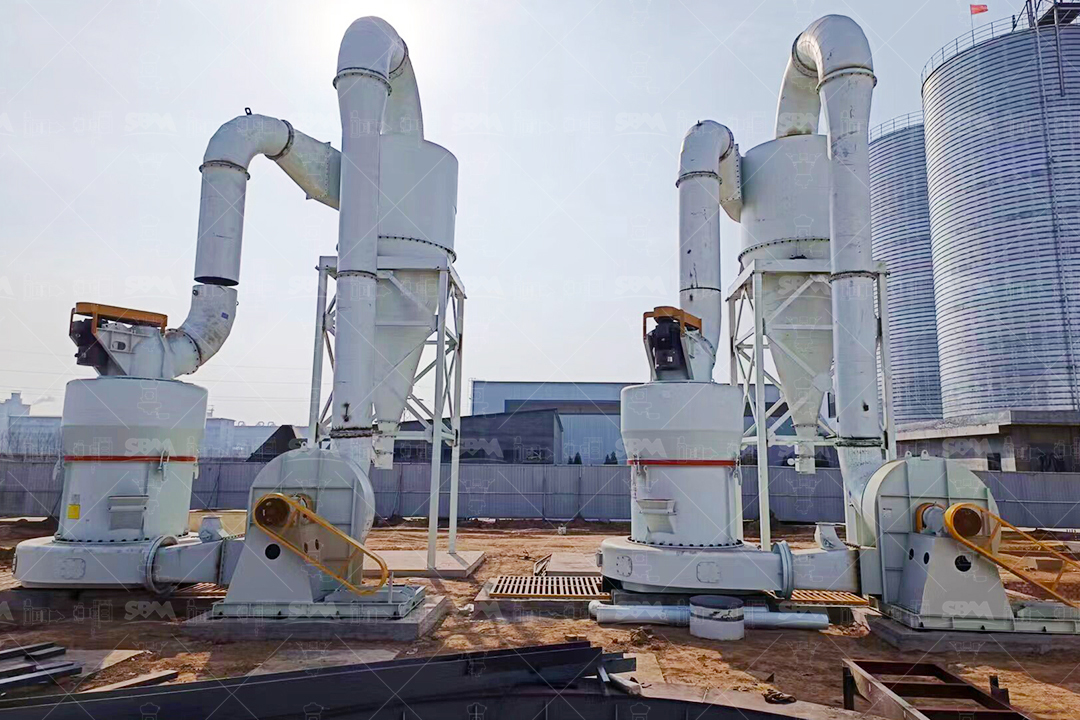
Understanding Double-Fly Powder: A Premium Mineral
Double-fly powder, often referred to in the industry as high-grade fine calcium carbonate (GCC), is not just any ground limestone. It is characterized by its exceptionally low impurity levels, high whiteness (typically above 95%), and a narrow particle size distribution. This makes it a critical ingredient in high-value applications such as PVC pipes, masterbatch production, artificial stone, paper coating, and even food and pharmaceutical industries. Unlike standard limestone powder, double-fly powder demands a grinding process that can preserve its inherent whiteness and achieve ultra-fine particle sizes without introducing iron contamination or causing thermal degradation.
The Evolution of the Raymond Mill: Beyond Traditional Design
For decades, the traditional Raymond mill was the workhorse of the mineral processing industry. However, its limitations—high energy consumption, frequent maintenance, and inconsistent product fineness—became bottlenecks for producers targeting premium markets. The modern MTW Series European Trapezium Grinding Mill, developed by SBM Machinery, represents a quantum leap. It is not just an incremental improvement; it is a complete re-engineering based on feedback from over 9,500 customers and decades of R&D. Key innovations include:
- Cone Gear Whole Transmission: Replaces traditional belt drives, offering higher transmission efficiency, saving space, and reducing maintenance points.
- Arc Air Duct Design: Minimizes air energy loss, ensuring consistent material transportation and higher classification efficiency.
- Unique Wear-Proof Perching Knife: The combined-type shovel blade reduces wear part costs; only the blade needs replacement, and its curved design optimizes the feeding angle, prolonging the service life of the roller and ring.
- Volute Design: Improves the wind-driven transmission efficiency inside the mill, enhancing overall performance and reducing maintenance costs.
These features translate directly into lower operating costs and higher uptime—critical factors when grinding premium materials like double-fly powder, where any downtime or contamination is costly.
Why They Are a Perfect Match: Technical Synergies
The phrase 'perfect match' is not an overstatement. The properties of double-fly powder demand precisely what the modern Raymond mill offers.
1. Fineness Control and Stability: Double-fly powder often requires fineness ranging from 400 to 1,500 mesh for different applications. The MTW mill, with its advanced classifier and frequency-conversion control, can deliver a consistent output size anywhere from 30-400 mesh (and with the SCM ultrafine mill, up to 2500-3000 mesh). This precision ensures that manufacturers can produce a uniform product that meets strict customer specifications, batch after batch. The arc air duct and volute design ensure a stable air flow, which is crucial for maintaining the cut size of the classifier.
2. Low Contamination and High Whiteness: Traditional mills often suffer from metal-to-metal contact, leading to iron contamination that can discolor the powder. The MTW mill's design minimizes this risk. The grinding roller and ring are made of high-quality wear-resistant materials, and the curved shovel blade design reduces unnecessary friction. Furthermore, the entire system operates under negative pressure, reducing the risk of external contamination. This is essential for producing double-fly powder that maintains its premium whiteness and purity.
3. Energy Efficiency and Operating Costs: Double-fly powder is a high-value product, but its production must remain economically viable. The MTW mill's bevel gear transmission offers a 20-30% reduction in energy consumption compared to older designs. Additionally, the wear parts have a longer service life. For example, the perching knife design means you only replace the blade tip, not the entire assembly. For a facility processing 10 tons per hour, these savings accumulate significantly over a year, turning a good profit margin into a great one.
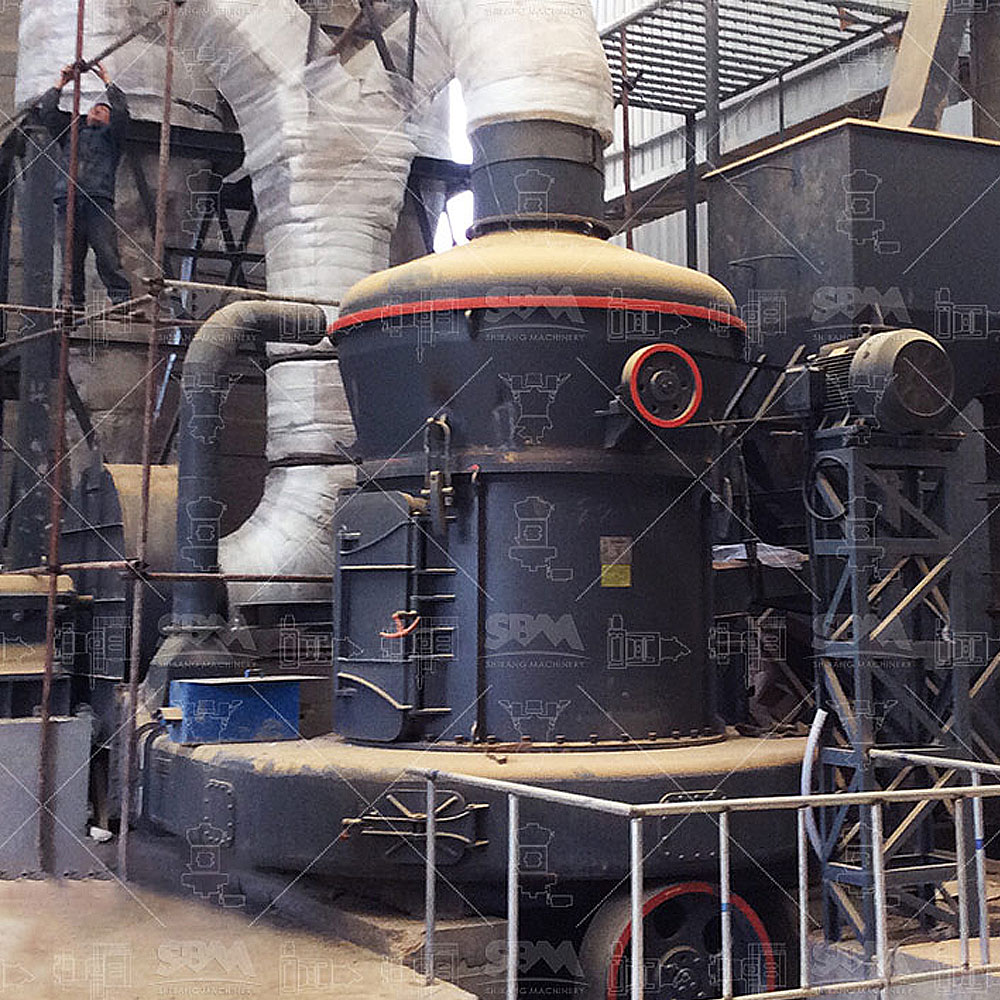
Real-World Applications and Case Scenarios
Consider a producer of artificial stone, a major consumer of double-fly powder. They require a filler with a specific particle size distribution to ensure the stone's strength and aesthetic translucency. Using a traditional mill, they would struggle with particle size inconsistency, leading to high rejection rates. By switching to the MTW Raymond mill configured for double-fly powder, they can achieve a D97≤5μm fineness consistently (using the SCM series) or a stable 800 mesh output (using the MTW). This reduces waste, improves product quality, and allows them to command a premium price in the market.
Another common application is in the production of masterbatch. Here, the powder's whiteness and purity are non-negotiable. The MTW mill's sealed, negative-pressure system prevents any dust leakage that could otherwise lead to product contamination or environmental hazards. The result is a cleaner production environment, compliant with strict environmental regulations, and a superior final product.
Common Pain Points and How This Match Solves Them
Industry professionals often voice recurring frustrations with their grinding equipment. The SBM team has heard these for years, and they are the very reasons behind the design of the MTW mill. Let's address them directly:
- Pain Point: Low output and high energy consumption. Solution: The MTW's cone gear transmission and optimized internal airflow significantly improve grinding efficiency. In many installations, clients report a 30-40% increase in output per kWh compared to their old equipment.
- Pain Point: Frequent and costly wear part replacement. Solution: The combined shovel blade and the use of high-chrome wear materials extend the life of grinding rollers and rings by severalfold. The curved blade design also reduces the 'dead zone' where material accumulates, further reducing wear.
- Pain Point: Difficult to control product fineness. Solution: The MTW mill is equipped with a high-efficiency dynamic classifier. With frequency conversion, the rotor speed can be fine-tuned to achieve the exact target fineness, eliminating the need for time-consuming manual adjustments and minimizing off-spec product.
- Pain Point: Excessive downtime for maintenance. Solution: The mill features a compact, accessible design. The grinding roller can be flipped out for maintenance without dismantling the entire mill. The internal lubrication system ensures all moving parts are adequately lubricated, reducing failure-related downtime.
- Pain Point: Environmental concerns and dust leakage. Solution: The entire system operates under negative pressure, and the mill body is fully sealed. This not only prevents dust spillover but also keeps the noise level low. The SCM ultrafine mill even includes soundproofing and muffler options to meet the strictest environmental standards.
Selecting the Right Machine for Your Double-Fly Powder Production
Not all Raymond mills are created equal. When choosing a mill for double-fly powder, consider these specifications:
- Feed Size: MTW mills accept up to 50mm feed, while ultrafine mills require 0-20mm. Ensure your upstream crushing equipment matches.
- Target Fineness: For 400-600 mesh, the MTW mill is ideal. For 800-2500 mesh, the SCM series or LUM vertical mill is better suited.
- Capacity Requirements: Small scale (0.5-25 tph) may call for the SCM unit. Medium scale (3-40 tph) is the sweet spot for MTW. Large-scale operations (up to 400 tph) should explore the LM vertical roller mill.
- Moisture Content: The vertical roller mill (LM or LUM) offers integrated drying, making it the choice for materials with higher moisture content.
Conclusion: The Strategic Advantage
In conclusion, the synergy between double-fly powder and the modern Raymond mill (MTW series) is not merely about grinding. It is a strategic partnership that enhances product quality, reduces operational costs, and ensures environmental compliance. By leveraging advanced transmission systems, intelligent control, and superior wear part design, the MTW mill transforms the production of premium powder from a challenge into a competitive advantage. Whether you are a new entrant or an established player looking to upgrade, understanding this perfect match is the first step towards operational excellence and market leadership.
Frequently Asked Questions (FAQ)
1. My current mill produces inconsistent fineness, causing issues with my PVC pipe quality. How does the modern Raymond mill solve this?
Modern Raymond mills, like the MTW series, feature an advanced dynamic classifier with frequency control. This allows for real-time adjustment of the rotor speed to maintain a precise cut size, typically achieving D97≤5 microns (with SCM series) or a stable 400-600 mesh (with MTW). This eliminates the 'coarse powder spillover' that plagues older designs, ensuring your double-fly powder meets strict specification every batch, thereby stabilizing your downstream product quality.
2. The wear parts on my old mill are eating into my profits. Are the newer mills more durable?
Absolutely. The MTW mill's unique combined shovel blade means you only replace the blade tip, not the whole assembly. Additionally, the grinding roller and ring are made from high-chrome alloy material, significantly extending their service life. Furthermore, the curved blade design optimizes the feeding angle, reducing the abrasion on the roller and ring surfaces. Many clients report a 2-3x improvement in wear part lifespan compared to traditional Raymond mills.
3. I need to produce double-fly powder with high whiteness. Will the milling process cause any contamination?
A common concern is iron contamination from the grinding media. The modern MTW design minimizes metal-to-metal contact. The grinding roller hangs on a spindle and the pressure is applied via a hydraulic or spring system, not direct hard contact. Moreover, the system operates under negative pressure, and the internal components are precision-machined, reducing unnecessary friction. This keeps iron content low, preserving the natural whiteness of the calcium carbonate. For ultra-high whiteness, the SCM series uses a special material for the grinding roller and ring that further reduces contamination.
4. What is the typical energy saving compared to a traditional pendulum roller mill?
The energy savings are substantial. The cone gear transmission in the MTW mill is more efficient than the traditional belt drive, and the optimized arc air duct reduces drag. In practice, clients often see energy consumption reductions of 30-40% when processing the same material to the same fineness. For a 20-ton-per-hour plant, this can translate into hundreds of thousands of kilowatt-hours saved annually.
5. I have heard about vertical mills like the LM or LUM. When should I choose a vertical roller mill over a Raymond mill for double-fly powder?
Vertical roller mills (VRMs) are ideal for large-scale operations (typically above 40 tph) and offer integrated drying, making them perfect for materials with 5-10% moisture. The LUM ultrafine vertical mill is also excellent for producing very fine powder (1250-2500 mesh) with high specific surface area. If your production scale is massive and you need to dry the material in the same step, a VRM is the right choice. However, for medium-scale operations (under 40 tph) and when absolute precision in the 400-600 mesh range is your priority, the MTW Raymond mill is more cost-effective and has a lower initial investment.


