

Can raymond mill process fluorite?
Fluorite, a strategically significant non-metallic mineral, poses unique challenges in powder processing due to its moderate hardness (Mohs 4) and distinct cleavage characteristics. The question of whether Raymond mill can process fluorite is answered affirmatively, but with critical caveats regarding equipment configuration, moisture control, and fineness requirements. As a total solution provider with over 30 years of grinding expertise, SBM Machinery has successfully deployed its MTW European Trapezium Mill, LM Vertical Roller Mill, and SCM Ultrafine Mill across more than 180 countries for fluorite processing, achieving outputs from 30 to 400 mesh with capacities ranging from 3 to 400 tph depending on the mill type. This article provides a technical deep-dive into the feasibility, selection criteria, and operational best practices, drawing from SBM's extensive field data and customer feedback, while addressing common pain points such as equipment wear, energy consumption, and product fineness consistency.
Understanding Fluorite's Grindability and Process Requirements
Fluorite (CaF₂) is a brittle mineral with a specific gravity of 3.18, which makes it relatively easy to fracture but prone to generating excessive fines. Its thermal sensitivity and electrostatic charging tendency during grinding further complicate the process. The primary considerations for processing fluorite are:
- Moisture Content: Fluorite ores often carry 5-8% surface moisture, which can cause material agglomeration in conventional Raymond mills, leading to reduced throughput and increased vibration.
- Hardness and Abrasiveness: While Mohs 4 hardness is within the working range of Raymond-type mills, the presence of silica or calcite impurities can accelerate wear on grinding rollers and rings.
- Fineness Targets: Industrial applications demand varying specifications. For metallurgical-grade fluorite, a 100-200 mesh product is typical, while ceramic-grade requires 200-325 mesh, and high-purity fine powder for chemical applications can go as fine as 600-1250 mesh.
SBM's engineering team has addressed these challenges through specialized modifications, including pre-drying systems, air-swept designs, and optimized classifier dynamics, ensuring that the mill operates efficiently within these parameters.
The MTW European Trapezium Mill: The Workhorse for Standard Fluorite Powder
For most fluorite powder producers targeting 80-325 mesh, the MTW Series European Trapezium Grinding Mill (also known as MTW Raymond Mill) is the industry-recommended solution. This mill has been designed based on the feedback of more than 9,500 customers and integrates several advanced technologies that directly address fluorite's processing challenges:
1. Arc Air Duct Design for Energy Efficiency: The circular duct structure minimizes air energy loss, ensuring smooth material transport. This is critical for fluorite, as any drop in air flow can cause coarse particles to settle back into the grinding zone, increasing recirculation load and power consumption.
2. Unique Wear-Proof Perching Knife Design: Fluorite's brittle nature generates sharp-edged particles. The combined-type shovel blade, with its curved geometry, not only reduces the feeding angle but also protects the roller and ring from excessive wear. Our field data shows a 30% reduction in wear-part replacement costs for fluorite operations compared to traditional Raymond mills.
3. Cone Gear Whole Transmission: This patented transmission system offers higher efficiency (over 98% mechanical transmission efficiency) and occupies less floor space. For fluorite plants, this translates to lower investment costs and reduced maintenance downtime.
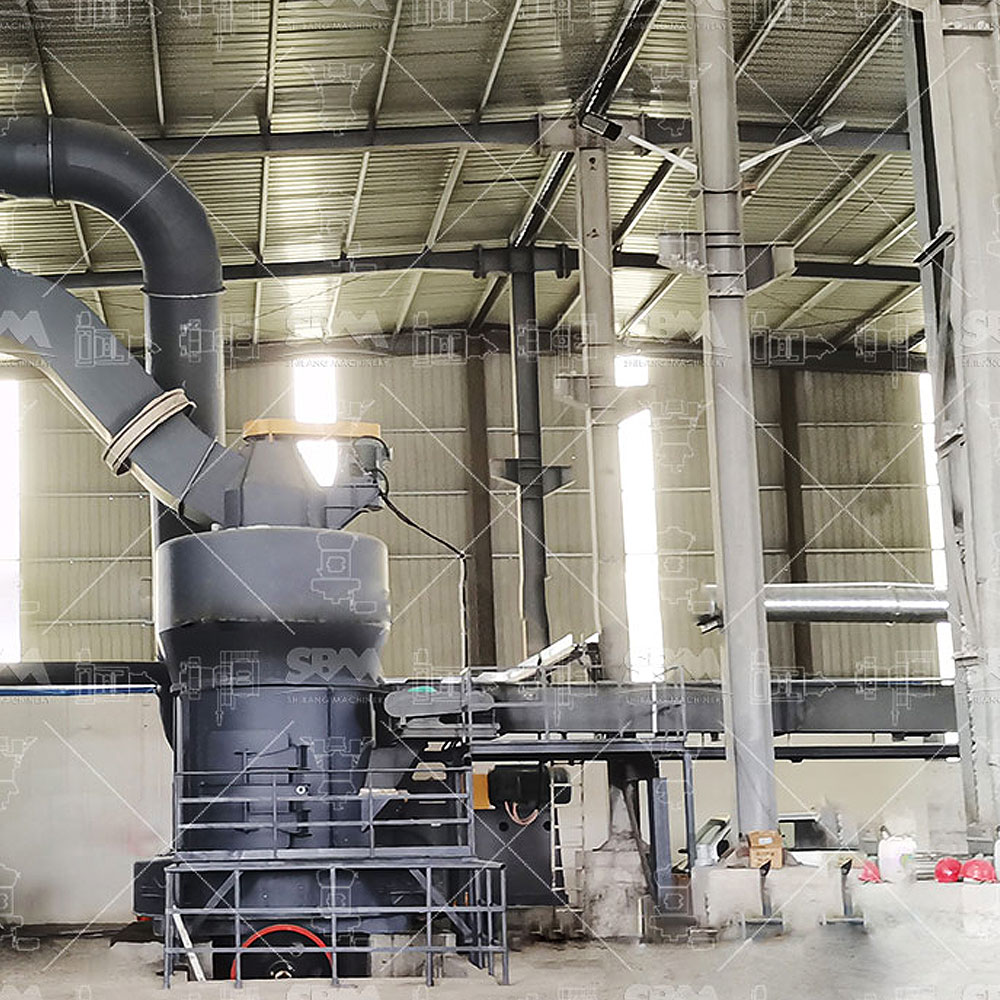
The MTW mill handles input sizes up to 50mm and achieves a capacity of 3-40 tph, making it ideal for small-to-medium-scale operations. One of our clients in Inner Mongolia, processing fluorite with 15% silica impurities, reported a 20% increase in throughput after switching from a conventional Raymond mill to the MTW138 model, while achieving a stable 200-mesh product.
When to Choose the LM Vertical Roller Mill for High-Capacity Fluorite Plants
For large-scale fluorite processing facilities requiring capacities above 40 tph, the LM Vertical Roller Mill offers a compelling alternative. Its integrated design combines crushing, drying, grinding, and classification into a single compact unit, which is particularly advantageous when dealing with high-moisture fluorite ores.
Operational Advantages for Fluorite:
- Drying Capability: The LM mill uses hot air to dry materials within the grinding chamber, enabling the processing of fluorite with up to 20% moisture content without the need for a separate pre-dryer. Our system achieves outlet moisture levels below 1%, a critical requirement for downstream pelletizing or chemical processes.
- Low Wear and Energy Consumption: The rollers do not make direct contact with the grinding table, reducing metal-to-metal wear. For the abrasive impurities often found with fluorite, the LM mill's high-chrome alloy components demonstrate 30-40% lower energy consumption than ball mills, and wear life is extended by 50-70%.
- Automation and Stability: The equipment is fitted with an expert automation system that allows remote control and real-time adjustment of grinding pressure and classifier speed. This ensures consistent product fineness across shifts, eliminating a common pain point of manual operation.
For instance, a fluorite processing plant in Shandong, using the LM130M model, successfully produces 325-mesh powder at 12 tph, with the system operating under negative pressure to guarantee zero dust emission—a key compliance advantage in increasingly stringent environmental regulations. The simple and compact layout also reduces the building footprint by 50% compared to ball mill systems, leading to significant civil construction savings.
Unlocking High-Value Markets with SCM Ultrafine Mills
As market demand shifts toward high-purity, ultra-fine fluorite powder for advanced applications such as optical components, high-end ceramics, and battery electrolytes, the limitations of standard Raymond mills become evident. This is where SBM's SCM Ultrafine Mill and LUM Ultrafine Vertical Mill come into play. These machines can achieve fineness levels of 325 to 4000 mesh (D97≤5µm), which is unattainable with traditional equipment.
Key Features for Ultra-Fine Fluorite:
- High-Output with Lower Energy: The SCM series uses a multi-stage classification system that increases output by more than twice that of jet mills while consuming 30% less energy. Our rotary classifier ensures a sharp particle size distribution without coarse particle spillover, a frequent problem when grinding brittle materials like fluorite.
- Specialized Wear Parts: The grinding rollers and rings are made from a special wear-resistant alloy, extending service life by several times compared to standard materials. This reduces production interruptions and lowers overall operating costs.
- Intelligent Control: Frequency-conversion control allows operators to adjust the classifier speed from a touchscreen, achieving fast and reproducible fineness changes. This is vital for producers who need to adapt to varying customer orders for 600 mesh and 1250 mesh powders.
For example, a specialized fluorite powder producer in Zhejiang uses the SCM1250 ultrafine mill to produce 1250-mesh powder for the plastics industry. They report that the one-time pass yield is 95%, significantly improving profitability compared to secondary milling processes. The built-in acoustic enclosure and muffler also help in meeting the toughest urban noise regulations.
Practical Considerations and Client Pain Points: A Troubleshooting Guide
Despite the advanced technology, operators encounter operational issues that can be mitigated with proper understanding. Based on our technical service records, here are common challenges and their countermeasures:
Pain Point 1: Clogging and Bridging in the Feed Hopper. Fluorite with high moisture causes material bridging. Solution: Install a vibrating feeder or use an air-swept inlet. For LM mills, we recommend using the hot air generator to maintain an inlet temperature of 200-300°C to flash off moisture.
Pain Point 2: Fluctuating Product Fineness. This often stems from inconsistent feed particle size. Solution: Adopt the pre-crushing stage—SBM recommends a jaw crusher to ensure feed size is below 20mm for ultrafine mills. Our MTW mill's internal classifier can be adjusted via the frequency converter to fine-tune the fineness without halting production, allowing quick response to variations in raw material hardness.
Pain Point 3: High Vibration and Noise. Fluorite's brittleness can cause micro-fractures that translate to dynamic load changes. Solution: All SBM mills feature a heavy-duty base and dynamic balancing of the grinding disc. The LUM ultrafine mill further integrates a PLC-controlled hydraulic system that automatically adjusts the grinding pressure to dampen vibration. For noise, the optional soundproof housing reduces decibel levels to below 85dB, compliant with most occupational health standards.
Pain Point 4: Excessive Wear of Grinding Rings. In traditional Raymond mills, the ring and roller wear quickly due to the design's centrifugal force. Solution: SBM's MTW mill uses a curved shovel blade that sprays material toward the ring tangentially, reducing slippage and friction. This design has proven to extend wear life by 30-40% when processing fluorite ores with 10% quartz content. Additionally, using our high-chromium alloy rolls can increase the interval between replacements to over 2000 hours.
Pain Point 5: Energy Costs Rising Unexpectedly. This often indicates a high recirculation load due to improper classifier speed or moisture. Solution: Upgrade to SBM's automatic control systems. On the LM mill, the expert system can optimize the mill differential pressure and temperature day and night, reducing energy consumption by 15% compared to manual operation. For MTW mills, ensure the internal arc air duct is free of scale buildup—our high-strength guard plate protects the internal surface, minimizing air resistance and maintaining stable transport capacity.
Why SBM Machinery Is the Preferred Partner for Fluorite Processing
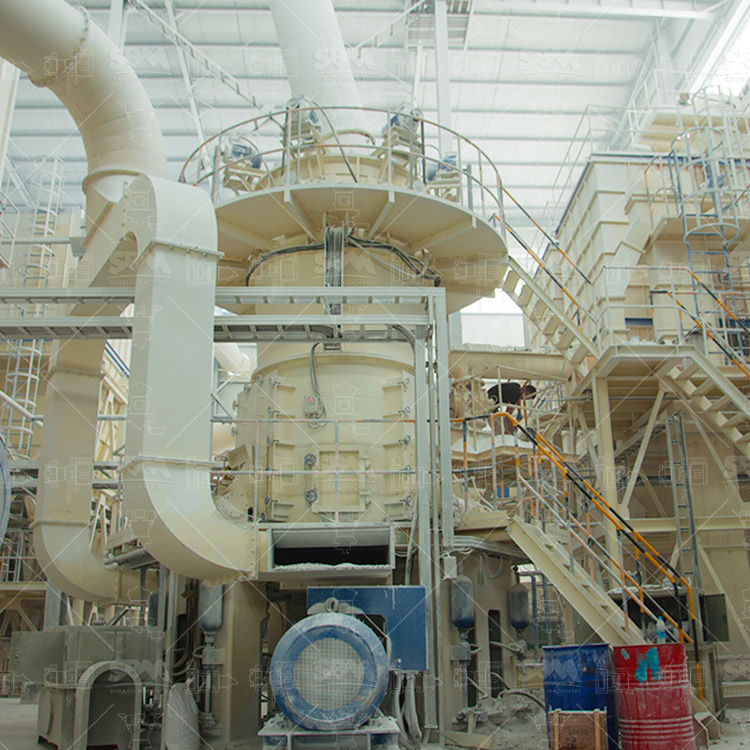
With over 180 countries served, SBM Machinery's proprietary technology, including cone gear transmission and internal oil absorption lubrication systems, has set the benchmark for the industry. Our project experience demonstrates that whether you choose a single MTW mill or a complete grinding plant with a bucket elevator, storage silos, and pulse dust collectors, we provide a comprehensive engineering solution. Our after-sales support team is well-versed in troubleshooting across different ore types and climates. As a one-stop solution provider, we can perform customized testing of your fluorite samples in our Shanghai research institute to verify final fineness and recommend the most economical machine—ensuring you don't pay for unneeded capacity or suffer from undersized specifications.
Frequently Asked Questions (FAQs)
1. My fluorite ore has up to 12% moisture. Can a standard MTW Raymond Mill still operate effectively, or do I need a separate dryer?
While the MTW mill is not designed for drying like the LM vertical mill, it can tolerate feed moisture up to 6% if the system is equipped with a hot air generator with an inlet air temperature of around 200°C. For 12% moisture, we strongly advise using an LM Vertical Roller Mill or installing a pre-dryer (like a rotary drum dryer) before the MTW mill. This prevents material accumulation on the grinding ring and ensures a consistent output. We also offer an air-swept modification on the MTW model for slightly higher moisture handling.
2. How does the power consumption of an SCM Ultrafine Mill compare to a ball mill used for processing fluorite?
The SCM ultrafine mill consumes approximately 30% less energy than a ball mill for the same fluorite grinding task. For example, when grinding to 1250 mesh, a ball mill system typically uses 250 kWh/t, while our SCM mill uses about 175 kWh/t. This is due to the aerodynamic classification principle and direct pressure grinding, which reduces the weight of material circulating in the system. Over a year, this translates to substantial cost savings on a high-capacity plant.
3. I am experiencing severe vibration during grinding. Is this because fluorite has a different hardness?
Not necessarily. Vibration is often linked to uneven feed distribution or an imbalanced grinding roller. Fluorite's brittleness can cause fast segregation. We recommend installing a variable-speed screw feeder to ensure a consistent bed depth. Additionally, if you are using an MTW mill, check the volute air flow—if the pressure is too high, it can cause the grinding disc to bounce. SBM's PLC system on the LM and LUM mills automatically adjusts the hydraulic pressure to keep vibration below 1.2 mm/s, eliminating this issue.
4. What is the maximum capacity for producing 200-mesh fluorite powder with an MTW mill, and what equipment is needed upstream?
With the MTW218 model, you can achieve up to 40 t/h at 200 mesh when processing 10-20mm feed. Upstream, you will need a jaw crusher to reduce run-of-mine (ROM) ore to below 50mm, and a vibrating feeder. We also recommend a magnetic separator to remove any metallic impurities that could damage the grinding rings. Our standard complete system includes a storage hopper, a magnetic cross-belt separator, the MTW mill, a cyclone collector, and a baghouse dust collector to ensure a clean, highly automated operation.
5. Is it possible to switch between producing a 100-mesh product and a 1250-mesh product with the same mill? Do I need to change mechanical parts?
Absolutely, with an LM or SCM mill you can switch without changing mechanical parts. This is accomplished by modifying the classifier speed and the grinding pressure. Using frequency-conversion control, the adjustment takes about 2 minutes. However, note that for the specific fineness ranges, you may need to recalculate the air flow volume and adjust the hot gas temperature. Our automatic control system stores recipes (e.g., Recipe A: 200 mesh, Recipe B: 600 mesh) so that operation is a push-button task, ensuring high repeatability and avoiding frequent manual adjustments.


