

Non-metallic mineral grinding with vertical roller mill: kaolin
Published: October 26, 2023
Kaolin, a naturally occurring white clay mineral, is a cornerstone of numerous industries—from ceramics and paper coating to pharmaceuticals and advanced ceramics. However, its unique properties, including high fineness requirements and moisture content, present significant challenges during grinding. Vertical roller mills (VRMs) have emerged as the preferred technology for non-metallic mineral processing, offering integrated drying, grinding, and classification in a single system. This article explores the technical advantages of using VRMs specifically for kaolin, drawing on decades of engineering expertise and global installations. We will delve into how modern VRM designs address common pain points such as high energy consumption, product fineness inconsistency, and operational downtime, while highlighting key performance metrics and innovative features that set them apart from traditional ball mills or Raymond mills.
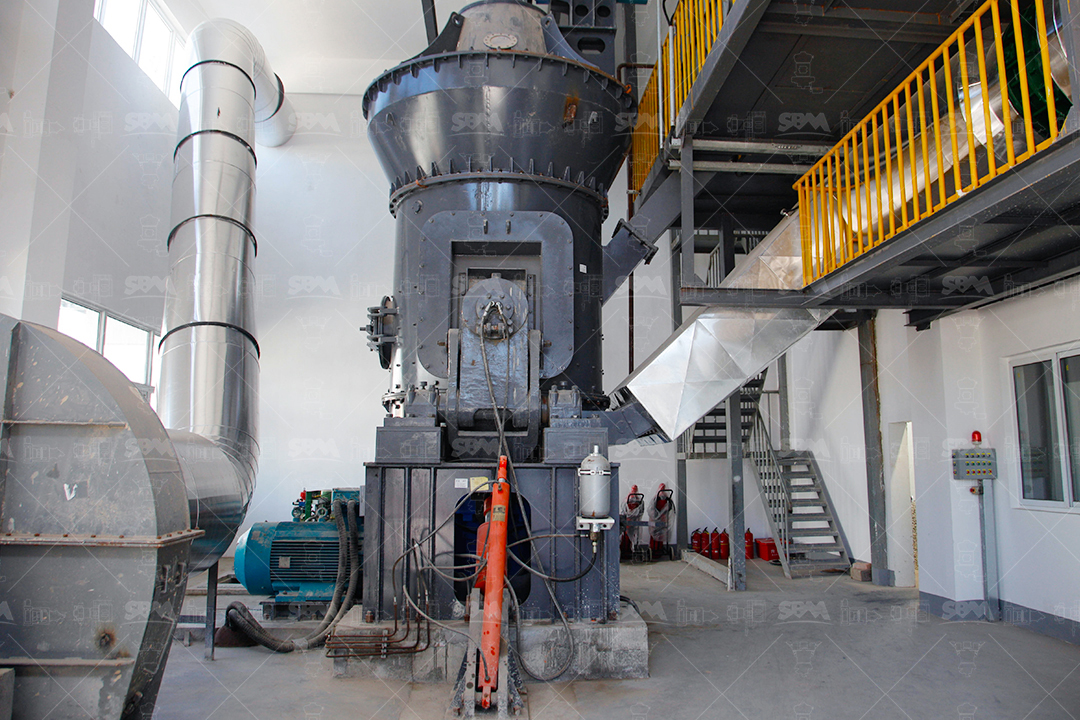
Why Vertical Roller Mills Dominate Kaolin Processing
Kaolin grinding demands a delicate balance between achieving ultra-fine particle sizes (often below 10 microns) and maintaining high throughput. Traditional ball mills are notorious for high energy consumption and excessive wear, while simple Raymond mills often struggle with fineness consistency. The LM series vertical roller mill, developed by Shanghai SBM Machinery, directly addresses these challenges. Unlike ball mills where grinding media collide with material, the VRM uses a rotating table and stationary rollers to crush and shear the feed material. This principle offers several inherent benefits:
- Integrated Drying: Kaolin often contains up to 20% surface moisture. The VRM utilises hot air from a furnace to dry and convey material simultaneously, eliminating the need for a separate dryer. This reduces capital expenditure and floor space by approximately 50% compared to traditional ball mill systems.
- Energy Efficiency: With grinding rollers directly applying pressure on the material bed, energy consumption is 30-40% lower than in ball milling systems. For kaolin producers operating with thin margins, this translates directly to lower cost per ton.
- Variable Fineness: The integrated classifier can adjust fineness from 30 to 400 mesh (for LM series) or even up to 2500 mesh (using SCM ultrafine mills). This flexibility allows producers to switch between grades (e.g., 325 mesh for paper filler vs. 1250 mesh for coating) without changing equipment.
Technical Innovations in Modern VRM Design
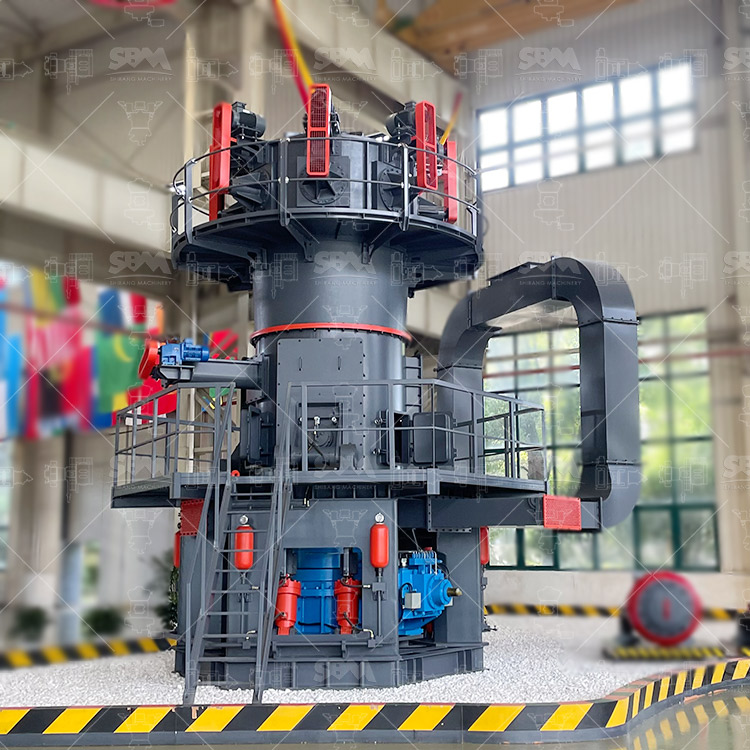
SBM’s LM vertical roller mill embodies several patented innovations that directly respond to kaolin’s specific grinding behaviour. First, the arc air duct design minimises air resistance and pressure losses, ensuring efficient pneumatic conveying of fine powder to the classifier. This is critical for kaolin, which tends to agglomerate due to its electrostatic properties. The high-strength guard plate protects the duct from abrasive wear, maintaining performance over thousands of hours.
Second, the cone gear whole transmission system replaces traditional side drives. This not only simplifies the mechanical structure but also enhances power transmission efficiency (up to 98%). For large-scale kaolin plants, this reduces the risk of gearbox failure—a common issue with older, multi-stage drives. The result is a more reliable mill with lower maintenance intervention.
Third, the unique wear-proof perching knife design (also present in the MTW European trapezium mill) is a game-changer. The curved shovel blade optimises the feeding angle, ensuring material is evenly distributed across the grinding ring. Only the blade tip needs replacement during maintenance, extending the service life of rollers and rings by 30-50%. This design also reduces operational costs by up to 20% compared to conventional fixed scrapers.
Addressing Common Kaolin Grinding Pain Points
Experience from over 180 countries reveals recurring customer frustrations. Here’s how the LM and LUM series solve them:
1. High Energy Consumption
Problem: Traditional mills consume 20-30 kWh per ton for kaolin to 325 mesh. Solution: The LM mill’s grinding mechanism reduces this to 10-15 kWh per ton. A case study from a ceramic-grade kaolin plant in China showed a 35% reduction in specific power consumption after switching from a ball mill to a SBM LM vertical mill.
2. Fineness Inconsistency
Problem: Achieving stable D97=45 microns (325 mesh) is difficult with simple Raymond mills due to classifier limitations. Solution: The LUM ultrafine vertical mill utilises a multi-rotor classifier with frequency control. This allows precise cut points between 325 and 2500 mesh, ensuring no coarse particles spill over. The residual on 325 mesh sieve is typically less than 0.5%.
3. Moisture Content Above 15%
Problem: High-moisture kaolin (e.g., from wet processing) causes plugging in traditional mills. Solution: The LM series can handle up to 20% moisture by directing hot gases into the mill body. The drying process occurs simultaneously with grinding, preventing material buildup on the table. For extremely wet kaolin (up to 30%), a preliminary flash dryer can be integrated.
4. High Wear Costs
Problem: Kaolin’s abrasive silica content (up to 5%) wears out grinding parts rapidly. Solution: SBM uses high-chromium alloy steel for rollers and table liners in the LUM series, increasing service life by 2-3 times compared to standard manganese steel. Additionally, the material bed principle means contact is minimised when operating correctly, reducing metal-to-metal contact.
5. Environmental Compliance
Problem: Dust leakage and noise pollution are major concerns. Solution: The entire VRM system operates under negative pressure with a sealed housing. SBM’s design includes a pulse-jet dust collector and silencer, reducing emissions to below 20 mg/Nm³—meeting European and Chinese standards. Noise levels are kept under 85 dB(A) at 1 metre, eliminating the need for expensive sound enclosures.
System Integration and Automation
Modern VRMs are not just standalone units; they are part of a complete grinding system. SBM’s offering includes a PLC/DCS automatic control system that monitors and adjusts key parameters in real-time: grinding pressure, table speed, classifier speed, and hot gas temperature. For kaolin with varying hardness, this ensures a stable product with a D97 deviation of less than ±2 microns. The system allows remote monitoring and data logging, enabling proactive maintenance and reducing unplanned downtime. For example, if vibration sensors detect abnormal levels, the system automatically reduces feed rate or adjusts roller pressure, protecting the mill from mechanical damage.
Furthermore, the system layout is compact. As a total solution provider, SBM can supply the entire package: feed hopper, belt conveyor, magnetic separator (to remove iron impurities), VRM, baghouse, and pneumatic conveying to silos. This turn-key approach minimises interface issues and accelerates commissioning time to just 6-8 weeks.
Choosing the Right VRM for Your Kaolin Project
The selection between LM, LUM, or SCM series depends on your target fineness and capacity:
- LM Series: For capacities from 3 to 400 tph, ideal for producing 30-400 mesh kaolin intended for ceramics, rubber, and coatings. Suitable for projects requiring lower capital investment, with outdoor installation possible due to weatherproof design.
- LUM Ultrafine Vertical Mill: For 10-70 tph capacities and fineness between 325-2500 mesh (D97 up to 5 microns). Perfect for paper coating and paint industries that demand critical quality specifications.
- SCM Ultrafine Mill: While technically a ring-roller mill, it excels for small-to-mid scale (0.5-25 tph) production of ultra-fine kaolin (325-4000 mesh) where energy efficiency and low noise are prioritized over large capacity.
In conclusion, vertical roller mills have revolutionised kaolin processing, offering unmatched efficiency, flexibility, and environmental compliance. With over 9500 customer feedback integrations in the design phase, SBM’s VRMs are engineered to eliminate the operational headaches that have plagued traditional grinding methods. Whether you need a robust LM mill for consistent throughput or an LUM for ultra-fine precision, the technology is proven, and the support is global.
Frequently Asked Questions (FAQs)
Q1: How does the LM vertical roller mill handle kaolin with high moisture content without pre-drying?
A: The LM mill utilises hot air (up to 400°C) introduced from the furnace. This air performs three functions simultaneously: conveying finished powder to the separator, drying the moisture (up to 20%), and maintaining the fluidised bed. For wet cake kaolin (25-30% moisture), we recommend a short-belt flash dryer upstream or reducing the feed rate by 10-15% to allow sufficient heat transfer. The system is designed to prevent condensation inside the mill, avoiding material sticking to rollers.
Q2: What is the real-lifetime of wear parts (roller and table) when grinding kaolin with a silica content of 3-5%?
A: With our proprietary high-chromium composite alloy (HRC 58-62), the service life typically ranges from 6,000 to 9,000 operational hours, depending on the D97 target. For finer products (below 10 microns), abrasion increases, so we recommend a larger diameter roller to reduce specific wear. On average, you can expect a 20-30% longer lifetime compared to generic vertical mill suppliers. The design allows easy replacement of the roller shell only, not the whole assembly, reducing spare parts costs by over 60%.
Q3: Can I produce multiple fineness grades from a single VRM without shutdown for long periods?
A: Yes, absolutely. The classifier speed is controlled by a variable frequency drive (VFD). To switch from, say, D97=45 microns (325 mesh) to D97=10 microns (1250 mesh), you simply reduce the classifier speed (for coarser) or increase it (for finer) while simultaneously adjusting the grinding pressure via the PLC. The transition can be completed in under 15 minutes, with minimal transition off-spec material (typically less than 1 ton). This is a key advantage over ball mills where classifier changes require manual screen swapping.
Q4: How do environmental regulations affect the selection of a VRM for kaolin?
A: The LM/LUM series units are fully sealed and operate under negative pressure, ensuring no dust leakage. We integrate high-efficiency pulse-jet filters that achieve an outlet emission of less than 20 mg/Nm³, compliant with EU Directive 2010/75/EU and China’s GB/T 14777-2017. Regarding noise, the mill body’s low vibration and labyrinth sealing reduce sound to 82 dB(A) at 5 metres. If local regulations require under 80 dB(A), we offer an optional acoustic enclosure fabricated from MDF acoustic panels without compromising maintenance access.
Q5: What are the most common mistakes when commissioning a vertical roller mill for kaolin?
A: The most frequent issue is calibrating the initial fixed feed rate. Operators tend too high, causing the bed to collapse or excessive vibration. We recommend starting at 70% of the designed capacity and stepping up by 5-tph increments while monitoring the differential pressure (should stay between 3000-4500 Pa). A second mistake is neglecting to adequately pre-heat the mill before feeding—always run the hot gas generator for 20 minutes. Our service engineers provide on-site commissioning support for the first 4-6 weeks to ensure these parameters are dialled in correctly.


