

Vertical roller mill helps reprocess mine tailings, turning waste into value
Mine tailings—the finely ground rock waste left after ore extraction—have long been a liability for mining operators, occupying vast land areas, posing environmental risks, and incurring continuous management costs. Yet, with the advancement of vertical roller mill (VRM) technology, these tailings are now being transformed from a costly burden into a valuable secondary resource. This article explores how the vertical roller mill, particularly the LM series from SBM Machinery, enables efficient reprocessing of mine tailings into marketable powders for construction, cement, and other industries, thereby turning waste into profit while addressing environmental concerns. It covers the technical advantages, operational benefits, and practical considerations for mining companies looking to implement tailings reprocessing systems, including answers to common questions about wear, energy use, and product quality.
From Waste Stream to Resource Stream: The VRM Advantage
For decades, mine tailings have been considered a necessary evil—a byproduct that demands careful disposal and long-term monitoring. However, the global push towards circular economy practices and the rising value of secondary raw materials have prompted forward-thinking operators to reconsider their tailings management strategies. The vertical roller mill (VRM) stands at the forefront of this shift, offering a technology that not only processes tailings economically but also produces high-quality fine powders that can be sold into various markets.
SBM's LM vertical roller mill is specifically engineered to handle the challenges of abrasive, variable-feed materials like mine tailings. With input sizes up to 50mm and output fineness ranging from 30 to 400 mesh, this mill accommodates the physical characteristics of most tailings streams. More critically, its integrated drying, grinding, and classification functions mean that wet or damp tailings—often containing residual moisture from the ore processing—can be processed directly, eliminating the need for separate drying equipment.
Why Traditional Processing Methods Fall Short
Many mining sites still rely on ball mills or Raymond mills for tailings reprocessing, but these technologies come with significant drawbacks when applied to tailings. Ball mills, despite their maturity, are notorious for high energy consumption and rapid wear of grinding media. In tailings applications, where the feed is often heterogeneous and contains abrasive silicates, the metal balls can wear out quickly, leading to frequent downtime and high maintenance costs.
Raymond mills, on the other hand, struggle with the high moisture content commonly found in tailings. They also lack the integrated drying capability that VRMs offer, requiring upfront drying systems that add capital and operating costs. Furthermore, their output fineness is limited, often insufficient for creating high-value products like cement additives or construction fillers.
The SBM LM Series: Designed for Tailings Reprocessing
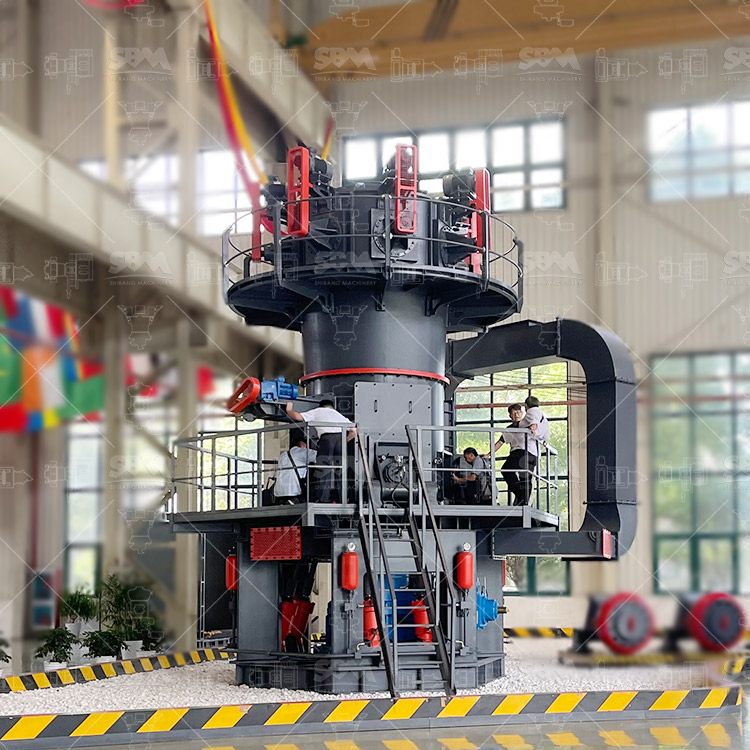
SBM Machinery has developed the LM vertical roller mill specifically to overcome these limitations. With capacities ranging from 3 to 400 tph, the LM series can be scaled to match the volume of tailings generated by any operation, from small pilot plants to large-scale mining complexes.
One of the key innovations in the LM mill is its small comprehensive investment footprint. The mill integrates crushing, drying, grinding, powder separation, and conveying into a single system, requiring about 50% of the floor space of a conventional ball mill system. This is a critical advantage in existing mining operations where space is often at a premium. Moreover, the system can be arranged outdoors, eliminating the need for costly buildings and reducing civil works.
In terms of operating costs, the LM mill is designed for efficiency. The grinding rollers do not contact the grinding plate directly, reducing wear and extending component life. The rollers and plate are fabricated from high-quality, wear-resistant materials, ensuring durability even when processing abrasive tailings. Energy consumption is 30–40% lower than that of conventional ball milling systems, a significant saving for operations processing large tonnages.
Turning Tailings into Marketable Products
The output from the LM mill can be tailored to meet the specifications of various industries. By adjusting the classifier speed and grinding pressure (achieved through the PLC/DCS automatic control system), operators can produce powders with fineness from 30 to 400 mesh, suitable for applications such as:
- Construction materials: Fine tailings powder can be used as a partial replacement for cement or as a filler in concrete, reducing the carbon footprint of construction projects.
- Cement industry: The processed powder can be added to Portland cement clinker to produce blended cements, improving workability and long-term strength while lowering production costs.
- Backfill in underground mines: Processed tailings can be used as paste backfill, stabilizing voids and reducing the risk of subsidence.
- Ceramics and refractories: With the right chemical composition, tailings can be ground to fine powders for use in ceramic tiles, bricks, or refractory materials.
The economic viability of tailings reprocessing hinges on producing a consistent, high-quality product. The LM mill's automatic control system ensures that variations in feed composition (a common issue with tailings) are compensated for in real-time, maintaining product uniformity. This allows mining companies to enter into long-term supply agreements with construction material producers, creating a steady revenue stream from what was previously a liability.
Operational Excellence and Environmental Benefits
Beyond product quality, the LM series offers operational benefits that directly address the pain points of mine operators. The mill's low vibration design, combined with its fully sealed system operating under negative pressure, minimizes dust emissions, helping operations meet stringent environmental regulations. Noise levels are also kept low, which is particularly important for sites near residential areas.
Maintenance is simplified through design features such as the combined-type shovel blade (in the MTW series) and the direct-drive gearbox, which eliminate many of the wear-prone components found in older mill designs. The use of high-quality materials in the rollers and grinding table extends service intervals, reducing downtime and maintenance labor costs.
Furthermore, the LM mill's ability to align with existing plant control systems (through remote and local control switching) means that operators can integrate the mill into their current process with minimal training. The intuitive interface and automated start-up/shutdown procedures reduce the risk of operator error and ensure consistent performance round-the-clock.
Case Considerations: From Waste to Worth in Practice
Imagine a mid-sized gold mine processing 200,000 tons of ore per year, producing approximately 180,000 tons of tailings. Historically, these tailings would be pumped into a lined storage facility, costing the operation an estimated $2–3 million annually in containment, monitoring, and eventual closure costs. By installing an LM vertical roller mill, the mine could instead dry and grind these tailings into a fine powder suitable for cement manufacturing.
Assuming a 30% moisture reduction and a final product fineness of 200 mesh, the mill could produce around 150,000 tons of marketable powder annually. At a conservative selling price of $15–20 per ton (depending on local market conditions), this translates into $2.25–3 million in new revenue, offsetting the cost of tailings management entirely. Moreover, the reduced land footprint for tailings storage and the lower environmental risk can improve the mine's social license to operate and its access to financing.
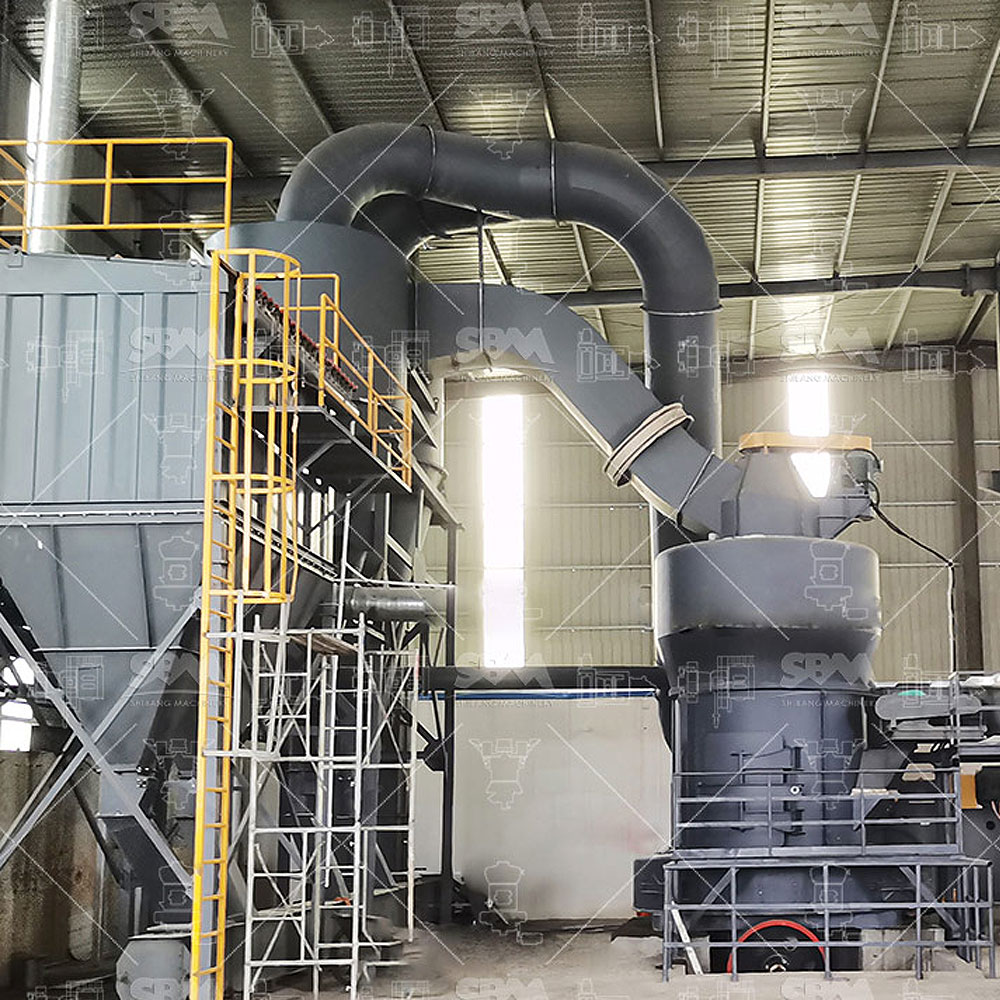
Such scenarios are becoming common in regions like Australia, Canada, and South Africa, where tailings reprocessing is a recognized strategy for both waste reduction and value creation. The key to success is selecting the right equipment and configuring it to handle the specific characteristics of the tailings—a task at which SBM's engineers are well-versed, having served over 180 countries and regions with grinding solutions.
Beyond the LM: A Suite of Processing Solutions
While the LM vertical roller mill is the ideal choice for large-scale tailings reprocessing (up to 400 tph), SBM also offers complementary equipment for various stages of the process. For pre-crushing of oversize particles, the European Trapezium Mill (MTW series) can act as a secondary grinder, with an input size up to 50mm and a capacity of 3–40 tph, perfect for smaller operations or for treating a coarser fraction of tailings.
For ultra-fine applications where tailings need to be ground to 325–4000 mesh, the SCM series ultrafine mill or the LUM series ultrafine vertical mill (which incorporates Taiwan grinding roller technology and German powder separation technology) may be more appropriate. The LUM mill, with its capacity of 10–70 tph and fineness capability down to D97<5μm, is particularly suited for high-value markets such as plastic fillers, artificial stone, and non-woven fabrics, where the purity and consistency of the powder are paramount.
Regardless of the specific configuration, the fundamental principle remains: reprocessing mine tailings is no longer just an environmental obligation but a business opportunity. The vertical roller mill core technology enables miners to extract the latent value in their waste streams, aligning profitability with sustainability.
Conclusion
The vertical roller mill, particularly SBM's LM series, has revolutionized the approach to mine tailings management. By integrating drying, grinding, and classification into a single, energy-efficient unit, it transforms a costly liability into a significant asset. With lower operating costs, a smaller footprint, and the ability to produce a range of marketable products, the VRM is the definitive technology for turning waste into value. As environmental regulations tighten and the demand for secondary resources grows, early adopters of this technology will be well-positioned to lead the industry in profitability and sustainability.
Frequently Asked Questions
1. Can the vertical roller mill handle high-moisture tailings (e.g., 20-30% moisture) directly, or does the material need pre-drying?
Yes, the LM vertical roller mill can handle tailings with moisture content up to approximately 8-10% without additional drying, thanks to its integrated hot air system. For higher moisture levels (e.g., 15-20%), the process can be optimized by using killed lime or hot gas injection (typically from a furnace or the plant's waste heat). In many cases, tailings from thickening or filter presses already have lower moisture content and can be processed directly. For extreme cases, a simple rotary dryer or a day bin with air sweeps can be placed upstream. Our engineers can conduct a moisture analysis and recommend the optimal configuration for your specific tailings feed.
2. How does the wear rate on the grinding rollers and table compare when processing abrasive tailings (e.g., quartz-rich) versus conventional cement raw meal?
Abrasive tailings, especially those high in free silica (quartz), will accelerate wear on grinding components. However, the LM mill uses wear-resistant materials (chrome steel or composite alloys) for the roller and table segments, and the design minimizes direct metal-to-metal contact. Our track record shows that for typical gold or copper tailings with 30-50% quartz content, the wear life is about 60-70% of that for cement raw meal, meaning roller and table liners may need replacement after 8,000-12,000 hours of operation instead of 15,000+ hours. To manage this, we offer additional sacrificial wear protection (e.g., tungsten carbide inserts) and recommend periodic laser measurement of the grinding profile. Some operators also pre-mix tailings with less abrasive materials to average out the wear.
3. What is the realistic energy saving compared to a traditional ball mill when grinding tailings to a product fineness of 200 mesh (or 74 microns)?
A typical ball mill will consume 25-35 kWh per tonne of feed to grind from 10 mm to 200 mesh (70-80% passing 200 mesh). Our LM vertical roller mill will consume between 18-24 kWh per tonne for the same task. This represents a saving of 25-35% in specific electrical energy. Additionally, the VRM's ability to perform simultaneous drying and grinding reduces the thermal energy consumption by eliminating a separate drying step (which could add 5-8 kWh/tonne in electrical equivalent). For a 50 tph operation, this translates to roughly 3-5 MW of electrical load reduction, which can be substantial in terms of operating cost and carbon footprint.
4. Can the LM mill consistently produce a powder that meets the quality requirements for cement additive, specifically in terms of fineness, uniformity, and pozzolanic activity?
Yes, the LM mill is fully capable of producing consistent 200-300 mesh powders that meet the EN 197-1 and ASTM C618 standards for natural pozzolans or supplementary cementitious materials (SCMs). The key is the hydraulic loading system on the rollers, which allows real-time adjustment of grinding pressure to compensate for grindability fluctuations in tailings. Combined with the high-precision separator (rotor speed and air flow control), we achieve a particle size distribution with a typical residue on 45 microns below 5-10% and Blaine surface areas of 350-450 m²/kg. Pozzolanic activity depends on the chemical composition of the tailings (amorphous silica and alumina content), not just the mill. If your tailings are low-reactivity, we sometimes recommend blending with slag or fly ash during the grinding process to achieve the desired cement properties.
5. What are the common pitfalls in commissioning a VRM for tailings reprocessing, and how does SBM help mitigate them?
The most common pitfalls are: 1) Underestimating the inherent variability of tailings feed (particle size, moisture, and hardness from day to day), which can cause mill vibration and shutdowns. 2) Incorrect calibration of the external recirculation system for oversize particles, leading to bottlenecks. 3) Insufficient hot gas flow for desired moisture removal, resulting in lower throughput. To mitigate these, SBM provides a pre-investigation phase where we test representative tailings samples in our pilot mill. We then design a specific control logic with features like feed-forward compensation based on online moisture sensors and variable-speed drive on the separator to stabilize the process. We also offer 24/7 remote support during the first six months of operation to fine-tune the mill parameters based on your actual tailings. Regular advisory visits and operator training are included in the commissioning package to ensure your team is self-sufficient quickly.


