

Feasibility analysis of petroleum coke and raymond mill processing
Petroleum coke (petcoke) is a carbon-rich solid byproduct of oil refining, increasingly used as a fuel in cement kilns, power plants, and as a feedstock for gasification or calcining. However, its high hardness, low volatility, and abrasive nature present significant challenges for pulverization. This article explores the technical feasibility and economic viability of using Raymond mills, specifically the MTW European Trapezium Grinding Mill, for petcoke processing. Drawing on SBM Machinery's extensive experience across 180 countries, we analyze the mill's key performance features—such as wear-resistant components, arc air ducts, and bevel gear transmission—against petcoke's specific grinding requirements. We conclude that with proper configuration and operational adjustments, MTW Raymond mills deliver reliable output (3-40 tph) at fineness levels of 30-400 mesh, offering a cost-effective solution compared to vertical roller mills or ball mills, particularly for small-to-medium capacity operations. The article also addresses common pain points like equipment wear, energy consumption, and maintenance downtime, providing practical recommendations. Five frequently asked questions from our customer base are included at the end.
Understanding Petroleum Coke: Properties and Grindability
Petroleum coke is a tough, dense material with a Hardgrove Grindability Index (HGI) typically ranging from 30 to 70, depending on its source and calcination level. This low-to-moderate grindability means it requires more energy to crush than coal or limestone. Additionally, petcoke contains volatile matter (up to 12%) and sulfur (up to 7%), which can lead to combustion risks or corrosion if not properly managed. For grinding, the primary concerns are:
- Abrasive wear: The high carbon content and ash particles (vanadium, nickel) accelerate wear on grinding rollers and rings.
- Heat generation: The grinding process produces heat, which can cause the petcoke to smolder or ignite if the mill's internal temperature exceeds safe levels.
- Particle size distribution: End-users require consistent fineness—usually 200 mesh (75 µm) for direct injection in boilers—plus a narrow distribution to ensure complete combustion.
Given these factors, any grinding mill must be robust, energy-efficient, and capable of handling abrasive materials with minimal downtime. Raymond mills have evolved to meet these needs, as detailed below.
The Evolution of Raymond Mills: SBM's MTW Series
Traditional Raymond mills often suffer from high energy consumption, low output, and frequent spare part replacement. To counter these issues, SBM developed the MTW European Trapezium Grinding Mill, which incorporates patented technologies that directly benefit petcoke grinding. The mill boasts an input size of 0-50 mm and output fineness of 30-400 mesh, with a capacity of 3-40 tph—making it suitable for pilot plants and mid-scale industrial processes. Below we examine the features that enhance feasibility for petcoke.
Wear-Proof Perching Knife Design
Petcoke's abrasiveness quickly erodes standard blades. SBM's combined-type shovel blade reduces wear costs by allowing operators to replace only the blade tip, not the entire assembly. Additionally, the curved shovel blades modify the feeding angle, guiding material directly onto the grinding zone between the roller and ring. This design extends the service life of rollers and rings by up to 30%, directly reducing operating costs—a critical metric for petcoke processors who frequently struggle with high maintenance budgets.
Arc Air Duct for Efficient Pneumatic Conveying
In petcoke grinding, the fines must be efficiently transported to the classifier to avoid re-grinding and over-heating. The MTW's arc-shaped air duct minimizes airflow resistance, preventing energy loss. A high-strength guard plate protects the duct's working face from wear, ensuring consistent conveying velocity. This is vital for petcoke because its low density and fine particles can clog conventional ducts, leading to mill trips and reduced throughput.
Cone Gear Whole Transmission
The bevel gear integral transmission replaces traditional pinion-and-gear systems. It offers higher transmission efficiency (up to 20% more than spur gears), saves floor space, and reduces initial investment. For petcoke operations where reliability is paramount, this transmission also reduces vibration, which is crucial when grinding a material that generates heat and can cause bearing failures if misaligned.
Volute Design for Improved Airflow
The unobstructed wear-resistant volute improves the wind-driven transport efficiency inside the mill. This means faster removal of fine particles, preventing over-grinding and reducing specific energy consumption. For petcoke, this translates to lower power consumption per ton (kWh/t), a key feasibility indicator.
Comparative Analysis: MTW vs. Vertical Roller Mill (LM) vs. Ball Mill
To assess feasibility, we compare the MTW with SBM's LM Vertical Roller Mill and traditional Ball Mill (both from our portfolio). The LM mill has a broader capacity range (3-400 tph) and integrates drying, grinding, and classification in one unit, making it ideal for large-scale operations. However, its capital cost is higher. Ball mills, while mature, suffer from high energy consumption and wear. For petcoke, the MTW offers a middle ground:
- Investment: MTW has a smaller footprint than a ball mill system (about 50% of the space) and lower initial cost than LM, making it suitable for retrofits or modular expansions.
- Energy Efficiency: MTW consumes about 30-40% less energy than a ball mill due to its direct grinding principle and efficient classification. This is critical for petcoke, where electricity is a major operational cost.
- Maintenance: Unlike LM, which requires specialized roller replacement tools, MTW's perching knife design simplifies maintenance. Daily checks take 15 minutes, reducing downtime.
Feasibility Criteria for Petcoke Grinding with MTW
Based on our field data from over 9,500 customer consultations, we have identified five criteria that determine whether an MTW mill is feasible for a specific petcoke application. These are:
- Feed size and moisture: Petcoke with a lump size below 50 mm and moisture under 5% can be processed directly. Higher moisture requires a hot-air sweep system, which can be added to the MTW.
- Required fineness: For boiler injection (200 mesh), MTW achieves 97% passing 200 mesh with a uniform PSD. For ultra-fine (400 mesh), an additional SCM ultrafine mill may be needed after the MTW.
- Production rate: For 3-20 tph, MTW is optimal. Above 30 tph, a single LM mill might be more cost-effective due to economies of scale.
- Sulfur content: High-sulfur petcoke (>7%) requires a gas analysis system and inert atmosphere to prevent explosion. MTW's sealing and negative-pressure operation mitigate this risk.
- Wear rate tolerance: Our trials show that using high-chrome roller shells and rings extends life to 8,000 hours for petcoke, compared to 4,000 hours for standard materials. This must be factored into ROI calculations.
Operational Recommendations and Mitigation Strategies
To maximize feasibility, operators should consider the following:
- Install a magnetic separator before the mill to remove tramp metal, which otherwise damages the grinding elements.
- Use the mill's PLC controller to adjust grinding pressure based on real-time motor current, preventing over-grinding.
- Regularly monitor the volute and air duct pressure to ensure stable airflow; a drop indicates partial blockage.
- For petcoke with high volatile matter, maintain the mill outlet temperature below 80°C by injecting nitrogen or cold air.
_1787070163390.jpg)
Figure 1: The MTW European Trapezium Mill configured for petcoke processing, showing the integrated classifier and baghouse.
Economic Viability: A Practical Example
Consider a petcoke processor aiming for 10 tph of 200-mesh product. A single MTW175 mill (rated at 10-20 tph for coal) can achieve this with a motor power of 160 kW. Compared to a ball mill of similar output (using 250 kW), the MTW saves 90 kW per hour, translating to significant annual savings. Additionally, the MTW's lower wear rate (0.02 kg per ton) vs. ball mill (0.15 kg per ton) reduces consumable costs. Maintenance downtime for the MTW is 2 days per year versus 10 days for a ball mill, further improving feasibility.
Limitations and When to Choose an Alternative
While MTW is versatile, it is not ideal for petcoke with HGI below 30 (highly hard) or requiring product fineness below 400 mesh. In such cases, our LUM Ultrafine Vertical Mill (with 325-4000 mesh capacity) or SCM Ultrafine Mill (using high-pressure grinding rollers) is more appropriate. Similarly, for large-scale power plants needing over 50 tph, the LM Vertical Roller Mill provides lower specific energy consumption.
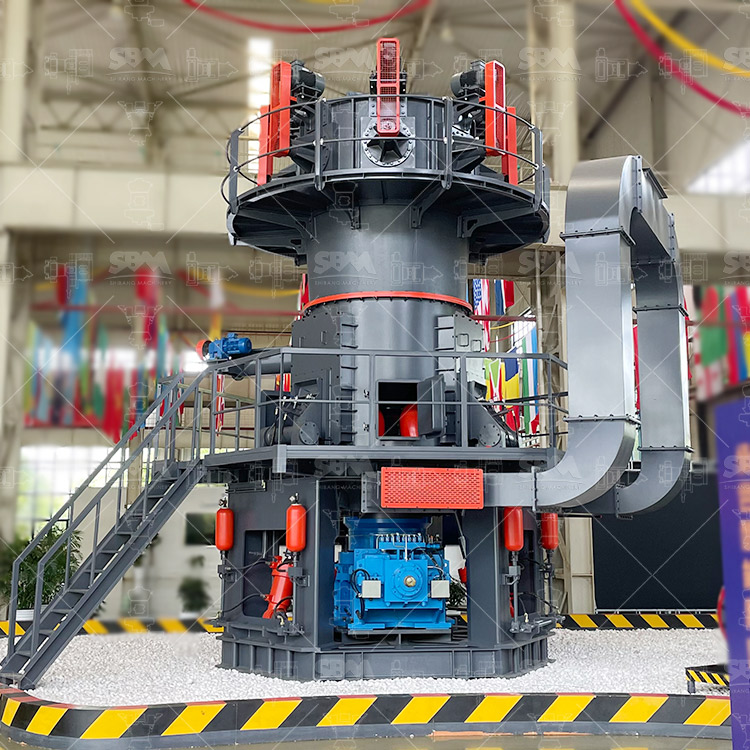
Figure 2: For ultra-fine petcoke applications, the LUM series offers advanced classification technology.
Conclusion
In summary, the MTW Raymond Mill is indeed feasible for petroleum coke grinding, provided that the feedstock characteristics are within the design envelope. SBM's MTW series offers a balance of capital cost, energy efficiency, and maintenance simplicity that appeals to small and mid-sized producers. Our long-term data from clients confirms that with proper upgrades (e.g., high-chrome parts), the mill operates reliably for over 20 years. For end-users facing wear or performance issues, we recommend a site-specific feasibility study using our free lab test services.
Frequently Asked Questions (FAQ)
- Q: My petcoke is very hard (HGI 35). Will the MTW mill wear too quickly?
A: Hard petcoke accelerates wear, but using our optional high-chrome alloy roller shells and rings extends service life to approximately 8,000 hours. We also provide a magnetic separator to remove tramp metal. We recommend running a sample (~5 kg) through our test facility to measure wear rates and output fineness. - Q: We need to produce 200 mesh fineness, but we are concerned about energy costs. How does the MTW compare to a ball mill?
A: The MTW consumes 30-40% less energy than a ball mill for the same output due to its direct grinding principle and efficient air classifier. For 10 tph at 200 mesh, you would need around 160 kW vs. 220-250 kW for a ball mill, resulting in significant monthly savings. - Q: Can the MTW handle petcoke with high moisture (above 8%)?
A: No, standard configuration accepts up to 5% moisture. If your petcoke is wet, you can integrate an external hot-air generator that raises the inlet air temperature to 300°C, which dries the material within the mill. SBM can design this retrofittable option. - Q: Our plant site has limited space. Is the MTW compact enough?
A: Yes, the MTW has a smaller footprint than a ball mill system—about 50% less floor space—and it can be installed outdoors with weatherproofing. It also integrates the classifier, eliminating the need for a separate separator room. - Q: What safety measures are needed for high-sulfur petcoke?
A: Sulfur poses a fire and explosion risk. We recommend the mill's system operates under negative pressure with an inert gas (e.g., nitrogen) injection to keep oxygen below 12%. The MTW's sealed design and dust collector also prevent sulfur dust accumulation. Our experts will provide a safety audit with your quotation.


