

Application expansion and challenges of vertical roller mill in the non-metallic minerals industry
Published: June 5, 2025
Vertical roller mills (VRMs) have evolved from a niche technology into a cornerstone of the non-metallic minerals processing industry, driven by the urgent need for energy efficiency, product fineness flexibility, and sustainable operation. This article explores the expanding applications of VRMs—from heavy calcium carbonate (GCC) and talc to barite and kaolin—while candidly addressing the operational challenges operators face daily, such as vibration control, material bed stability, and wear management. Drawing on field data and equipment innovations from SBM Machinery, we present a practical roadmap for maximizing VRM performance, reducing total cost of ownership, and meeting stringent environmental standards. Whether you are scaling up from a ball mill system or optimizing an existing VRM circuit, this guide offers actionable insights grounded in real-world installations across 180+ countries.
The Rise of VRMs in Non-Metallic Minerals: Beyond Cement
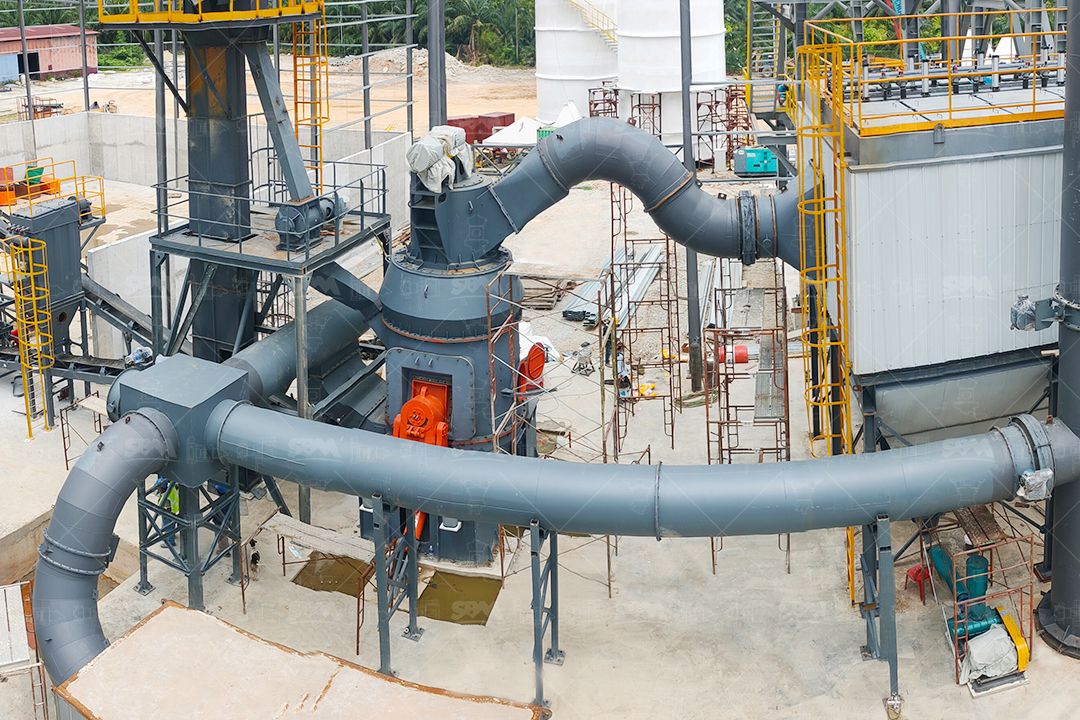
For decades, ball mills and Raymond mills dominated the non-metallic minerals sector. However, with energy costs soaring and product specifications tightening, the industry has pivoted toward vertical roller mills for their integrated drying, grinding, and classification capabilities. Unlike traditional systems, a VRM accomplishes size reduction in a single unit, significantly reducing plant footprint—often by 50% compared to ball mill circuits—and enabling outdoor installation to cut civil engineering costs. This compactness is particularly advantageous for greenfield projects in remote mineral-rich regions.
Key Application Segments
- Heavy Calcium Carbonate (GCC): VRMs now produce GCC powders from 400 mesh to 2500 mesh with controlled particle size distribution (PSD), essential for plastics, paints, and paper coatings.
- Industrial Fillers and Extenders: Talc, barite, and kaolin are processed at lower specific energy (30–40% less than ball mills) while achieving D97≤5μm in ultrafine grades.
- New Energy Materials: Lithium battery separators and cathode coatings require ultra-fine, low-iron mineral powders; VRMs with ceramic-lined components meet this purity demand.
Overcoming Core Operational Challenges
1. Material Bed Stability and Vibration
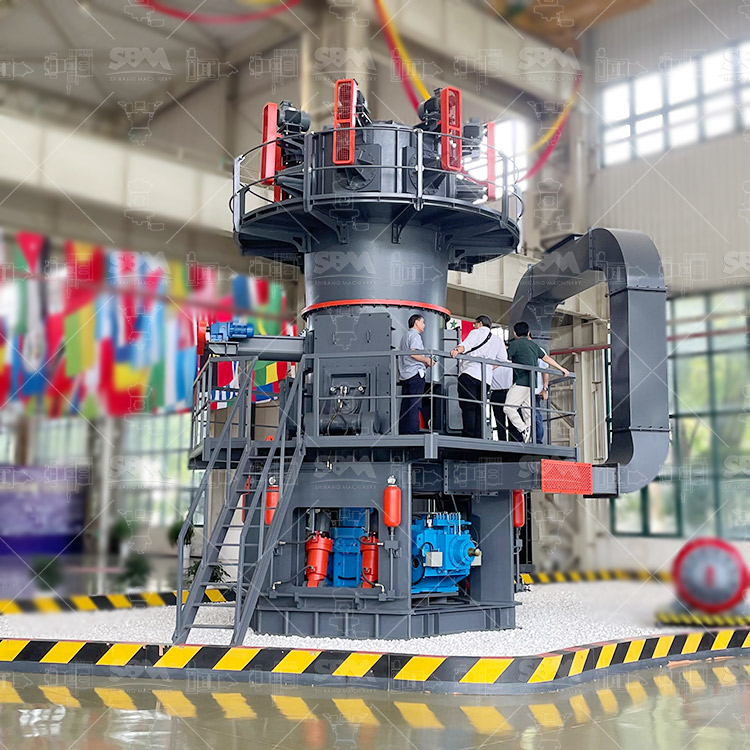
One common pain point is vibration caused by uneven material distribution on the grinding table. Operators often struggle with feed moisture variability—if the feed is too dry, the bed collapses; if too wet, material packs. SBM's LM series VRM addresses this with an automatic control system that adjusts grinding pressure and table speed in real time. The roller shell and liner are designed with optimized grinding curves that stabilize the material bed, reducing vibration amplitude by up to 20% in field trials.
2. Wear Life of Grinding Elements
Wear parts are the highest recurring cost. Traditional mills require frequent roller and ring replacement, leading to downtime. SBM's patented perching knife design uses a combined-type shovel blade, allowing only the blade tip to be replaced, not the entire assembly. The curved blade geometry reduces feeding angle variability, extending roller and ring service life by 30–50% under abrasive feeds like quartz-bearing talc.
3. Energy Efficiency at Ultrafine Fineness
As customers demand D97 under 10μm for premium products, energy consumption can spike. The LUM ultrafine vertical mill overcomes this by incorporating a multi-rotor classifier from Germany, which cuts coarse particle bypass and improves classification sharpness. Compared to jet mills, LUM delivers twice the throughput at 30% lower energy—a critical advantage when processing high-value minerals like wollastonite or diatomite.
System Integration and Automation—The Smart Mill Concept
Modern VRMs are no longer standalone grinders; they are the heart of a digitalized process loop. SBM's LUM and LM mills feature PLC/DCS control systems that enable remote monitoring and automated adjustment of grinding pressure, separator speed, and inlet temperature. This not only ensures consistent product fineness (e.g., D97≤5μm repeated batch-to-batch) but also reduces manual intervention, saving labor costs. For existing plants, a VRM can be retrofitted into a ball mill circuit as a pre-grinder to boost overall capacity by 40% without adding additional classifiers.
Environmental Compliance and Low-Noise Operation
Non-metallic mineral processors face tightening EHS regulations. VRMs operate under negative pressure, ensuring zero dust spillage, and with acoustic enclosures, noise levels are kept below 85 dB(A) at 1 meter—meeting OSHA and EU standards. The high-efficiency double pulse dust collection system captures 99.9% of ultra-fine particles, far exceeding typical baghouse requirements. For water-sensitive minerals like gypsum, the integrated drying function allows processing with 15% free moisture feed, eliminating the need for a separate rotary dryer.
Future Outlook: From Single Machine to Total Solutions
The non-metallic minerals industry is shifting toward total solution providers who can offer not just a mill but the entire powder processing system—from crushing and drying to classification and packaging. SBM's complete grinding systems have been installed in over 180 countries, serving industries from power generation (limestone desulfurization) to new energy materials (silicon carbide). The next frontier is modular VRM units with pre-engineered bases, reducing installation time by 30% and enabling rapid capacity expansion. As processors seek to differentiate products—such as high-purity white GCC for paper or ultra-low-iron mica for cosmetics—VRM flexibility in adjusting fineness and particle shape will remain a decisive competitive edge.
Conclusion
Vertical roller mills have proven their mettle in non-metallic minerals, delivering energy savings, product quality, and environmental responsibility. The challenges—wear, vibration, and system complexity—are being systematically addressed through smarter engineering, robust automation, and service partnerships. For any processor aiming to stay ahead, investing in a modern VRM is no longer optional; it is a strategic imperative. Evaluate your specific feed characteristics, target fineness, and capacity, then select a VRM that offers proven wear-part durability and a control system you can truly operate. The data from 9500+ customers has shown one clear truth: a well-optimized VRM is the most cost-effective path to premium mineral powders.
Frequently Asked Questions (FAQ)
- Why does my VRM vibrate even with correct feed size? Vibration often results from varying feed moisture or a thin material bed. Set a consistent feed moisture (<5%) and use the automatic pressure adjustment; if vibration persists, check for worn scraping blades or a damaged nozzle ring.
- How often do I need to replace grinding rollers in a non-metallic application? For materials like limestone (Mohs hardness 3), roller life can exceed 8,000 hours. For harder minerals like feldspar, expect 4,000–6,000 hours. Using SBM's combined blade design, you only replace the blade, not the entire hub, reducing downtime by up to 70%.
- Can a VRM achieve a fineness of D97=3μm without a downstream classification step? Yes, the LUM ultrafine vertical mill with a multi-rotor classifier can achieve D97≤3μm in a single pass for calcite and talc, but at reduced capacity. For 5μm typical in GCC, we recommend a 10–15% capacity derating compared to 10μm production.
- Is it possible to process heat-sensitive minerals like sulfur or paraffin-coated fillers? Yes, but you need to control grinding temperature by injecting cold air or using a water-cooled mill body. SBM offers a special cooling loop for such applications; however, we advise a pilot test to ensure safety.
- What is the typical payback period for upgrading from a ball mill to a VRM? While the upfront investment is higher, energy savings of 30–40% plus a 50% reduction in floor space often translate to a payback period of 18–30 months, depending on local electricity costs. Additionally, the ability to process multiple minerals in one unit reduces equipment redundancy.


