

Uses of raymond mill in calcium carbonate processing
Published: March 15, 2025
Calcium carbonate, particularly in its ground or precipitated forms, is one of the most versatile industrial minerals, finding applications in plastics, paper, paints, coatings, rubber, adhesives, sealants, and even pharmaceuticals and food. The processing of calcium carbonate—from mined limestone or marble to a finely divided powder with controlled particle size distribution—is a critical step that determines the quality and value of the final product. Among the various milling technologies available, the Raymond mill, and its modern evolution, the European trapezium mill, remains a cornerstone for medium-fineness calcium carbonate production (typically 30–400 mesh). However, the industry has evolved, and today's processors face a complex array of challenges: high energy consumption, inconsistent product quality, excessive wear and tear on equipment, and the need to meet increasingly stringent environmental regulations. This comprehensive guide explores the specific uses, operational advantages, and selection criteria for Raymond mills in calcium carbonate processing, drawing on decades of field experience and engineering innovation to help you optimize your plant's performance, reduce total cost of ownership, and stay competitive in a demanding global market.
Understanding the Core: What a Modern Raymond Mill Does for Calcium Carbonate
At its heart, a Raymond mill is a ring-roller mill. Material is fed into the grinding chamber, where a rotating grinding roller presses against a stationary grinding ring. The material is crushed and ground between the roller and ring. A stream of air then carries the fine particles upward to a classifier, which separates particles of the desired fineness. Oversized particles are returned to the grinding chamber for further processing. This simple, robust design has made it a workhorse for non-metallic minerals for over a century.
In the context of calcium carbonate (GCC – Ground Calcium Carbonate), the Raymond mill excels in producing powders with fineness ranging from 30 mesh (coarse) to 400 mesh (fine). This range covers a vast spectrum of applications:
- Rubber and Plastics: As a filler, calcium carbonate in the 200-400 mesh range improves strength, stiffness, and impact resistance while reducing cost.
- Paints and Coatings: A 325-mesh or finer product provides excellent brightness, opacity, and weather resistance.
- Paper: As a coating pigment, fillers at 200-325 mesh enhance smoothness and printability.
- Building Materials: Coarser powders (30-100 mesh) are used in asphalt, sealants, and as a base for drywall compounds.
- Agriculture: Coarse-ground limestone is used to adjust soil pH.
The key to unlocking value is not just having a mill, but having a mill that can deliver a consistent, high-quality product with minimal downtime and energy input. This is where the modern iteration of the Raymond mill, such as the SBM MTW European Trapezium Mill, differentiates itself from older, less efficient designs.
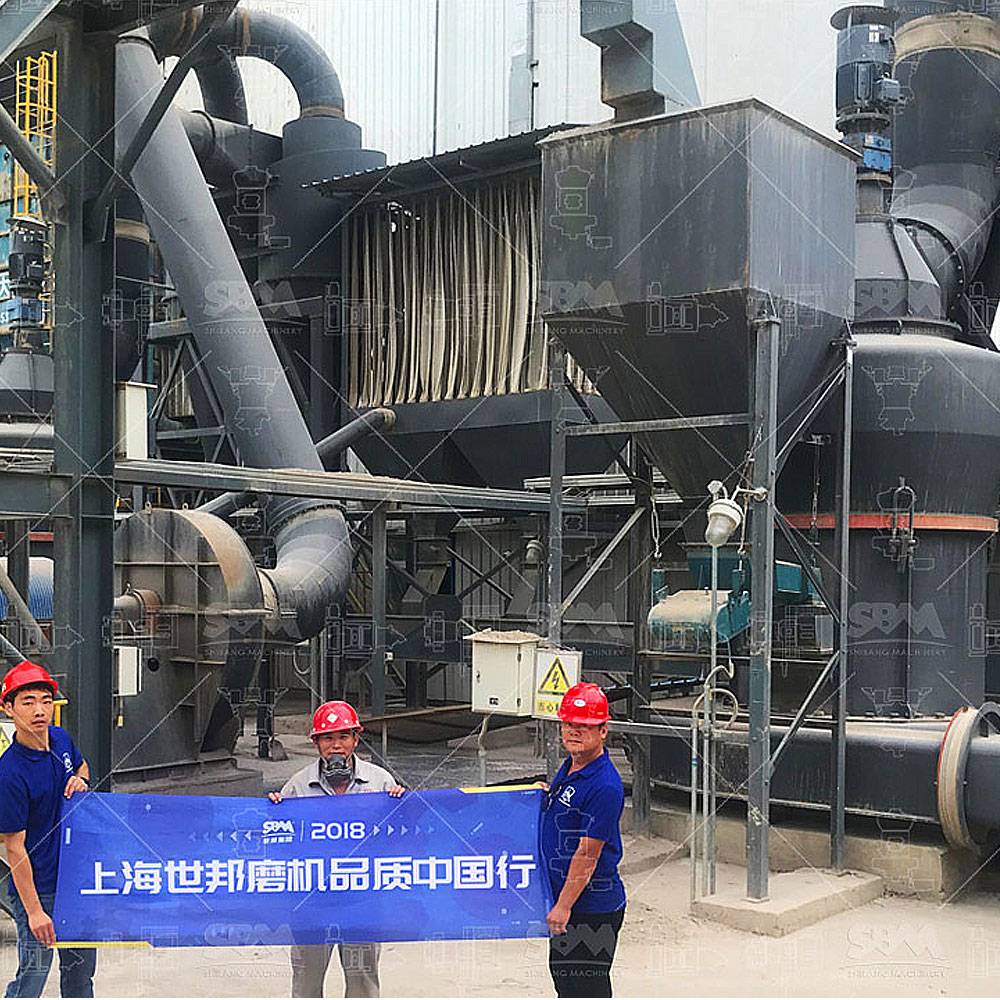
Addressing the Top 5 Pain Points in Raymond Mill Operation for GCC
Based on interactions with over 9,500 customers globally, we have identified the most persistent operational pain points and how modern Raymond mill design directly addresses them.
1. High Energy Consumption & Inefficient Transmission
The Pain: Traditional mills often use a gearbox with a secondary pinion or a belt drive, which suffers from significant energy loss. This directly translates to higher electricity bills per ton of product.
The Solution: Integra Transmission. The MTW Raymond mill utilizes a cone gear whole transmission. This system couples the motor directly to the grinding shaft via a bevel gear, and the entire set is housed within the gearbox. This eliminates the energy losses associated with belts, pulleys, and secondary gear trains. The result is a more efficient power transfer, directly reducing the kWh per ton of calcium carbonate processed. In real-world applications, this can represent a 10-20% reduction in specific power consumption compared to older mill designs.
2. Excessive Wear and Rapid Spare Part Degradation
The Pain: Grinding rollers and rings are the heart of the mill, and they wear out. In traditional designs, the shovel blade that feeds material to the grinding zone also wears quickly, requiring frequent replacement. The downtime and cost of these wear parts are major operational headaches.
The Solution: Wear-Proof Design and Material Science. Modern Raymond mills incorporate several key advancements:
- Combined-type shovel blade: Instead of replacing the entire shovel, only the blade tip needs to be swapped, which is a quicker and cheaper maintenance operation.
- Curved shovel blade design: This simple change alters the feeding angle, throwing material more effectively against the grinding ring. This reduces slippage and uneven wear, extending the life of both the roller and the ring.
- High-quality metallurgy: Rollers and rings are now made from high-chrome alloy steels that are significantly more durable than materials used in older machines. This can extend the service life of these critical parts by several times.
3. Reduced Airflow Efficiency and Material Transport Issues
The Pain: The internal air duct in a conventional mill is often straight or poorly designed. This can cause turbulence and energy loss as the air stream is used to lift the ground powder to the classifier. This reduces throughput and can also lead to material build-up.
The Solution: Arc Air Duct Design. The MTW series features an arc-shaped air duct. This design minimizes changes in airflow direction, reducing pressure loss and ensuring a smooth, efficient flow of air and material. Additionally, the high-strength guard plates within the duct protect the vulnerable surfaces from wear, ensuring long-term, stable airflow without premature structural failure. The result is a higher capacity for material transport and more consistent classifier feed pressure, leading to a more uniform product fineness.
4. Vibration, Instability, and Mechanical Failure
The Pain: Mill vibration is a killer of productivity. It often stems from uneven material feed, but can also be exacerbated by an imbalanced grinding mechanism or a weak internal structure. Vibrations lead to premature wear of bearings and seals, and in severe cases, catastrophic failure.
The Solution: Reinforced Volute and Stable Structure. The volute design in modern Raymond mills isn't just about air flow; it's also about structural integrity. The volute casing acts as a sturdy, reinforced shell that contains the grinding forces more effectively. This structural rigidity minimizes vibration, ensuring that the mill operates smoothly even when processing harder calcium carbonate grades. This stability is crucial for maintaining consistent product quality and maximizing the lifespan of the mill's internal components.
5. Environmental Compliance and Dust Leakage
The Pain: Older milling systems are prone to dust leakage from flanges, pipes, and the mill housing itself. This not only creates a hazardous and dirty work environment but also fails to meet modern emission standards, putting operators at risk of penalties and impacting their social license to operate.
The Solution: Negative Pressure System & Sealed Operation. The entire milling circuit should operate under negative pressure, meaning the internal air pressure is slightly lower than atmospheric. This ensures that any minor leaks only pull air in, not push dusty air out. Modern Raymond mills are designed with robust, well-sealed flanges and access doors. Combined with a high-efficiency pulse jet dust collector, the system ensures that the air leaving the plant meets (if not exceeds) strict environmental standards. The investment in a dust-free environment is an investment in employee health, community relations, and uninterrupted operation.
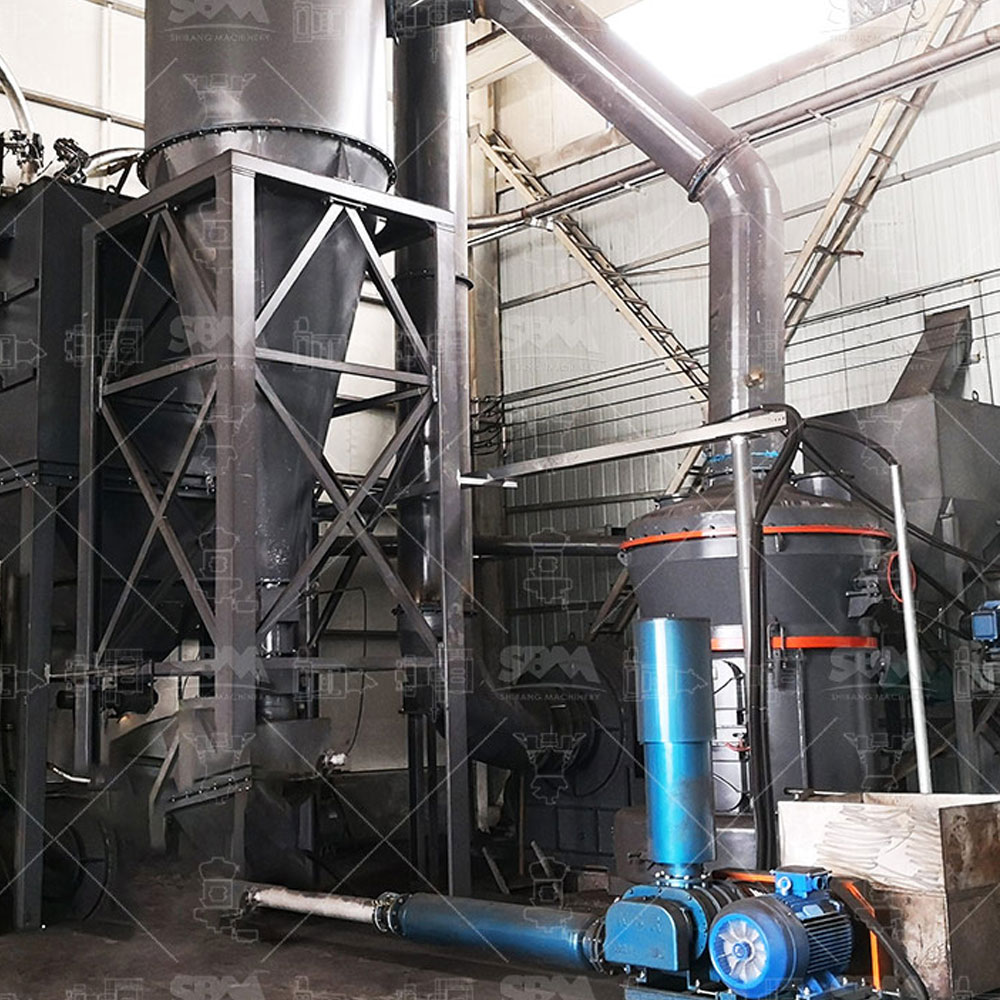
Beyond the Mill: The Importance of a Total Solution
Choosing the right Raymond mill is only the first step. The overall plant layout, from the feeding system to the dust collection and conveying system, must be optimized to achieve maximum efficiency. A turnkey solution provider, with experience across the entire mineral processing workflow, can offer a complete grinding system tailored to specific calcium carbonate feed stocks (soft chalk vs. hard marble), desired fineness, and capacity requirements. Key components to consider in a complete system include:
- Feeder: A vibrating feeder ensures a constant and uniform supply of raw material into the mill, which is critical for maintaining a stable grinding load and consistent product fineness.
- Baghouse Dust Collector: This is the heart of the environmental protection system. A well-designed dust collector not only cleans the air but also recovers valuable fine powder that may be a saleable product.
- Blower & Airflow Control: The blower provides the necessary air flow for material transport and classification. An efficient variable-frequency drive (VFD) on the blower allows for precise control of airflow, optimizing the system for different product target sizes and reducing energy consumption.
- Classifier: While the Raymond mill has an integral classifier, some applications may benefit from an external dynamic classifier for the production of fine (400 mesh) products with a narrow particle size distribution.
Raymond mills have been a reliable workhorse for calcium carbonate processing, but the technology is not static. Modern machines like the MTW European Trapezium Mill address the most critical shortcomings of traditional designs—namely, energy efficiency, wear life, and air flow dynamics. When evaluating new equipment, don't just focus on the initial price of the mill. Calculate the Total Cost of Ownership (TCO), factoring in energy consumption, spare parts loss, maintenance labor, and downtime. A mill with a slightly higher upfront price but significantly lower operating costs will deliver a far better return on investment over its lifecycle. By investing in a modern Raymond mill and partnering with a leading solution provider, you are not just buying a machine—you are investing in the reliability, efficiency, and long-term competitiveness of your calcium carbonate business.
FAQ: Addressing Common Client Concerns for Raymond Mill in GCC
- Q: My calcium carbonate feed is very hard. Will a Raymond mill be able to handle it without excessive wear? A: While a Raymond mill is not the primary choice for extremely hard aggregates, it is fully capable of grinding common calcium carbonate ores like limestone and marble. To mitigate wear on these tougher feeds, we recommend a mill equipped with the high-chrome wear parts and the combined-type shovel design mentioned above. Additionally, proper feed size control (typically within 50mm) is essential to prevent stress on the grinding mechanism. In many instances, a preliminary jaw crusher or hammer crusher should be placed before the mill to ensure a consistent, manageable input size, extending the life of wearing parts.
- Q: I need a consistent D97 of 400 mesh. Can I achieve this with a Raymond mill and what is the classifying efficiency? A: Yes, a modern Raymond mill (like the MTW series) can produce up to 400 mesh (38 microns). However, achieving a sharp cut with a narrow particle size distribution is challenging at this fineness due to the design of the standard centrifugal classifier. A better practice is to operate the mill at a slightly coarser setting (e.g., 325 mesh) and then use an external dynamic classifier (or an ultrafine grinding step) to separate the final product. The internal classifier is efficient for standard ranges (200-325 mesh). For a truly consistent 400-mesh product, we often recommend a combined system or a switch to an ultrafine mill from our portfolio for your specific application.
- Q: I've heard old Raymond mills are limited compared to vertical mills. Why shouldn't I just buy a vertical roller mill for my calcium carbonate? A: That's an excellent question. The choice depends entirely on your product specification and plant scale. For producing standard GCC in the 100-400 mesh range with capacities from around 5 to 40 tph, a Raymond mill offers a significantly lower initial capital investment and simpler maintenance requirement compared to a large vertical roller mill. The technology is mature and widely understood by operators. However, if you need more than 40 tph of a fine product or need integrated drying, a Vertical Roller Mill (VRM) is indeed the superior choice due to its larger capacity, lower energy consumption (30-40% less than ball mill systems, which is also lower than some Raymond setups), and its ability to dry material in-circuit. We provide both, so the best choice isn't based on brand loyalty, but on your operational needs. We often advise customers that if you need above 40 tph, a VRM is a more cost-effective long-term investment.
- Q: What is a realistic timeline for a scheduled maintenance stop on an MTW Raymond Mill compared to an older machine? A: This is where the design really helps you. With the combined-type shovel, you can swap the blade in a few hours instead of a full day. The use of a cone gear transmission eliminates regular belt tensioning and replacement. And because the air duct has guard plates, you don't have to schedule repairs for worn duct walls. In general, maintenance downtime is reduced by approximately 30%-40% when switching from a traditional Raymond mill to an MTW series. The scheduled maintenance intervals for the main gearbox are extended, and the lubrication system with an internal oil pump ensures consistent lubrication, reducing the wear on gears and bearings.
- Q: How do you handle the calcium carbonate fines? My current setup gets clogged with sticky, moist powder that stops the bag filter. A: Moisture is a killer for dry powder processing. Ensure your feed material has a surface moisture content of less than 1-2%. If your feed is slightly moist, we recommend pre-drying in a rotary dryer or using a mill with integral drying capability, especially in humid climates. For the sticky fines issue, the problem is often in the air velocity and filter selection. We optimize the system's negative pressure and use a pulsating jet baghouse with anti-static and PTFE membrane filter bags to handle the fine, slightly hygroscopic GCC. We also ensure the air sweeping velocity in the mill is high enough to prevent particle agglomeration on the duct walls. Our process engineers will analyze the specific levels of moisture and the geological type of your calcium carbonate to design a system that ensures a clean and efficient flow from mill to storage silo.


