

Specific applications of ultrafine barium sulfate in coatings
Ultrafine barium sulfate (BaSO₄) has become a cornerstone functional filler in the modern coatings industry, prized for its exceptional brightness, chemical inertness, and particle size distribution control. When processed to D97 ≤ 5 μm (and even finer), it does far more than extend TiO₂ — it actively enhances film transparency, gloss retention, weatherability, and scratch resistance. The coating formulator's real challenge is not whether to use ultrafine barium sulfate, but how to achieve a consistent, contamination-free grind at industrial scale. This article explores specific application scenarios — from automotive OEM clearcoats to matte architectural paints and high-barrier industrial primers — and connects each use case to the grinding equipment that makes high-performance barium sulfate possible. Drawing on nearly three decades of powder processing expertise, we will discuss how mills like the SCM ultrafine grinding mill and LUM vertical roller mill deliver the fineness, narrow particle distribution, and energy efficiency that serious coating producers demand, along with practical answers to the most common operational pain points.
Let's begin with the problem every coatings lab faces: maintaining batch-to-batch gloss control. Standard barium sulfate, even at 1250 mesh, leaves a perceptible haze in high-gloss systems. The solution lies in reducing the top-cut particle size. When barium sulfate is ground to D97 ≤ 5 μm (approximately 2500 mesh), it becomes optically transparent in the binder matrix — it scatters less light than coarser particles because the particle diameter is well below the wavelength of visible light. This is why premium automotive basecoats and clearcoats routinely incorporate ultrafine, precipitated or ground barium sulfate at 5–15% by weight. The primary grinding challenge is the abrasive nature of the mineral (Mohs hardness 3–3.5) and the need to avoid iron contamination, which would cause yellowing in white and light-tinted coatings.
Let's examine the specific mill configurations that solve this. The SCM series ultrafine grinding mill, with its heavy-duty rotor design and special wear-resistant roller and ring materials, is engineered for exactly this application. Its vertical turbine powder classifier provides an extremely sharp cut, meaning no coarse particle spillover — a critical factor when you need D97 under 5 μm without resorting to multiple passes. In contrast, a jet mill can also achieve this fineness but typically consumes 30% more energy. For a 15–20 tons per hour plant producing ultrafine barium sulfate for high-gloss industrial coatings, the SCM's energy advantage directly improves the profitability of the entire grinding circuit.
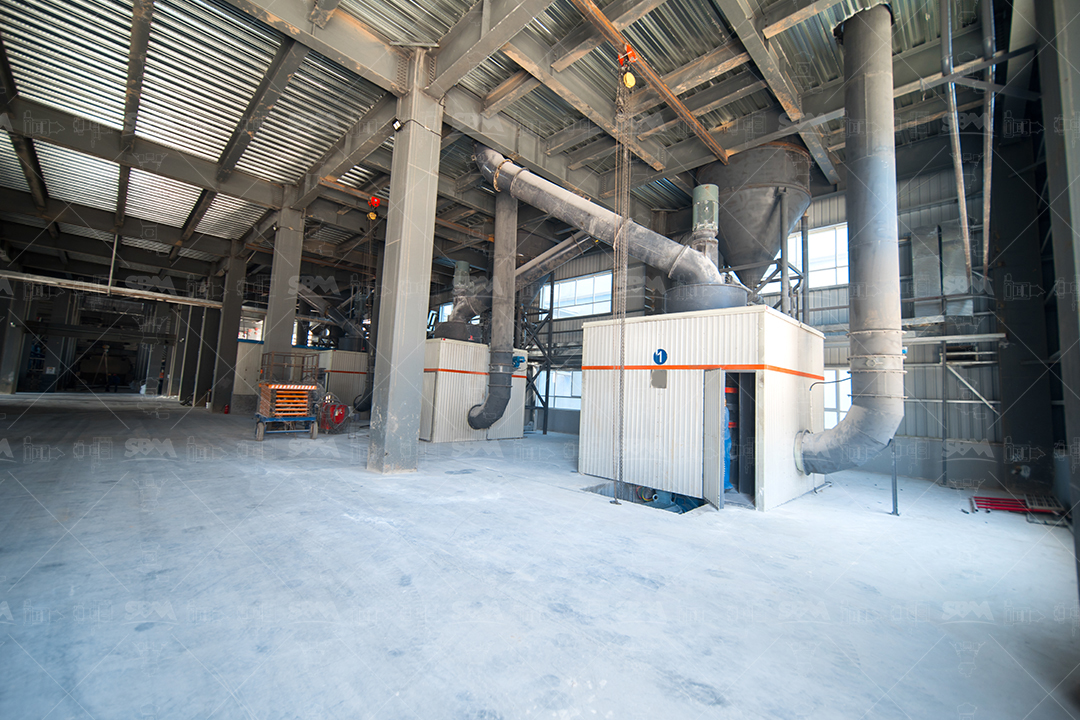
Now, consider matte and satin architectural paints. The twist here is that formulators often want controlled surface roughness to create matting. They deliberately add a coarser fraction (say, D90 around 10–15 μm) to reduce gloss. However, using only coarse particles creates high oil absorption and weak film integrity. The smart approach is a bimodal distribution: fine ground BaSO₄ below 2 μm for film reinforcement and a separate, carefully classified coarse fraction for matting. The MTW European trapezium mill is ideal for producing this coarser fraction (30–400 mesh range) reliably. Its unique curved shovel blades maintain a stable feeding angle, which is crucial when processing abrasive barium sulfate — it prolongs the life of the grinding ring and roller, lowering the wear cost per ton. One coatings producer in Southeast Asia recently reported a 40% reduction in downtime after switching their matting agent production from a traditional Raymond mill to an MTW mill, thanks to the combined-type shovel blade design that only requires replacing the blade tip, not the entire holder.
Another specialized use is in anti-corrosive primers for marine and industrial maintenance coatings. Ultrafine barium sulfate acts as an excellent barrier pigment — its platy, non-reactive nature reduces water vapor permeability. But the real secret is purity and surface area. To achieve a dense, film-forming barrier, the BaSO₄ needs to be ground to a high surface area (BET > 3 m²/g), which is usually achieved at D97 ≤ 3 μm. This is a difficult spec because it sits between standard ultrafine (D97 5 μm) and nano (D50 <100 nm). The LUM ultrafine vertical mill, with its multi-rotor classifier and adjustable rotor speed, can hit these intermediate cuts with a narrow distribution (±0.5 μm). Its grinding roller technology, introduced from Taiwan, and German powder classification principles ensure that the material bed is consistently formed, reducing the risk of over-grinding and creating unwanted fines that increase viscosity in the final paint.
For high-volume coatings like industrial baking enamels or coil coatings, throughput matters more than ultimate fineness. Here, a two-stage grinding process often makes sense. First, a ball mill (our optimized version with reduced metal ball wear thanks to new alloy materials) reduces the crude barium sulfate from 50 mm feed to about 0.15 mm. Then the SCM or LUM takes over for final micronization. This staged approach lowers total energy consumption by about 25% compared to single-stage fine grinding. It also gives you flexibility: if a certain plant run doesn't need ultra-fine powder, you can bypass the ultrafine stage and use the ball mill output directly for low-gloss primers. The LM vertical roller mill, with its capacity range of 3–400 tph, is the workhorse for this primary stage — its integration of drying and grinding means even slightly moist barite (up to 5% surface moisture) can be processed without a separate dryer, a common pain point in humid coastal regions.
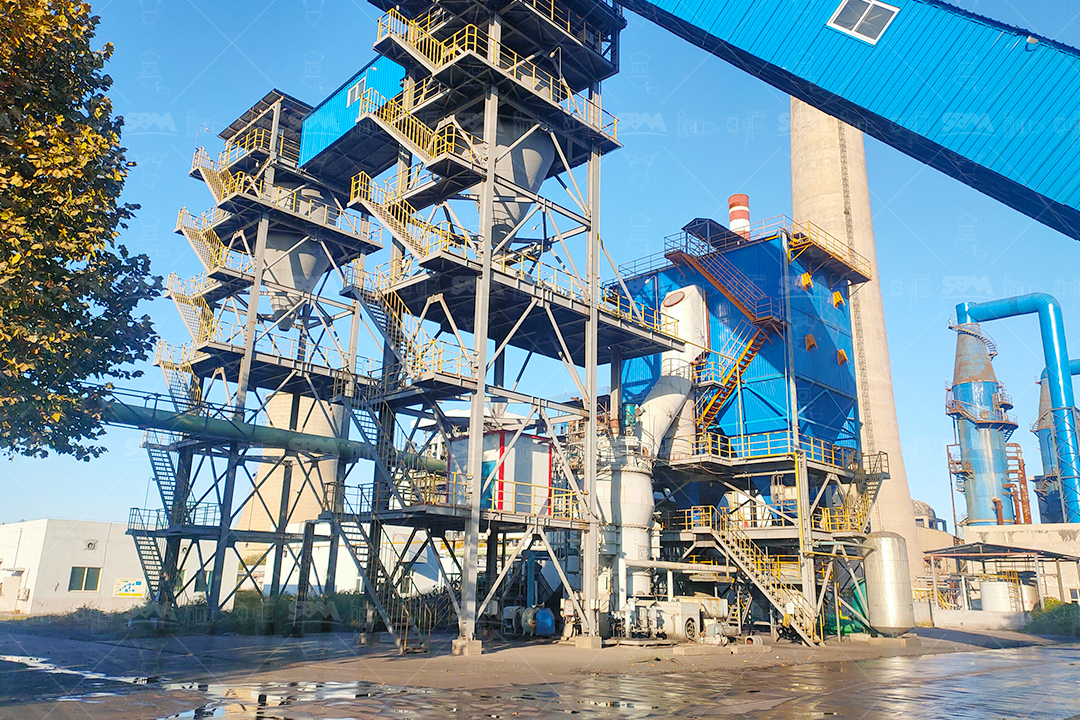
Let's drill into the operational specifics that determine coating performance. Viscosity control is one. When you grind barium sulfate finer, the specific surface area increases, which raises the oil absorption number. This can thicken the paint and require more dispersant. To avoid this, the grinding equipment must produce particles with a narrow distribution and minimum irregular agglomerates. Our SCM mill, characterized by its volute and high-efficiency turbine classifier, yields a more spherical particle shape compared to a jet mill, which tends to create sharp, cracked surfaces. These rounded particles pack more efficiently and need less binder to wet out, meaning formulators can increase filler loading without sacrificing flow and leveling.
Another pain point is color consistency. In applications like white topcoats for appliances or powder coatings, even 0.5% iron contamination from grinding media can cause a visible gray undertone. That's why our LUM vertical mill uses specialized wear plates and rollers that avoid metal-to-metal contact, and the SCM mill's grinding chamber has no bearing screws that could rub and shed steel. For the most critical uses, we can supply the mill grinding path with ceramic-coated liners — this is a custom option we have delivered for several titanium dioxide manufacturers who also process barium sulfate on the same line.
From an energy management perspective, the electrical consumption for producing a ton of fine BaSO₄ (D97 = 5 μm) is typically 80–120 kWh. An older air-swept pendulum mill can consume twice that. The adoption of an SCM mill, which has a capacity twice that of a jet mill at 30% lower energy, is a clear winner for coating fillers. Investors are often surprised that the total cost of ownership is lower despite higher upfront cost because the classifier's frequency conversion control allows them to switch between 800 mesh and 2500 mesh within minutes — so the same machine can serve both the exterior primer line (which needs 10 μm) and the high-gloss enamel line (which needs 3 μm). No other equipment type offers this level of flexibility.
Now let's talk about how you validate that the mill is producing the right powder for your coating. The classic tests — Hegman gauge for dispersion, gloss meter for finish, and ISO 787 for oil absorption — are all downstream. The upstream indicator is the particle size distribution curve. We recommend that coating manufacturers install an inline laser diffraction analyzer into the mill's pneumatic conveying line. This gives real-time feedback to the PLC, which adjusts the classifier speed. Our LUM mill already includes this in its DCS automatic control system. It automatically prevents the production of low-grade material that would otherwise be rejected by your quality control lab.
To summarize the application map:
1) Automotive & industrial topcoats (high gloss) – use SCM or LUM to achieve D97 ≤ 5 μm, load 10–15%, improves gloss 20% compared to unground filler.
2) Matte wall paints – dual-system with MTW for coarse fraction (10 μm) and SCM for fine fraction (2 μm), allows precise gloss reduction with low oil absorption.
3) Primers and anti-corrosion – LUM with D97 ≤ 3 μm ensures barrier film density; use ceramic liners if extreme color purity needed.
4) High-volume industrial baking – ball mill primary + classifier secondary (our ball mill has optimized wear materials) provides stable 15–30 tph output at 45 μm D50.
5) Waterborne systems – any of the above, but ensure the mill's internal surfaces are easy to clean to avoid cross-contamination when switching between colors.
We have installed over 200 grinding lines globally specifically for barium sulfate and its sister minerals (barite, witherite). The feedback is consistent: the choice of grinding equipment is the single most important factor in securing coating quality. A mill that produces a broad distribution or overgrinds will cause your paint to have irregular gloss patches, high viscosity, or poor hiding power — problems that no amount of dispersant or formulation tweaking can fully correct.
For coating producers planning to build a new micronized BaSO₄ unit, we recommend starting with a pilot test on our SCM or LUM mill at our Shanghai facility. We will grind your actual feed stock, measure the PSD, and generate a full energy audit. You can then extrapolate the target capacity. We also provide a total solution from the primary crusher to the bag filler, including the mounting and commissioning.
As a closing thought, the world of coating fillers is moving towards finer particles, but not at the expense of economics. The smart producer will invest in a versatile system that can produce multiple fineness grades with the same base equipment. Our MTW and SCM mills, and the LUM vertical mill, are all designed to be modular such that you can upgrade the classifier or the grinding roller later. This future-proofs your investment.
Frequently Asked Questions
Q1: I currently grind barium sulfate to 1250 mesh, but my clearcoat still hazes. Do I need to invest in a jet mill or can a mechanical mill achieve D97 below 5 microns?
You don't need a jet mill. Our SCM series ultrafine mill can achieve D97 ≤ 5 μm with a throughput of 0.5–25 tph, and at 30% lower energy than a jet mill. The key is the frequency-conversion classifier that gives a sharp cut. We recommend you send us a 10-kg sample; we'll grind it to your target fineness and send the PSD curve for your evaluation.
Q2: My main issue is iron contamination — my white paint turns gray when using a common Raymond mill. How can I avoid that?
First, try our LUM vertical mill because the grinding roller does not touch the grinding table, there's no metal-to-metal friction. Second, we offer an optional ceramic lining for the grinding chamber and can use high-alumina grinding rollers. Another tip is to run the mill at lower pressure to reduce wear. Many white pigment manufacturers in our client list have used this approach and seen iron content below 50 ppm.
Q3: I need to produce both fine (D97 5 μm) and coarse (D97 20 μm) barium sulfate for my matte paints. Can one machine do both?
Absolutely. The SCM mill has a variable speed classifier. By reducing the rotor speed, you can increase the top-cut to roughly 20 μm, but we generally advise against combining the two in the same run. You can produce a 5-micron batch in the morning, then adjust the settings and produce a 20-micron batch in the afternoon. The whole changeover takes about 15 minutes with a PLC control system.
Q4: My BaSO₄ feed has about 3% surface moisture. Will this clog the ultrafine mill?
Not with the LUM vertical mill, which integrates drying, grinding, and separation. It can handle up to 10% moisture. With the SCM, you'd want to pre-dry to below 1% to avoid clogging because it's more of a ring-roller mill. If you want to save the cost of a separate dryer, the LUM is your better choice because it uses hot air from the blower for simultaneous drying.
Q5: What kind of maintenance schedule should I expect for an SCM mill processing barium sulfate 8,000 hours per year?
With our heavy-duty rotor design and special wear-resistant alloy for roller and ring, expect to replace the grinding ring every 4,000–5,000 hours and the roller shell every 6,000 hours. The classifier blades, made of hardened steel, last about 8,000 hours. The key is the combined-type shovel blade — you only replace the blade tip, not the whole arm. This lowers the spare parts cost by about 30% compared to conventional pendulum mills. We can supply a maintenance kit on a scheduled basis so you have parts on hand when you need them.


