

Differences between crystal powder and ultrafine barium sulfate
When comparing crystal powder and ultrafine barium sulfate, the fundamental distinction lies not in their chemical identity—both are BaSO₄—but in their physical morphology, particle size distribution, surface treatment, and the milling technology required to achieve each form. Crystal powder typically refers to a coarser, more angular product with a broader size range, often produced through simple jaw crushing and conventional grinding. Ultrafine barium sulfate, by contrast, demands advanced micronization to reach D97 ≤ 5–10 μm, resulting in a smooth, rounded particle profile that delivers superior gloss, dispersion, and impact strength in paints, plastics, and rubber. This article provides a technical deep-dive into these differences, highlights the role of grinding equipment such as SBM's MTW European Trapezium Mill, LM Vertical Roller Mill, SCM Ultrafine Mill, and LUM Ultrafine Vertical Mill, and addresses common operational pain points that processors face when transitioning from crystal powder to ultrafine grades.
1. Morphological and Physical Property Differences
The most obvious distinction between crystal powder and ultrafine barium sulfate is particle shape. Crystal powder, often produced by classifying natural barite ore after primary grinding, retains a crystalline, blocky, or needle-like structure. This angular morphology creates a higher oil absorption rate and lower packing density, which can be problematic in high-filler-loading applications such as powder coatings, where it may increase resin demand and reduce gloss. On the other hand, ultrafine barium sulfate, when ground to a fineness of 325–2500 mesh (or even up to 4000 mesh with specialized mills like SCM or LUM), develops a more spherical and smooth surface. This shape improves flowability, reduces internal friction, and enhances the optical properties of the end product—critical for automotive primers, topcoats, and masterbatch production.
Another key parameter is the specific surface area. Crystal powder typically has a lower specific surface area (around 0.5–1.5 m²/g), while ultrafine grades can exceed 5–10 m²/g. This increase in surface area directly influences the interaction with binders and additives. For example, in PVC applications, a high-surface-area ultrafine barium sulfate can act as a functional filler that improves dimensional stability and heat resistance. However, it also requires more effective surface treatment (e.g., with stearic acid) to prevent agglomeration and ensure wetting. Processors often underestimate this, leading to dispersion issues in high-speed mixers.
_1788452459226.jpg)
2. Purity and Whiteness Considerations
Purity (typically >97% BaSO₄) and whiteness (measured as brightness at 457 nm) are two factors where crystal powder and ultrafine barium sulfate can diverge significantly, even from the same ore source. Crystal powder, because it relies on sieving rather than air classification, often retains trace impurities such as silica, iron oxide, or organic matter. These impurities not only reduce the whiteness (often below 90%) but also cause abrasion in downstream processing equipment. Ultrafine barium sulfate, manufactured through energy-intensive grinding and classification, tends to be more homogenous, with whiteness values above 93–95% when using high-purity barite ore. The closed-loop systems of SBM's LM or LUM vertical mills include efficient dust collection, which prevents contamination from ambient particles—a critical factor for meeting ISO 3262 standards in the paper and paint industries.
For customers who use barium sulfate as a filler in papermaking or as an X-ray opacifier in medical plastics, even minor purity differences can cause rejection. Crystal powder's broader impurity profile makes it unsuitable for those high-end uses. In contrast, ultrafine barium sulfate, especially when ground in a mill with ceramic-lined internal parts (e.g., SCM ultrafine mill with special wear-resistant materials), maintains a consistent chemical composition, ensuring batch-to-batch reliability.
3. Grinding Technology and Equipment Impact
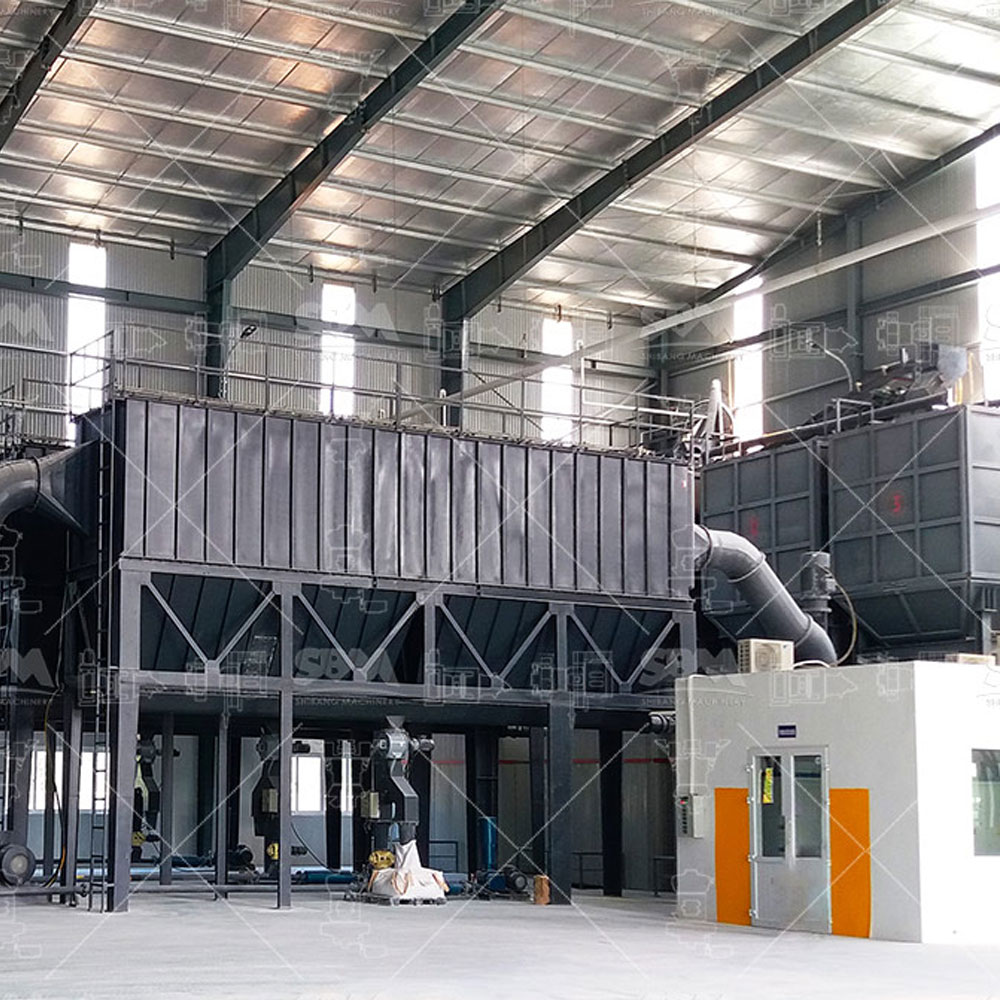
The production route is where the 'crystal' vs. 'ultrafine' difference becomes most pronounced. Crystal powder, often in the 100–400 mesh range (with a d50 around 50–150 μm), can be economically ground using SBM's MTW European Trapezium Mill. The MTW mill, with its cone gear integrated transmission and arc air duct, provides a stable output of 3–40 TPH at these coarser sizes. The design of the curved shovel blades reduces wear by 30% compared to traditional Raymond mills, making it ideal for continuous production of crystal barium sulfate.
However, to reach ultrafine sizes (d97 < 10 μm), the physics of grinding changes. High-energy impact mills like jet mills are sometimes used, but they consume 3–4 times more energy per ton compared to vertical roller mills. SBM's solution is the LUM Ultrafine Vertical Mill, which combines Germany's powder classifier technology and Taiwan's grinding roller design. It produces a finished fineness from 325 to 4000 mesh and maintains a capacity of 10–70 TPH. Unlike a jet mill, LUM uses a grinding roller to compress the material bed, which is more efficient for brittle minerals like barite. The classifier rotor speed is adjustable via frequency conversion, allowing the operator to precisely set the top-cut size to avoid over-grinding and 'coarse particle' bleeding, a common pain point with older classifiers.
A comparative example: For a client producing crystal powder for the radiation shielding industry, an MTW mill with a 30-mesh output might suffice. For the same client who wants to expand into automotive coatings with a filler of D97 ≤ 6 μm, switching to an SCM ultrafine mill (capacity 0.5–25 TPH) allows one-step processing, eliminating the need for a separate classifying step.
4. Dispersion and Surface Treatment Effects
One of the most frequent complaints from compounding plants is poor dispersion of ultrafine barium sulfate in organic media. This is rarely the fault of the powder itself but rather a lack of understanding about its surface energy. Crystal powder, being larger and less reactive, can be easily wetted by simple stirring. Ultrafine particles, with their high surface area, tend to agglomerate due to van der Waals forces. This is where the milling process must include a system for in-situ coating. In many SBM installations, a small amount (1–3%) of stearic acid or a titanate coupling agent is injected into the grinding zone of the LUM or SCM mill. The high shear forces facilitate the coating reaction without the need for a separate heating step.
Furthermore, the choice between crystal and ultrafine influences the rheology of the final slurry. In a typical paint formulation, substituting 30% of the crystal pigment with ultrafine barium sulfate can reduce gloss by 5–10 units if not properly dispersed. Conversely, a well-dispersed ultrafine grade can actually enhance gloss and hide power due to better light scattering. Our technical support team often recommends a laser-diffraction particle size analysis (Cilas or Malvern) before scaling up. Crystal powder can tolerate a broader size distribution (span of 2.0 or higher), whereas ultrafine grades should have a span below 1.5 to prevent viscosity spikes.
5. Energy Consumption and Production Cost Dynamics
Energy efficiency is a hidden differentiator. Crystal powder production using MTW mills typically consumes 20–30 kWh per ton. Ultrafine production in a jet mill can easily double that to 60–80 kWh/ton. In contrast, SBM's LUM ultrafine vertical mill consumes only 40–50 kWh/ton for d97 = 8 μm. This is achieved due to the multi-rotor classifier's efficient separation, which prevents fine particles from recirculating (and wasting energy). The integrated drying capability within the LM vertical mill also allows the use of raw barite with up to 15% moisture, avoiding the cost of a separate rotary dryer. In a 10 TPH ultrafine barium sulfate plant, this saves approximately 8% of overall operating cost compared to a traditional ball mill plus classifier system.
For customers facing a budget crunch, the temptation to use crystal powder for an application that truly needs ultrafine (e.g., as a filler for anti-slip floor coverings) often results in quality claims and batch rejection. The solution is not necessarily to invest immediately in a high-end mill. Instead, SBM can provide a retrofittable upgrade kit for existing MTW mills to improve classification efficiency. But for a long-term strategy, the capital expenditure on an LUM mill typically pays back within 18–24 months through reduced energy and higher product selling price.
6. Application-Specific Selection Criteria
To make the decision easier, we provide a simple heuristic: if your end product requires BaSO₄ as an extender where opacity and particle packing are secondary (e.g., in cheap cement products, bitumen roofing, or as a weighting agent in drilling mud), crystal powder is the cost-effective choice. If your product is a high-gloss paint, a battery separator, or an engineering plastic where the filler's optical clarity (i.e., particle size being less than half the wavelength of light) and uniform distribution are crucial, then ultrafine barium sulfate is non-negotiable.
The industry benchmark shows a growing regulatory and consumer demand for lead-free, low-VOC products. High-purity ultrafine barium sulfate covers these requirements without compromising on mechanical properties. For example, in a rigid PVC profile, using 10 wt% of ultrafine barium sulfate (d50 = 0.7 μm) improves the surface finish similar to a 20% loading of crystal powder. This reduces material cost and also lowers the carbon footprint—a selling point for eco-conscious brands.
7. Operational Pain Points and Mitigation Strategies
We have observed a recurring set of challenges among our clients who transition from crystal to ultrafine grades. These include:
a) Coarse particle contamination – When a mill's classifier blades wear unevenly, some coarse particles (above 20 μm) bypass the rotor and contaminate the 'ultrafine' product. This is why SBM's classifiers use a 'multi-rotor' design with a dedicated rotor for each output channel, ensuring that the cut size is sharp. We recommend replacing wear parts at every 2000 operating hours as a preventive measure.
b) Moisture regain – Ultrafine powder (with a specific area > 5 m²/g) absorbs moisture from air quickly. This leads to caking in storage silos. A simple solution is to use a nitrogen-purged silo (if production budget allows) or to add a dry-air breather valve. Our grinding systems often include a downstream dehumidifier to maintain powder temperature 10°C above ambient dew point.
c) Fluctuation in bulk density – Crystal powder has a fixed bulk density based on its packing fraction (typically 0.9–1.1 g/cm³). Ultrafine powder, depending on the 'as-ground' agglomeration, can vary from 0.4 to 0.7 g/cm³. This inconsistency is a headache for ingredient feeders. In such cases, we advise a post-grinding deagglomeration step using a high-speed rotor to regularize the flow properties.
d) pH instability in aqueous systems – Residual calcium oxide or iron oxides in the ore can cause pH to drift upward (above 9) in a slurry, which destabilizes certain acrylic binders. For ultrafine grades, SBM's milling process uses an air classifier that removes these heavier impurity minerals (as tailings), effectively acting as a beneficiation step—something that ball mills fail to achieve.
SBM Machinery, with over 180 countries of experience and more than 9500 customer feedback-based improvements in mills, offers a free material testing service. We can grind your barite ore sample in our Shanghai R&D center, provide a complete particle size distribution analysis, and recommend the appropriate mill configuration. Our range includes MTW (for crystal powder up to 400 mesh), LM vertical roller mills (for capacities up to 400 TPH with rough classification), SCM ultrafine mill (for high purity and fine finish), and LUM (for high capacity, low energy ultrafine output). Please fill out the inquiry form on our website to arrange a consultation.
Frequently Asked Questions (FAQ)
Q1: Can I use the same mill to produce crystal powder and ultrafine barium sulfate, or do I need separate equipment?
A1: Technically, a single LUM ultrafine vertical mill can adjust its classifier speed and grinding pressure to produce a wider range of outputs (from 200 mesh to 4000 mesh). However, the frequent changing of operating parameters to alternatiely switch between crystal (coarse) and ultrafine (fine) shortens the transitional time and may cause one grade to be contaminated with the other. For economic and quality reasons, it is recommended to run two parallel mills: an MTW for crystal powder (stable 24/7) and an SCM/LUM specifically for ultrafine. Our engineers can design a split system.
Q2: Why does my ultrafine barium sulfate achieve a low whiteness (below 90%) even though the grinding is fine?
A2: Whiteness loss in fine grinding is usually due to (i) iron contamination from worn grinding media; (ii) over-grinding causing particle re-agglomeration which enhances yellowness; or (iii) incomplete removal of source impurities. SCM ultrafine mills use ceramic-lined pulleys and non-ferrous alloy rings to minimize iron pick-up. Additionally, the arc air duct design promotes a stronger air flow that takes away the lighter, purer particles while rejecting the heavier dirty tailings. If your current mill uses carbon steel balls, consider replacing with high alumina media or switch to a vertical roller mill.
Q3: In a stone paper masterbatch, replacing all crystal powder with ultrafine barium sulfate made the material too brittle. Why?
A3: Ultra-fine particles have a higher tendency to bond to each other via weak van der Waals forces, forming a cohesive network that reduces elongation at break. In stone paper (CaCO₃/PE blends), you often need a bimodal particle size distribution: 50% at D50 = 2 μm and 50% at D50 = 0.7 μm. You cannot achieve that with a single-stage grinding. You should either blend two different SBM products (one from an MTW mill, one from an SCM) or use a post-blending mechanical mixer. Furthermore, the surface of the barium sulfate must be coated with a fatty acid (e.g., stearic at 1.5 wt%) to chemically bond with PE. Untreated BaSO₄ will always cause brittleness.
Q4: How do I measure real-time fineness when the mill is producing ultrafine barium sulfate?
A4: While a Malvern Mastersizer in the lab provides accurate D50 and D97, for on-line control we suggest installing a CGSE or Apex system that uses a light obscuration method. SBM integrates a sampling unit into the system that automatically dilutes the powder with isopropyl alcohol and measures particle size every 10 minutes. If this is too expensive, a simple method is to use a Hegman gauge (grindometer) for fast quality checks: a poor dispersion will show points at 50–80 μm. Note that a grindometer only works on slurry, not dry powder.
Q5: We produce crystal powder (400 mesh) at 2 TPH, but during the past month our capacity dropped by 25% with no visible wear. What could be the cause?
A5: A capacity drop without mechanical wear often indicates problems with raw material moisture (above 8% clogging the feeding screw) or a change in ore hardness (often due to increasing silica content). Even a 2% increase in silica dramatically impacts grindability. Check your ore's Modulus of Elasticity via a breakage test. Secondly, inspect the cyclone discharge for air lock. Under negative pressure, air may leak through a misaligned flange or a deflated elastic sleeve, reducing the collection efficiency. Our service team suggests using a simple pressure drop gauge across the duct; it should be stable at +50 mmHg. If it oscillates, there is a partial blockage. Additionally, ensure your feeder is calibrated to correlate with the motor amperage. We have seen cases where the vibration feeder belt slipped due to fine dust, thereby feeding 25% less material without any alarm.


