

Can vertical roller mill process calcite?
Published on February 14, 2025
Yes, vertical roller mill (VRM) can absolutely process calcite, and doing so offers distinct advantages in efficiency, product quality, and operational cost—particularly for medium-to-fine powder production. However, whether a VRM is the right choice depends on your target fineness, throughput, moisture content, and specific application (e.g., GCC for paper, plastics, paint, or desulfurization). Drawing on SBM's decades of field experience across 180+ countries and our LM Series Vertical Roller Mill platform, this article explains the technical feasibility, performance parameters, common challenges, and practical solutions when grinding calcite with a VRM.
Calcite, a naturally occurring calcium carbonate mineral (CaCO3), is one of the most widely used non-metallic minerals in modern industry—from construction aggregates to high-value fine powders for paper coating, plastics, rubber, adhesives, and environmental applications. Traditionally, ball mills and Raymond mills have been the go-to equipment for calcite grinding. But producers increasingly ask: can the energy-efficient vertical roller mill handle this abrasive yet relatively soft mineral (Mohs hardness 3) and deliver the fineness and consistency their downstream processes demand?
This question is not trivial. Many operators have been burned by poorly configured VRM systems—whether from improper roller pressure, moisture issues, or classifier inefficiency—leading to high vibration, rapid wear, or poor particle size distribution. At SBM, we have addressed these issues through our LM Vertical Roller Mill's integrated design, which combines drying, grinding, classification, and conveying. Over the years, we have delivered complete calcite grinding solutions from 30 to 400 mesh (for general GCC) and, when paired with our LUM Ultrafine Vertical Mill, up to 2500 mesh or D97≤5μm.
In this in-depth guide, I will walk you through the technical rationale, practical configuration, and operational pointers for using vertical roller mills on calcite—based on the actual features of our LM series (and complementary SCM Ultrafine or MTW European trapezium options). We will also address common pain points such as excessive vibration, high wear on grinding elements, and inconsistent fineness, so you can make an informed purchasing or operational decision.
Why Calcite Grinding with VRM Makes Technical Sense
Calcite is not a “hard” mineral like quartz or granite. Its Mohs hardness of 3 means it is relatively easy to pulverize. Yet its cleavage properties cause it to break into play or acicular particles if grinding pressure is misaligned, which can harm the particle shape required for high-grade applications like paper coating or masterbatch. Vertical roller mills, by design, use a shearing and compression action between the grinding roller and the rotating table. Because the roller never directly contacts the table (a material bed forms between them), the grinding action is gentler than ball milling, preserving a more regular particle shape—cubic or sub-angular rather than flat—which many calcite processors appreciate.
Our LM series VRM, with an input size up to 50mm and output fineness from 30–400 mesh, is a proven workhorse in calcite processing. It integrates several features that specifically benefit calcite:
- Combined drying and grinding – If your calcite has residual moisture (up to 4–5%), the hot air inside the mill evaporates it while grinding, preventing clogging issues that plague other systems.
- Cone gear whole transmission – This reduces energy loss and increases the efficiency of power transfer, which translates directly to lower kWh per ton of calcite powder.
- Arc air duct design – Ensures stable airflow, which is critical for efficient pneumatic conveying and classification of fine calcite particles.
- Adjustable classifier speed – The dynamic rotary classifier allows you to shift fineness within a certain range without stopping production, giving you flexibility for different customer orders (e.g., 200 mesh for agriculture, 400 mesh for plastics).
Is Calcite Too Abrasive for VRM?
One concern that persists in the industry is abrasion. Calcite contains trace impurities—often silica (SiO2) or dolomite—that can be more abrasive than pure CaCO3. However, calcite is still on the softer side, typically causing less wear per ton than, say, feldspar or quartz. Our design reacts to that with a few essential safeguards:
- Quality materials for roller and table – We use high-chrome alloys with advanced hardening treatments. In comparative tests, our grinding elements show wear rates significantly lower than ordinary manganese steel. In a typical calcite plant running 24/7, the wear life can extend over 6,000 to 8,000 hours before you need to re-profile the tires.
- Wear-proof curved shovel (perching knife) design – Even if a stray rock enters the mill, the shovel design minimizes damage by diverting the material effectively. On the LM mill, the material feed is central, and the rollers handle it uniformly, preventing localized wear on the table's outer rim.
- Regular inspection and maintenance – For high-silica calcite (SiO2 > 3%), we recommend installing a magnetic separator and pre-screening to remove any metallic or oversize debris. Many of our customers also add a simple washing step if silica content is extremely high, but that is rarely required for pure calcite.
Performance Data: What Output Can You Expect?
Let's talk numbers. The LM vertical roller mill can process up to 400 TPH (in the largest models) for some materials, but for calcite with a typical target in the -200 mesh to -400 mesh range (74–38 micron), you would use a mid-sized mill, say the LM240K, producing around 30–80 TPH depending on your specific bulk density and grindability. However, if you need ultra-fine calcite—let’s say D97≤10μm for PVC or artificial stone—that is beyond the LM Mill's designed range. That is why we developed the LUM Ultrafine Vertical Mill, which incorporates Taiwan's grinding roller technology and Germany's multi-rotor classifier technology. The LUM mill can produce powders between 325 and 2500 mesh (or down to D97=5μm) with capacities from 10 to 70 TPH, specifically for calcite, marble, and limestone.
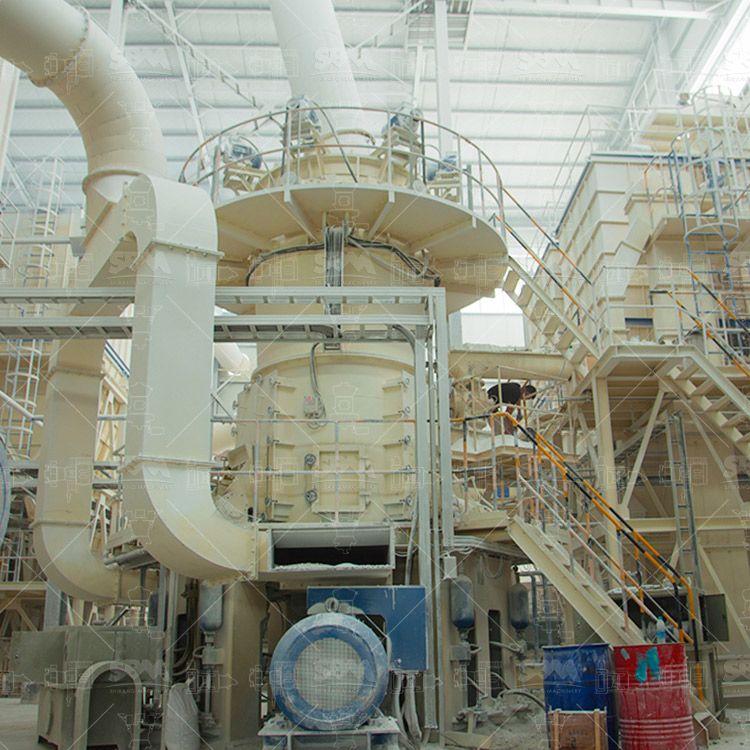
So if you are processing calcite for filler in papermaking (which typically requires 700–1200 mesh), a high-end solution like LUM is often more appropriate than a standard vertical mill or even an SCM ultrafine. But for GCC products with a target below 400 mesh, the LM series is the most economical choice because it consumes 30–40% less energy than a ball mill and requires less floor space.
Realistic Customer Pain Points & How SBM Solves Them
Over the years, calcite processors have shared recurring pain points with our team. Here are those challenges—and the ways our equipment's design addresses them:
- High energy costs – In many regions, electrical rates are climbing. Our LM's cone gear transmission and optimized grinding mechanism reduce power consumption compared to older mills. In one case study, a Mexican calcite producer switched from his ball mill to an LM vertical mill and saw a 32% reduction in kWh per ton at the same throughput and fineness. The integrated system eliminates the independent classifier and bucket elevator, which saves additional power.
- Product fineness inconsistency – Fineness drift can ruin a batch or cause off-spec products in downstream processes like sealant production. The LM's dynamic classifier is programmable and linked to the mill's PLC, which automatically adjusts the rotor speed to maintain the required d97. The classifier's air seal is also improved, avoiding any coarse powder bleed-through. Because it is a closed-loop system, you can set a target and walk away.
- Moisture content – Some calcite mines have high natural moisture (especially after wet washing). If the moisture is between 4% and 10%, a standard mill may clog, and operators waste time drying or pre-pulverizing. The LM mill, however, uses a hot-air generator integrated into the mill housing. As the calcite passes over the hot airstream (up to 300°C), surface moisture evaporates at the same time as grinding. You can even filter the final gas stream with a baghouse to recover fine powder, meeting stringent environmental emission limits.
- Maintenance frequency – Again, wear of grinding table and rollers are the mechanical heart of any VRM. When grinding calcite with 1% SiO2 and moisture content below 2%, some SBM customers run their mill for 8,000 hours without relining. Our monthly maintenance is mainly routine checks on hydraulic pressure and lubrication. Some customers also notice that our oil bath lubrication system pre-lubricates internal gears, reducing the risk of catastrophic failure—a common fear when vertical mill gearboxes overheat. The internal oil absorbing system in the LM units automatically reduces temperature and increases gear reliability.
- Vibration and unplanned shutdowns – Are you afraid of mill vibration causing a shutdown? A vertical mill only operates well if a stable material bed is maintained on the grinding table. Too much feed and it might shake; too little feed and vibration occurs. SBM provides an expert automatic control system that monitors material level, grinding pressure, and differential pressure. It automatically adjusts the feed rate or hydraulic pressure to maintain a steady bed. Furthermore, the rollers are equipped with a lifting device (hydraulic cylinder) that allows safe start-up with an empty mill, avoiding high torque starts that could damage gears.
System Configuration: Complete Solution, Not Just a Mill
At SBM, we don't just deliver a vertical mill as a standalone unit. We consider ourselves a total solution provider. For calcite processing, our typical system includes:
- Primary jaw crusher or hammer crusher to reduce raw calcite (maybe 300mm) down to 0-50mm feed size.
- Belt conveyor with magnetic separator and metal detector to protect the mill.
- LHMC or bucket elevator to feed the mill hopper.
- The LM vertical mill itself, with internal classifier.
- Baghouse filter or pulse dust collector for product collecting (we often use a two-stage: cyclone plus bag filter to achieve high collection efficiency up to 99.9%).
- Air blower and ducting under negative pressure to maintain proper airflow and avoid dust leakage.
- A central control panel with PLC monitoring.
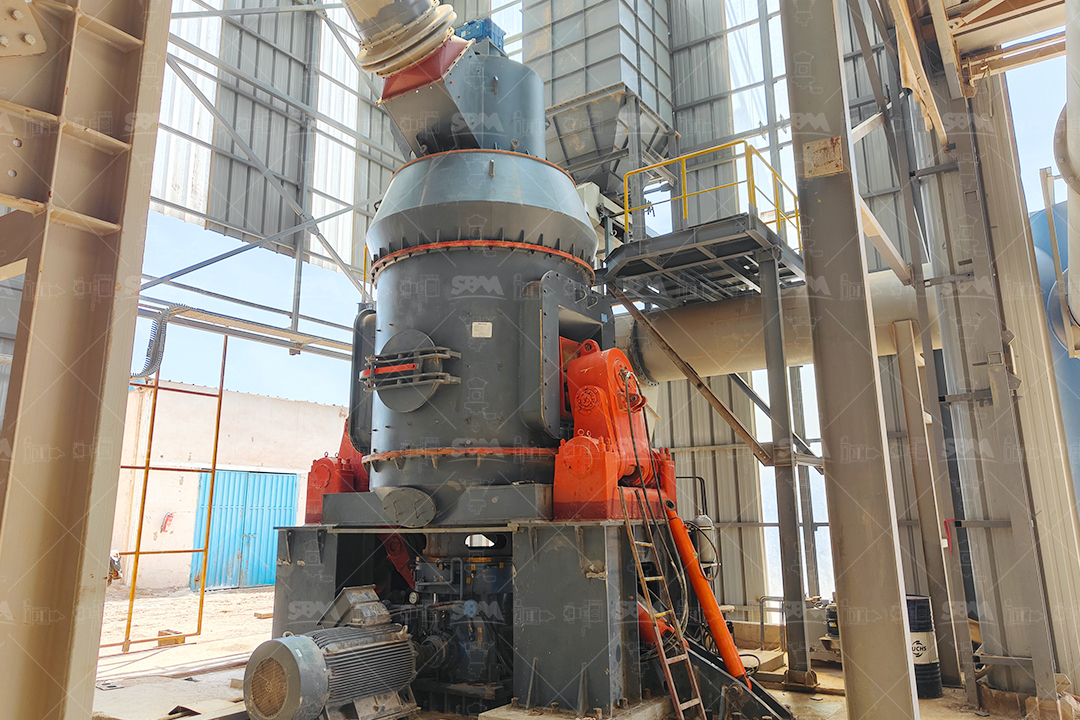
This complete system can be installed outdoors, reducing civil works costs by about 50% compared to a conventional ball mill system. The vertical mill's small footprint is a boon for existing plants that want to expand capacity without constructing a new building. We also provide spare parts and technical training for your local engineers.
Alternative Options: When Not to Use a VRM for Calcite
While we've emphasized the vertical mill's benefits, be aware that for very coarse products (say less than 100 mesh), a traditional Raymond mill like our MTW European Trapezium mill might be more cost-effective, since it produces less over-grinding. For ultra-fine requirements (below 325 mesh), our SCM Ultrafine Mill (non-vertical type) is also an option, but the LUM vertical mill is preferred for capacities above 10 TPH because of its integrated drying and efficient classification. If you need both coarse and fine powder, you might even set up a hybrid system: use a vertical mill as a pre-grinder to feed an SCM or second-stage classifier. We have done many such designs to achieve the sharpest cut.
Final Verdict
So, can a vertical roller mill process calcite? In short, yes—when correctly specified, operated, and maintained. It is a high-efficiency, low-energy, compact solution that is especially attractive for new plants aiming at 200–600 mesh calcite products and for existing plants looking to replace an outdated ball mill or Raymond mill. With SBM's LM series and LUM series technology, you'll be investing in a long-lasting, reliable system. Review your target output fineness and capacity, and you will find a matching vertical mill model. If you need expert consultation, our engineering team based in Shanghai is happy to run a grindability test on a sample of your calcite and provide a detailed mass and energy balance.
FAQ: Common Customer Concerns
1. Does calcite’s moisture content affect vertical roller mill operation? And how should I manage it?
Yes, very high moisture (above 10%) can cause poor bed stability and even clog the nozzle ring. In the LM vertical mill, we use excess hot air to evaporate moisture as the material is being ground. For calcite with moisture below 5%, a standard operation using flue gas or ambient air generally works. For moisture higher than that, we recommend a dry or pre-blending step with dry stone. Our system also has dual air inlets: one for hot air and one for ambient air to maintain temperature control. In high-humidity regions, you may need a larger baghouse to capture steam, but that's addressed in the engineering design.
2. What is the maximum silica (SiO2) content acceptable in calcite for a vertical roller mill without excessive wear?
For pure calcite (SiO2 below 0.5%), wear is low and service life of the roller and table exceeds 7,000 hours. If SiO2 is up to 2%, still economical, but you should inspect the wear segments every 3,000 hours. If SiO2 content exceeds 4%, it's imperative to pre-treat the material—use a magnetic trap or even an air classifier to reduce heavy impurities, or alternatively consider a more wear-resistant alloy for the grinding parts. We can supply discs with ceramic inserts if your ore is unusually harsh. Some of our customers in Vietnam grind calcite with 2–3% SiO2, and with our high-chrome material, they only need to replace the grinding ring once every half-year (two shifts per day).
3. My target fineness is D97 = 15 microns for PVC compounding. Is a vertical roller mill able to achieve this?
Yes, but you need to use the LUM ultrafine vertical mill rather than the standard LM mill. The LUM uses a multi-rotor classifier to achieve cut points of D97 ≤ 5 microns with appropriate capacity. For instance, the LUM1123 can produce around 8–12 tph of 1250 mesh calcite, whereas the LM mill won't go below 400 mesh effectively. We should run a sample to fine-tune your fineness vs capacity curve, as the exact particle size distribution matters for your plastic's tensile strength.
4. How long does it take to install a turnkey vertical roller mill system for calcite powder plant?
Installation timeline depends on site preparation and civil works, but on average it takes about 6–8 months (from contract signing to commercial production). Since our system is modular and containerized, we minimize on-site construction. The grinding mill itself can be assembled within two weeks after foundations are ready, given the integrated gear reducer and hydraulic unit arrive prefabricated. Our commissioning engineers typically stay on site until you can operate to spec for seven days, and we also provide operator training at our factory in Shanghai or at your site.
5. In terms of energy consumption, how does the vertical roller mill compare to a traditional ball mill when grinding calcite to 200 mesh?
The specific electrical energy consumption to grind a soft material like calcite from a feed of 5mm to 200 mesh (74 microns) using an LM vertical mill averages around 18–22 kWh per ton. A ball mill system (including classifier and bucket) would consume about 25–30 kWh per ton. So the VRM offers roughly a 25–30% energy saving. Additionally, because the VRM is a single piece of equipment, it eliminates the energy used for lifting materials and reduces auxiliary load. Over a 20 TPH operation running 5,000 hours/year, that saving equals about 2 million kWh per year—a significant environmental and financial benefit.


