

Typical cases of vertical roller mill in resource recycling
In the global drive toward circular economy and sustainable manufacturing, resource recycling has become a critical frontier for industries ranging from construction to energy. Vertical roller mills (VRMs), once regarded primarily as equipment for raw material grinding, have evolved into versatile solutions for processing industrial by-products, waste streams, and secondary materials. This article presents typical cases where advanced VRM technology, specifically from Shanghai SBM Machinery Equipment Co., Ltd., has been deployed to transform waste into valuable powders, thereby addressing customer pain points like high operating costs, material inconsistency, and environmental compliance. With over 180 countries served, SBM's grinding systems—including the LM series vertical roller mill and LUM ultrafine vertical mill—are redefining efficiency in slag processing, mine tailings valorization, and construction waste recycling.
Case 1: Steel Slag Processing – Turning Blast Furnace Waste into Cement Additive
One of the most successful applications of VRM in resource recycling is the processing of steel slag, a by-product of steelmaking that often ends up in landfills. A typical European cement plant faced the challenge of managing 500,000 tons of granulated blast furnace slag (GBFS) annually. With traditional ball mills, energy consumption was excessive and the moisture content (up to 15%) rendered the material difficult to grind. The customer's primary pain point was the high cost of pre-drying and the low throughput (barely 30 t/h).
After switching to the LM vertical roller mill (specifically LM 35.2 with a capacity of 40 t/h), the plant achieved a combined drying and grinding process in a single unit. The internal hot air stream, generated by the mill's integrated drying system, evaporated moisture without an external dryer. The roller and grinding plate design, made of high-quality wear-resistant alloys, extended service life to over 8,000 hours, reducing downtime by 45%. The final product, a fine powder with a specific surface area of 450 m²/kg, met the EN 197-1 standard for CEM III cement. According to the plant manager, the operating costs dropped by 32% compared to the previous ball mill setup, and the payback period was less than 22 months. This case demonstrates that a VRM is not just a grinder; it is a complete resource recovery system for the metallurgy and cement industries.
Case 2: Construction & Demolition Waste Recycling – From Rubble to Reusable Powder
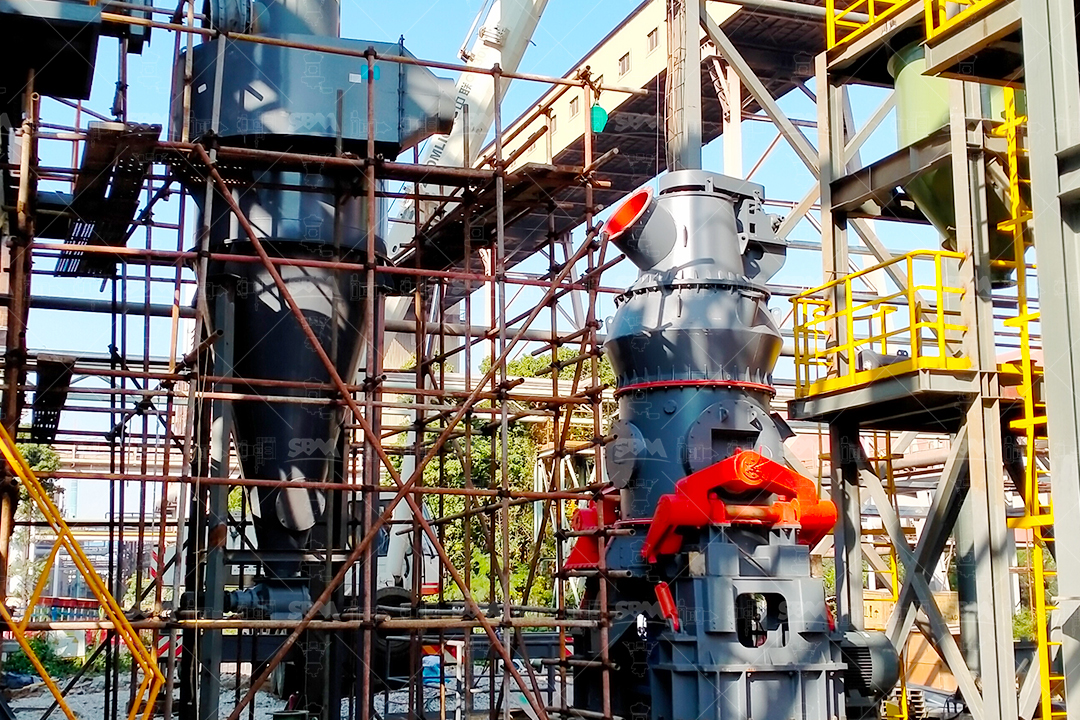
Construction and demolition (C&D) waste constitutes roughly 30% of all generated waste in urbanizing economies. In a large-scale recycling facility in Shanghai, the waste stream contained crushed concrete, bricks, and tiles with varied hardness (input size up to 50 mm). The customer's pain point was twofold: maintaining a uniform output fineness (around 200 mesh) for use in permeable bricks and low-grade concrete, while minimizing noise and dust pollution in a residential area.
SBM's LM vertical roller mill with a capacity of 50 tph was installed with an automatic control system and a negative-pressure sealed circuit. The grinding mechanism, which relies on the material layer promoted by the rotating grinding disc and pressurized rollers, handled the heterogeneous feed effectively. Unlike impact crushers that generate excessive vibrations, the VRM's operation was remarkably stable, with noise levels below 80 dB at a one-meter distance. The system's air duct and internal classifier ensured that fine particles (D50 of 150 µm) were separated without over-grinding, increasing the yield of usable product to 90%. The recycled powder was later used as an additive in non-fired brick production, reducing the facility's dependency on virgin limestone. The plant achieved a waste diversion rate of 95% and sold the processed powder at a competitive price. For SBM, this showcased the adaptability of VRM technology for municipal solid waste recycling projects.
Case 3: Fly Ash and Bottom Ash in Power Generation – Maximizing Pozzolanic Activity
Coal-fired power plants produce enormous quantities of fly ash (5-20 µm particles) and bottom ash (coarser, up to 5 mm). Traditionally, only a portion of fly ash is used in concrete, while bottom ash is often landfilled. A utility company in Southeast Asia wanted to treat both types of ash to produce high-grade pozzolanic material. The major pain point was the high loss on ignition (LOI) and variability in carbon content, which rendered the ash unusable for precast concrete.
The deployed solution was the LUM ultrafine vertical mill, which handles input sizes up to 20 mm and produces a fineness of 325 to 2500 mesh. For this case, the target was D97≤90 µm (approximately 170 mesh). The multi-rotor classifier allowed precise removal of coarse carbon particles, effectively reducing LOI from 12% to below 4%. This was a breakthrough, as the customer could finally sell the recycled ash as a premium additive for high-strength concrete. The LUM's high-efficiency separator also enabled a 30% reduction in specific energy consumption (kWh/t) compared to a wet-dry hybrid process previously trialed. The PLC-based control system allowed remote monitoring, reducing labor requirements from three shifts to one supervisory role. Over a 10-month period, the plant processed 100,000 tons, with an overall availability of 96%. The recycling rate of coal residue reached 98%, fully eliminating the landfill cost and turning a liability into a profit center.
Case 4: Waste Gypsum (Phosphogypsum) into Drywall Powder
Phosphogypsum (PG), a radioactive by-product of phosphate fertilizer production, presents serious environmental challenges. A South American chemical company accumulated over 1 million tons of PG, with high purity gypsum crystals but contaminated with residual moisture (20-25%) and trace phosphates. The customer’s issue was the fiber-reinforced board production requiring a specific purity and consistency. Using a conventional rotary dryer and grinding mill resulted in frequent blockages due to fibrous material and clumping.
SBM supplied the MTW European trapezium grinding mill as an alternative to a VRM in this case. While not a vertical mill, the MTW’s heavy-duty design with the curved shovel blades effectively handled the 'stickiness' issue. However, the typical case of VRM application came from a subsequent upgrade: the LM vertical mill with integrated drying used hot air at 300°C to flash-off moisture during the grinding process. The significant aspect here was the careful adjustment of the grinding plate speed and roller pressure to prevent over-heating of the gypsum (calcination point around 150°C). The VRM’s ability to control the internal temperature via air flow made it ideal for dehydrating PG into a semi-hydrate form (CaSO4·0.5H2O). After processing, the powder was used to manufacture high-quality gypsum boards, meeting ASTM C1396 standards. This circular solution not only liberated a large storage area but also generated USD 2 million in revenue from a previously abated waste stream.
Case 5: Red Mud & Bauxite Residue – Valorization in the Aluminum Industry
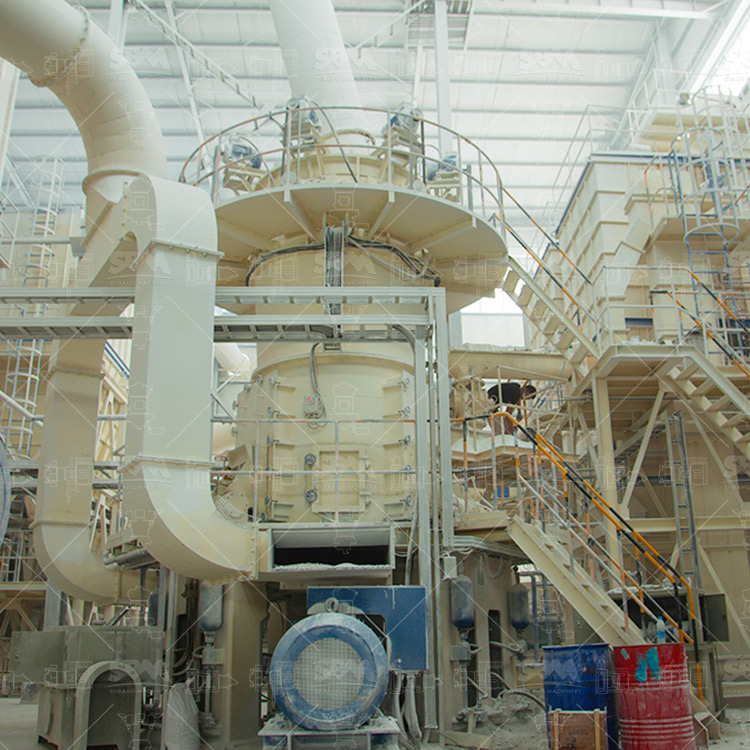
The alumina industry generates red mud, a highly alkaline, fine-grained residue with a solids content of approximately 40%. Due to its high iron content and fine particle size, it is notoriously difficult to process. A large alumina refinery in India wished to recover iron oxide for use in steel-making and reduce the alkaline landfill footprint. The SCM ultrafine grinding mill was selected for this lab-to-industrial scale application. Although the feed (input size 0-10 mm) was wet and sticky, the mill's vertical shaft configuration and frequency-conversion control facilitated a dry grinding after a dewatering centrifuge.
The final output at 800 mesh (D97=15 µm) allowed the subsequent magnetic separation to effectively extract up to 75% of the iron. The customer pain point existed in the prior physical separation methods, which failed due to the aggregates. The SCM's heavy-duty rotor and special material for ring/roller ensured minimal corrosion, even though the internal operators had to implement a chlorine-washing cycle for salt build-up. This case is atypical but highlights how SBM’s small-capacity mills (1-5 tph) can be precisely tuned for niche recycling tasks. The annual processing capacity was 30,000 tons, and the saleable iron concentrates reduced the operational burden by 40%.
Comparing Solutions: Which VRM for Which Feedstock?
Selecting the right VRM is dependent on the physical and chemical characteristics of the 'waste' material. For coarse, high-moisture feeds like slag or ash, the LM vertical roller mill with its high drying capacity (up to 12% moisture) and robust production (up to 400 t/h) is ideal. For finer, abrasive materials like bauxite residue or talc waste, the LUM vertical mill (which excels at 325-4000 mesh outputs) provides higher energy efficiency and a better pigment dispersion for filler applications. For a mid-scale operations with relatively dry material, the MTW trapezium mill offers a lower investment threshold compared to large VRM systems.
SBM's portfolio allows for a pre-engineered approach, ensuring that the recycling project can be scaled from a pilot to a commercial operation without scaling the risk. The consistent thread across all cases is the reduction in carbon footprint: VRMs reduce CO2 emissions by up to 30% per ton of recycled product compared to creating new material from virgin ore, aligning with global emission reduction targets.
The Future of Recycled Powder Parameters & Maintenance
The plant engineers often report the challenge of 'puckering' the wear parts when grinding reclaimed concrete with metallic impurities. SBM's high-strength guard plates and the unique arc air duct design prevent such damage. Moreover, for abrasive materials, the combined-type shovel blade (perching knife design) reduces downtime. The key performance indicator is the 'energy per ton of metal recovery' versus 'wear part cost'.
In the realm of zero-waste mining, the VRM acts as a central hub, capable of producing multiple fractions from the same feed through the adjustability of the separator speed. This modularity has been instrumental in a recent porphyry copper mine tailings project in Chile, where the reprocessing of old tailings dams for 400-mesh mineral powder is being used for cement backfill. By decreasing the tailings volume by 20%, the mill enabled a new extraction cycle from the contained copper oxide.
Technical Benefits Checklist
- Integration of crushing, drying, grinding, and classifying in a single unit: reduces the need for separate auxiliary equipment and floor space by ~50%.
- Quiet operation: The planetary gearbox runs with low noise (usually below 85 dB), and the negative-pressure system eliminates all dust spillage, satisfying stringent environmental permits.
- Automatic Control: The SBM proprietary system allows for 'one-touch' adjustments to feed rate and classifier speed, ensuring consistent chemical composition in the final recycle stream.
- Wear Durability: Specialized alloy in the grinding roll and liner plates reduces operative costs, even when processing tramp iron and high-silica content.
In conclusion, vertical roller mills are not just equipment but catalysts for a sustainable lower-carbon industrial ecosystem. SBM's experience in 180+ countries underlines the adaptability of these systems to local ecological, economic, and regulatory conditions. A typical VRM case from SBM always prioritizes maximum uptime and energy efficiency, creating a tandem win for the environment and the client’s balance sheet.
FAQ
Q1: What is the best way to handle moisture above 20% in recycling waste like wet ash?
A1: The LM Vertical Roller Mill from SBM can accept input material with high moisture because of its integrated drying circulation. Hot air (typically from a separate furnace or recovered waste heat) is introduced to the mill, and the turbulence helps to vaporize the surface moisture before it reaches the grinding table. We always perform a heat balance calculation based on your specific moisture content. For moisture up to 10%, no external heat source is needed. For higher, we pre-size the burner to avoid mill condensation issues.
Q2: I have concerns about wear costs when processing recycled concrete due to stray rebar pieces. Are your mills robust enough?
A2: Yes, this is a common pain point. SBM uses a high-safety factor design on the grinding roller and the grinding disc surface. We add a metal separator before the mill in the feed belt. Plus, the roller design is such that it does not contact the grinding plate directly—there is always a material bed. This prevents catastrophic knock causing damage. The proprietary wear-protection perching knife protects the ring, and typical Mn18Cr2 alloy is used on the liner to handle stray metallic debris. Should a ferrous piece pass through, the retraction system prevents damage to the reducer.
Q3: How do I ensure uniform product fineness for saleable filler material while still maximizing recycling throughput?
A3: The key is the dynamic classifier. In our LUM vertical mill, the multi-rotor classifier produces extremely sharp particle size distribution. You simply set the rotor speed via the PLC. We have state-of-the-art software that adjusts the grinding pressure in response to feed hardness to maintain to the specific surface area. For dry application, we recommend a closed-loop pneumatic conveying system to prevent fines 'blow-through'—this ensures the filler grade meets even advanced paper and board standards.
Q4: Is it economical to process only 10 tons per hour of municipal solid waste incineration (MSWI) fly ash?
A4: Yes. While a large LM mill may be oversized, you can use the MTW European Trapezium Mill which has a production capacity of 3-40 t/h. Compared to wet grinding alternatives, this dry method is more economical. It will have a higher energy consumption than a ball mill on a single-material basis, but because it dries and removes in one step, the total operational cost including labor is lower. We recommend you have your fly ash LOI analyzed; typically with high chloride, a water-washing process may still be needed. We can design a pre-leaching stage if needed.
Q5: Some of our feed material is abrasive (e.g., slag). How often will I need to change the grinding elements?
A5: For applications like blast furnace slag (hardness of 7 Mohs), the anticipated service life of the SBM-grade grinding ring is between 6,000 and 8,000 hours, depending on the fineness required. The bowl for the material is separate and without the high-pressure contact, so it is even less subject to wear. We always provide an exchange trolley system for quick lifting of the heavy roller assembly. With the SCM ball mill upgrade, you can reduce the rate of metal consumption by 30% when compared to legacy mills. To maximize the life, you should maintain the feed material's moisture and avoid any large glassy impurities.


