

How raymond mill works and its use in limestone processing
Published: February 18, 2025
Raymond mill, a cornerstone of industrial powder processing, operates on the principle of grinding between a rotating shaft and stationary ring, yet its modern iterations—such as the European trapezium mill—have evolved far beyond the classic design. In limestone processing, this equipment is indispensable, transforming raw rock into fine powders essential for desulfurization, cement, and GCC production. This article explores the mechanics of Raymond mills, their technical evolution, and their practical application in limestone workflows, drawing on expertise from Shanghai SBM Machinery Equipment Co., Ltd., a total solution provider with over 180 countries of service. By understanding the working principle, key advantages, and selection criteria, operators can tackle common pain points like high energy consumption, wear costs, and inconsistent fineness, ensuring efficient and profitable limestone powder production.
The Working Principle of Raymond Mill
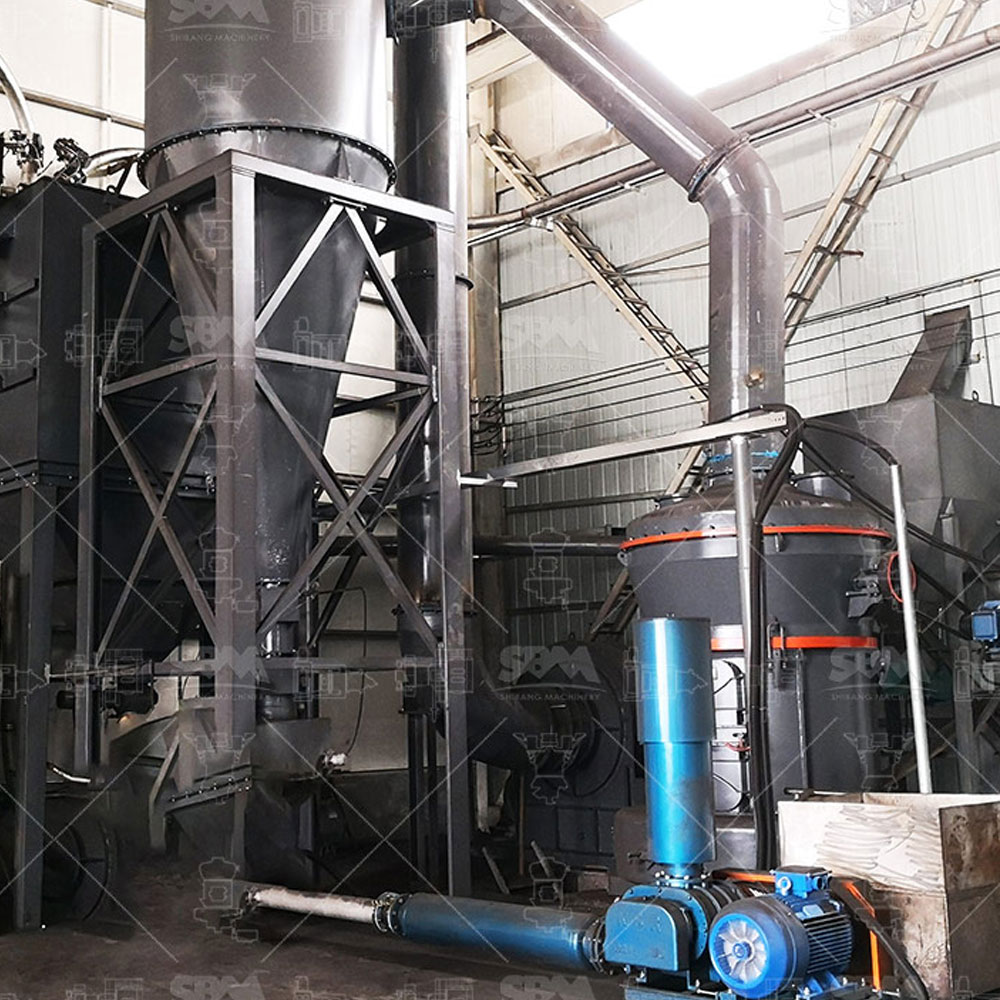
At its core, a Raymond mill uses a vertical grinding configuration. The main drive, often a cone gear whole transmission in advanced models like the MTW series, rotates a central shaft. This shaft is connected to a grinding roller assembly (plum frame), which swings outward due to centrifugal force, pressing against a stationary grinding ring. Feed material, typically limestone with an input size up to 50mm, is fed through a hopper into the grinding chamber between the roller and ring. As the roller rotates, it crushes and grinds the limestone into fine particles. A stream of air, drawn through an arc-shaped air duct, lifts the ground powder upwards towards the classifier. The classifier, often a high-speed rotating blade, allows only particles of the desired fineness (e.g., 30-400 mesh) to pass through to the cyclone collector or baghouse, while oversized particles are returned to the grinding zone for further size reduction. This closed-circuit system ensures continuous operation and consistent output.
In the context of limestone, the mill's grinding pressure and airflow must be finely tuned. For instance, in SBM's MTW European Trapezium Mill, the curved shovel blade design adjusts the feeding angle, ensuring materials are evenly distributed on the grinding ring, which directly improves grinding efficiency and reduces wear on the roller and ring. The entire transmission is sealed with an oil absorption lubrication system, reducing maintenance downtime and contamination risk—a critical feature when processing abrasive minerals like limestone, which contains calcium carbonate and trace silica.
Key Technical Advances in Modern Raymond Mills
Traditional Raymond mills suffer from low throughput, high energy consumption, and frequent wear. However, modern equipment designed by leading manufacturers like SBM has addressed these issues through several innovations.
1. Cone Gear Whole Transmission
Instead of belt-driven systems common in older mills, the MTW series employs a bevel gear integral transmission. This design not only increases transmission efficiency (critical for reducing energy costs, which can be a major pain point) but also reduces the mill's footprint, lowering initial capital expenditure. For limestone processors, this means less energy wasted per ton of powder produced, directly reducing operational expenses.
2. Arc Air Duct Design
The circular air duct inside the mill prevents air energy loss, ensuring efficient pneumatic conveying of ground limestone. The high-strength guard plate protects the duct's working surface from abrasive wear, extending the lifespan of internal components. Operators often complain about frequent blockages in older mills with square ducts; the arc design minimizes such risks, enabling seamless production for environmental desulfurization limestone powder.
3. Volute Design for Improved Wind Efficiency
The unobstructed, wear-resistant volute enhances the wind-driven transmission within the mill. This is particularly important for limestone applications where the material's density requires strong, consistent airflow to carry the powder upward. Reduced maintenance on the volute translates to lower material costs for maintenance, a common headache for plant managers.
4. Wear-Proof Components
The combined-type shovel blade (perching knife) in the MTW mill allows for the replacement of only the blade, not the entire assembly—a significant cost saving. Moreover, curved blades modify the feeding angle, extending the service life of the grinding roller and ring. For limestone, which can be highly abrasive due to impurities like quartz, this design directly mitigates the pain point of premature wear and the associated production stoppages.
Use in Limestone Processing: From Desulfurization to GCC
Limestone is a versatile mineral, and Raymond mills are tailored to its various downstream uses.
Environmental Desulfurization: In coal-fired power plants, limestone powder is injected into flue gas to absorb sulfur dioxide. This requires a fineness of approximately 200-325 mesh with high surface area. The MTW European Trapezium Mill, with an output size range of 30-400 mesh and a capacity of 3-40tph, is ideally suited for this application. Its ability to maintain stable grinding under continuous operation ensures that the desulfurization system receives a consistent supply of reactive powder.
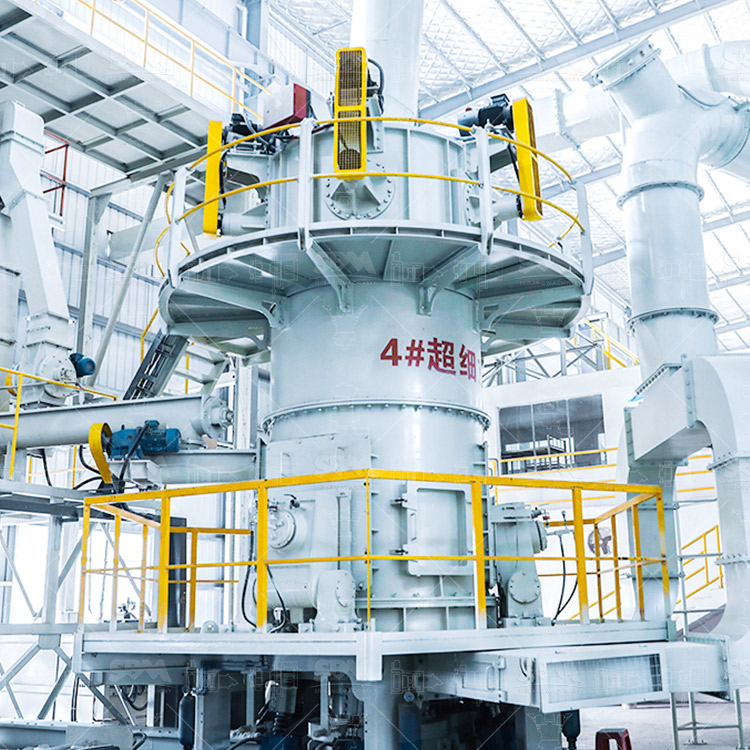
Heavy Calcium Carbonate (GCC) Production: For GCC, which is used in plastics, rubber, and paper, the required fineness often exceeds 400 mesh. Here, the SCM series ultrafine grinding mill shines. Developed as a successor to general Raymond mills that 'fail to meet market demands,' the SCM mill can adjust powder fineness from 325 to 2500 mesh, achieving D97≤5μm (about 2500 mesh) in a single pass. This high fineness is achieved using a high-efficiency vertical turbine powder classifier that ensures accurate cutting size with no spillover of coarse powder. For GCC producers, this eliminates the pain point of needing secondary grinding stages and reduces overall energy consumption by 30% compared to jet mills.
Coarse and Medium Powders: When producing limestone aggregates or coarse powders (such as for animal feed or soil conditioners), a conventional Raymond mill or an LM vertical roller mill is more practical. The LM vertical roller mill integrates crushing, drying, grinding, and powder selection, making it a versatile solution for applications requiring a larger capacity (3-400tph). Its direct grinding contact between rollers and the grinding disc reduces energy consumption by 30-40% compared to ball mills, which is a common competitor. For limestone providers with large output demands, this integration alleviates the pain point of high power usage and large floor space requirements—the LM system occupies about 50% of the floor space of a ball mill system and can be installed outdoors.
Comparative Analysis: Which Mill is Best for Your Limestone?
Choosing the right mill is a common pain point for new projects. The table below summarizes the selection logic based on SBM's product lineup.
- MTW European Trapezium Mill (Raymond Mill): Ideal for limestone desulfurization powder (200 mesh) with capacity 3-40tph. It is the first choice for mid-sized power plants. The cone gear transmission ensures high efficiency, while the arc air duct reduces energy consumption. If your project requires a standard, well-tested Raymond mill technology, this is your go-to.
- LM Vertical Roller Mill: Best for large-capacity limestone grinding (e.g., 50tph and above). It is perfect for cement plants using limestone as a raw material or for producing GCC pre-mixes. The integrated drying function is a bonus if your limestone has high surface moisture.
- SCM Ultrafine Mill: When your limestone product requires an ultra-fine powder (e.g., 800 mesh (<25 microns) for high-end plastics), the SCM mill is the only viable Raymond-based solution. Its automatic feedback system and frequency-conversion control ensure fast, stable conversion of finished products, directly addressing the pain point of inconsistent fineness that standard Raymond mills cannot fix.
Addressing Common Pain Points in Maintenance and Operation
Customers often report issues with traditional Raymond mills, including mechanical vibration, short lifespan of grinding parts, and high noise.
Vibration: The LM series vertical roller mill features a design where rollers do not contact the grinding plate directly, minimizing vibration. SBM's equipment incorporates a heavy rotor design in the SCM mill, and after balance treatment, the grinding chamber operates stably free of vibration. This stability is crucial for reducing downtime and preventing premature bearing failures.
Wear Costs: Material wear is the number one complaint. For limestone (hardness 3-4 on Mohs scale), the wear rate is moderate, but high-silica limestone can be brutal. SBM's MTW mill uses a 'combined-type shovel blade' and special materials for rollers and rings, extending durability several times over. In the SCM mill, the roller and ring are made from special alloys, making their life span several times longer than standard parts.
Environmental Compliance: Modern mills have solved dust leakage issues. The LM series operates under negative pressure with tight seals, and its low vibration ensures noise is below 85 dB. The SCM mill uses an efficient double powder collection method (cyclone and pulse dust collector), achieving dust collection effects far higher than international standards. This eliminates the risk of fines and worker safety complaints, a common issue in older plants.
Conclusion
The Raymond mill has evolved from a simple grinding machine into a sophisticated processing system. In limestone processing, whether for desulfurization, GCC, or micro-powder production, choosing the correct type is vital. SBM's range—from the MTW European Trapezium Mill to the LUM Ultrafine Vertical Mill—offers tailored solutions addressing the core pain points of energy costs, wear, and fineness control. By understanding the working principle and leveraging modern technical advances like arc air ducts and cone gear transmission, limestone processors can maximize profitability and sustainability. As a total solution provider with installations in over 180 countries, SBM Machinery provides not just machinery but complete grinding systems, ensuring your limestone operation runs effectively from raw feed to final powder.
FAQ: Common Customer Concerns
1. My limestone has high moisture (say 10%). Can a Raymond mill still dry and grind it?
Standard Raymond mills struggle with high moisture because wet material clogs the mill. However, the LM vertical roller mill has an integrated drying function—hot gases can be introduced into the mill to dry and grind simultaneously. For the MTW series, a preceding drying step is required. For wet limestone feed, we recommend a flash dryer upfront or using the LM mill to avoid downtime.
2. What is the typical wear life of a grinding roller and ring when processing limestone?
Depending on the silica content in the limestone (the culprit for wear), the roller and ring in MTW Raymond mills typically last from 8,000 to 15,000 hours. SBM's special alloy steel has extended life by 30% compared to standard manganese steel. For low-abrasion limestone (under 1% silica), 15,000 hours is common. Always request a wear test with actual ore to set precise expectations.
3. How do I achieve a fineness of D97≤10 microns for my limestone GCC, but my current Raymond mill only goes to 200 mesh?
To achieve 10-micron (approximately 1250 mesh) limestone powder, a standard Raymond mill is insufficient. You need the SCM series ultrafine grinding mill. With a frequency-conversion speed regulator, you can set the output to exactly 1250 mesh. The mill's primary classifier ensures no coarse powder contaminates the final product, achieving a sharp particle distribution. The SCM mill can handle up to 2500 mesh (5 microns) with ease.
4. I have a desulfurization project that needs 40 tons per hour of 200-mesh limestone. Can a single MTW mill handle it, or do I need a vertical roller mill?
For 40tph, the MTW series has a maximum capacity of 40tph, so it would be at its upper limit. This can lead to higher vibration and wear. We suggest using a larger vertical roller mill (LM170) which can easily handle 50tph with just 70-80% load, reducing energy consumption per ton and improving longevity. Operating at maximum capacity constantly is a common pain point; leaving a spare capacity buffer extends component life significantly.
5. What is the easiest way to automate and reduce labor costs in my limestone milling plant?
Both the MTW and LM mills can be equipped with a PLC/DCS automatic control system. This system integrates load control (regulating feed rate based on motor current) and classifier speed adjustments. It enables one operator to monitor multiple units from a central control room, freeing up physical labor for other tasks. Additionally, remote monitoring allows for adjustments via a network, significantly cutting labor expenses—a key pain point for operators.


