

Environmental benefits of vertical roller mill in fly ash processing: supporting the green circular economy
Published: March 18, 2025
As coal-fired power generation continues to produce vast quantities of fly ash worldwide, the need for sustainable processing solutions has never been more urgent. Vertical roller mills have emerged as a game-changing technology in this field, offering significant environmental advantages over traditional grinding equipment. By integrating drying, grinding, and powder separation into a single compact system, these mills reduce energy consumption by 30% to 40%, minimize dust emissions through fully sealed negative-pressure operation, and enable the large-scale reuse of fly ash in cement, concrete, and construction materials. This article explores how vertical roller mill technology supports the green circular economy by transforming an industrial by-product into a valuable resource while lowering carbon footprints and operational costs.
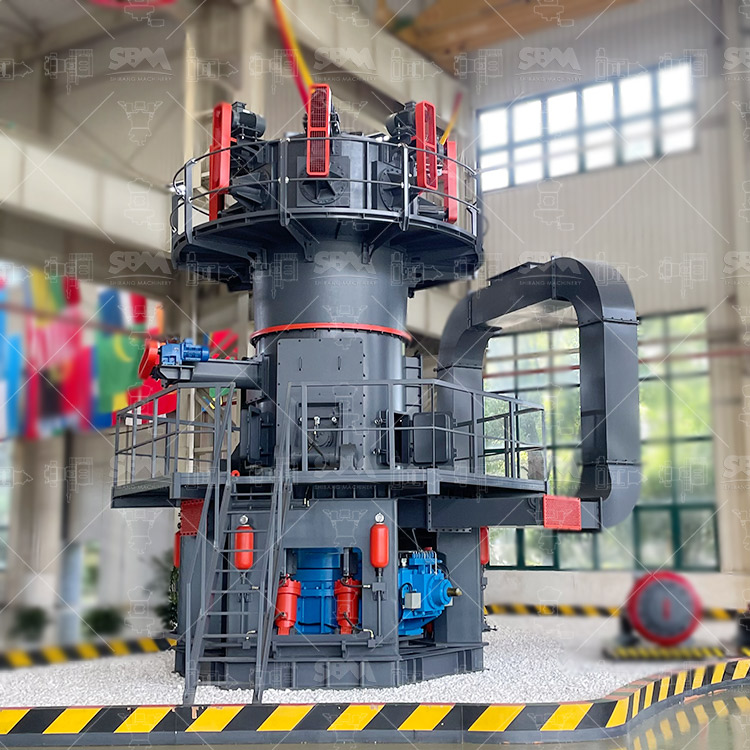
Fly ash, a fine residue generated from burning pulverized coal in power plants, has long been treated as waste. In many regions, it was simply dumped into landfills or ash ponds, creating serious environmental hazards including groundwater contamination, air pollution from windblown particles, and long-term land degradation. However, fly ash is not truly waste. Its pozzolanic properties make it an excellent supplementary cementitious material, capable of replacing a portion of Portland cement in concrete production. When processed to the right fineness, fly ash improves concrete durability, reduces permeability, and lowers the heat of hydration. The challenge has always been how to process it efficiently, cleanly, and at scale.
This is where vertical roller mill technology comes into play. Unlike traditional ball mills, which rely on impact and attrition between metal balls and material, vertical roller mills grind material between a rotating table and stationary rollers. This fundamental design difference leads to remarkable environmental benefits. The most immediate is energy efficiency. Ball mills typically consume between 30 and 40 percent more energy to achieve the same output. For a fly ash processing plant running thousands of hours per year, that difference translates into hundreds of thousands of kilowatt-hours saved, which means less fossil fuel burned at power plants and fewer greenhouse gas emissions released into the atmosphere.
Another major environmental advantage is dust control. Fly ash is extremely fine and easily becomes airborne. In older grinding systems, material transfer points, air classification circuits, and product collection areas often leak dust into the workplace and surrounding environment. Vertical roller mills operate under negative pressure with a fully sealed system. The grinding chamber, the air duct, the powder classifier, and the discharge system are all integrated and enclosed. Dust spillover is virtually eliminated. The collected dust is recycled back into the product stream, not released. This not only protects the health of workers but also ensures compliance with increasingly strict national emission standards. For communities located near fly ash processing facilities, the difference in air quality is immediately noticeable.
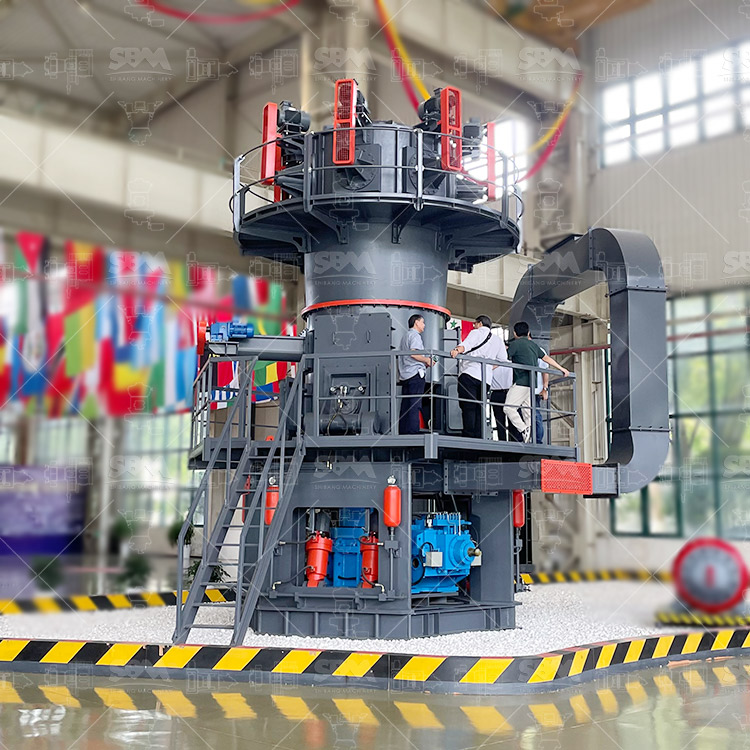
Noise pollution is another often-overlooked environmental concern. Ball mills generate noise levels that can exceed 100 decibels, requiring workers to wear hearing protection and creating discomfort for nearby residents. Vertical roller mills, by contrast, operate with minimal vibration and noise. The grinding action is smooth and continuous rather than the violent tumbling of heavy steel balls. The entire system can be enclosed in sound-insulated housing if needed. In practice, the noise level of a well-maintained vertical roller mill is significantly lower, making it a much better neighbor in populated areas.
The green circular economy is not just about reducing harm; it is about creating value from what was once discarded. Vertical roller mills enable fly ash to be processed into high-quality powder that can be sold to cement plants, concrete producers, and even as a raw material for geopolymer synthesis. This transforms a disposal cost into a revenue stream. Power plants that once paid to haul away and bury fly ash can now sell it. Concrete manufacturers can reduce their clinker content, which is the most carbon-intensive component of cement. Every ton of fly ash used to replace cement avoids roughly 0.8 to 0.9 tons of carbon dioxide emissions. When you multiply that by the millions of tons of fly ash processed annually, the climate impact is enormous.
Vertical roller mill technology also supports water conservation. Traditional wet ball mills require significant amounts of water for grinding and dust suppression. In contrast, vertical roller mills are dry grinding systems. They use hot gas to dry the material as it is being ground. For fly ash, which may contain moisture from storage or transport, the integrated drying function eliminates the need for separate drying equipment. This saves not only water but also the energy that would have been used in a separate dryer. In arid regions where water is scarce, this is a critical advantage.
Let us consider the operational cost savings that also contribute to environmental sustainability. A vertical roller mill has a smaller footprint than a ball mill system of the same capacity. It can be installed outdoors, requiring less civil construction and less steel and concrete. The grinding rollers and table liners are made of high-quality wear-resistant materials, and because the rollers do not directly contact the table when idle, wear is reduced. Maintenance intervals are longer, and the replacement parts are lighter and easier to handle. Less frequent maintenance means fewer shutdowns, less energy wasted on restarts, and lower consumption of spare parts, all of which reduce the overall environmental burden.
Automation plays a supporting role in environmental performance. Modern vertical roller mills are equipped with advanced control systems that continuously monitor and adjust grinding pressure, airflow, and classifier speed. This ensures that the mill always operates at its optimal efficiency point. It also prevents conditions that could lead to excessive dust generation or energy waste. Remote monitoring and control allow operators to respond quickly to changes in feed material or production targets. The result is a stable, reliable process that consistently meets environmental targets without requiring constant human intervention.
From a life-cycle perspective, vertical roller mills are a clear winner. The initial manufacturing of the equipment involves steel and other materials, but the mill can operate for decades with proper maintenance. Over that lifetime, the energy and emissions saved compared to ball mill alternatives are many times greater than the embodied impacts of producing the mill itself. When the mill is finally retired, much of the steel can be recycled. This cradle-to-cradle thinking is the essence of the circular economy.
In many countries, regulations now mandate the beneficial use of fly ash rather than landfilling. For example, in India, the Fly Ash Utilization Notification requires power plants to achieve 100% utilization. In China, similar policies encourage the use of fly ash in cement and concrete. Vertical roller mills make compliance with these regulations not just possible but profitable. They allow power plants and independent processors to produce a consistent, high-quality product that meets the stringent fineness and reactivity requirements of the construction industry.
Case studies from around the world confirm these benefits. In Southeast Asia, a 100 tph vertical roller mill processing fly ash for a major cement producer reduced specific energy consumption from 42 kWh/t to 28 kWh/t compared to the ball mill it replaced. Dust emissions at the stack dropped by more than 90%. The product fineness was more uniform, leading to better concrete performance. The plant operator reported that the mill paid for itself in energy savings and increased fly ash sales within three years. Similar stories come from Europe, the Middle East, and Latin America.
It is worth noting that not all vertical roller mills are the same. The design details matter. Features such as the shape of the grinding rollers, the profile of the grinding table, the type of classifier, and the sealing system all affect environmental performance. For fly ash, which is abrasive and can be sticky when moist, special wear-resistant materials and optimized airflow patterns are essential. A well-designed mill will have a curved air duct that reduces pressure loss, a high-efficiency classifier that cuts precisely at the desired particle size, and a robust sealing system that prevents any dust from escaping. These are not optional extras; they are the foundation of environmental compliance and operational reliability.
Maintenance also has an environmental dimension. When a mill needs to be opened for roller replacement, dust can be released. Systems that allow quick, safe access with minimal material spillage are preferred. The use of combined-type shovel blades or segmented wear parts reduces the amount of material that must be discarded. In modern designs, only the worn blade is replaced, not the entire assembly. This reduces waste and conserves resources.
The transition to a green circular economy requires every industry to rethink its processes. For fly ash, the vertical roller mill is one of the most powerful tools available. It turns a liability into an asset, reduces energy consumption and emissions, conserves water, and produces a valuable product that displaces carbon-intensive cement. As the world continues to urbanize and demand for concrete grows, the responsible management of fly ash will become even more important. Vertical roller mill technology is ready to meet that challenge.
Investing in a vertical roller mill is not just a capital decision; it is an environmental decision. It signals a commitment to cleaner production, to worker health, and to the communities that host industrial facilities. It aligns business goals with planetary boundaries. And it demonstrates that profitability and sustainability can go hand in hand. For companies that process fly ash, the question is no longer whether to adopt vertical roller mill technology, but how quickly they can make the switch.
Frequently Asked Questions
1. What is the biggest challenge when switching from a ball mill to a vertical roller mill for fly ash?
The most common challenge is adapting to the different operational philosophy. Ball mills are tolerant of variations in feed size and moisture, while vertical roller mills require more consistent feed preparation. However, with proper pre-screening and moisture control, this is easily managed. The benefits in energy savings and dust reduction quickly outweigh the learning curve.
2. Can a vertical roller mill handle fly ash with high moisture content?
Yes, vertical roller mills are designed with integrated drying. Hot gas is introduced into the grinding chamber, and the turbulence ensures efficient heat transfer. Fly ash with up to 10-15% moisture can typically be dried to less than 1% in a single pass, depending on the specific mill configuration and available heat source.
3. How does the vertical roller mill reduce dust compared to other grinding systems?
The entire system operates under negative pressure and is fully sealed. There are no open transfer points. The classifier and dust collector are integrated. Any dust that is generated is immediately captured and returned to the product stream. This results in emission levels that are a fraction of those from ball mill systems.
4. What is the typical wear life of grinding rollers when processing fly ash?
With properly selected wear-resistant materials and a well-designed grinding bed, the rollers can last 8,000 to 12,000 hours or more. Fly ash is abrasive, but the rolling compression action is gentler on wear parts than the impact action in a ball mill. Regular inspection and timely replacement of the replaceable segments keep the mill operating efficiently.
5. Is a vertical roller mill more expensive to maintain than a ball mill?
The initial wear part cost may be higher, but the total maintenance cost over the life of the equipment is often lower. Vertical roller mills have fewer moving parts, require less frequent lubrication, and allow for quicker roller replacement. The energy savings alone often cover maintenance costs many times over. Additionally, the reduced downtime for maintenance translates to higher availability and lower production losses.


