

Key role of raymond mill in ceramic raw material preparation
Published on: 2025-03-18
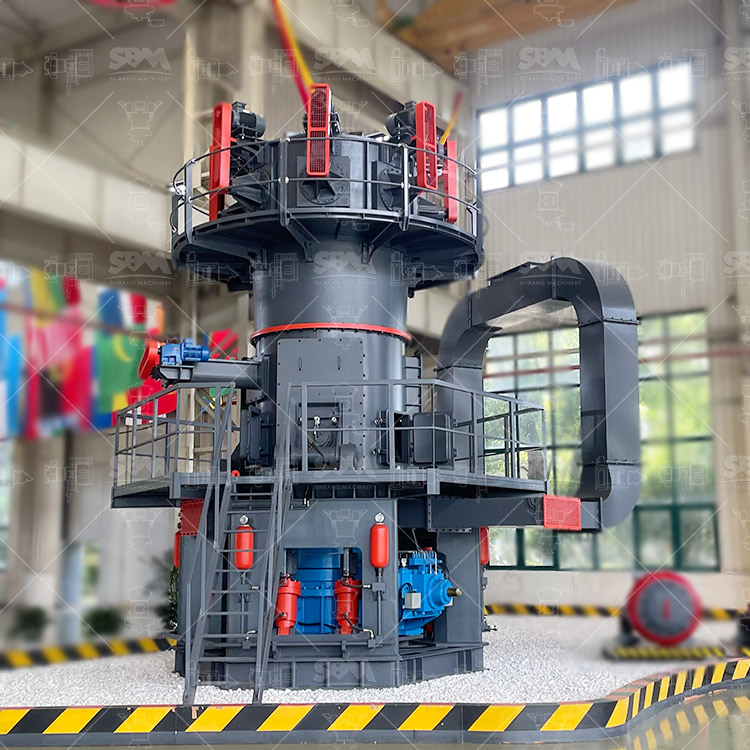
In ceramic manufacturing, the preparation of raw materials is not simply a preliminary step—it directly determines body uniformity, forming behavior, firing shrinkage, surface quality, and final product consistency. Among the many grinding systems available, the Raymond mill has long occupied a central position in ceramic raw material preparation because it balances fineness control, continuous output, drying capability, and operational economy in a way that few other mills can match. Modern ceramic producers process materials such as feldspar, quartz, clay, talc, barite, wollastonite, limestone, dolomite, and various frit or glaze components. These materials differ widely in hardness, moisture, and desired particle size, yet all require stable and controllable comminution. The Raymond mill, especially in its evolved European trapezium design, has become a practical workhorse for preparing ceramic powders in the 30–400 mesh range, while ultrafine and vertical mill technologies extend the same preparation logic into finer and larger-scale territories. This article examines why Raymond mills remain essential in ceramic raw material preparation, how modern designs address common production pain points, and what users should consider when selecting and operating grinding equipment.
Why Ceramic Raw Material Preparation Demands More Than Simple Grinding
Ceramic products are highly sensitive to particle size distribution. A body mix that is too coarse may reduce reactivity during sintering and cause incomplete densification. A mix that is too fine may increase shrinkage, create firing cracks, or raise energy consumption in downstream processes. In glazes and engobes, particle size affects suspension stability, melting behavior, and surface gloss. In technical ceramics, even small variations in median particle size can alter mechanical strength and dielectric properties.
At the same time, ceramic raw materials are often natural minerals with variable moisture content, hardness, and impurities. A preparation system must therefore handle:
- Controlled fineness from coarse filler grades to fine glaze grades
- Stable continuous output without frequent interruption
- Drying of materials that carry surface moisture
- Dust containment and environmental compliance
- Low wear cost because abrasive minerals such as quartz and feldspar accelerate component consumption
- Flexible adjustment when switching between recipes
This is where the Raymond mill has proven its value. Unlike simple impact crushers or coarse pendular mills, a modern Raymond mill integrates grinding, classification, and often drying within a single closed-loop system. The result is a compact preparation unit that can deliver consistent powder fineness while remaining adaptable to different ceramic raw materials.
How the Raymond Mill Works in Ceramic Raw Material Preparation
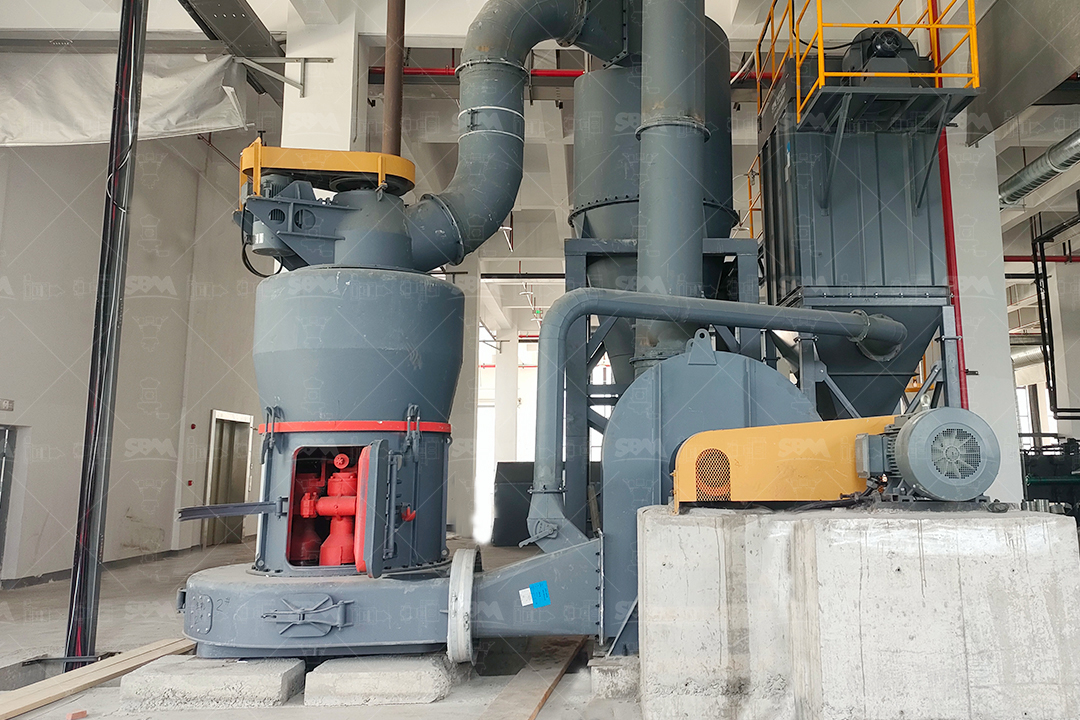
In a typical Raymond mill system, raw material is fed into the grinding chamber by a feeder. The material is scooped by a shovel blade and carried between the grinding roller and the grinding ring. As the roller rotates under spring or hydraulic pressure, the material is crushed and ground by a combination of compression, shear, and attrition. An upward air stream generated by the mill fan transports the ground particles to a classifier. Oversized particles are rejected and returned to the grinding zone, while particles that meet the target fineness pass through the classifier and are collected by a cyclone or dust collector.
For ceramic raw material preparation, this continuous closed-loop operation offers important advantages:
- Adjustable product fineness: By changing classifier speed or adjusting the air flow, the operator can shift the product size within a defined range. This is essential when the same plant produces different ceramic bodies or glaze formulations.
- Continuous operation: The mill can run steadily for long periods, which suits the high-volume, non-stop nature of many ceramic production lines.
- Drying capability: Hot air can be introduced into the system to remove surface moisture while grinding. This reduces or eliminates the need for separate drying equipment in some flowsheets.
- Compact layout: The mill, classifier, fan, and dust collector can be arranged in a relatively small footprint, which is valuable in space-constrained ceramic plants.
Among modern Raymond mill designs, the European trapezium mill has become a preferred choice for ceramic raw material preparation. It was developed through long-term research and the integration of feedback from thousands of users. Compared with traditional Raymond mills, it incorporates a whole transmission bevel gear system, internal oil absorption lubrication, an arc air flue, and a volute design. These features improve transmission efficiency, reduce air energy loss, and make maintenance more convenient.
Key Technical Features That Matter in Ceramic Processing
1. Wear-Resistant Grinding Elements
Ceramic raw materials such as quartz, feldspar, and zircon sand are abrasive. Wear is one of the most common cost drivers in powder preparation. Modern Raymond mills address this with improved shovel blade designs and high-quality wear-resistant materials. For example, a combined-type shovel blade allows only the blade to be replaced during maintenance rather than the entire assembly. Curved shovel blades change the feeding angle to extend the service life of the roller and ring. This directly reduces operating costs and downtime.
2. Arc Air Duct and Volute Design
Air flow is the lifeline of a Raymond mill. If the air duct is poorly designed, energy losses increase, transport efficiency drops, and the mill may not achieve its rated output. An arc air duct reduces turbulence and ensures smooth material transport. A volute design improves wind-driven transmission efficiency inside the mill and reduces maintenance requirements. In ceramic plants where production schedules are tight, these details translate into higher availability and more consistent powder quality.
3. Bevel Gear Whole Transmission
Traditional mills often use belt or open-gear transmission, which can be noisy, inefficient, and maintenance-intensive. The bevel gear integral transmission used in modern European trapezium mills offers higher transmission efficiency, saves space, and lowers investment cost. For ceramic manufacturers, this means more power reaches the grinding zone and less energy is lost as heat or vibration.
4. Classifier Accuracy
Fineness control is not only about achieving a target mesh size. It is also about avoiding coarse particle overflow and excessive fines. A well-matched classifier ensures a sharp cut point and a stable particle size distribution. In ceramic glaze preparation, for instance, inconsistent fineness can cause defects such as pinholing, crawling, or uneven gloss. In body preparation, it can affect pressing behavior and firing shrinkage. Raymond mill systems with adjustable classifiers give operators the ability to fine-tune the product for each formulation.
5. Dust Collection and Environmental Compliance
Ceramic raw material preparation generates dust. Modern mills operate under negative pressure with sealed systems and pulse dust collectors. This prevents dust spillover, protects workers, and helps plants meet environmental regulations. The efficient double powder collecting method used in some ultrafine systems can achieve dust collection performance well above standard requirements. For Raymond mills used in ceramic plants, proper sealing and dust collection are not optional—they are part of the production license to operate.
Where Raymond Mills Fit in the Ceramic Raw Material Flow
A ceramic raw material preparation plant may use several grinding stages. Jaw crushers or hammer crushers reduce large lumps to feed size. Then Raymond mills or vertical mills perform the main grinding. Finally, ultrafine mills may produce specialized glaze or advanced ceramic powders.
Raymond mills are particularly well suited for:
- Feldspar grinding: Feldspar is a major flux in ceramic bodies and glazes. It must be ground to a consistent fineness to ensure uniform melting.
- Quartz grinding: Quartz adds strength and thermal stability but is highly abrasive. Wear-resistant Raymond mill components help control maintenance costs.
- Clay and kaolin processing: These materials may require drying and gentle grinding to preserve particle shape. Raymond mills with hot air supply can handle moisture while maintaining product quality.
- Talc and wollastonite: Used in tiles, sanitaryware, and technical ceramics, these minerals require controlled particle size for consistent thermal expansion and mechanical properties.
- Limestone and dolomite: Often used as fillers or in glaze recipes, they can be ground efficiently in Raymond mills.
- Barite and other barium compounds: Used in special glazes and frits, they benefit from adjustable fineness and stable output.
For plants that need higher capacity or finer products, vertical roller mills and ultrafine mills extend the same preparation principles. A vertical roller mill integrates crushing, drying, grinding, powder separation, and transportation. It occupies about half the floor space of a ball-milling system and can be arranged outdoors, which reduces civil investment. Its energy consumption is typically 30–40% lower than a ball mill system. For large-scale ceramic raw material preparation, this can be a decisive advantage.
Ultrafine mills, such as the SCM series, can produce powders from 325 to 2500 mesh or even finer. They are used for advanced ceramics, functional fillers, and specialty glazes. The LUM ultrafine vertical mill combines Taiwan grinding roller technology and Germany powder separating technology, making it suitable for medium and high-end processing in industries such as plastic master batch, PVC, artificial stone, and non-woven fabrics, as well as for calcite, marble, limestone, talc, dolomite, barite, kaolin, wollastonite, gypsum, feldspar, and pyrophyllite. For ceramic raw material preparation, these ultrafine systems are often used after a Raymond mill or as dedicated lines for high-value products.
Common Pain Points in Ceramic Raw Material Preparation
Despite the maturity of grinding technology, ceramic producers still face recurring challenges. Understanding these pain points helps explain why equipment selection and system design matter so much.
Pain Point 1: Inconsistent Product Fineness
When the classifier is not accurate or the air flow is unstable, the product may contain too many coarse particles or too many fines. This leads to inconsistent ceramic body behavior, variable shrinkage, and higher reject rates. A Raymond mill with a well-designed classifier and stable air circuit can maintain a tight particle size distribution.
Pain Point 2: High Wear and Frequent Spare Parts Replacement
Abrasive minerals wear out rollers, rings, and shovel blades. If the mill design does not allow easy replacement or does not use wear-resistant materials, maintenance costs and downtime increase. Combined-type shovel blades, curved blade geometry, and high-quality wear materials reduce this burden.
Pain Point 3: Dust Leakage and Environmental Pressure
Dust is a health hazard and an environmental compliance risk. A mill that is not fully sealed or lacks adequate dust collection can cause problems with regulators and neighboring communities. Modern Raymond mills operate under negative pressure with pulse dust collectors and sealed systems.
Pain Point 4: High Energy Consumption
Grinding is energy-intensive. Ball mills, in particular, consume large amounts of power. Raymond mills and vertical mills can reduce energy consumption per ton of product. The vertical mill’s grinding rollers directly grind material on the grinding plate, using 30–40% less energy than a ball mill system. For ceramic plants facing rising electricity costs, this is a major consideration.
Pain Point 5: Difficulty Switching Between Formulations
Ceramic plants often produce multiple products. Switching from one raw material to another may require different fineness, moisture handling, or additives. A flexible Raymond mill system with adjustable classifier speed, variable air flow, and optional drying allows faster changeover and less material waste.
Pain Point 6: Space Limitations
Many ceramic plants are built on constrained sites. A compact grinding system that integrates multiple functions can save significant space. Vertical roller mills, for example, have a footprint about 50% of a ball-milling system and can be arranged outdoors.
Pain Point 7: Labor and Automation
Finding skilled operators is increasingly difficult. Modern mills with PLC/DCS automatic control systems allow remote and local control switching, automatic pressure adjustment, and intelligent feedback. This reduces labor costs and minimizes human error.
Choosing the Right Mill for Ceramic Raw Material Preparation
The choice between Raymond mill, vertical roller mill, ultrafine mill, and ball mill depends on the specific ceramic product and production scale.
- Raymond mill (European trapezium mill): Best for 30–400 mesh products with capacities from 3 to 40 tph. It is ideal for feldspar, quartz, clay, talc, barite, limestone, and dolomite in body and glaze preparation. It offers good fineness control, drying capability, and compact layout.
- Vertical roller mill: Best for larger capacities from 3 to 400 tph and when drying, grinding, and classification need to be integrated. It has lower energy consumption and a smaller footprint than ball mills. Suitable for cement, chemical, coal, and electric power industries as well as ceramic raw material preparation.
- Ultrafine mill (SCM series): Best for 325–2500 mesh products with capacities from 0.5 to 25 tph. It is used for advanced ceramics, specialty glazes, and functional fillers. It features high output, low energy consumption, and precise classification.
- Ultrafine vertical mill (LUM series): Best for 325–4000 mesh products with capacities from 10 to 70 tph. It integrates ultra-fine grinding, separation, and transportation, and is suitable for medium and high-end processing of calcite, marble, limestone, talc, dolomite, barite, kaolin, wollastonite, gypsum, feldspar, and pyrophyllite.
- Ball mill: Still used for certain ceramic applications, but it has high energy consumption and wear issues. Modern ball mills have improved structure and materials, but for many ceramic raw material preparation duties, Raymond and vertical mills offer better efficiency.
In practice, many ceramic plants use a combination. A Raymond mill may handle body preparation, while an ultrafine mill produces glaze powders. A vertical mill may handle large-volume raw material grinding, while a ball mill is retained for specific mixing or fine grinding tasks. The key is to match the mill to the material characteristics, target fineness, capacity requirement, and available space.
Operational Best Practices for Raymond Mills in Ceramic Plants
To get the most from a Raymond mill in ceramic raw material preparation, operators should focus on several areas:
- Feed consistency: Uniform feed size and moisture content help stabilize grinding pressure and product fineness.
- Air flow balance: The fan speed and air damper settings should be adjusted to match the target fineness and material load.
- Classifier maintenance: Worn classifier blades or improper settings can cause coarse particle overflow. Regular inspection is essential.
- Lubrication: The internal oil absorption lubrication system in modern mills reduces maintenance, but oil quality and levels should still be checked.
- Wear part monitoring: Rollers, rings, and shovel blades should be inspected on a schedule. Replacing worn parts early prevents energy waste and product quality problems.
- Dust collector performance: Pulse bags or cartridges should be checked for tears or clogging. Poor dust collection reduces air flow and can cause dust emissions.
- Automation utilization: PLC/DCS systems can optimize grinding pressure, classifier speed, and feed rate. Operators should be trained to use these features rather than running the mill manually.
Conclusion
The Raymond mill remains a key technology in ceramic raw material preparation because it addresses the fundamental needs of the industry: controlled fineness, continuous output, drying capability, compact layout, and manageable operating costs. Modern European trapezium mills have improved on traditional designs with better transmission, air flow, wear resistance, and maintenance access. For finer or larger-scale production, vertical roller mills and ultrafine mills extend the same preparation logic into new territory. By understanding the material characteristics, production requirements, and pain points, ceramic manufacturers can select and operate grinding equipment that delivers consistent quality and efficient performance.
Frequently Asked Questions
1. Can a Raymond mill handle wet ceramic raw materials?
Yes, if the mill is equipped with a hot air supply system. Many ceramic raw materials, such as clay and kaolin, carry surface moisture. By introducing hot air into the grinding chamber, the Raymond mill can dry the material while grinding. This reduces or eliminates the need for a separate dryer. However, very high moisture content may require pre-drying or a larger air heater to maintain stable operation.
2. What fineness can be achieved in ceramic raw material preparation?
A standard Raymond mill can produce products in the 30–400 mesh range. For finer ceramic glazes or advanced ceramics, ultrafine mills can reach 325–2500 mesh or even D97≤5μm. The required fineness depends on the ceramic product. Body mixes often use 100–200 mesh, while glazes may require 325 mesh or finer. The classifier and air flow settings determine the actual product size.
3. How do I reduce wear costs when grinding quartz and feldspar?
Choose a mill with wear-resistant grinding elements and a design that allows easy replacement. Combined-type shovel blades allow only the blade to be replaced. Curved shovel blades change the feeding angle to extend roller and ring life. High-quality materials for rollers and rings also make a significant difference. In addition, maintaining proper grinding pressure and avoiding over-grinding can reduce wear.
4. What is the difference between a Raymond mill and a vertical roller mill for ceramic raw materials?
A Raymond mill is typically used for 30–400 mesh products and capacities up to about 40 tph. It is compact and well-suited for medium-scale ceramic plants. A vertical roller mill can handle larger capacities up to 400 tph and integrates crushing, drying, grinding, powder separation, and transportation. It has lower energy consumption and a smaller footprint than a ball mill system, but it is generally a larger investment. The choice depends on capacity, fineness, and layout requirements.
5. How can I prevent dust leakage and meet environmental standards?
Ensure the mill system is fully sealed and operates under negative pressure. Use a properly sized pulse dust collector with efficient filter bags or cartridges. Check for leaks in ducts, flanges, and collection points. Modern mills are designed with sealed systems and effective dust collection. Regular maintenance of the dust collector and seals is essential. In some cases, an additional sound insulation room and muffler may be needed to control noise as well.


