

What equipment works best for grinding mineral powder?
Published: May 16, 2025
Choosing the right grinding equipment for mineral powder production depends on several key factors: the required fineness, capacity, material characteristics, and the specific industrial application. In general, the most effective solutions include the MTW European Trapezium Mill for medium-fine grinding, the LM Vertical Roller Mill for large-scale and energy-efficient processing, the SCM Ultrafine Mill for ultra-fine powders, the LUM Ultrafine Vertical Mill for high-end non-metallic minerals, and the Ball Mill for traditional and abrasive applications. Each type offers distinct advantages, and the best choice is the one that aligns with your production goals, raw material properties, and operational budget. This article explores these equipment options in detail, helping you make an informed decision.
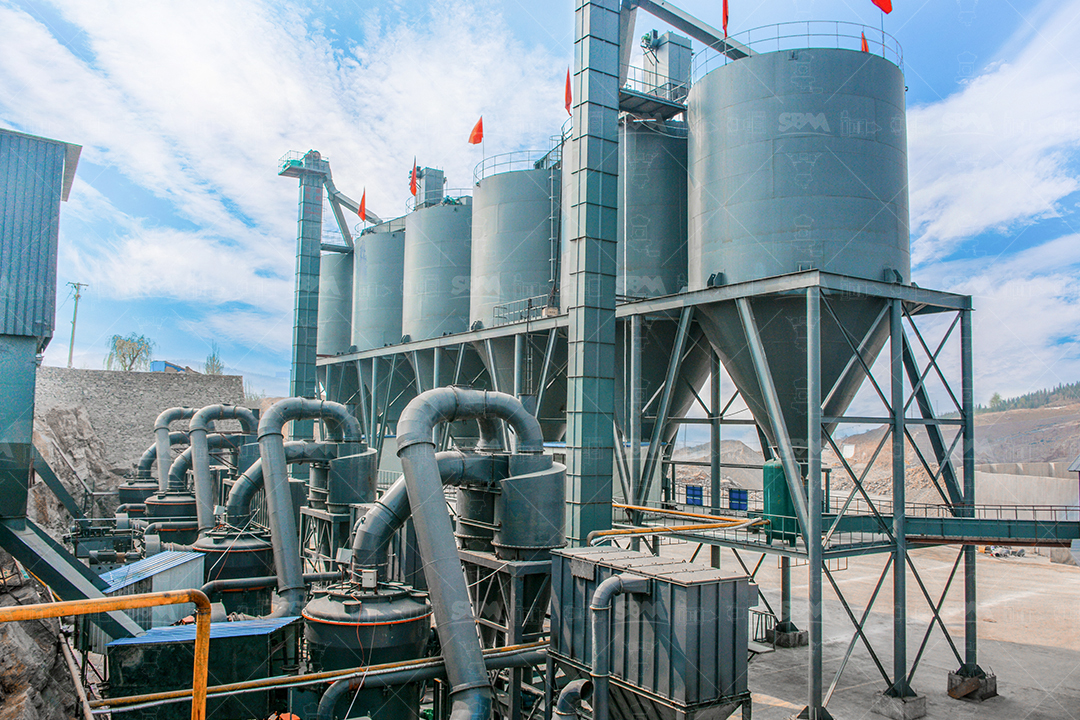
Understanding the Mineral Powder Grinding Process
Mineral powder grinding is a critical step in many industries, including building materials, mining, metallurgy, chemicals, and non-metallic minerals. The goal is to reduce raw materials to a fine powder with a specific particle size distribution. The efficiency of this process directly impacts product quality, energy consumption, and overall profitability.
Different minerals require different grinding approaches. For example, limestone used in environmental desulfurization needs a specific fineness to react effectively. Heavy calcium carbonate (GCC) for paper and plastics demands high whiteness and controlled particle size. Coal powder for power generation requires consistent fineness for efficient combustion. Petroleum coke, slag, and new energy materials each have unique grinding challenges.
At SBM Machinery, we have served over 180 countries and regions, providing everything from individual grinding units to complete grinding systems. Our expertise spans the entire mineral processing workflow. Below, we examine the main types of grinding equipment and their best-use scenarios.
MTW European Trapezium Mill: The Versatile Workhorse
The MTW Series European Trapezium Grinding Mill, also known as the MTW Raymond Mill, is a proven solution for medium-fine grinding. It was developed based on long-term research, analysis of traditional mills, and feedback from more than 9,500 customers. This new generation mill incorporates international advanced technologies and multiple patented innovations.
Key technical advantages:
- Unique wear-proof perching knife design: The combined-type shovel blade reduces the cost of wearing parts. Only the blade needs replacement during maintenance. The curved shovel blades change the feeding angle and prolong the service life of the roller and ring.
- Arc air duct design: The circular duct avoids air energy loss and ensures transportation efficiency. A high-strength guard plate protects the working face of the air duct.
- Cone gear whole transmission: The bevel gear integral transmission achieves higher transmission efficiency, saves space, and lowers investment costs.
- Volute design: The unobstructed wear-resistant volute improves wind-driven transmission efficiency and reduces material maintenance costs.
Specifications: Input size 0-50mm, output size 30-400 mesh, capacity 3-40 tph.
This mill is ideal for processing limestone, calcite, dolomite, barite, and other medium-hard minerals. It is a popular choice for customers who need a reliable, cost-effective solution for medium-fine powder production.
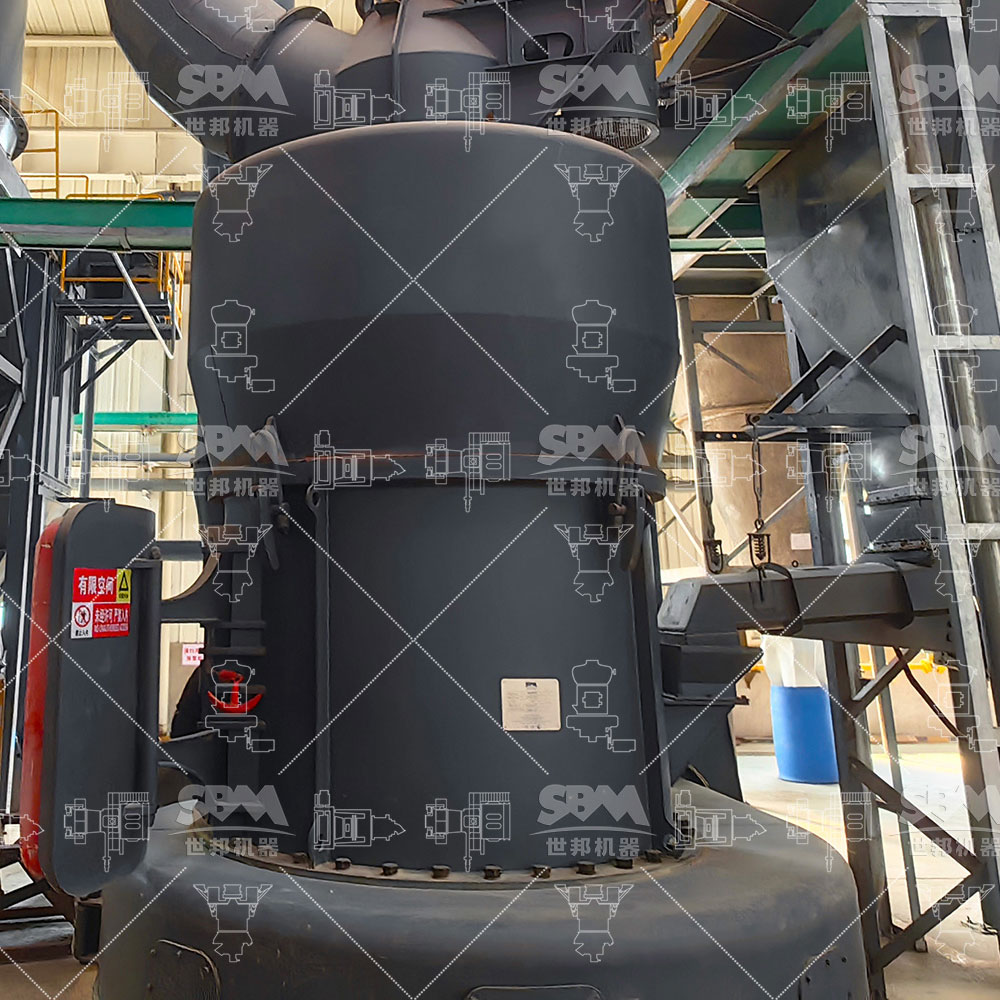
LM Vertical Roller Mill: High Capacity and Energy Efficiency
The LM Vertical Roller Mill is a newly launched product designed to solve technical issues such as low output and high energy consumption in traditional grinding. It is developed based on years of production experience and analysis of both foreign and domestic products. Its performance has reached the leading international level.
This mill integrates drying, pulverizing, and powder selection. It is widely applied in cement, chemical, coal, and electric power industries. It has become the mainstream equipment in the pulverizing industry.
Key technical advantages:
- Small comprehensive investment: The equipment integrates crushing, drying, grinding, powder separating, and transportation. The system is simple and compact, with floor space about 50% of that of a ball-milling system. It can be arranged outdoors, greatly reducing investment costs.
- Low operating costs: Less wear because the roller does not contact the grinding plate directly, and both are made of high-quality materials. High efficiency because the grinding rollers directly grind materials on the grinding plate, featuring lower energy consumption (30%-40% lower than ball-milling systems).
- Automatic control system: An expert automatic control system enables free switching between remote and local control, achieving easy operation and saving labor costs.
- High environmental protection standard: The equipment operates stably with little vibration, so noise is low. The system is wholly sealed and works under negative pressure, free of dust spillover. Emissions meet national standards.
Specifications: Input size 0-50mm, output size 30-400 mesh, capacity 3-400 tph.
The LM Vertical Roller Mill is best for large-scale production, such as slag micro-powder, coal powder preparation, and cement raw meal. Its high capacity and low energy consumption make it a favorite for power plants, cement plants, and large non-metallic mineral processing operations.
SCM Ultrafine Mill: For the Finest Powders
As social economy develops, requirements for pulverizing fineness have increased. General Raymond mills are unable to meet market demands. As a result, SBM developed the SCM series ultrafine grinding mill. Its powder fineness can be adjusted from 325 to 2500 meshes, and its disposable fineness can reach D97≤5μm. This has ranked the leading level in the same trade, with partial highest fineness reaching 2500 meshes through repeated experiments by the geoscientific research institute.
Key technical advantages:
- High output and low energy consumption: It features high efficiency and low energy consumption, with capacity more than twice that of jet mills but energy consumption lower by 30%. Automatic feedback with fast and stable conversion of finished products; intelligent control saves labor costs directly.
- High fineness: Frequency-conversion control for convenient adjustment. One-time finished products D97≤5μm. The efficient vertical turbine powder classifier achieves high efficiency, accurate cutting size, and no spillover of coarse powder.
- Heavy rotor design and tight test method: The roller and ring are made of special material, so durability can be several times higher. The grinding chamber has no bearing screw, able to work stably free of vibration after balance treatment.
- Environmental protection: The efficient double powder collecting method of powder collectors and pulse dust collectors achieves good dust collection effect, far higher than international standards. Optimized sound insulation room and muffler effectively prevent equipment noise spread.
Specifications: Input size 0-20mm, output size 325-4000 mesh, capacity 0.5-25 tph.
The SCM Ultrafine Mill is ideal for producing ultrafine powders from calcite, chalk, limestone, dolomite, kaolin, bentonite, talc, mica, magnesite, pyrophyllite, sepiolite, and other non-metallic minerals. It is widely used in paper, plastics, rubber, paint, coatings, and pharmaceuticals.
LUM Ultrafine Vertical Mill: High-End Non-Metallic Minerals
The LUM Ultrafine Vertical Mill is a new type of ultrafine grinding equipment that integrates powder grinding, separation, and transportation. With years of experience in mill production, SBM designed the LUM series by basing it on vertical mills. The company introduced Taiwan's grinding roller technology and Germany's powder separating technology.
As professional medium and high-end processing equipment in plastic master batch, PVC, artificial stone, electric cable, non-woven fabrics, and other industries, the LUM Series Ultrafine Vertical Mill is mainly used for ultrafine grinding of calcite, marble, limestone, talc, dolomite, barite, kaolin, wollastonite, gypsum, feldspar, pyrophyllite, and other non-metallic mineral ores.
Key technical advantages:
- High efficiency and high quality of finished products: The grinding curves of the roller shell and lining plate are uniquely designed based on the ultrafine pulverization principle, making it easier to form a material bed, improving grinding efficiency, and increasing the proportion of finished products from primary grinding.
- Advanced separation technology and energy efficiency: The principle of multi-rotor powder classifiers is adopted, so finished product fineness can be customized as selected range, with no low-grade material in existence. By adopting a PLC control system, major parameters like grinding pressure, rotating speed of grinding disc, and speed of classifier are controlled.
- Intelligentized control system and stable operation: The control mode for pressure adjustment of the grinding roller adopts a PLC/DCS automatic control system, ensuring accurate control of grinding pressure, high efficiency, and stable operation. Automatic control system enables remote control and simple operation. Frequency-conversion speed regulation enables the mill to be used for various materials.
- Environmentally friendly: Special structural design and operating principle ensure small vibration and low noise. The whole equipment is well sealed and the system operates under negative pressure. Therefore, powder and dust are prevented from flowing out of the system. It is environmentally friendly and meets national environmental protection requirements.
Specifications: Input size 0-20mm, output size 325-4000 mesh, capacity 10-70 tph.
The LUM Ultrafine Vertical Mill is the best choice for high-end applications requiring ultrafine powders with consistent quality, such as in the production of artificial stone, PVC, and cable materials.
Ball Mill: Traditional and Reliable
Ball mill has been used in many industries for a long time, and the technology is quite mature. However, there are still some problems. Many investors have expressed that the metal balls are easy to wear out and energy consumption is quite high. SBM optimized the design and adopted new materials, which obviously reduced the cost of spare parts. SBM produces various types of ball mill to meet different requirements. For example, dry ball mill is mainly for producing common powder, and wet ball mill is widely used in mineral dressing.
Specifications: Input size 0-25mm, output size 0.2-0.074mm, capacity 3-65 tph.
Ball mills are suitable for grinding abrasive materials, ores, and minerals where a very fine product is not required. They are often used in mineral dressing, cement, and refractory industries.
How to Choose the Right Grinding Equipment
Selecting the best grinding equipment requires a careful analysis of your specific needs. Consider the following factors:
- Required fineness: If you need powders finer than 400 mesh, the SCM Ultrafine Mill or LUM Ultrafine Vertical Mill is appropriate. For 30-400 mesh, the MTW European Trapezium Mill or LM Vertical Roller Mill is suitable.
- Capacity: For small to medium capacity (3-40 tph), the MTW mill is a good fit. For large capacity (up to 400 tph), the LM Vertical Roller Mill is preferred.
- Material characteristics: Hardness, moisture content, and abrasiveness affect equipment wear and drying requirements. The LM Vertical Roller Mill has a drying function, making it suitable for materials with high moisture.
- Energy efficiency: Vertical roller mills and ultrafine mills are more energy-efficient than ball mills.
- Environmental regulations: All SBM mills are designed to meet strict environmental standards, with dust collection and noise reduction features.
- Automation and labor costs: Automatic control systems in the LM, LUM, and SCM mills reduce labor requirements.
SBM Machinery offers a complete range of grinding equipment and can provide customized solutions. With over 180 countries served, SBM is a trusted partner for mineral powder processing.
Frequently Asked Questions (FAQ)
1. What is the most common pain point when grinding mineral powder, and how can it be solved?
The most common pain point is high energy consumption and wear costs, especially with traditional ball mills. Many customers struggle with frequent replacement of grinding media and high electricity bills. SBM addresses this with the LM Vertical Roller Mill, which consumes 30-40% less energy than ball mills and has less wear because the roller does not contact the grinding plate directly. The MTW European Trapezium Mill also features a unique wear-proof perching knife design that reduces maintenance costs. For ultrafine grinding, the SCM Ultrafine Mill uses a heavy rotor design and special materials to extend durability.
2. My material has high moisture content. Which mill can handle it without pre-drying?
The LM Vertical Roller Mill is ideal for materials with high moisture content because it integrates a drying function. Hot air can be introduced into the mill to dry the material while grinding. This eliminates the need for a separate dryer, saving capital and operating costs. The LUM Ultrafine Vertical Mill also can handle some moisture, but the LM series is specifically designed for higher moisture applications, such as slag and coal.
3. I need to produce ultrafine powder below 10 microns. What equipment do you recommend?
For ultrafine powders below 10 microns (D97≤5μm), the SCM Ultrafine Mill is the best choice. It can produce powders from 325 to 2500 mesh, with one-time fineness reaching D97≤5μm. The LUM Ultrafine Vertical Mill is also capable of producing 325-4000 mesh powders and is suitable for high-end non-metallic minerals. Both mills use advanced classifiers to ensure precise cut sizes and no coarse particle overflow.
4. What about dust and noise? My plant is in a residential area.
SBM grinding equipment is designed with environmental protection in mind. The LM Vertical Roller Mill operates under negative pressure with a wholly sealed system, preventing dust spillover. The SCM Ultrafine Mill uses efficient double powder collecting (powder collectors and pulse dust collectors) to achieve dust collection far higher than international standards. It also has an optimized sound insulation room and muffler to reduce noise. The LUM Ultrafine Vertical Mill also features small vibration and low noise due to its special structural design. All mills meet national environmental protection requirements.
5. I have limited space and a tight budget. Which mill offers the smallest footprint and lowest investment?
The LM Vertical Roller Mill offers a compact layout with floor space about 50% of that of a ball-milling system. It can be arranged outdoors, greatly reducing investment costs. It also integrates crushing, drying, grinding, powder separating, and transportation, simplifying the system. For smaller capacities, the MTW European Trapezium Mill is also cost-effective and has a relatively small footprint. While SBM does not disclose prices in this article, we recommend contacting our team for a customized quotation based on your specific requirements.
For more information on how SBM Machinery can help you choose the best grinding equipment for your mineral powder project, please contact our experts. We have served over 180 countries and are ready to assist you.


